Understanding Rasa Theory and Its Role in Storytelling
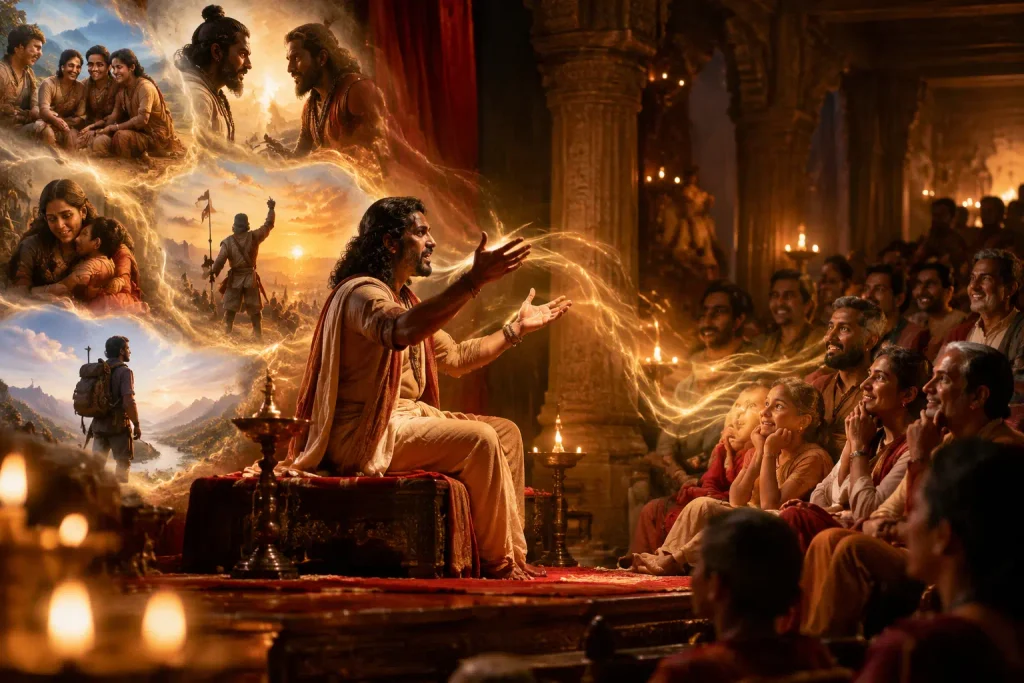
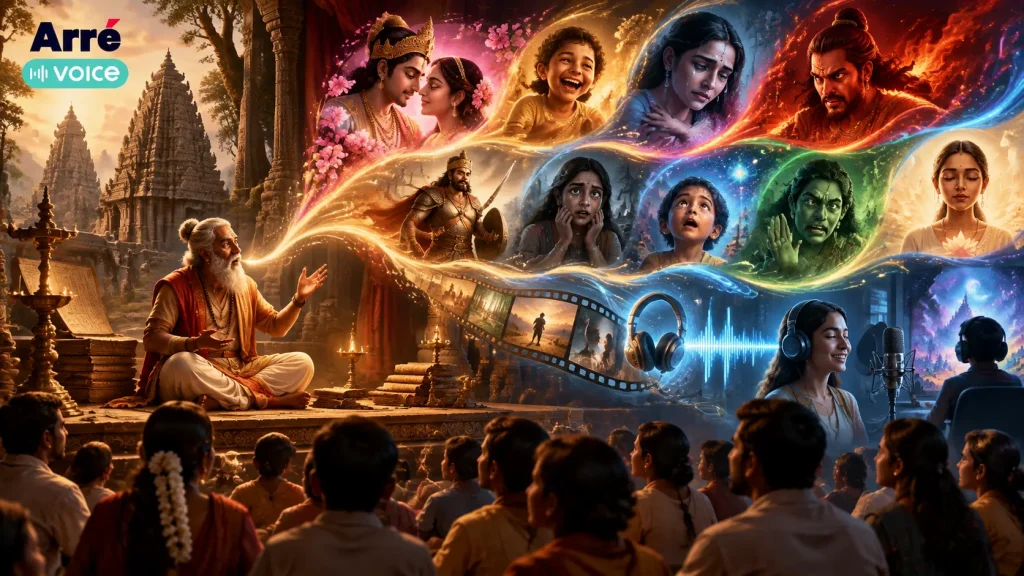
Rasa Theory is an ancient Indian framework that explains how stories, performances, and artistic expressions create emotional experiences in audiences. Developed by Bharata Muni in the Natya Shastra, Rasa Theory describes how emotions, characters, situations, and expressions combine to create meaningful connections between storytellers and listeners.
The word “Rasa” means essence, flavour, or emotional experience. In storytelling, Rasa represents the feeling that an audience experiences after engaging with a narrative. A story is not remembered only because of its events or characters, but because of the emotions it creates.
From classical Indian theatre and dance to modern films, podcasts, and digital storytelling, emotions remain the foundation of meaningful narratives. Whether it is the courage of a hero, the sadness of a loss, the joy of humour, or the wonder of an extraordinary experience, emotions transform simple events into memorable stories.
Rasa Theory explains why certain stories continue to influence audiences across generations. It highlights that storytelling is not only about presenting information; it is about creating an emotional journey where audiences feel connected to characters, situations, and experiences.
Today, the principles of Rasa Theory continue to influence modern storytelling formats, including cinema, web series, audio dramas, and voice-based experiences. As digital platforms grow, understanding emotions has become even more important for creators who want to build deeper connections with audiences.
What Is Rasa Theory?
1.1 Understanding the Meaning of Rasa in Indian Aesthetics
Rasa Theory explains how artistic expressions create emotional experiences in audiences. In Indian aesthetics, Rasa is considered the emotional essence that emerges when a story, performance, or artwork connects with human feelings.
The term “Rasa” comes from Sanskrit and means essence, taste, or flavour. Just as food creates different tastes, storytelling creates different emotional experiences. A powerful story allows audiences to experience emotions beyond everyday life by entering the world of characters and situations.
However, Rasa is different from ordinary emotions. A character may experience sadness, anger, love, or fear within a story, but Rasa is the emotional response created in the audience.
For example:
- A tragic story may create Karuna Rasa by making audiences feel compassion and sadness.
- A heroic journey may create Veera Rasa by inspiring courage and determination.
- A comedy may create Hasya Rasa through laughter and happiness.
This distinction makes Rasa Theory unique. It focuses not only on what characters feel but also on how storytelling creates emotional experiences for those who watch or listen.
In modern storytelling, this principle remains highly relevant. A film scene, podcast episode, or audio drama becomes memorable when audiences emotionally connect with the narrative. The strongest stories are those that make people feel something.
1.2 Origin of Rasa Theory in Natya Shastra
Rasa Theory was introduced by Bharata Muni in the Natya Shastra, one of the oldest texts on Indian performing arts. The text explains how drama, music, dance, and storytelling combine to create emotional experiences.
Bharata Muni developed Rasa Theory to explain the relationship between artistic expression and audience response. According to the theory, storytelling becomes powerful when different elements work together:
- Characters create emotional situations
- Story events establish conflicts and experiences
- Expressions communicate feelings
- Audiences experience the resulting Rasa
The Natya Shastra describes theatre as a complete art form where dialogue, gestures, music, movement, and emotions come together. Through these elements, performers create experiences that allow audiences to connect deeply with the story.
For centuries, Indian classical theatre, dance traditions, and oral storytelling practices have used these principles to communicate emotions. Stories from mythology, epics, and folklore have survived because they successfully create emotional experiences among audiences.
Today, the same ideas apply to modern storytelling formats. A narrator’s voice, background music, character dialogue, and pacing in an audio story all contribute to creating emotional impact.
1.3 The Formula Behind Rasa Creation
Bharata Muni explained that Rasa emerges through the combination of three important elements:
Vibhava + Anubhava + Vyabhichari Bhava = Rasa
These elements work together to transform situations and emotions into a complete audience experience.
Vibhava (Determinants)
Vibhava refers to the causes or situations that create an emotion within a story.
It establishes the emotional foundation by showing:
- Who the characters are
- What situation they experience
- What circumstances create the emotion
Examples:
- A reunion between loved ones creates feelings of affection.
- A character facing injustice creates anger or determination.
- A personal loss creates sadness and compassion.
Vibhava helps audiences understand why a particular emotion emerges within a narrative.
Anubhava (Consequences)
Anubhava refers to the expressions and actions through which emotions become visible.
These include:
- Facial expressions
- Body language
- Voice modulation
- Dialogue delivery
- Physical reactions
In audio storytelling, Anubhava becomes especially important through voice. The tone, pace, pauses, and emotional delivery of a narrator can communicate feelings even without visual elements.
For example, a slow and emotional voice can express sadness, while a powerful and energetic voice can communicate courage and excitement.
Vyabhichari Bhava (Transitory Emotions)
Vyabhichari Bhava refers to temporary emotional states that support and strengthen the main emotion of a story.
These emotions may include:
- Fear
- Doubt
- Anxiety
- Excitement
- Hope
- Curiosity
These smaller emotional experiences help create a richer storytelling journey.
For example, a hero’s journey may include moments of fear, uncertainty, and struggle before reaching courage and victory. These changing emotions make the final experience more impactful.
Together, Vibhava, Anubhava, and Vyabhichari Bhava create Rasa — the emotional connection that makes stories meaningful and memorable.
The Nine Rasas (Navarasa) Explained
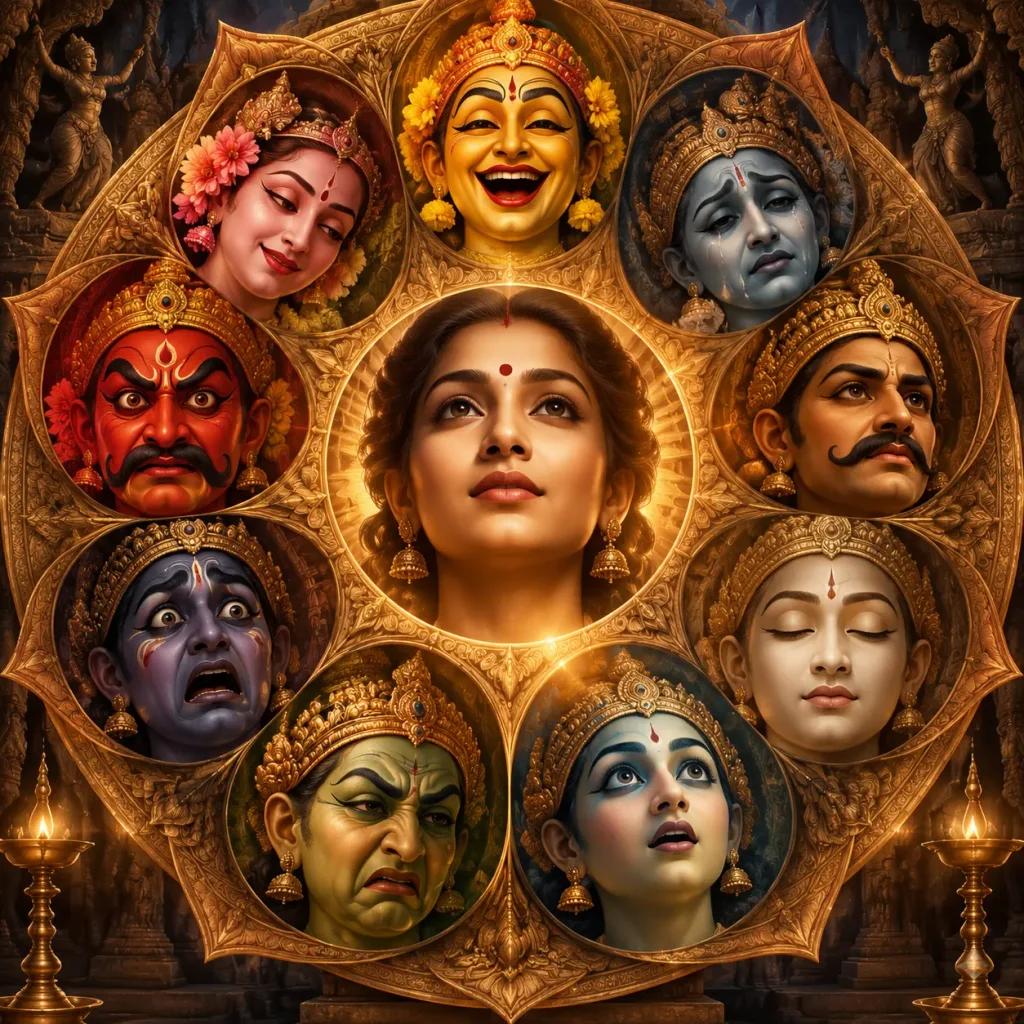
Navarasa refers to the nine fundamental emotions described in Indian aesthetic theory. These nine Rasas represent different emotional experiences that storytelling, theatre, music, dance, and visual arts can create in audiences.
The concept of Navarasa helps creators understand how emotions influence storytelling. A powerful narrative does not simply communicate events; it allows audiences to experience feelings such as love, courage, compassion, fear, wonder, and peace.
Each Rasa represents a different emotional response and contributes to creating a complete storytelling experience.
The nine Rasas are:
- Shringara (Love and Beauty)
- Hasya (Humour and Joy)
- Karuna (Compassion and Sorrow)
- Raudra (Anger and Fury)
- Veera (Courage and Heroism)
- Bhayanaka (Fear and Suspense)
- Bibhatsa (Disgust and Aversion)
- Adbhuta (Wonder and Curiosity)
- Shanta (Peace and Spiritual Calm)
2.1 Shringara Rasa: Love, Beauty, and Attraction
Shringara Rasa represents love, beauty, attraction, and emotional connection. It is considered one of the most important Rasas because relationships and human connections are central to many stories.
The emotion of Shringara is created through experiences of affection, admiration, romance, and emotional bonding. It is not limited only to romantic love but can also represent appreciation for beauty, relationships, nature, and meaningful connections.
In storytelling, Shringara Rasa helps audiences connect with characters through their relationships and emotional experiences.
Examples include:
- Love stories between characters
- Relationships based on trust and affection
- Emotional bonds between family members
- Narratives celebrating beauty and harmony
Indian literature and mythology contain many examples where Shringara plays an important role. Stories of relationships, devotion, and emotional attachment often create strong connections because audiences recognise universal experiences of love and belonging.
In modern storytelling formats such as films, podcasts, and audio dramas, Shringara Rasa continues to influence character-driven narratives by creating emotional depth and relatability.
2.2 Hasya Rasa: Humour and Joy
Hasya Rasa represents laughter, happiness, amusement, and light-hearted emotions. It shows how humour can make storytelling enjoyable while creating a strong connection with audiences.
Humour is an important storytelling element because it provides emotional balance. After moments of tension or conflict, humorous experiences allow audiences to relax and engage more deeply with characters.
Hasya Rasa can be created through:
- Funny situations
- Witty conversations
- Comic characters
- Unexpected moments
- Playful interactions
Comedy-based storytelling works because laughter creates positive emotional responses and makes characters more memorable.
Examples include:
- A humorous supporting character who brings energy to a story
- A funny situation that reduces tension
- Dialogues that create entertainment and connection
In digital storytelling, podcasts, and audio entertainment, voice plays a major role in creating Hasya Rasa. Timing, tone, expressions, and delivery help transform simple dialogues into engaging humorous experiences.
2.3 Karuna Rasa: Compassion and Sorrow
Karuna Rasa represents compassion, sadness, empathy, and emotional pain. It allows audiences to connect deeply with characters experiencing struggles, loss, or difficult situations.
Stories that create Karuna Rasa often focus on human challenges and emotional journeys. These narratives remind audiences about empathy, kindness, and the shared experiences of life.
Karuna Rasa is created through situations such as:
- Separation from loved ones
- Personal struggles
- Sacrifice
- Loss and grief
- Difficult life circumstances
Examples include:
- A character overcoming hardship
- Stories of sacrifice and resilience
- Emotional journeys involving loss or transformation
Although sadness may appear negative, Karuna Rasa plays an important role in storytelling because emotional challenges make characters more realistic and relatable.
In audio storytelling, voice narration can make Karuna Rasa especially powerful. A narrator’s tone, pauses, and emotional expression can help audiences feel the character’s experiences more deeply.
2.4 Raudra Rasa: Anger and Fury
Raudra Rasa represents anger, intensity, and powerful emotional energy. In storytelling, it often appears during moments of conflict, injustice, or confrontation.
Anger can become a powerful narrative force when it represents a character’s response to unfairness, betrayal, or suffering.
Raudra Rasa helps create dramatic tension through:
- Conflicts between characters
- Battles and confrontations
- Revenge narratives
- Emotional turning points
Examples include:
- A hero fighting against injustice
- A character seeking revenge after betrayal
- Conflicts between opposing values
However, storytelling often uses Raudra Rasa not only to show anger but also to explore its consequences. Uncontrolled anger can create destruction, while purposeful anger can inspire action and change.
In character-driven storytelling, complex emotions like anger make heroes and villains more realistic by showing their motivations and internal struggles.
2.5 Veera Rasa: Courage and Heroism
Veera Rasa represents courage, bravery, confidence, and determination. It is the emotion that inspires audiences through heroic actions and overcoming challenges.
Stories featuring Veera Rasa often highlight characters who face difficulties with strength and commitment.
This Rasa is created through:
- Acts of bravery
- Leadership moments
- Selfless actions
- Overcoming obstacles
Examples include:
- Warriors protecting their people
- Leaders making difficult decisions
- Individuals achieving goals despite challenges
Many mythological stories use Veera Rasa to portray heroes who stand for justice, responsibility, and courage.
In modern storytelling, superhero narratives, motivational stories, and personal transformation journeys often use Veera Rasa to inspire audiences.
Through voice storytelling, a powerful narration style, confident delivery, and emotional intensity can enhance the feeling of courage and determination.
2.6 Bhayanaka Rasa: Fear and Suspense
Bhayanaka Rasa represents fear, uncertainty, and suspense. It creates emotional tension by making audiences anticipate what may happen next.
Fear is an important storytelling emotion because it creates curiosity and keeps audiences engaged.
Bhayanaka Rasa can be created through:
- Unknown situations
- Dangerous environments
- Unexpected events
- Mysterious characters
Examples include:
- Horror stories
- Mystery narratives
- Suspense-based dramas
- Thrillers
The effectiveness of fear-based storytelling comes from imagination. Audiences often experience stronger emotions when stories allow them to imagine possibilities.
In audio storytelling, sound design, silence, background effects, and voice modulation play an important role in creating suspense and fear.
2.7 Bibhatsa Rasa: Disgust and Aversion
Bibhatsa Rasa represents feelings of dislike, discomfort, and aversion. Although it is a challenging emotion, it plays an important role in creating powerful storytelling experiences.
This Rasa is often used to show:
- Negative situations
- Moral conflicts
- Destructive behaviour
- Consequences of harmful actions
Bibhatsa Rasa helps audiences understand what should be rejected or questioned within a story.
Examples include:
- Stories showing injustice
- Narratives exploring corruption or cruelty
- Conflicts between ethical and unethical actions
By creating discomfort, storytellers can encourage audiences to reflect on important social and moral issues.
2.8 Adbhuta Rasa: Wonder and Curiosity
Adbhuta Rasa represents amazement, curiosity, and a sense of wonder. It allows storytelling to create experiences beyond ordinary reality.
This Rasa is commonly found in:
- Mythological stories
- Fantasy narratives
- Magical experiences
- Discoveries and adventures
Examples include:
- Divine events
- Extraordinary achievements
- New discoveries
- Imaginary worlds
Adbhuta Rasa is powerful because it encourages imagination. It creates a feeling of exploring something unknown and extraordinary.
Many digital storytelling formats use this emotion through immersive experiences, visual effects, sound design, and imaginative narratives.
2.9 Shanta Rasa: Peace and Spiritual Calm
Shanta Rasa represents peace, tranquillity, wisdom, and inner harmony. It focuses on emotional balance and deeper reflection.
Unlike intense emotions such as anger or fear, Shanta Rasa creates a sense of calm and understanding.
It appears in stories involving:
- Spiritual journeys
- Self-discovery
- Philosophical reflection
- Inner transformation
Examples include:
- Meditation-based narratives
- Stories about wisdom and enlightenment
- Personal journeys toward peace
Shanta Rasa reminds audiences that storytelling is not only about excitement and conflict but also about reflection, learning, and emotional growth.
In modern audio experiences, calm narration, soothing voices, and thoughtful storytelling can create peaceful emotional connections with listeners.
How Rasa Theory Creates Powerful Storytelling
Rasa Theory explains why certain stories stay with audiences long after they are experienced. At the heart of every memorable narrative is an emotional connection between characters, situations, and viewers or listeners. By understanding how emotions are created and experienced, storytellers can design narratives that feel meaningful, relatable, and impactful.
Whether in classical theatre, films, novels, podcasts, or digital audio stories, Rasa Theory provides a framework for understanding how storytelling transforms simple events into powerful emotional experiences.
3.1 The Relationship Between Characters and Emotions
Characters are the emotional foundation of every story. Audiences connect with characters not only because of what they do, but because of what they feel, struggle with, and represent. Rasa Theory explains that characters act as carriers of emotions, allowing audiences to experience different feelings through their journeys.
A well-developed character represents a specific emotional experience. A hero may represent courage and determination, while another character may represent sacrifice, compassion, or conflict. These emotional qualities help audiences understand the deeper meaning behind a story.
For example, a heroic character creates Veera Rasa (the emotion of courage) by overcoming challenges, protecting others, or standing against injustice. A character experiencing loss or separation may create Karuna Rasa (compassion and sorrow), allowing audiences to connect with feelings of empathy and emotional pain.
Villains and antagonists also play an important role in emotional storytelling. They often represent conflict, anger, ambition, or fear, creating tension that moves the story forward. A strong antagonist does not only create obstacles but also helps reveal the emotional strength and transformation of other characters.
Emotional depth makes characters more human. Audiences remember characters who experience:
- Personal struggles
- Inner conflicts
- Growth and transformation
- Relationships and emotional challenges
This emotional connection encourages audiences to see parts of their own experiences reflected in the characters.
3.2 How Story Structure Builds Emotional Experiences
Rasa Theory is closely connected with the structure of storytelling. A story is not only a sequence of events; it is an emotional journey where each stage creates a different response from the audience.
A powerful narrative usually follows four important stages:
Beginning: Creating Emotional Connection
The beginning introduces characters, settings, and situations. This stage establishes the emotional foundation of the story.
Audiences begin to understand:
- Who the characters are
- What they desire
- What challenges they may face
- Why their journey matters
A strong beginning creates curiosity and emotional investment. For example, introducing a character’s dream, struggle, or relationship helps audiences develop empathy.
Conflict: Creating Emotional Tension
Conflict is where emotions become stronger. Challenges, obstacles, and unexpected events create emotional movement within the story.
Different conflicts can create different Rasas:
- A battle may create Veera Rasa
- A loss may create Karuna Rasa
- A mystery may create Bhayanaka Rasa
- A disagreement may create Raudra Rasa
Conflict gives characters an opportunity to reveal their true emotions and creates moments that audiences can relate to.
Transformation: Creating Emotional Growth
Transformation is the stage where characters change because of their experiences. This emotional journey is one of the most important aspects of storytelling.
A character may move from:
- Fear to courage
- Confusion to understanding
- Failure to success
- Anger to acceptance
These transformations create powerful emotional experiences because audiences witness growth and change.
Resolution: Creating Emotional Satisfaction
The ending provides emotional closure by showing the outcome of the character’s journey. A satisfying resolution allows audiences to reflect on the meaning and message of the story.
The final emotional experience may create:
- Peace and understanding
- Inspiration
- Happiness
- Reflection
Through this structure, storytellers guide audiences through a complete emotional journey, making stories more memorable and meaningful.
3.3 Why Audiences Remember Stories Through Emotions
People often remember stories not because of every detail, but because of how those stories made them feel. Emotional experiences create stronger memories and deeper connections than information alone.
Rasa Theory highlights that storytelling becomes powerful when audiences personally experience emotions through a narrative. A story about courage can inspire confidence, a story about loss can create empathy, and a story about transformation can encourage hope.
Emotional memory plays an important role in audience engagement because feelings influence:
- What people remember
- What they share with others
- How they connect with characters
- How they respond to future stories
Relatable experiences make emotional storytelling even stronger. Audiences connect with universal human experiences such as:
- Love
- Family
- Friendship
- Struggle
- Success
- Loss
- Personal growth
This is why stories from different cultures and time periods continue to remain relevant. The emotions behind them are universal.
Rasa Theory in Indian Storytelling Traditions
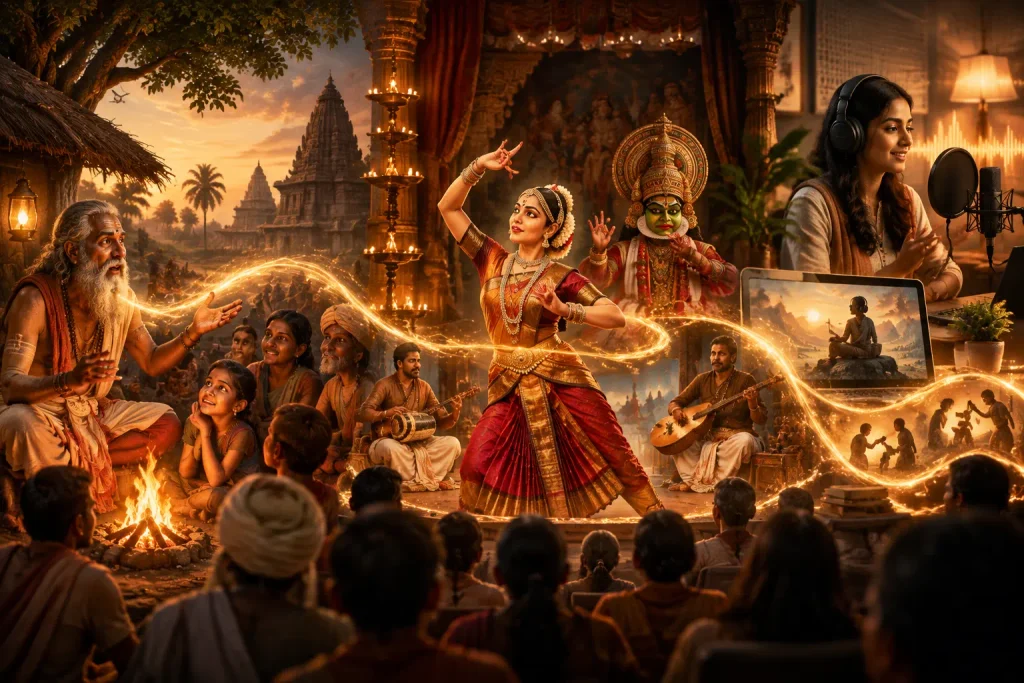
Rasa Theory has been deeply connected with Indian storytelling traditions for centuries. From classical theatre and dance performances to folk narratives and oral storytelling, emotions have always been central to how stories are created and experienced.
Indian storytelling traditions focus not only on presenting events but also on creating emotional experiences for audiences. Through expressions, music, narration, and performance, storytellers have preserved emotions across generations.
The Role of Rasa in Classical Indian Theatre
In classical Indian theatre, Rasa is considered the essence that transforms a performance into an emotional experience. Performers use:
- Facial expressions
- Body movements
- Dialogue delivery
- Music
- Gestures
to communicate emotions and create a connection with audiences.
The purpose of performance is not only to show emotions but to allow audiences to experience those emotions internally.
Connection With Dance, Music, and Oral Storytelling
Rasa Theory extends beyond theatre into Indian classical dance and music traditions. Artists use rhythm, expressions, movements, and sounds to communicate emotional meanings.
For example:
- A dancer’s expressions can represent love, devotion, or sadness
- Music can create feelings of peace, excitement, or longing
- Storytellers can use voice modulation to create emotional impact
Oral storytelling traditions have also relied on emotional expression to preserve stories across generations. Storytellers used voice, pauses, and dramatic narration to keep audiences engaged.
Preserving Emotions Through Indian Storytelling Traditions
Indian storytelling has preserved emotional experiences through various forms, including:
- Folk performances
- Mythological narratives
- Theatre traditions
- Oral storytelling
Epic narratives such as the Ramayana and Mahabharata continue to connect with audiences because they explore universal emotions such as courage, duty, love, sacrifice, conflict, and compassion.
These traditions demonstrate that emotions are the bridge between stories and audiences.
Know more about → Indian Storytelling Traditions
Rasa Theory in Modern Entertainment and Digital Media
Although Rasa Theory originated thousands of years ago, its principles continue to influence modern storytelling formats. Films, web series, podcasts, audio dramas, and digital content all rely on emotional experiences to engage audiences.
Modern creators use the same fundamental idea: a successful story must make audiences feel something.
5.1 Rasa Theory in Films and Visual Storytelling
Cinema combines multiple storytelling elements to create emotional experiences. Characters, visuals, music, dialogue, and editing work together to produce different Rasas.
For example:
Heroic Moments
Action sequences, character victories, and moments of courage create Veera Rasa. Audiences feel inspired when characters overcome challenges and achieve their goals.
Emotional Scenes
Scenes involving relationships, sacrifice, or personal struggles create Karuna Rasa. These moments encourage empathy and emotional connection.
Comedy Sequences
Humorous situations and entertaining characters create Hasya Rasa, providing joy and relaxation.
Background music and visual storytelling also strengthen emotional responses. A powerful soundtrack, meaningful expressions, or a carefully designed scene can enhance the emotional impact of a story.
5.2 Rasa Theory in Podcasts and Audio Storytelling
Rasa Theory is especially relevant to audio storytelling because voice is one of the strongest tools for communicating emotions. Without visual elements, listeners rely on narration, tone, pacing, and sound design to imagine and experience the story.
Audio storytelling creates emotional connections through:
- Voice expression
- Character dialogue
- Narration style
- Background sounds
- Music and atmosphere
A narrator’s voice can create suspense, empathy, excitement, or sadness. The same words can create different emotional experiences depending on how they are delivered.
Examples:
- A slow, mysterious narration can create suspense
- A warm voice can create emotional connection
- Powerful dialogue delivery can create inspiration
Sound design further enhances imagination by creating an immersive world around the listener.
For platforms focused on voice-based storytelling, Rasa Theory provides valuable insights into creating emotionally engaging experiences where characters, voices, and narratives connect deeply with audiences.
Know more about
→ Audio Storytelling Platforms
→ AI Voice Stories
Bringing Rasa Theory Into Character-Based Storytelling
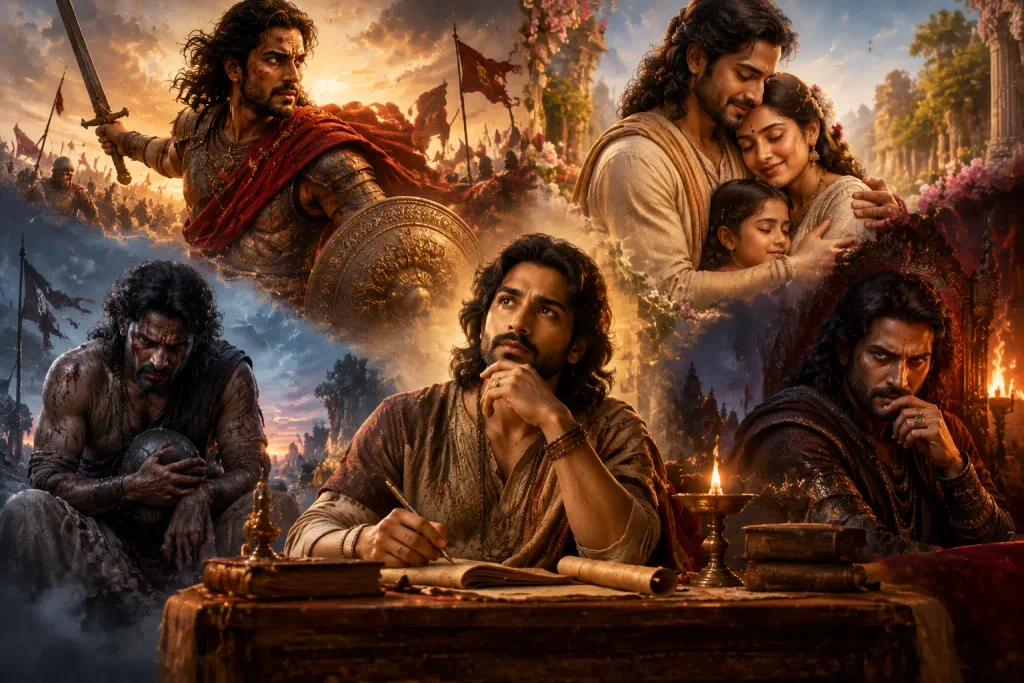
Rasa Theory provides storytellers with a powerful framework for creating emotionally meaningful characters. Instead of designing characters only around their actions or roles, creators can build them around emotional identities that influence their decisions, relationships, and transformations.
When audiences understand a character’s emotions, they develop a stronger connection with the story. A character’s emotional journey becomes the bridge between the narrative and the audience’s own experiences.
6.1 Creating Characters Through Emotional Identity
Characters become memorable when they represent specific emotional experiences. Rasa Theory helps creators understand the dominant emotions that shape a character and how those emotions influence the audience’s response.
A character can be designed around one primary Rasa while also experiencing multiple emotions throughout the story.
Hero → Veera Rasa (Courage and Heroism)
A heroic character often represents Veera Rasa, the emotion of courage, confidence, and determination.
These characters are defined by:
- Facing challenges
- Protecting others
- Overcoming fear
- Taking responsibility
The emotional connection comes from watching characters transform difficulties into moments of strength and bravery.
Examples include warriors, leaders, and individuals who fight against obstacles to achieve a greater purpose.
Romantic Character → Shringara Rasa (Love and Beauty)
Characters based on Shringara Rasa represent love, attraction, relationships, and emotional connection.
These characters often explore:
- Romantic relationships
- Emotional bonds
- Longing and affection
- Human connections
Love stories become powerful because audiences relate to universal emotions such as attachment, hope, and companionship.
Tragic Character → Karuna Rasa (Compassion and Sorrow)
Characters representing Karuna Rasa create emotional depth through experiences of loss, sacrifice, and struggle.
These characters may face:
- Personal hardships
- Separation
- Difficult choices
- Emotional pain
Their journeys encourage audiences to feel empathy and understand human vulnerability.
Complex Antagonist → Raudra Rasa (Anger and Conflict)
A powerful antagonist often represents Raudra Rasa, expressing anger, revenge, ambition, or conflict.
However, effective villains are not created only through negative emotions. Complex antagonists often have:
- Personal motivations
- Emotional wounds
- Conflicting beliefs
- Human weaknesses
This complexity makes characters more realistic and creates deeper storytelling experiences.
6.2 Using Rasa Theory for Better Storytelling Experiences
Creators can use Rasa Theory as a storytelling tool to improve emotional depth, character development, and audience engagement.
Improving Character Development
Understanding emotional identity helps creators design characters with clear motivations and meaningful journeys.
Instead of asking only:
“What does this character do?”
Creators can ask:
“What emotion drives this character’s choices?”
This approach creates characters who feel authentic and relatable.
Creating Better Story Pacing
Rasa Theory also helps control the emotional rhythm of a story. A powerful narrative balances different emotional experiences instead of maintaining one feeling throughout.
For example:
- Suspense creates curiosity
- Conflict creates tension
- Humour provides relief
- Emotional moments create empathy
- Resolution creates satisfaction
This emotional movement keeps audiences engaged throughout the storytelling experience.
Increasing Emotional Engagement
Stories become memorable when audiences experience emotions alongside characters.
Rasa Theory allows creators to intentionally design moments that create:
- Connection
- Anticipation
- Inspiration
- Reflection
Whether through films, books, podcasts, or audio dramas, emotional storytelling helps audiences build stronger relationships with narratives.
How AI Is Changing Emotional Storytelling
Artificial intelligence is transforming how creators develop, personalise, and deliver emotional storytelling experiences. While human emotions remain the foundation of storytelling, AI tools are helping creators explore new possibilities in character development, narration, and audience engagement.
AI does not replace emotional creativity; instead, it provides new ways for storytellers to experiment with ideas and create immersive experiences.
7.1 AI and Emotion-Based Content Creation
AI-powered storytelling tools can support creators throughout the content development process.
Applications include:
Story Development
AI can assist creators with:
- Generating story ideas
- Developing narrative structures
- Exploring different emotional directions
- Creating story outlines
Creators can use AI to experiment with different character journeys and emotional arcs.
Character Creation
AI can help build detailed character profiles by exploring:
- Character personalities
- Motivations
- Emotional backgrounds
- Relationship dynamics
This allows creators to develop characters with stronger emotional identities.
Narrative Assistance
AI tools can support:
- Script development
- Dialogue improvement
- Scene planning
- Story expansion
By assisting with creative workflows, AI allows creators to focus more on emotional storytelling and audience connection.
Personalised Storytelling
AI enables more personalised storytelling experiences by adapting narratives based on audience preferences.
Future storytelling experiences may include:
- Custom character journeys
- Interactive narratives
- Emotion-based recommendations
- Personalised audio experiences
7.2 AI Voice Technology and Emotional Narration
Voice is one of the most powerful elements of emotional storytelling. AI voice technology is creating new possibilities for delivering expressive and personalised narration across different formats.
AI-powered voice experiences can support:
Character Voices
AI voice technology allows creators to develop unique voices for different characters, helping audiences identify personalities and emotional traits.
A character’s voice can communicate:
- Confidence
- Fear
- Happiness
- Sadness
- Mystery
Emotional Delivery
The impact of a story depends not only on words but also on how those words are delivered.
AI voice technology can help create emotional variations through:
- Tone
- Pace
- Expression
- Voice style
This makes audio storytelling more immersive and engaging.
Multilingual Storytelling
AI voice technology can help creators reach wider audiences by supporting storytelling across multiple languages.
This creates opportunities for:
- Regional language stories
- Cultural narratives
- Global audience connections
Personalised Experiences
Future AI voice experiences may allow audiences to interact with stories through customised voices and adaptive narration.
This can create more personal connections between storytellers, characters, and listeners.
Know more about
→ Generative Voice AI
7.3 Preserving Indian Storytelling Through AI
AI is creating new opportunities to preserve and share India’s rich storytelling heritage. Many traditional stories, regional narratives, and cultural experiences have been passed down through generations through oral traditions.
AI can support preservation through:
Regional Language Storytelling
AI-powered voice and language technologies can help preserve stories in different Indian languages and dialects.
This allows:
- Local stories to reach wider audiences
- Traditional narratives to remain accessible
- Cultural expressions to continue digitally
Digital Archives
AI can assist in creating digital collections of:
- Folk stories
- Mythological narratives
- Historical accounts
- Oral traditions
These archives can help future generations explore India’s storytelling heritage.
Voice-Based Heritage Experiences
Combining AI voice technology with traditional narratives can create immersive experiences where audiences can listen to stories in authentic voices and languages.
This represents a connection between ancient storytelling traditions and modern digital innovation.
The Future of Rasa Theory in Digital Storytelling
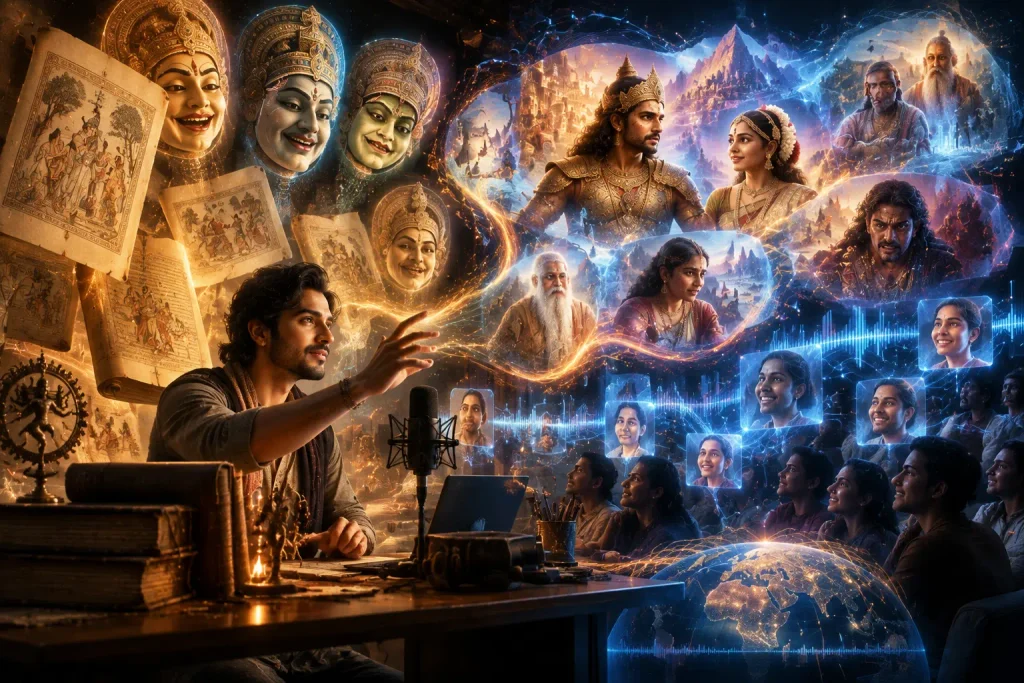
Rasa Theory continues to remain relevant because emotions are still the foundation of human storytelling. As technology evolves, the principles of emotional connection, character experience, and audience response will continue to shape digital narratives.
The future of storytelling will combine ancient emotional understanding with modern technologies to create deeper and more personalised experiences.
Emerging Trends in Emotional Storytelling
Emotional AI Experiences
Future storytelling platforms may use AI to understand audience preferences and create experiences that respond emotionally to listeners.
Possible developments include:
- Adaptive narratives
- Emotion-driven recommendations
- Interactive characters
Interactive Storytelling
Digital storytelling is moving beyond passive consumption. Audiences may increasingly participate in stories through:
- Choice-based narratives
- Interactive characters
- Personalised story paths
Voice-First Entertainment
Voice technology is making storytelling more accessible and immersive.
Future experiences may include:
- AI-powered audio dramas
- Interactive voice stories
- Personalised narration
- Conversational storytelling
Creator-Driven Narratives
Digital platforms are allowing more creators to share unique voices and perspectives.
This growth will support:
- Independent storytellers
- Community-based storytelling
- Diverse cultural narratives
Personalised Story Experiences
AI and voice technologies may enable stories that adapt to individual listeners, creating unique emotional journeys for every audience member.
Rasa Theory connects ancient Indian understanding of emotions with the future of digital storytelling, where technology helps creators build deeper human connections through meaningful experiences.
How Arré Voice Helps Creators Build Emotion-Driven Stories
Voice has always been one of the strongest ways humans express emotions. Arré Voice combines the power of storytelling and voice technology to help creators develop engaging audio experiences that connect with audiences.
Through voice-first storytelling, creators can transform ideas into emotional narratives where characters, conversations, and experiences come alive.
Arré Voice supports creators by enabling:
- Voice-based storytelling experiences
- Emotion-driven audio content
- Character-focused narratives
- Community connections through stories
By combining storytelling principles with modern voice experiences, creators can explore new ways to share meaningful narratives.
The future of storytelling belongs to experiences that connect technology with human emotions. Rasa Theory reminds us that while formats may change, the emotional connection between stories and audiences remains timeless.
Discover powerful stories, explore emotional narratives, and create meaningful voice experiences with Arré Voice.
Frequently Asked Questions
What is Rasa Theory?
Rasa Theory is an ancient Indian aesthetic framework that explains how artistic expressions create emotional experiences in audiences. Developed by Bharata Muni in the Natya Shastra, it describes how emotions, characters, situations, and expressions combine to create meaningful storytelling experiences.
Who introduced Rasa Theory?
Rasa Theory was introduced by Bharata Muni, an ancient Indian scholar and the author of the Natya Shastra. The theory explains how drama, dance, music, and storytelling generate emotional responses in audiences through artistic expression.
What is the meaning of Rasa in storytelling?
In storytelling, Rasa refers to the emotional essence or experience felt by the audience. It goes beyond a character’s emotions and represents the feeling created through storytelling elements such as characters, situations, expressions, and narrative techniques.
What are the nine Rasas in Indian aesthetics?
The nine Rasas, also known as Navarasa, are Shringara (love), Hasya (humour), Karuna (compassion), Raudra (anger), Veera (heroism), Bhayanaka (fear), Bibhatsa (disgust), Adbhuta (wonder), and Shanta (peace).
What is Navarasa theory?
Navarasa theory is the concept of nine fundamental emotional experiences described in Indian aesthetics. It explains how different emotions influence audience reactions and help creators build deeper connections through storytelling, performance, and artistic expression.
How does Rasa Theory help storytellers?
Rasa Theory helps storytellers understand emotional impact by guiding character development, story structure, pacing, and audience engagement. Creators can use different Rasas to build memorable characters, meaningful conflicts, and emotionally powerful storytelling experiences.
What is the difference between emotion and Rasa?
Emotion refers to the feelings experienced by characters or individuals, while Rasa refers to the emotional response created within the audience. A character may feel sadness, but the audience experiences Karuna Rasa through that portrayal.
How is Rasa Theory used in modern films and digital content?
Modern films, series, podcasts, and digital content use Rasa principles through character emotions, music, visuals, dialogue, and storytelling techniques. These elements help create experiences such as suspense, joy, empathy, inspiration, and emotional connection.
How does Rasa Theory apply to audio storytelling?
Rasa Theory plays an important role in audio storytelling by using voice, tone, narration, dialogue, and sound design to create emotional experiences. A narrator’s voice can build suspense, compassion, excitement, or wonder in listeners.
How is AI changing emotional storytelling experiences?
AI is transforming emotional storytelling through personalised narratives, AI-assisted writing, character creation, and expressive voice technology. It helps creators develop multilingual, interactive, and emotionally engaging storytelling experiences while preserving cultural and personal stories.