An AI voice generator is a technology that converts written text into realistic speech using artificial intelligence and advanced text-to-speech models. Creators use AI voice generators to produce narration, video voiceovers, podcasts, audio stories, character voices, and marketing content faster without traditional recording equipment. These tools help transform written ideas into professional audio experiences while making voice creation more accessible for creators across different industries.
How AI Voice Generators Are Changing Content Creation
Voice has always been a powerful storytelling medium. From radio shows and audiobooks to podcasts, video content, and voice-based platforms, audiences continue to consume more content through audio experiences.
The growth of the creator economy has significantly increased the demand for voice content. Today, creators are producing YouTube videos, podcasts, short-form videos, educational content, advertisements, and digital stories that require high-quality narration and engaging voice experiences.
However, creating professional voice content traditionally involves several challenges. Creators often need:
- Professional voice artists
- Recording equipment
- Studio setups
- Editing support
- Additional production time
For independent creators and small teams, these requirements can make voice production expensive and time-consuming.
AI voice generators are changing this process by helping creators transform written ideas into professional audio experiences. Using artificial intelligence and text-to-speech technology, creators can generate realistic voices, experiment with different narration styles, and produce content faster.
Modern AI voice technology also helps solve important creator challenges, including:
- Faster content production
- Multiple language support
- Consistent narration quality
- Lower production costs
A creator can now convert a script, article, or story idea into a complete voice experience without requiring traditional recording workflows.
AI voice generators are also creating new opportunities for storytelling. Writers can develop narrated stories, video creators can produce voiceovers, game developers can create character voices, and brands can build engaging audio experiences.
As digital content continues to evolve, AI voice technology is becoming a creative partner that helps creators move from written ideas to professional audio content more efficiently.
What Is an AI Voice Generator?
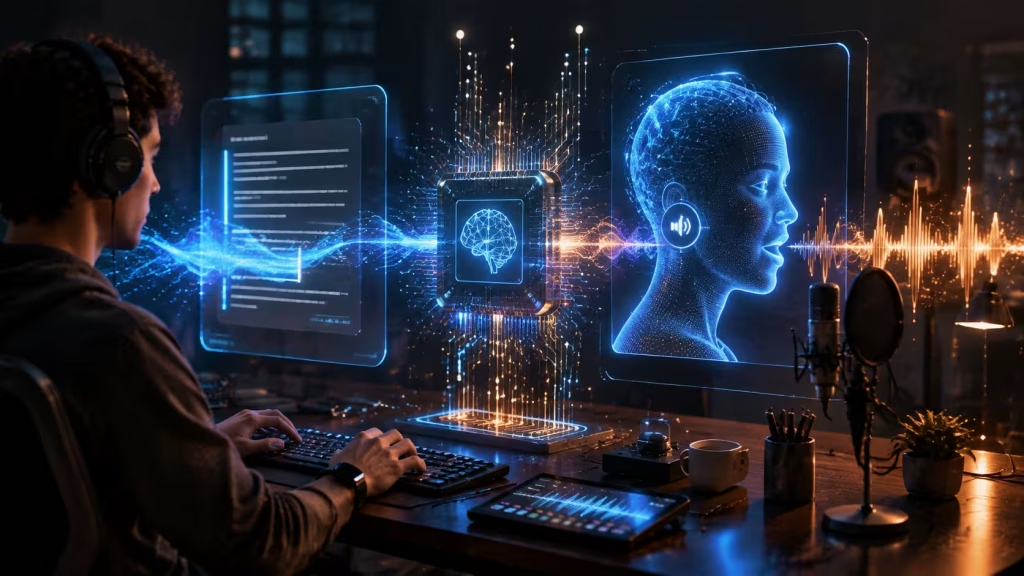
An AI voice generator is a software technology that uses artificial intelligence and text-to-speech (TTS) models to convert written text into human-like speech.
Unlike traditional voice recording, where a person records every line manually, AI voice generators analyze written content and generate spoken audio using trained voice models. These systems can reproduce natural speech patterns, pronunciation, tone, and expressions to create realistic voice experiences.
AI voice generators are used by creators, businesses, educators, and developers to produce different types of audio content without requiring traditional recording equipment.
What Can AI Voice Generators Create?
AI voice generators can create various types of voice content, including:
Narration
Creators can use AI voices for:
- Story narration
- Audiobooks
- Educational content
- Documentaries
- Explainer videos
AI-generated narration helps creators add professional-quality voices to written content.
Character Voices
AI voice technology allows creators to develop unique voices for fictional characters.
Examples include:
- Story characters
- Game personalities
- Virtual companions
- Animated characters
Creators can experiment with different voice styles and personalities to make characters more engaging.
Video Voiceovers
Video creators use AI voice generators for:
- YouTube videos
- Tutorials
- Social media content
- Faceless videos
- Educational videos
AI voiceovers allow creators to produce videos faster while maintaining consistent narration quality.
Podcast Voices
AI voice generators can support podcast production through:
- Episode narration
- Introductions and outros
- Voice enhancements
- Audio storytelling
This helps creators explore new podcast formats and improve production efficiency.
Audio Stories
AI voice technology is creating new opportunities for audio storytelling.
Creators can transform scripts into:
- Fiction stories
- Character-driven narratives
- Audio dramas
- Interactive voice experiences
This connects AI voice generation with the growing demand for voice-first content.
Marketing Content
Brands and marketers use AI voices for:
- Product videos
- Advertisements
- Social media campaigns
- Brand storytelling
AI voice generators help businesses create engaging audio content at scale.
How Does an AI Voice Generator Work?
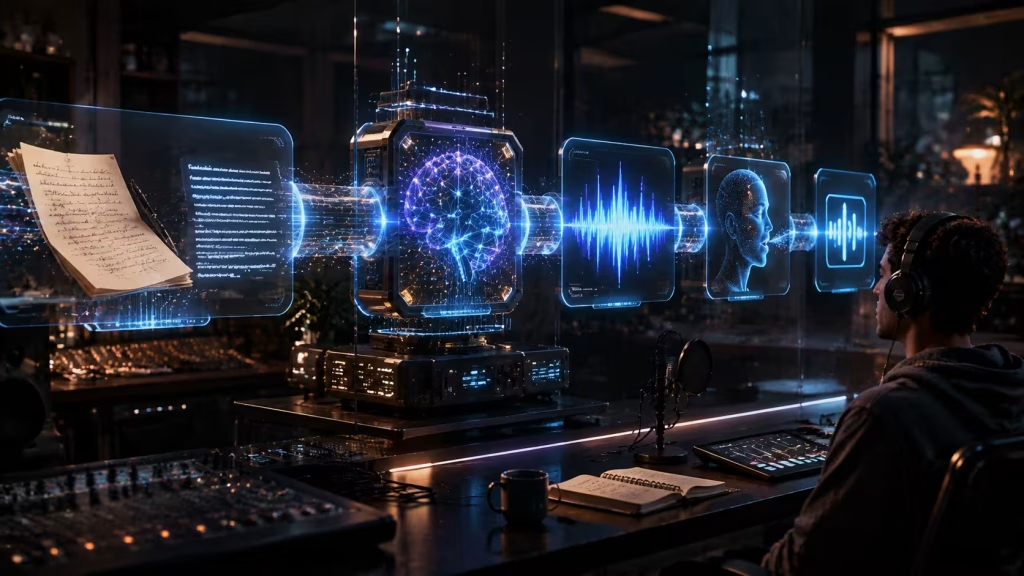
AI voice generators work by combining artificial intelligence, machine learning, and text-to-speech technology to transform written content into realistic speech.
The process involves multiple stages, from providing the text input to generating a final audio file.
Step 1: Input Text
The first step is providing the content that needs to be converted into speech.
Creators can input:
- Scripts
- Articles
- Dialogue
- Written content
- Story drafts
The AI system analyzes the text to understand the words, sentence structure, and intended delivery.
For example, a creator can provide a video script or a fictional story, and the AI voice generator prepares it for voice conversion.
↓
Step 2: AI Voice Processing
After receiving the text, the AI system processes the content using advanced speech models and language technologies.
During this stage, AI analyzes:
Speech Models
AI voice systems use trained speech models to understand how human voices produce sounds and patterns.
These models help generate:
- Natural pronunciation
- Realistic speech flow
- Human-like delivery
Language Processing
AI evaluates the written text to understand:
- Words
- Sentence structure
- Context
- Meaning
This helps the generated voice sound more natural.
Voice Patterns
The system identifies voice characteristics such as:
- Speaking style
- Rhythm
- Tone
- Expression
These elements help create a more realistic audio output.
↓
Step 3: Voice Generation
Once the text is processed, AI generates the spoken voice.
During voice generation, AI creates:
Pronunciation
The system converts written words into accurate spoken sounds.
Tone
AI adjusts the emotional quality of the voice based on the selected style.
Examples:
- Professional
- Friendly
- Dramatic
- Calm
Rhythm
The AI controls speech patterns, including:
- Pauses
- Speaking speed
- Natural flow
Expression
Advanced AI voice systems can add emotional elements such as:
- Excitement
- Curiosity
- Seriousness
- Storytelling emphasis
These features make AI-generated voices sound more natural and engaging.
↓
Step 4: Audio Export
After the voice is generated, creators receive the final audio output.
The exported content can include:
- Voice files
- Narration tracks
- Content-ready audio
Creators can then use the generated audio for:
- Videos
- Podcasts
- Stories
- Presentations
- Social media content
The complete workflow can be summarized as:
Text Input → AI Processing → Voice Generation → Audio Experience
AI voice generators simplify voice production by allowing creators to transform written ideas into professional audio content quickly and efficiently.
Key Features of Modern AI Voice Generators
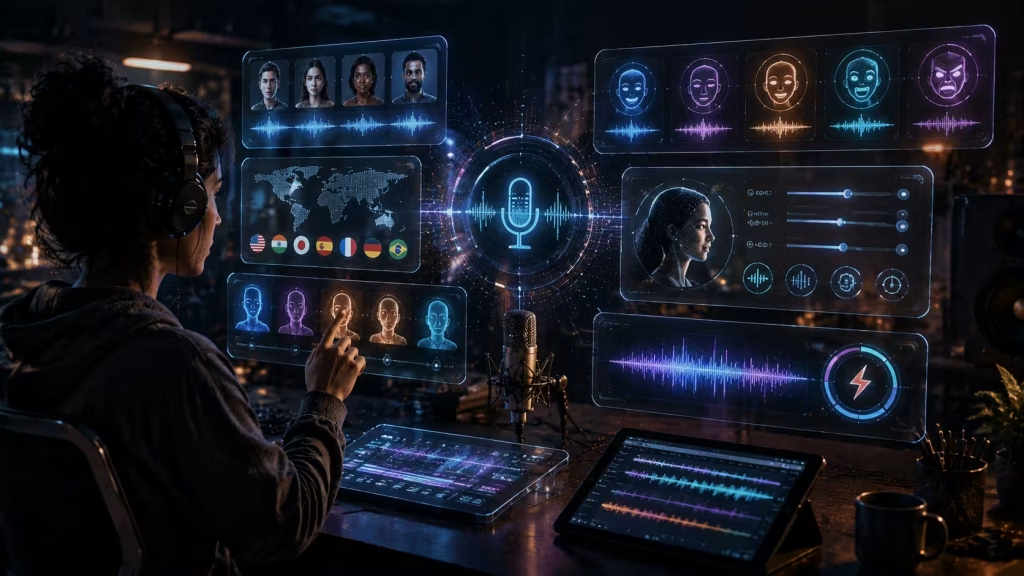
Modern AI voice generators have evolved beyond simple text-to-speech systems. Today’s AI voice technology can create realistic, expressive, and customizable voices that help creators produce professional audio content across different formats.
From YouTube videos and podcasts to audio stories and interactive experiences, AI voice generators provide creators with tools to develop engaging voice content faster and more efficiently.
The most important features of modern AI voice generators include:
Realistic AI Voices
One of the biggest advancements in AI voice technology is the ability to generate natural and human-like speech.
Modern AI voice generators can produce voices with:
- Natural pronunciation
- Human-like delivery
- Improved voice quality
- Realistic speech patterns
Earlier text-to-speech systems often sounded robotic and lacked emotional expression. However, advanced AI voice models can now replicate elements of human speech, including pauses, emphasis, tone variations, and conversational flow.
This makes AI-generated voices suitable for:
- Video narration
- Audiobooks
- Podcasts
- Storytelling
- Character voices
For creators, realistic AI voices help produce professional-quality audio without requiring traditional recording setups.
Multiple Languages
Content is no longer limited to one language or one audience. Modern AI voice generators support multiple languages, helping creators reach global and regional audiences.
Multilingual AI voice technology enables creators to produce content in:
- English
- Hindi
- Tamil
- Telugu
- Malayalam
- Other regional and international languages
This is especially valuable for creators who want to share stories, educational content, and entertainment experiences with diverse audiences.
For example, a creator can develop a story in one language and adapt it for different communities through AI-powered voice generation.
This creates new opportunities for:
- Regional storytelling
- Global content distribution
- Multilingual podcasts
- Localized videos
Voice Styles and Emotions
A voice is more than just spoken words. The tone, emotion, and delivery style influence how audiences experience content.
Modern AI voice generators allow creators to experiment with different voice styles, including:
- Professional narration
- Conversational voices
- Dramatic storytelling
- Character voices
- Educational delivery
AI voice technology can also add emotional expressions such as:
- Excitement
- Curiosity
- Seriousness
- Calmness
- Storytelling emphasis
This is particularly useful for creators developing:
- Fictional characters
- Audio dramas
- Interactive stories
- Narrated content
Emotional voice generation helps make digital content feel more engaging and memorable.
Voice Customization
Modern AI voice generators provide creators with greater control over how a voice sounds and performs.
Creators can customize elements such as:
Speed
Adjusting speaking speed helps match the voice with different content formats.
Examples:
- Faster delivery for short videos
- Slower narration for storytelling
- Balanced pacing for educational content
Pitch
Pitch adjustments allow creators to modify the character and personality of a voice.
This is useful for creating:
- Different characters
- Unique personalities
- Distinct narration styles
Style
Creators can select voice styles based on their content requirements.
Examples:
- Friendly
- Professional
- Dramatic
- Energetic
Delivery
Voice delivery affects how audiences connect with content.
AI voice customization allows creators to create voices that match the emotion and purpose of their stories.
Fast Audio Production
One of the biggest advantages of AI voice generators is faster content production.
Traditional voice recording often requires:
- Finding voice artists
- Scheduling recording sessions
- Setting up equipment
- Editing multiple takes
AI voice generators reduce these production barriers by allowing creators to generate audio quickly from written content.
Creators can:
- Convert scripts into narration
- Test multiple voices
- Update content easily
- Produce more content consistently
This makes AI voice technology especially useful for creators who regularly publish videos, podcasts, stories, and social content.
How Creators Use AI Voice Generators
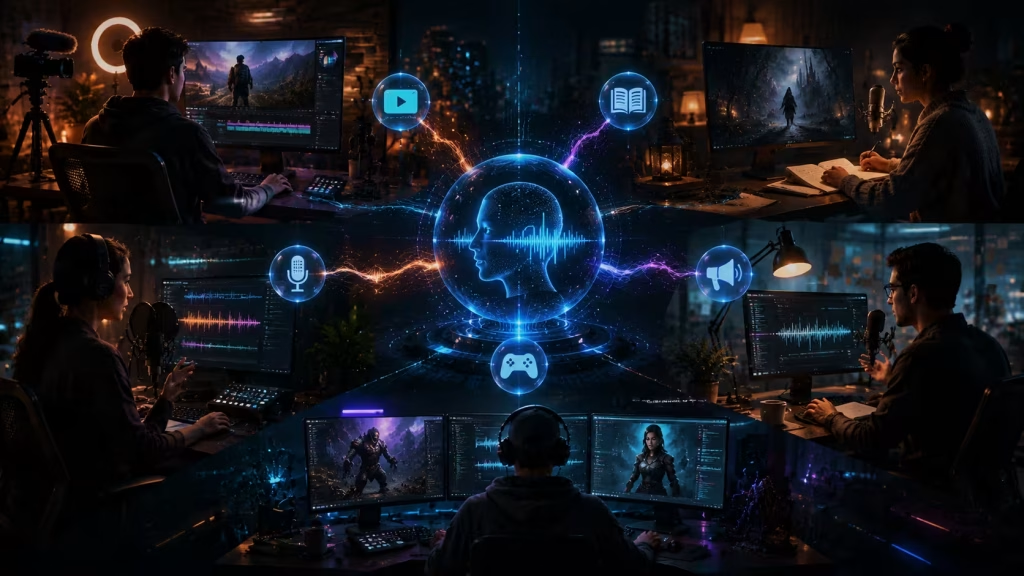
AI voice generators are being adopted across different creator industries because they help transform written ideas into engaging audio experiences.
From YouTube creators to storytellers, marketers, and game developers, AI voices are helping creators produce content faster while exploring new creative possibilities.
YouTube Creators
YouTube creators are one of the largest audiences using AI voice generators.
Many creators use AI voices for:
- Faceless videos
- Explainer videos
- Shorts
- Educational content
- Documentary-style videos
For creators who do not want to record their own voice or need consistent narration, AI voice generators provide a practical solution.
Examples include:
Faceless Videos
AI narration allows creators to build channels without appearing on camera while still delivering engaging content.
Explainer Videos
Creators can use AI voices to explain:
- Concepts
- Tutorials
- Product information
- Educational topics
YouTube Shorts
Short-form content requires quick production. AI voices help creators produce narration faster for short videos.
Educational Content
Teachers and educational creators can use AI narration to make lessons more accessible and engaging.
Story Creators
AI voice generators are creating new opportunities for writers and storytellers who want to transform written ideas into audio experiences.
Creators can use AI voices for:
- Audio stories
- Fiction
- Character narration
- Interactive storytelling
A traditional written story can now become an immersive audio experience through:
Story Idea → Script → AI Voice → Audio Story
AI voice technology allows creators to experiment with:
- Different narrators
- Multiple characters
- Emotional storytelling
- Fictional worlds
For creators interested in developing complete audio experiences, AI voice technology provides a bridge between writing and voice-based storytelling.
Podcast Creators
Podcasters can use AI voice generators to improve production workflows and create consistent audio experiences.
Common use cases include:
- Podcast introductions
- Episode narration
- Voice enhancements
- Additional character voices
AI voices can support creators who need professional narration without recording every segment manually.
For example, a podcast creator can use AI narration for:
- Episode summaries
- Educational segments
- Story transitions
- Supporting audio elements
This allows creators to focus more on content quality and audience engagement.
Marketers
Brands and marketers are increasingly using AI voice generators for digital campaigns and customer communication.
Common applications include:
- Advertisements
- Product videos
- Brand storytelling
- Social media campaigns
AI voices help marketers create consistent audio content across different platforms and languages.
For example, a brand can use AI narration for:
- Promotional videos
- Product demonstrations
- Customer education content
This makes audio production more scalable for marketing teams.
Game Creators
Game developers use AI voice generators to create immersive character experiences.
AI voice technology can support:
- NPC voices
- Character dialogue
- Interactive game experiences
Game creators can develop different voices for:
- Heroes
- Villains
- Supporting characters
- Virtual companions
AI-generated voices help developers experiment with larger character worlds while reducing some traditional voice production limitations.
As games become more interactive, AI voice technology will continue playing an important role in creating dynamic characters and immersive digital worlds.
AI Voice Generator vs Traditional Voice Recording
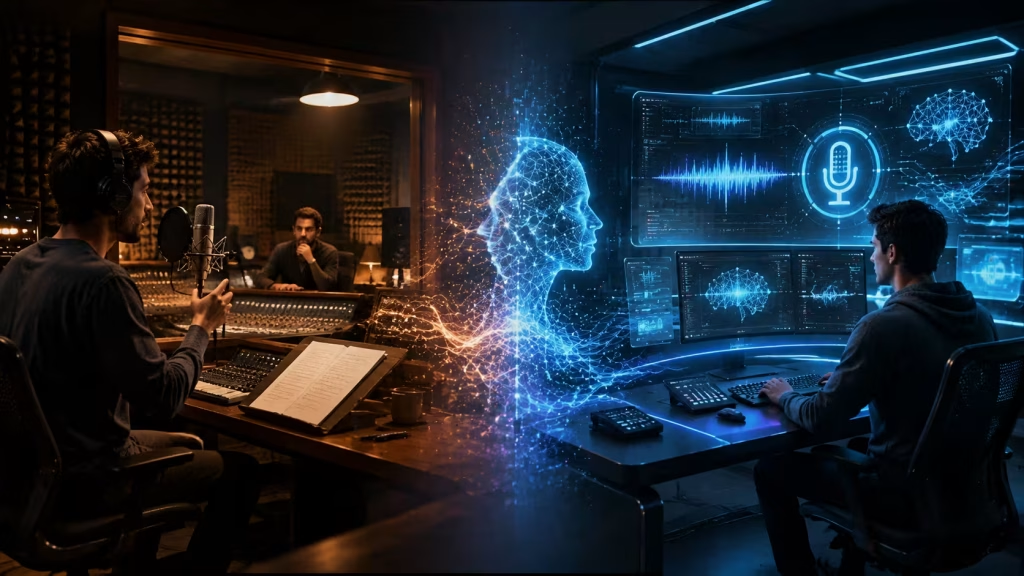
Voice production has traditionally depended on human voice actors, recording studios, and editing workflows. While traditional voice recording continues to create authentic and emotionally rich performances, AI voice generators are introducing a faster and more flexible approach to creating audio content.
AI voice technology allows creators to transform written content into spoken experiences without requiring traditional recording setups. This makes voice production more accessible for independent creators, small teams, and businesses.
However, AI voice generators are not replacing human creativity. Instead, they provide additional tools that help creators produce and experiment with audio content more efficiently.
| Traditional Voice Recording | AI Voice Generator |
| Requires professional voice actors | Uses AI-generated voices |
| Requires recording equipment and studio setup | Works digitally through AI platforms |
| Longer production process | Faster voice generation |
| Higher production cost | Lower production barriers |
| Scheduling and recording limitations | Available anytime for content creation |
| Multiple revisions require additional recording | Easy modifications and quick updates |
Traditional Voice Recording
Traditional voice recording remains an important part of professional storytelling and entertainment.
It involves:
- Voice artists
- Recording equipment
- Studio environments
- Audio engineers
- Editing processes
Human voice actors bring unique qualities such as:
- Emotional interpretation
- Personal expression
- Performance style
- Character depth
This makes traditional voice acting especially valuable for films, premium productions, and stories where human performance is central.
However, traditional recording can also create challenges for creators, including:
- Higher production costs
- Longer timelines
- Limited recording availability
- Difficulty making frequent changes
AI Voice Generators
AI voice generators provide an alternative approach by allowing creators to generate realistic speech directly from written text.
Creators can use AI voices for:
- Video narration
- Audio stories
- Podcasts
- Character voices
- Educational content
- Marketing materials
The biggest advantages include:
Faster Production
Creators can convert scripts into voice content quickly without arranging recording sessions.
Easy Modifications
If a script changes, creators can regenerate the audio without repeating the entire recording process.
Lower Production Barriers
Independent creators can produce professional-quality voice content without investing heavily in recording equipment.
AI Voice Technology Improves Production Efficiency While Giving Creators More Flexibility
The future of voice creation is likely to include both AI-generated voices and human performances.
AI voice technology helps creators:
- Produce content faster
- Experiment with different voices
- Create multilingual experiences
- Scale content production
At the same time, human voices continue to provide emotional depth, authenticity, and creative interpretation.
The best approach is not choosing between AI and human voices, but using the right technology based on the storytelling goal.
Best AI Voice Generator Features for Story Creators
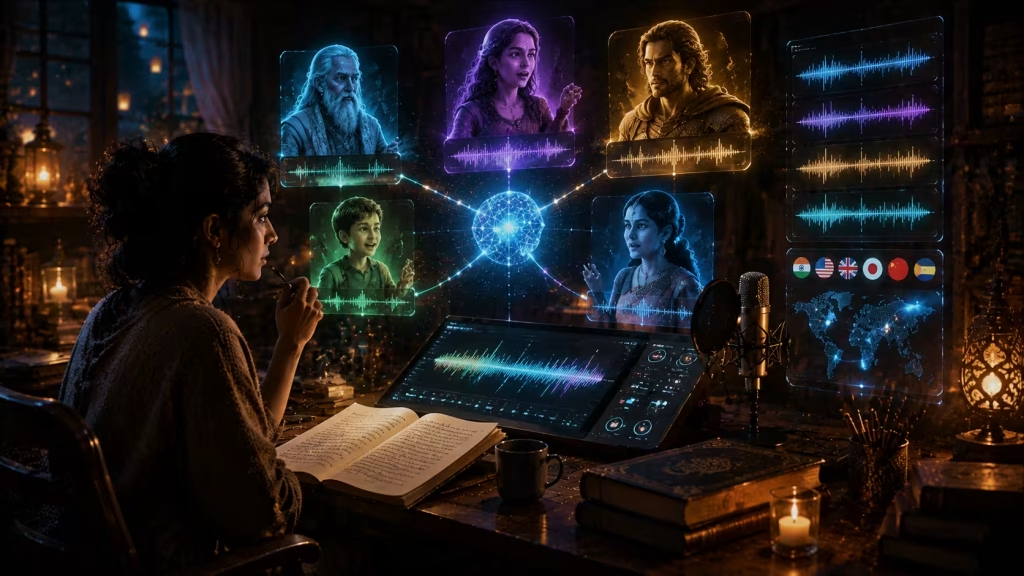
For storytellers, an AI voice generator is more than a text-to-speech tool. The right technology can help transform written ideas into immersive audio experiences by adding narration, character voices, and emotional expression.
Story creators need AI voice features that support creativity, not just voice generation.
Important features include:
Story Narration
Narration plays an important role in audio storytelling. A strong narrator helps audiences understand characters, emotions, and story environments.
AI voice generators help creators produce:
- Fiction narration
- Story explanations
- Documentary-style audio
- Educational storytelling
Creators can convert written stories into engaging audio experiences without requiring a professional narrator for every project.
This allows writers and independent storytellers to experiment with audio formats more easily.
Character Voices
Characters are the foundation of many storytelling formats, including:
- Audio dramas
- Fiction stories
- Games
- Interactive experiences
AI voice technology allows creators to develop different voices for different characters.
Creators can experiment with:
- Unique personalities
- Different speaking styles
- Character expressions
- Multiple voice identities
This makes it easier to build stories with richer character interactions.
Emotional Delivery
A good story depends on emotion. Modern AI voice generators are improving their ability to create voices with different expressions and delivery styles.
Creators can use emotional voice features for:
- Dramatic storytelling
- Suspense
- Comedy
- Educational content
- Character performances
Emotional delivery helps make AI-generated audio feel more natural and engaging.
Multilingual Voices
Storytelling is becoming increasingly global. Creators want to reach audiences across different languages and regions.
AI voice technology supports multilingual content creation by helping creators produce:
- Regional language stories
- Translated narration
- Localized audio experiences
For Indian creators, multilingual AI voices create opportunities to share stories across diverse language communities.
Community Content
Modern storytelling is moving beyond one-way content consumption. Creators are building communities around shared interests, conversations, and experiences.
AI voice technology can support community-driven content through:
- Voice discussions
- Creator stories
- Interactive audio experiences
- Community-based storytelling
This creates new possibilities where creators can use voice not only to publish content but also to build relationships with audiences.
AI Voice Generator for Audio Storytelling
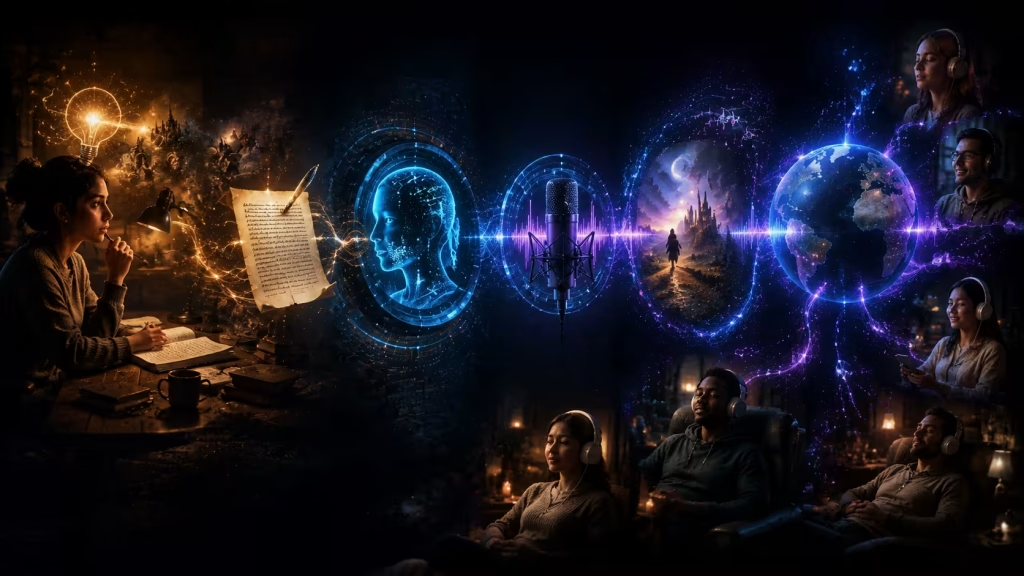
Audio storytelling is one of the most exciting areas where AI voice technology is creating new opportunities for creators.
Traditional audio production often requires voice actors, recording equipment, and editing resources. AI voice generators simplify this process by allowing storytellers to transform ideas into complete audio experiences.
Creators can use AI voices to develop:
- Fiction narratives
- Cultural stories
- Character-driven audio
- Interactive voice experiences
The process can be represented as:
Story Idea
↓
Script
↓
AI Voice
↓
Audio Experience
↓
Audience
Story Idea
Every audio experience begins with a creative concept.
Creators can develop ideas around:
- Fictional worlds
- Personal stories
- Cultural experiences
- Educational topics
- Character journeys
AI tools can support brainstorming and help creators explore different storytelling possibilities.
Script Development
Once the idea is created, the next step is developing the script.
Creators can prepare:
- Narration
- Character dialogue
- Story structure
- Scene descriptions
A strong script remains the foundation of a successful audio story.
AI Voice Generation
The script can then be transformed into spoken audio using AI voice technology.
Creators can select voices based on:
- Narration style
- Character personality
- Emotional tone
- Audience preference
This allows written stories to become immersive listening experiences.
Audio Experience
AI-generated voices can be combined with:
- Sound effects
- Music
- Multiple characters
- Interactive elements
This creates richer audio storytelling formats.
Examples include:
- Fiction episodes
- Character conversations
- Audio dramas
- Voice-based experiences
Audience Connection
The final step of storytelling is connecting with listeners.
Platforms focused on voice experiences allow creators to:
- Share stories
- Discover audiences
- Build communities
- Create conversations
This is where AI voice generation moves beyond production and becomes part of a larger storytelling ecosystem.
The future workflow can be summarized as:
AI Voice Generation → Audio Experience → Audience Connection
Platforms like Arré Voice represent this evolution by helping creators move from creating voice content to sharing stories and building communities around voice-first experiences.
Best AI Voice Generator Tools for Creators
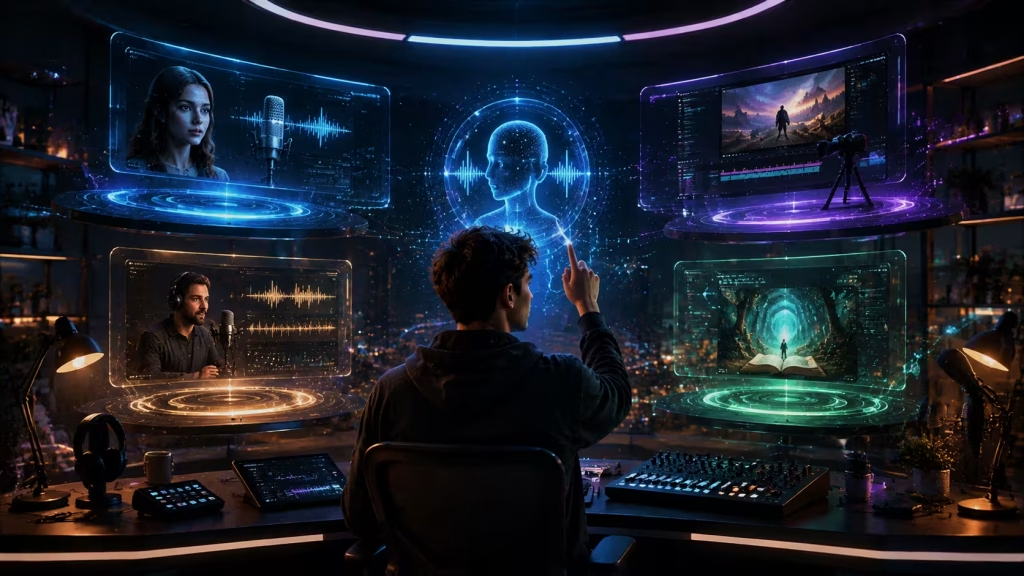
The best AI voice generator depends on what creators want to achieve. Some platforms focus on creating highly realistic voices, while others are designed for video production, narration, or building voice-based storytelling experiences.
Instead of choosing a single tool, creators should evaluate AI voice platforms based on their specific needs:
- Voice quality
- Content format
- Customization options
- Language support
- Audience engagement goals
Different AI voice tools solve different parts of the content creation process.
Best AI Voice Generator for Realistic Voices
ElevenLabs
Best for:
- Natural AI voices
- Professional narration
- Character voices
ElevenLabs is known for generating realistic AI voices designed to closely resemble human speech patterns.
Creators commonly use it for:
- Audiobook narration
- Fictional character voices
- Video narration
- Voice-based content
Its focus is on voice quality, emotional expression, and realistic delivery, making it useful for creators who need high-quality generated voices.
For storytelling projects, realistic voice generation helps create more immersive experiences where narration and characters feel more engaging.
Best AI Voice Generator for Video Creators
Murf / PlayHT
Best for:
- Videos
- Presentations
- Marketing content
Video creators often require consistent narration for different types of content, including:
- YouTube videos
- Explainer videos
- Tutorials
- Product demonstrations
- Social media content
AI voice platforms such as Murf and PlayHT help creators convert scripts into professional voiceovers without traditional recording processes.
These tools are useful for creators who need:
- Fast production
- Multiple voice options
- Consistent narration
- Easy content updates
For video-focused creators, AI voice generators reduce production time while maintaining professional-quality audio.
Best Voice Storytelling Platform
Arré Voice
Best for:
- Audio storytelling
- Voice communities
- Creator discovery
Most AI voice tools focus primarily on generating audio. They help creators transform text into spoken content.
Arré Voice focuses on what happens after creation — helping creators share stories, connect with listeners, and build communities through voice.
The difference can be understood as:
Most AI Voice Tools:
Create audio
Arré Voice:
Create → Share → Connect
Creators can use voice-first experiences to:
- Share audio stories
- Build audiences
- Discover listeners
- Participate in voice communities
The future of voice content is not only about generating voices. It is about creating meaningful connections between creators and audiences.
How to Create Audio Content Using an AI Voice Generator
Creating audio content with an AI voice generator involves transforming an idea into a complete listening experience.
The basic workflow is:
Script → AI Voice → Audio Editing → Publishing
Creators can follow these steps:
Step 1: Write Your Script
The first step is preparing the written content.
Your script can include:
- Story narration
- Video content
- Podcast segments
- Character dialogue
- Educational material
A well-structured script helps AI voice generators produce more natural and engaging audio.
Creators should focus on:
- Clear sentences
- Natural dialogue
- Proper storytelling flow
Step 2: Select an AI Voice
After preparing the script, creators can choose a suitable AI voice.
Selection depends on:
- Content type
- Audience
- Tone
- Story style
Examples:
- Professional voice for educational videos
- Expressive voice for storytelling
- Character voice for fiction
- Conversational voice for podcasts
Choosing the right voice helps create a stronger connection with listeners.
Step 3: Adjust Voice Settings
Modern AI voice generators provide customization options to improve the final output.
Creators can adjust:
- Speaking speed
- Pitch
- Tone
- Voice style
- Emotional delivery
These settings allow creators to match the voice with the purpose of the content.
For example:
A dramatic story may require emotional delivery, while an educational video may need a clear and professional tone.
Step 4: Generate Narration
Once the voice settings are finalized, AI generates the narration.
The output can be used for:
- Videos
- Podcasts
- Audio stories
- Presentations
- Social media content
Creators can review the generated audio and make adjustments if required.
Step 5: Edit Audio
The generated voice can be enhanced with additional production elements.
Creators can add:
- Background music
- Sound effects
- Multiple voice tracks
- Transitions
This helps transform generated speech into a complete audio experience.
Step 6: Publish Content
The final audio can be published across different platforms.
Examples:
- YouTube
- Podcasts
- Social platforms
- Voice communities
- Digital storytelling platforms
AI voice generation helps creators move from an idea to a published audio experience faster.
The Future of AI Voice Generators
AI voice technology is moving beyond simple narration toward more interactive and personalized experiences.
Future developments will include:
Personalized Voices
AI voice generators will become more adaptive, allowing creators to develop voices that match specific audiences, characters, and storytelling styles.
Personalized voices can support:
- Custom narration
- Unique characters
- Personalized learning experiences
AI Characters
AI-generated voices will play an important role in creating digital personalities.
Future AI characters may include:
- Virtual companions
- Game characters
- Story personalities
- Interactive assistants
These characters will create more engaging storytelling experiences.
Interactive Storytelling
Future stories will become more dynamic, allowing audiences to interact with characters and narratives.
AI voice technology can support:
- Conversational stories
- Interactive audio experiences
- Audience-driven narratives
Regional Language Voices
Language diversity will become a major opportunity for AI voice technology.
AI voices can help creators produce content in:
- Indian regional languages
- International languages
- Local storytelling formats
This can help more creators share stories with wider communities.
Voice Communities
The future of voice content is not only about creating audio but also building connections.
Voice communities will allow creators and audiences to:
- Share stories
- Discover content
- Participate in conversations
- Build relationships
How Arré Voice Fits Into the AI Voice Ecosystem
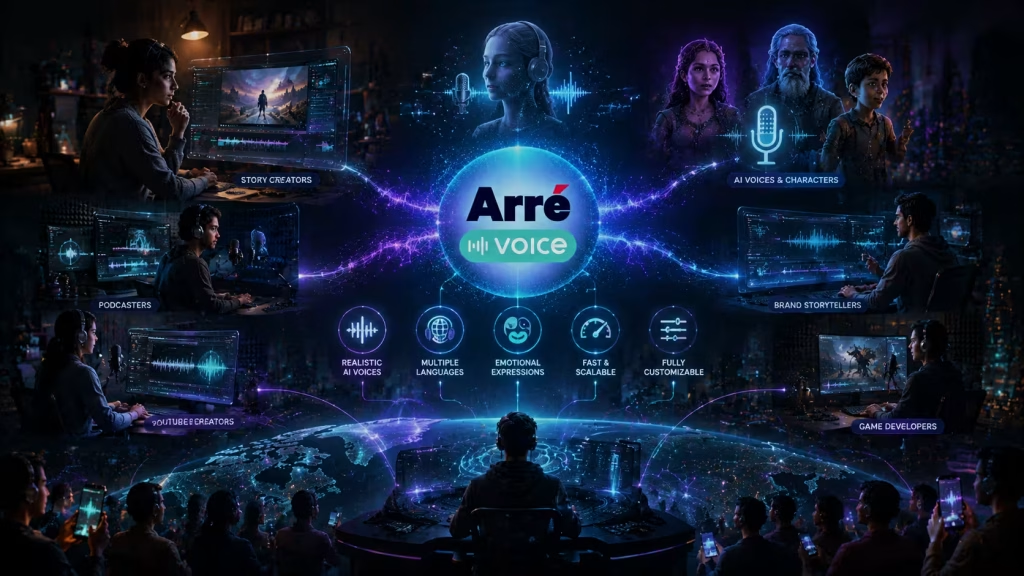
Most AI voice generators solve one important problem:
Creation
They help creators generate voices, narration, and audio content.
However, storytelling does not end after creation. Content becomes meaningful when it reaches audiences and creates connections.
Arré Voice focuses on the complete voice storytelling journey:
AI Voice Generation → Arré Voice → Audience Connection
From Creation to Community
Creators can use AI voice technology to develop:
- Narration
- Character voices
- Audio experiences
Arré Voice helps creators take the next step by enabling them to:
- Create voice content
- Share stories
- Discover listeners
- Build communities
Creating Voice-First Experiences
Voice creates a more personal relationship between creators and audiences.
Through voice-first experiences, creators can move beyond traditional content publishing and build communities around:
- Stories
- Conversations
- Ideas
- Shared interests
The Future of Voice Creation
AI voice generators are making audio creation faster and more accessible. But the next evolution of voice content will come from combining technology with human connection.
The journey is:
AI Voice Generation → Voice Storytelling → Audience Community
Arré Voice represents this shift by helping creators not only create audio content but also connect through voice.
Frequently Asked Questions
1. What can an AI voice generator be used for?
An AI voice generator can be used to create narration, video voiceovers, podcasts, audio stories, character voices, educational content, and marketing audio. Creators use AI voice technology to convert scripts and written ideas into realistic speech, helping them produce voice-based content faster without traditional recording equipment or professional studio setups.
2. How do creators make audio content using AI voice generators?
Creators typically start by writing a script, selecting an AI-generated voice, adjusting voice settings such as tone and delivery, and generating the final narration. The audio can then be edited with music, sound effects, or multiple voice layers before publishing. This workflow helps writers, video creators, podcasters, and storytellers transform ideas into complete audio experiences.
3. Can AI voice generators create different character voices?
Yes, AI voice generators can help creators develop different character voices for fiction, games, animations, and interactive storytelling. By adjusting voice style, tone, emotion, and delivery, creators can build unique personalities for characters. This allows writers and developers to experiment with fictional worlds and create richer voice-based experiences.
4. How are AI voice generators changing storytelling?
AI voice generators are changing storytelling by making voice production more accessible, faster, and flexible. Creators can transform written stories into narrated experiences, experiment with multiple voices, create multilingual content, and develop interactive audio formats. AI supports the creative process by reducing production barriers while allowing storytellers to focus on ideas, characters, and audience connection.
5. What is the difference between AI voice generation and traditional voice recording?
Traditional voice recording requires voice actors, recording equipment, studio environments, and editing workflows. AI voice generation allows creators to produce spoken audio digitally from written content. While AI improves speed, accessibility, and experimentation, human voice actors continue to provide emotional depth, personal expression, and performance qualities that remain important for many professional storytelling projects.
6. Can AI voice generators create voices in Indian languages?
Yes, many AI voice technologies support multiple languages, including Indian languages such as Hindi, Tamil, Telugu, and Malayalam. Multilingual AI voices allow creators to produce regional stories, localized videos, educational content, and audio experiences for diverse audiences. This creates new opportunities for creators who want to share stories across different language communities.
7. Are AI voice generators useful for YouTube and video creators?
AI voice generators are widely used by YouTube and video creators for narration, explainer videos, tutorials, documentaries, and faceless content. They help creators produce consistent voiceovers without recording every segment manually. AI narration can also support faster content production, multilingual videos, and scalable workflows for creators publishing content regularly.
8. What should creators look for in an AI voice generator?
Creators should evaluate AI voice generators based on voice quality, language support, customization options, emotional expression, commercial usage rights, and content workflow. The right tool depends on the creator’s goal, whether it is producing videos, podcasts, audio stories, character voices, or community-based voice experiences. Features like realistic delivery and flexible voice styles are important for storytelling.