Why AI Voice Avatars Are Changing Digital Communication

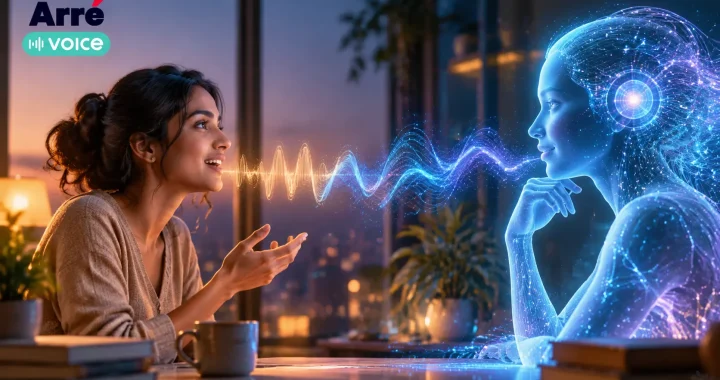
AI voice avatars are AI-powered digital characters that use artificial intelligence, voice technology, and conversational systems to communicate with people through realistic and personalised speech experiences. Unlike static digital avatars, they can combine a visual or digital identity with an AI-generated voice, conversational intelligence, and responsive interactions.
As digital communication moves beyond keyboards and screens, voice is becoming an increasingly important interface. People can communicate more naturally through speech, while AI systems can respond using tone, pacing, and expressive voice characteristics that make interactions feel more engaging.
AI voice avatars are emerging across entertainment, customer experiences, education, digital communities, and storytelling. For businesses, they can provide interactive brand or service experiences. For creators, they can become characters, narrators, hosts, or virtual personalities. In entertainment, they can help transform passive content into more interactive experiences.
The evolution from text-based assistants to voice-enabled digital personalities is also changing what users expect from AI. Instead of simply receiving information from a system, people can increasingly interact with digital characters that have recognizable voices, personalities, and conversational behaviours.
AI voice avatars are AI-powered digital characters that combine artificial intelligence, voice generation, conversational technology, and digital identity to communicate through spoken interactions. They can understand user input, generate responses, and deliver those responses through realistic synthetic voices. This enables more personalised and engaging experiences across communication, entertainment, customer service, education, and storytelling.
The growing interest in voice-first technology reflects a broader shift toward more human-like digital interactions. Voice can communicate more than words alone: changes in tone, pacing, emphasis, and expression can influence how a message is perceived.
For businesses and creators, this creates new possibilities. A digital character can have a consistent personality and voice while adapting its responses to different users or situations. In storytelling, the same technology can make characters more interactive and allow audiences to experience narratives through voice rather than simply reading or listening passively.
What Are AI Voice Avatars?
1.1 Understanding AI Voice Avatars and Their Meaning
An AI voice avatar is a digital character or identity that uses artificial intelligence and voice technology to communicate with users. It can combine a visual representation, an AI-generated voice, language understanding, and conversational capabilities to create an interactive digital personality.
Traditional digital avatars are often visual representations of a person or character. They may appear in games, virtual environments, websites, or applications, but they do not necessarily communicate independently. An AI voice avatar adds an intelligent voice layer, allowing the character to speak, respond, and participate in conversations.
Voice also gives digital characters additional personality and emotional depth. The way something is spoken can influence whether a character feels friendly, professional, dramatic, playful, calm, or authoritative. This makes voice an important part of designing a believable digital identity.
AI voice avatars typically combine several technologies and capabilities:
- Digital identity: A recognizable character, persona, or virtual representation.
- AI-generated voice: Synthetic speech that allows the avatar to communicate verbally.
- Natural language understanding: Technology that helps interpret what users say or ask.
- Conversational intelligence: AI systems that generate relevant responses and maintain conversational context.
- Personalised interactions: Responses or experiences adapted to user preferences, context, or previous interactions.
This places AI voice avatars at the intersection of AI avatar technology, voice AI, and conversational technology. The avatar provides the identity, voice provides the communication layer, and artificial intelligence provides the ability to understand and respond.
1.2 How AI Voice Avatars Work
AI voice avatars rely on several technologies working together rather than a single AI system. A typical interaction can involve understanding a user’s spoken input, generating an appropriate response, converting that response into speech, and presenting it through a digital character.
The process can be simplified as:
User Voice → Speech Recognition → AI Understanding → Response Generation → Voice Synthesis → Avatar Interaction
Artificial Intelligence and Language Models
The AI system first needs to understand what the user is saying and determine the intent behind the request. Language models can process the input, consider the surrounding conversational context, and generate an appropriate response.
For example, if a user asks an AI character a question and then asks a follow-up question using words such as “why?” or “tell me more,” the system needs to connect the second request with the earlier conversation. This contextual capability is what allows an AI voice avatar to move beyond isolated commands.
Language models can also help shape responses according to a defined character or communication style. A virtual tutor, fictional character, customer-service representative, and entertainment personality may all require different conversational behaviours.
Voice Generation Technology
Once the AI generates a response, text-to-speech technology converts that response into spoken audio. Modern voice generation systems can produce speech with natural pronunciation, pacing, pauses, and expressive characteristics.
Voice generation can also be designed around a particular identity. Factors such as speaking style, tone, vocal characteristics, and emotional expression can help create a consistent voice for an AI character.
The quality of this voice layer is important because an intelligent response can still feel unnatural if the speech sounds overly robotic or lacks appropriate expression.
Avatar and Visual Representation
The final layer is the avatar itself. Depending on the application, an AI voice avatar may be represented as a 2D character, 3D digital human, virtual personality, animated figure, or another digital identity.
When voice, conversational intelligence, and visual representation work together, the result can become an interactive digital character rather than simply a voice interface.
1.3 Difference Between AI Voice Avatars, Voice Assistants, and Chatbots
AI voice avatars, voice assistants, and chatbots all use artificial intelligence to interact with users, but they are designed around different interaction models.
| AI Voice Avatars | Voice Assistants | Chatbots |
| Have a digital identity and personality | Primarily focus on voice commands and assistance | Primarily use text-based interactions |
| Can support emotional and character-driven conversations | Commonly perform tasks or provide information | Commonly answer questions or support users |
| Designed for immersive and interactive experiences | Designed for practical everyday tasks | Often used for customer support and information |
| Can combine voice, personality, and visual representation | Usually centred around a voice interface | Usually centred around a text interface |
There is some overlap between these technologies. A voice assistant can use conversational AI, and a chatbot can use generative AI. An AI voice avatar can also perform many of the same functions.
The key difference is the role of digital identity and personality. AI voice avatars are designed not only to provide an answer but also to represent a character, personality, brand, or virtual identity. This makes them particularly relevant to entertainment, storytelling, education, customer experiences, and other applications where engagement matters.
The Evolution of AI Voice Avatar Technology
2.1 From Digital Characters to Intelligent Voice Personalities
Digital characters have existed in many forms, from animated characters and virtual representations to game characters and computer-generated personalities. Early digital characters were generally designed to display predefined behaviours rather than hold flexible conversations.
The development of virtual assistants introduced another stage in this evolution. Users could interact with technology using spoken commands, but many early systems were primarily designed around specific tasks and predefined interaction patterns.
AI chat systems expanded the possibilities by allowing users to communicate with software using natural language. Advances in machine learning, natural language processing, generative AI, and voice synthesis have now brought these capabilities together in increasingly sophisticated voice-based experiences.
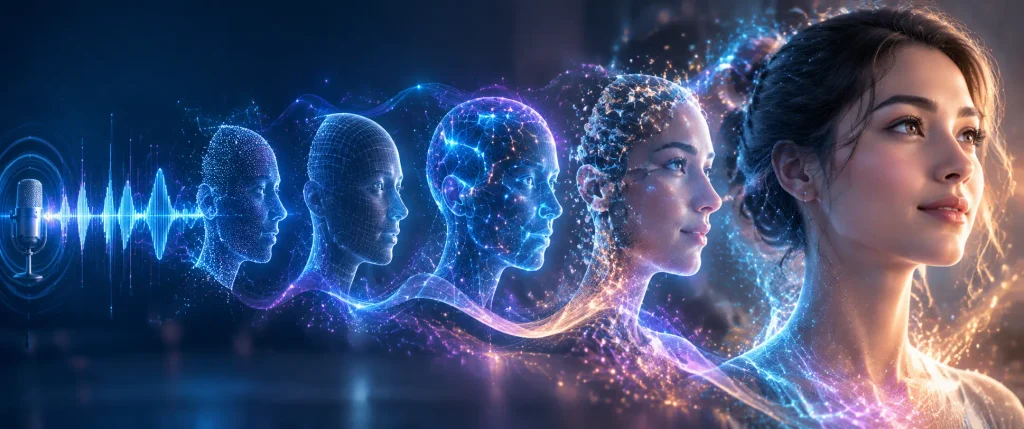
This progression can be broadly understood as:
Digital Characters → Virtual Assistants → AI Chat Systems → Voice-Enabled Digital Personalities
Modern AI voice avatars build on these developments by combining conversational intelligence with a recognizable digital identity and voice.
As AI models become better at understanding language and generating responses, and voice synthesis becomes more natural, digital characters can support interactions that feel less like issuing commands and more like communicating with a virtual personality.
2.2 Why Voice Makes AI Avatars More Human
Voice adds an important layer to digital communication because spoken language contains information beyond the literal words being used. Tone, pacing, emphasis, pauses, and vocal expression can influence how people interpret a message.
For AI avatars, voice can therefore contribute to:
- Emotional connection: Expressive speech can make interactions feel more engaging.
- Personality: A consistent vocal style can reinforce a character’s identity.
- Trust and familiarity: A recognizable voice can create continuity across interactions.
- Natural communication: Speaking and listening can feel more intuitive than typing in certain situations.
Human voices can also communicate aspects of identity and culture. Accent, language, pronunciation, rhythm, and speaking style can contribute to how a person or character is perceived.
This makes voice especially valuable for AI digital humans and virtual characters. Instead of interacting with an abstract software interface, users can experience an identifiable voice and personality.
However, creating a human-like voice experience is not simply about making synthetic speech sound realistic. The voice also needs to fit the character, context, audience, and purpose of the interaction.
2.3 The Rise of Personalised AI Experiences
Personalisation is becoming an important part of modern digital experiences. Instead of providing exactly the same interaction to every user, AI systems can adapt responses based on available context, preferences, conversation history, and the purpose of the interaction.
AI voice avatars can use personalisation to adapt aspects of an experience such as:
- User preferences
- Conversation history
- Response style
- Communication patterns
- Character behaviour
- Content recommendations
For example, an educational AI avatar might adjust explanations according to a learner’s level, while an entertainment character could adapt its conversations based on the direction chosen by the audience.
Personalisation can also make a digital personality feel more consistent. When an AI avatar maintains a defined communication style while adapting its responses to context, the interaction can become more relevant and engaging.
This shift is part of a broader movement toward personalised AI avatars and voice-enabled digital experiences, where technology responds not only to what users ask but also to the context in which they interact.
Key Features of AI Voice Avatars
3.1 Realistic AI Voice Generation
Realistic AI voice generation is one of the defining components of an AI voice avatar. Text-to-speech technology converts AI-generated responses into spoken language, while modern voice systems can incorporate natural pronunciation, speech rhythm, pauses, and expressive delivery.
Key characteristics can include:
- Natural speech patterns
- Human-like pronunciation
- Different emotional expressions
- Adjustable speaking styles
- Consistent character voices
The goal is not simply to produce understandable speech. For many applications, the voice needs to match the personality and context of the avatar.
A virtual teacher may require a clear and encouraging delivery, while a fictional character may need a distinctive tone and expressive performance. A brand avatar may instead require a consistent voice aligned with its identity.
Advances in AI voice technology are making it possible to create increasingly natural speech experiences, giving digital characters a stronger sense of identity and making voice a central part of the interaction.
3.2 Conversational Intelligence
An AI voice avatar becomes more interactive when it can understand questions, maintain context, and respond naturally rather than simply playing predefined audio.
Conversational intelligence allows an avatar to:
- Understand user questions and requests
- Maintain context across an interaction
- Generate relevant responses
- Adapt the conversation based on user input
- Support follow-up questions
This capability connects AI voice avatars closely with conversational voice AI, where speech recognition, natural language understanding, AI reasoning, and voice generation work together to support ongoing conversations.
The combination of conversational intelligence and a recognizable voice identity allows an AI avatar to function as more than a static digital character. It can become an interactive participant in an experience.
3.3 Personality and Character Development
Personality is another important feature of AI voice avatars. A digital character can be designed with specific traits, communication patterns, values, and behavioural characteristics that influence how it interacts with users.
An AI voice avatar may have:
- A distinct personality
- Defined character traits
- A recognizable communication style
- Consistent emotional expressions
- A specific narrative or character background
For storytelling, this can be particularly valuable. A character’s voice and personality can work together to make conversations and narratives more memorable.
Personality also helps differentiate AI avatars. Two systems may use similar underlying AI technologies but create very different experiences because their voices, behaviours, and character identities are designed differently.
The result is a shift from interacting with an anonymous AI system toward interacting with a recognisable digital personality.
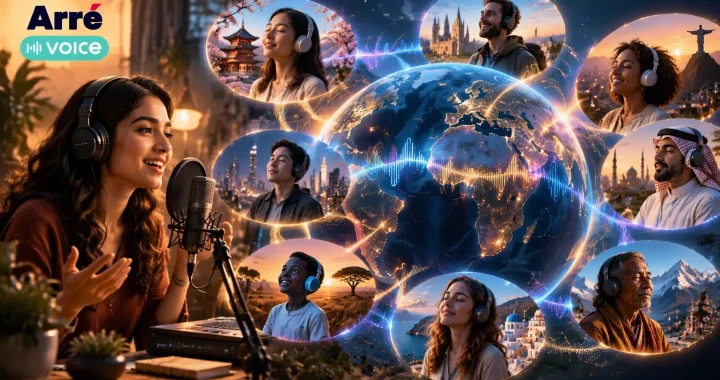
3.4 Multilingual and Regional Voice Capabilities
AI voice avatars can also support communication across multiple languages and regional contexts. Multilingual voice capabilities can make digital experiences more accessible to audiences who prefer to communicate in different languages.
Important capabilities can include:
- Multiple language support
- Regional accents and pronunciation
- Cultural adaptation
- Localised voice experiences
- Multilingual conversations
Language localisation is about more than translating words. A successful voice experience may also need to consider pronunciation, cultural context, expressions, speaking styles, and regional expectations.
For creators and businesses reaching diverse audiences, this can help create AI avatars that feel more relevant to different communities rather than relying on a single standardised voice experience.
As multilingual AI and voice localisation technologies develop, AI voice avatars can become increasingly useful for global communication, regional storytelling, education, entertainment, and customer experiences.
Applications and Use Cases of AI Voice Avatars

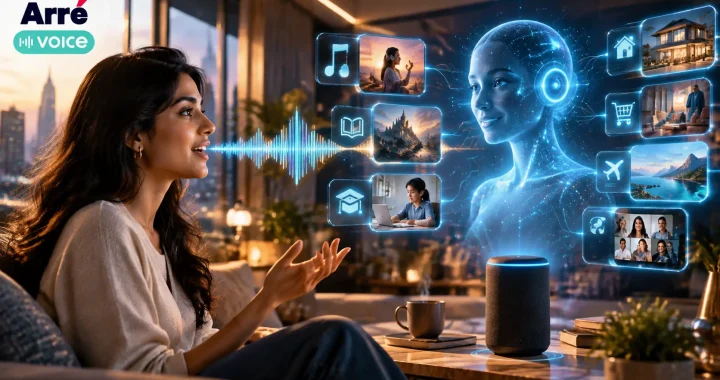
AI voice avatars can be used wherever communication, personality, and interactive voice experiences come together. Their ability to combine AI-generated speech with digital identities makes them useful across entertainment, customer experience, education, creator platforms, and digital communities.
4.1 AI Voice Avatars in Entertainment and Storytelling
Entertainment is one of the most natural applications for AI voice avatars because voice can give digital characters a recognizable identity and personality.
AI voice avatars can be used as:
- Interactive fictional characters
- Audio story characters
- Virtual storytellers
- Digital performers
- Conversational entertainment personalities
Instead of simply listening to a predefined recording, audiences can potentially interact with a character, ask questions, influence conversations, or explore different parts of a story through voice.
For example, a fictional character could respond to audience questions while maintaining a defined personality and speaking style. A virtual storyteller could introduce a story, explain characters, or guide listeners through different narrative experiences.
This creates a shift from passive entertainment to interactive entertainment, where the audience can become part of the experience.
AI voice avatars can also help bring fictional or historical-inspired characters to life through distinctive voices and conversational behaviours. When combined with strong writing and character development, voice technology can make digital characters feel more present and memorable.
Audio storytelling is another important area where these technologies can contribute. Voice avatars can become narrators, characters, or interactive participants within audio experiences, expanding how audiences discover and engage with stories.
→ Audio Storytelling Platforms
4.2 AI Voice Avatars in Customer Experience
Businesses can use AI voice avatars to create more interactive customer experiences. Instead of communicating only through text interfaces or conventional automated phone systems, organisations can introduce virtual representatives with a defined voice and digital identity.
Common applications include:
- Virtual customer representatives
- Brand assistants
- Product or service guides
- Personalised support experiences
- Voice-based information services
An AI voice avatar could, for example, answer common questions, guide customers through a service, explain product information, or help users navigate a digital experience.
One potential advantage is faster communication. Users can speak naturally instead of typing questions, while AI systems can process requests and provide responses in real time.
Other potential benefits include:
- 24/7 availability: AI systems can provide assistance outside traditional service hours.
- Faster communication: Voice can allow users to communicate without typing or navigating multiple screens.
- Consistent experiences: A defined avatar and voice can provide a recognizable interaction style.
- Human-like interaction: Expressive voice and conversational responses can make automated experiences feel more natural.
However, AI voice avatars work best when they complement rather than unnecessarily replace human support. Complex, sensitive, or high-stakes situations may still require human representatives.
4.3 AI Voice Avatars in Education and Learning
Education is another area where voice-enabled AI avatars can create interactive experiences. A virtual character can act as a tutor, language-learning assistant, narrator, or conversational learning companion.
Potential applications include:
- Virtual tutors
- Language learning assistants
- Interactive learning characters
- Voice-based practice sessions
- Educational storytelling
Voice can make learning more interactive because students can ask questions and receive spoken responses rather than relying entirely on written instructions.
For language learning, for example, an AI voice avatar could provide conversational practice, demonstrate pronunciation, and respond to spoken questions. A virtual tutor could also adapt explanations to the learner’s level and encourage continued interaction.
Interactive characters can be especially useful for younger learners or educational storytelling. A lesson can be presented through a character that asks questions, explains concepts, and responds to the learner’s input.
The value of these experiences depends on the quality of the educational content and the accuracy of the AI. Voice technology can improve engagement, but it should support sound teaching practices rather than replace them.
4.4 AI Voice Avatars for Creators and Digital Communities
Creators can use AI voice avatars to experiment with new forms of audience engagement. Instead of treating voice only as a narration tool, creators can develop recurring digital personalities that interact with audiences across different experiences.
Potential uses include:
- Virtual hosts
- Creator assistants
- Interactive community experiences
- Voice-based personalities
- Character-led content
A creator could develop a virtual host with a consistent voice and personality for introducing content, guiding an audio experience, or interacting with a community.
AI voice avatars can also support audience participation. A character could respond to questions, participate in discussions, or become part of an interactive storytelling format.
For creator communities, this opens up possibilities beyond conventional posts and recordings. Voice-based personalities can become another layer through which creators build recognition, develop characters, and engage audiences.
The most effective creator experiences are likely to combine AI capabilities with human creative direction. The creator defines the character, story, tone, and purpose, while AI can help deliver a more interactive voice experience.
AI Voice Avatars in Storytelling and Digital Entertainment
Storytelling is one of the areas where AI voice avatars can have a particularly distinctive impact. Voice already plays a central role in narration, audio drama, podcasts, and spoken storytelling. AI voice avatars add another possibility: characters that can potentially respond and interact rather than simply deliver predetermined dialogue.
5.1 Creating Characters Through AI Voice Technology
AI voice technology allows creators to develop characters with distinctive vocal identities. Instead of treating voice as a final production layer, creators can make it part of the character-development process from the beginning.
A character can be designed around:
- A unique voice
- Specific personality traits
- Emotional characteristics
- A particular communication style
- A defined narrative background
This can be applied to many types of storytelling.
For example, creators could develop:
- Mythological-inspired characters with distinctive narrative personalities
- Fictional personalities designed for interactive stories
- Story narrators with consistent voices and styles
- Virtual performers that appear across multiple audio experiences
The voice can reinforce the character’s identity. A calm and thoughtful voice may create a very different impression from an energetic or dramatic one, even when the written dialogue is identical.
When conversational AI is added, the character can potentially move beyond scripted narration. Instead of only speaking predetermined lines, the character can respond to audience input while maintaining its established personality and narrative context.
5.2 How AI Voice Avatars Enhance Audio Storytelling
Audio storytelling depends heavily on the listener’s imagination. Unlike visual media, spoken stories can leave space for audiences to construct their own mental images, while voice communicates character, emotion, and atmosphere.
AI voice avatars can contribute to this experience by strengthening:
- Character depth: Distinctive voices can make characters easier to recognise and remember.
- Emotional storytelling: Vocal expression can reinforce the mood and emotional direction of a scene.
- Immersion: Consistent voices and personalities can make fictional worlds feel more cohesive.
- Audience engagement: Interactive characters can give listeners more opportunities to participate.
A narrator can establish the world of a story, while individual AI voice characters can give different personalities their own identities. This can create a richer audio environment where the audience is not only listening to a narrative but also experiencing distinct voices within it.
The technology can also support interactive storytelling formats. A listener might ask a character a question, explore additional story information, or influence the direction of an experience.
The important distinction is that technology alone does not create a compelling story. Writing, character development, voice performance, sound design, and creative direction remain essential. AI voice avatars can expand the available storytelling tools, but the quality of the experience still depends on how those tools are used.
5.3 The Future of Interactive Storytelling With AI Characters
The future of AI-powered storytelling could move further from fixed narratives toward experiences that respond to individual audiences.
Possible developments include:
- Conversational characters: Audiences can speak directly with fictional personalities.
- Choose-your-own-story experiences: User decisions influence how a narrative develops.
- Personalised narratives: Stories can adapt elements of the experience to individual preferences or interactions.
- Real-time character interactions: AI characters can respond dynamically during an experience.
This could create a new category of interactive entertainment where every listener has some ability to shape the experience.
Imagine entering an audio story and speaking with a character before deciding what happens next. Instead of following exactly the same sequence as every other listener, the experience could respond to questions, choices, and conversations.
For creators, this represents an opportunity to rethink the relationship between storyteller and audience. The creator can establish the world, characters, rules, and narrative direction, while AI can provide a layer of real-time interaction.
As conversational AI, voice generation, and AI character technology continue to develop, voice avatars could become an important part of interactive storytelling—bridging the gap between listening to a story and participating in one.
How AI Voice Avatars Are Changing Human-Computer Interaction
The way people interact with computers has changed significantly over time. Early digital experiences relied heavily on keyboards and text commands, followed by graphical interfaces, touchscreens, and mobile applications. AI voice avatars represent another step in this evolution by making spoken interaction a more central part of the digital experience.
Instead of always clicking through menus or typing instructions, users can communicate with digital systems using natural speech. When voice is combined with conversational intelligence and a digital identity, the interaction can become more personal and engaging.
6.1 Moving From Clicking Interfaces to Talking Interfaces
For decades, digital interaction has largely been built around visual interfaces. Users click buttons, select menus, type queries, and navigate screens to complete tasks.
Touch interfaces made these interactions more direct, particularly on smartphones and tablets. Voice-first technology introduces another model: talking to technology instead of primarily clicking or typing into it.
This progression can be broadly understood as:
Keyboard → Touch → Voice → Conversational Voice Experiences
Voice-first interaction can reduce the number of steps required to communicate with a system. A user can simply speak a request instead of searching through menus or typing a detailed instruction.
AI voice avatars add another dimension to this experience. Rather than interacting with an anonymous voice interface, users can communicate with a digital personality that has a recognizable voice, identity, and conversational style.
This does not mean visual and touch interfaces are disappearing. Instead, voice is becoming another important interaction layer that can work alongside screens, applications, and traditional interfaces.
6.2 Creating More Emotional Digital Experiences
Digital interfaces traditionally communicate information through text, images, buttons, and visual design. Voice adds another layer by allowing information to be delivered through speech, tone, pacing, and expression.
AI voice avatars can use these characteristics to create experiences that feel more engaging and personal.
They can potentially improve:
- Engagement: Conversational interactions can encourage users to actively participate rather than simply consume information.
- Accessibility: Voice can provide an alternative interaction method for people who find typing, reading, or navigating visual interfaces difficult.
- Connection: A consistent voice and personality can make a digital character feel more recognizable.
- User experience: Speaking and listening can make certain interactions more natural and less dependent on traditional screen-based navigation.
For entertainment and storytelling, the emotional dimension of voice can be particularly important. A character’s tone and delivery can help communicate excitement, tension, humour, empathy, or calmness.
However, creating emotional digital experiences requires more than realistic speech. The AI’s responses, character personality, conversational context, and overall experience need to work together. Voice is one part of a larger interaction design.
6.3 Building Digital Identities Through Voice
Voice can become an important part of digital identity. Just as visual design can communicate who a brand or creator is, a consistent voice can establish recognition and personality.
AI voice avatars can use voice to represent:
- Personality: A distinctive voice can reinforce the traits of a digital character.
- Brand identity: Businesses can create recognizable voice experiences aligned with their communication style.
- Creator identity: Creators can use recurring voice personalities as part of their storytelling or content ecosystem.
- Cultural expression: Language, pronunciation, accent, and speaking style can contribute to a character’s cultural context.
This makes voice more than a technical output. It becomes part of the identity of the digital experience itself.
For creators, this can be especially useful when developing recurring characters or virtual personalities. A consistent voice can help audiences recognize a character across multiple stories, episodes, or interactive experiences.
How to Create an AI Voice Avatar
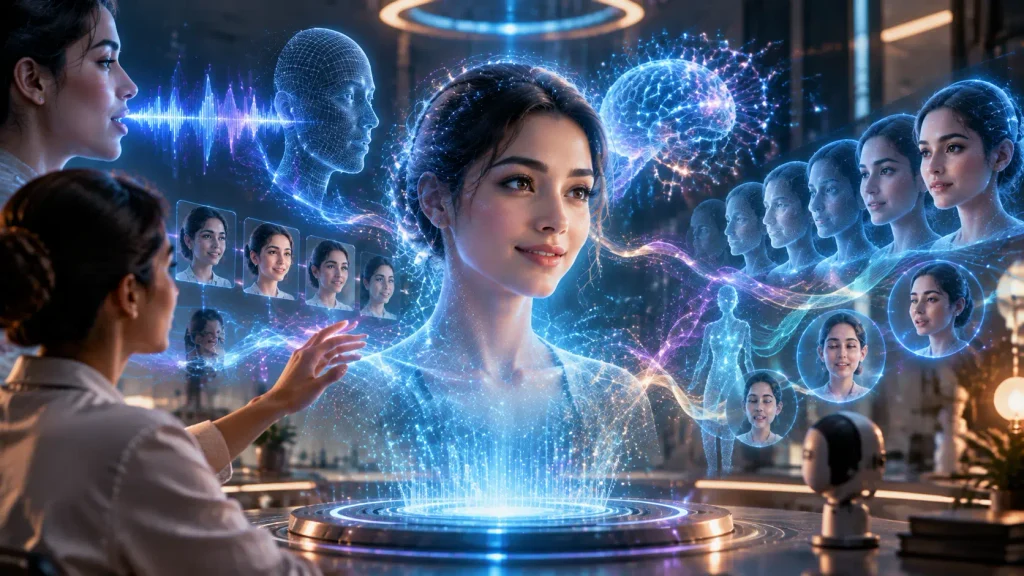
Creating an AI voice avatar involves more than choosing an AI-generated voice. A useful avatar needs a clear purpose, defined personality, suitable voice identity, conversational behaviour, and an approach for continuous improvement.
The exact technical workflow varies depending on the application, but the creative and strategic process can be organized into several stages.
7.1 Defining the Purpose and Personality
The first step is deciding why the AI voice avatar exists and who it is designed to interact with.
Before creating one, consider:
- Who is the target audience?
- What problem or experience will the avatar support?
- What personality should it have?
- How should it communicate?
- Where will users interact with it?
The intended use case should influence the avatar’s personality. A virtual tutor may need to be patient, encouraging, and clear. A fictional character may require a stronger personality and specific emotional traits. A brand assistant may need to sound consistent with the organisation’s identity.
Defining these characteristics early helps create a more coherent experience rather than producing a generic AI personality.
7.2 Designing Voice and Character Identity
Once the purpose and personality are established, the next step is to define how the avatar sounds and behaves.
Important elements can include:
- Voice tone: Warm, energetic, calm, professional, dramatic, or another appropriate style.
- Speaking style: The vocabulary, rhythm, pacing, and conversational patterns used by the avatar.
- Emotional range: How the voice responds to different situations and emotional contexts.
- Character background: The identity, history, motivations, and traits that shape the avatar’s behaviour.
Voice and personality should support each other. A character designed as playful and energetic may require a very different vocal identity from a serious educational tutor.
For storytelling, character background is particularly important because it can influence how the avatar responds within the fictional world. This helps prevent the voice from feeling disconnected from the character it represents.
7.3 Training and Improving AI Voice Avatars
AI voice avatars can require ongoing development after their initial creation. Depending on the system, this may involve voice data, language models, conversational rules, feedback systems, and other AI components.
Voice data can influence the characteristics of generated speech, while AI models can help the avatar understand user input and generate responses.
Continuous improvement can involve:
- Reviewing how users interact with the avatar
- Identifying misunderstandings or inaccurate responses
- Improving conversational context
- Refining voice delivery and character behaviour
- Incorporating appropriate user feedback
User feedback can reveal where an avatar feels natural and where the experience creates friction. This information can then guide improvements to both the technical system and the character design.
Responsible development is equally important. Voice data should be handled carefully, and creators or organisations should consider consent, privacy, identity protection, and appropriate use of voice technology when developing AI voice avatars.
Bringing AI Voice Avatars to Life Through Arré Voice
8.1 Why AI Voice Avatars Matter for Modern Storytelling
AI voice avatars create an opportunity to rethink how stories are experienced. Traditional storytelling often establishes a clear separation between the storyteller and the audience: one side creates and performs the story while the other listens.
Voice-enabled AI characters can make that relationship more interactive.
Voice can create emotional connection by giving characters recognizable identities and expressive ways of communicating. When listeners hear a consistent character voice, the character can feel more present within the story.
AI voice avatars can also make characters more immersive. Instead of only hearing a character through scripted dialogue, audiences can potentially interact with that character, ask questions, and explore different parts of its personality.
This creates three important possibilities for modern storytelling:
- Emotional connection: Voice can make characters feel more expressive and recognizable.
- Immersion: Consistent voices and personalities can strengthen the sense of being inside a story world.
- Interactivity: Conversational characters can allow audiences to participate rather than only listen.
For voice-first storytelling, this represents a natural extension of the medium: stories can become spaces for conversation as well as narration.
8.2 Creating Voice-Based Characters and Experiences With Arré Voice
Arré Voice brings together voice storytelling, creators, listeners, and communities, creating opportunities to explore new forms of voice-based entertainment.
For creators, AI voice avatar concepts can support experiences such as:
- Character-driven storytelling
- Creator-led audio experiences
- Community interactions
- Voice-first entertainment
- Interactive character experiences
A creator could develop a recurring voice character as part of an audio story, use a digital personality to introduce content, or experiment with conversational experiences that encourage audience participation.
The combination of voice, storytelling, and community can also create new ways for audiences to engage with creators. Instead of simply consuming an audio experience, listeners can become part of a broader voice-based environment.
The role of AI is not to remove the creator from this process. Instead, it can provide additional tools for experimenting with characters, voices, narratives, and audience interaction while the creator remains responsible for the creative direction.
8.3 The Role of AI Voice Avatars in the Future of Arré Storytelling
As voice AI and conversational technologies develop, AI voice avatars could become another layer within the future of voice-first storytelling.
Potential possibilities include:
- Interactive stories: Audiences could communicate with characters and influence parts of a narrative.
- Personalised listening: Experiences could adapt to individual preferences and interactions.
- AI-powered creators: Creators could use AI tools to develop new characters, formats, and voice experiences.
- Voice communities: Digital personalities could participate in communities alongside human creators and listeners.
The most interesting possibilities may come from combining AI capabilities with human creativity. Creators can establish the story, character, emotion, and cultural context, while AI can help make those experiences more responsive and interactive.
For Arré Voice, this points toward a broader vision of voice as more than a format for consuming content. Voice can become a space where creators, characters, and communities interact.
As AI voice avatars evolve, the opportunity is not simply to create more digital characters. It is to explore new forms of storytelling in which audiences can listen, respond, participate, and build relationships with voice-based experiences.
How AI Is Shaping the Future of Voice Avatars

The development of artificial intelligence is expanding what voice avatars can do. As language models, voice generation, and conversational systems become more capable, AI voice avatars can move beyond simple scripted interactions toward more adaptive and personalised digital experiences.
The next stage of development is likely to focus not only on making voices sound realistic, but also on making digital personalities more useful, context-aware, and relevant to individual users.
9.1 AI Voice Avatars and Personalised Digital Companions
AI voice avatars can evolve into digital companions that support users across different aspects of their daily lives. Instead of being designed for only one predefined task, a voice-enabled digital personality can potentially provide ongoing interaction based on a user’s needs and context.
Examples include:
- Personal assistants: Helping users organize information, manage tasks, or access services through voice.
- Learning companions: Supporting students with explanations, practice, revision, and conversational learning.
- Entertainment companions: Recommending or delivering stories, characters, and interactive entertainment experiences.
Personalisation can make these experiences more useful. A learning companion, for example, could adapt explanations to a user’s level, while an entertainment companion could remember preferences and suggest relevant experiences.
The distinction between an assistant and a companion is also important. An assistant is generally designed to help complete tasks, while a companion can be designed around ongoing interaction, personality, and engagement.
AI voice avatars may eventually combine aspects of both, creating digital personalities that can assist users while also providing more conversational experiences.
9.2 Ethical Considerations Around AI Voice Avatars
The development of realistic AI voices creates important ethical questions, particularly when a synthetic voice resembles a real person’s identity.
Voice ownership is one key consideration. A person’s voice can be closely associated with their identity and professional reputation, making the use of voice data an important issue when creating synthetic or cloned voices.
Consent is equally important. People should understand how their voice data may be collected, reproduced, or used. Voice-based AI systems should not treat someone’s identity as a resource that can be replicated without appropriate permission.
Identity protection also matters as AI-generated voices become increasingly realistic. Misusing synthetic voices can create confusion about who is actually speaking or whether a particular message is authentic.
Responsible AI usage therefore requires attention to:
- Clear consent and permissions
- Appropriate handling of voice data
- Transparency about AI-generated voices
- Protection against identity misuse
- Responsible deployment of synthetic voice technology
For creators and businesses, ethical voice design should be considered from the beginning rather than added only after an AI voice experience has been developed.
9.3 The Future of Human and AI Collaboration
The future of AI voice avatars does not necessarily mean replacing human creators. A more likely direction is collaboration between human creativity and AI capabilities.
Future experiences may increasingly involve:
- Human creators using AI tools to develop characters, voices, and interactive content.
- AI-assisted storytelling that helps creators experiment with different narrative structures and voice experiences.
- Hybrid digital experiences that combine human performances, AI-generated elements, and interactive technology.
Human creators remain important because storytelling depends on imagination, cultural understanding, emotional insight, and creative intent. AI can provide new production and interaction capabilities, but the creative direction still determines what an experience means to its audience.
This human-AI collaboration can create a model where technology expands what creators can produce without removing the human perspective that gives creative work its identity.
The Future of AI Voice Avatars in Digital Storytelling
AI voice avatars could become an important part of the next generation of digital storytelling. As voice-first interfaces, generative AI, and conversational technologies develop, stories may become increasingly interactive, personalised, and responsive.
Several trends are likely to influence this evolution:
- Voice-first interactions: Audiences increasingly communicate with digital experiences through natural speech.
- AI-powered characters: Characters can become more interactive and responsive.
- Personalised entertainment: Stories and experiences can adapt to individual preferences and interactions.
- Creator-driven experiences: Human creators can use AI tools to develop new storytelling formats.
- Digital human evolution: Virtual personalities can become more sophisticated in how they communicate, behave, and represent identity.
The biggest change may be the relationship between audiences and digital characters. Traditional digital storytelling generally gives audiences a completed narrative to experience. Interactive AI can introduce opportunities for audiences to ask, respond, explore, and participate.
This creates a broader shift from content consumption to conversational participation.
AI voice avatars represent the bridge between human expression and artificial intelligence, creating new possibilities for communication, creativity, and storytelling.
The technology is still evolving, and its long-term impact will depend on factors such as authenticity, privacy, responsible AI development, creative quality, and user trust. The most valuable experiences are likely to be those where technology strengthens the human elements of storytelling rather than simply adding automation.
How Arré Voice Helps Creators Build Next-Generation Voice Experiences
Arré Voice sits within the broader evolution of voice-first storytelling and digital entertainment, giving creators and audiences a space to explore new ways of experiencing audio.
A voice storytelling ecosystem can bring together:
- Voice-based storytelling
- AI-powered creative possibilities
- Engaging audio experiences
- Creator and audience communities
For creators, emerging voice technologies can provide new ways to experiment with characters, narration, interactive formats, and audience engagement. Instead of treating voice only as a method of delivering content, creators can explore it as a medium for building experiences and communities.
Arré Voice can support this broader vision by combining human creativity, voice experiences, storytelling, and community interaction. As AI voice technology continues to develop, these capabilities can open new possibilities for creators who want to experiment with next-generation audio formats.
The future of storytelling may not be defined only by what audiences listen to, but also by how they interact with the voices, characters, creators, and communities behind those experiences.
Create, discover, and experience the future of voice storytelling with Arré Voice.
Frequently Asked Questions
What are AI voice avatars?
AI voice avatars are AI-powered digital characters that combine a virtual identity with a realistic synthetic voice and conversational intelligence. They can communicate with users through spoken interactions, express personality and emotion, and support experiences such as storytelling, education, entertainment, customer service, and digital assistance.
How do AI voice avatars work?
AI voice avatars typically combine artificial intelligence, language models, natural language understanding, voice generation, and an avatar or digital character. The system interprets a user’s input, generates an appropriate response, converts that response into natural-sounding speech, and presents it through the avatar’s voice and visual identity.
What is the difference between AI voice avatars and voice assistants?
Voice assistants primarily focus on helping users complete tasks through spoken commands, such as answering questions or controlling devices. AI voice avatars add a stronger layer of identity, personality, visual representation, and emotional expression. This makes them suitable not only for assistance but also for storytelling, entertainment, education, and interactive digital experiences.
Are AI voice avatars powered by artificial intelligence?
Yes. AI voice avatars are powered by artificial intelligence technologies that can include large language models, natural language processing, machine learning, speech synthesis, and conversational AI. These technologies allow an avatar to understand input, generate responses, and communicate through an AI-generated voice.
How are AI voice avatars used in storytelling?
AI voice avatars can act as narrators, fictional characters, virtual performers, or interactive storytellers. They can give characters distinctive voices and personalities, respond to audiences, and support interactive narratives. In audio storytelling, this can make characters feel more expressive and immersive while giving creators new ways to develop voice-based experiences.
Can AI voice avatars speak multiple languages?
Yes. Many AI voice avatar systems can support multiple languages and regional voice variations. Multilingual capabilities can help creators and businesses adapt voice experiences for different audiences, although the quality of pronunciation, accent, cultural context, and emotional expression can vary between languages and systems.
Are AI voice avatars replacing human creators?
AI voice avatars are better understood as creative and communication tools rather than direct replacements for human creators. They can assist with narration, character development, localization, and interactive experiences, while human creators continue to provide creative direction, storytelling choices, cultural context, and emotional intent.
What industries use AI voice avatars?
AI voice avatars can be used across entertainment, storytelling, education, customer experience, marketing, gaming, media, training, and digital communities. Their applications range from virtual tutors and customer representatives to interactive characters, digital performers, and voice-enabled brand experiences.
How do AI voice avatars create personalised experiences?
AI voice avatars can personalize interactions by adapting responses to user preferences, conversation history, language, communication style, and context. When combined with conversational AI, personalization can make interactions feel more relevant and responsive while allowing different users to experience the same digital character or service in different ways.
What is the future of AI voice avatar technology?
The future of AI voice avatar technology is likely to involve more natural conversations, stronger emotional expression, multilingual interaction, personalized digital companions, and increasingly interactive AI characters. In digital storytelling, these developments could enable audiences to interact directly with characters and experience narratives that adapt dynamically to their choices.