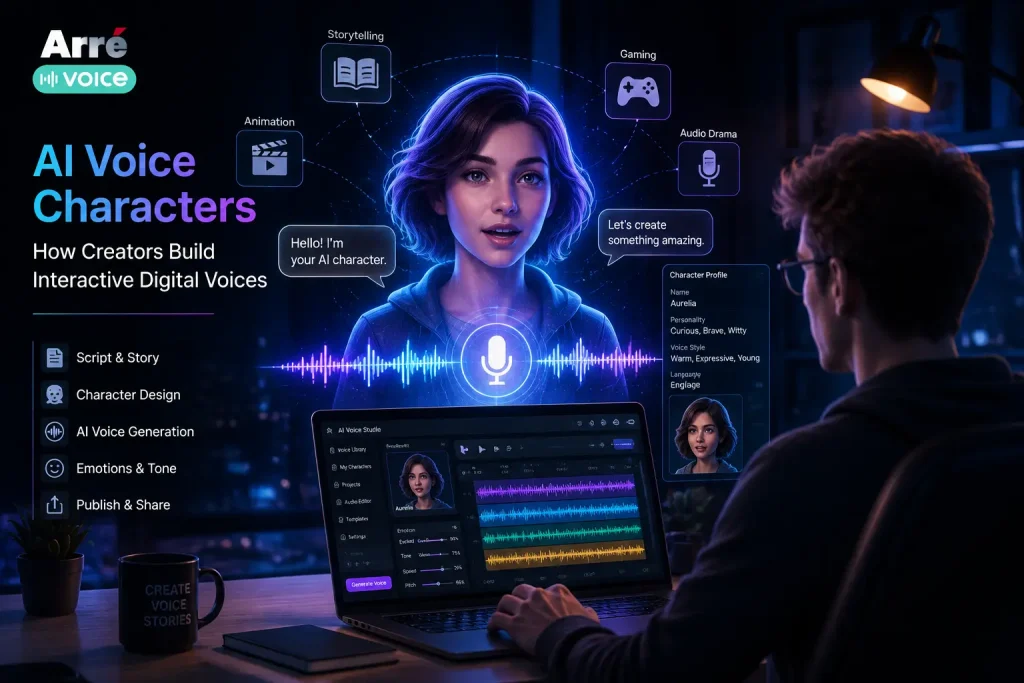
AI voice characters are digital characters created using artificial intelligence-generated voices. They combine character design, scripts, and synthetic voice technology to create realistic personalities for stories, games, animations, and interactive experiences.
Introduction: The Rise of AI Voice Characters in Modern Storytelling
Storytelling has always evolved with technology. From oral traditions and written books to radio dramas, podcasts, video content, and interactive digital experiences, every generation has found new ways to create and consume stories.
Today, artificial intelligence is introducing another major shift: AI voice characters. These digital personalities combine character design, storytelling, and AI-generated voices to create characters that can speak, express emotions, and interact with audiences in ways that were previously limited to professional voice production.
The growth of AI-assisted creativity has made character creation more accessible for writers, creators, game developers, and storytellers. Instead of relying only on traditional recording processes, creators can now experiment with different voices, personalities, emotions, and narrative styles while building unique digital characters.
The rise of fictional characters in digital media has also changed how audiences experience stories. Characters are no longer limited to books, films, or games. They can now exist as interactive voices, virtual companions, audio storytellers, and community personalities that engage audiences across multiple platforms.
Gaming and interactive storytelling have accelerated this transformation. Modern audiences expect deeper character experiences, realistic conversations, and immersive worlds where digital characters feel more alive. AI voice technology helps creators develop characters with unique identities, consistent voices, and emotional depth.
At the same time, audio storytelling continues to grow as more people consume content through mobile devices, headphones, and voice-based platforms. AI voice characters are creating new opportunities for creators to produce audio dramas, fictional stories, educational experiences, and interactive content without traditional production limitations.
AI voice technology is allowing creators to design characters that can speak, express emotions, and interact with audiences without traditional voice recording limitations. By combining artificial intelligence with human creativity, creators can build new forms of storytelling where characters become more dynamic, accessible, and engaging.
What Are AI Voice Characters?
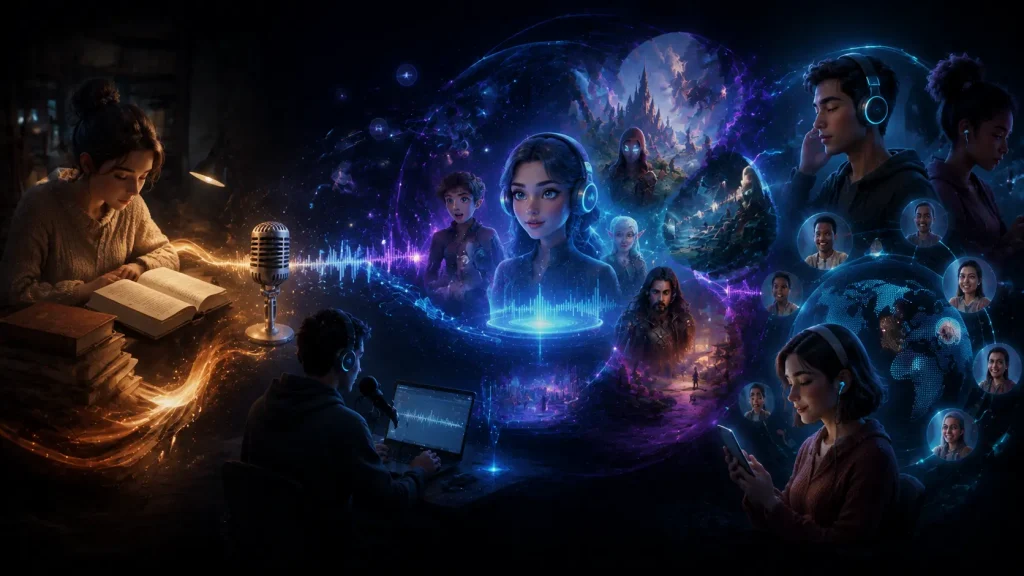
AI voice characters are fictional or digital characters powered by artificial intelligence-generated voices that allow them to communicate through realistic speech. These characters combine creative storytelling elements with AI voice technology to create personalities that can narrate stories, interact with users, and participate in digital experiences.
Unlike traditional fictional characters that only exist through written descriptions or recorded performances, AI voice characters can generate spoken conversations using synthetic voices. They can be designed with specific personalities, emotional patterns, speaking styles, and backgrounds to make them feel more realistic and engaging.
AI voice characters are used across multiple creative fields, including:
- Audio storytelling
- Fiction podcasts
- Video games
- Virtual companions
- Educational content
- Brand experiences
- Interactive communities
The purpose of an AI voice character is not only to generate speech but to create a complete digital personality that audiences can connect with.
Components of AI Voice Characters
An AI voice character is created by combining multiple storytelling and technology elements.
1. Character Personality
Personality defines how a character behaves, communicates, and responds. Creators can decide whether a character is:
- Funny or serious
- Friendly or mysterious
- Confident or emotional
- Educational or entertaining
A strong personality helps audiences recognize and connect with the character.
2. Story Background
Every memorable character has a story behind them. Background details help define:
- Where the character comes from
- Their purpose and role
- Their experiences
- Their motivations
AI voice characters become more engaging when they have a clear identity beyond just a generated voice.
3. Script and Dialogue
Scripts provide the foundation for character communication. Creators define:
- Speaking style
- Vocabulary
- Conversations
- Story interactions
- Emotional moments
AI can assist in generating and adapting dialogue while allowing creators to maintain control over the character’s voice and message.
4. Synthetic Voice
Synthetic voice technology enables AI characters to speak naturally. Modern AI voice systems can generate:
- Different voice styles
- Multiple languages
- Various tones
- Natural speech patterns
This allows creators to build characters that sound unique and consistent.
5. Emotional Expression
Emotion makes characters feel more human. AI voice technology can adjust elements such as:
- Tone
- Pitch
- Speaking speed
- Voice intensity
These features help characters express excitement, sadness, curiosity, confidence, and other emotions.
6. Interactive Behaviour
AI voice characters can move beyond one-way narration by responding to audiences. Interactive behaviour allows characters to participate in:
- Conversations
- Games
- Learning experiences
- Community interactions
This creates more engaging storytelling experiences where audiences feel connected with digital personalities.
AI voice characters represent the combination of storytelling creativity and artificial intelligence. They allow creators to move from simply writing characters to building voices, personalities, and interactive experiences that audiences can engage with.
How Do AI Voice Characters Work?
AI voice characters work by combining creative character development, artificial intelligence, and voice generation technology. The process involves designing a character identity, creating dialogue, generating a unique voice, adding emotional expression, and using the character across different storytelling formats.
Unlike traditional characters that depend entirely on recorded voice performances, AI voice characters can be developed, modified, and adapted through AI-powered tools. Creators can experiment with different personalities, voices, and storytelling styles to build characters for entertainment, education, gaming, and interactive experiences.
The process of creating an AI voice character generally involves the following steps:
Step 1: Create the Character Concept
Every AI voice character begins with a clear creative concept. Before generating a voice, creators need to define who the character is, what role they play, and how they fit into a story or experience.
The character concept includes:
Personality
Personality determines how the character behaves and communicates. Creators can define characteristics such as:
- Friendly or serious nature
- Humorous or dramatic personality
- Curious or knowledgeable behaviour
- Emotional responses and communication style
A well-defined personality helps the AI voice character maintain consistency across different conversations and storytelling situations.
Background
A character background gives context to their identity. It can include:
- Origin story
- Experiences
- Skills and abilities
- Personal motivations
- Relationships with other characters
For example, a fantasy narrator may have a completely different background compared to an AI tutor or a virtual game companion.
Role
The role defines the purpose of the character within the content experience.
Examples:
- Story narrator
- Fictional hero
- Game character
- Educational assistant
- Virtual companion
- Brand personality
A clear role helps creators design the character’s voice, dialogue, and behaviour according to the audience’s expectations.
Story Purpose
Creators also need to decide why the character exists and what experience they should provide.
The purpose may include:
- Helping audiences understand a topic
- Enhancing fictional storytelling
- Creating interactive experiences
- Guiding users through digital environments
- Building emotional connections with audiences
A strong character concept becomes the foundation for every future interaction.
Step 2: Write Character Dialogue
Once the character identity is established, creators develop the dialogue that defines how the character communicates.
AI voice characters require more than just words. Their dialogue needs to reflect their personality, emotions, and purpose.
Important elements include:
Voice Style
Voice style determines how the character sounds when communicating.
Creators can define whether the character should sound:
- Professional
- Casual
- Energetic
- Mysterious
- Friendly
- Dramatic
The voice style helps audiences recognize the character’s identity.
Speaking Patterns
Speaking patterns influence how the character delivers conversations.
This includes:
- Choice of words
- Sentence structure
- Speaking rhythm
- Conversation style
- Repeated expressions
A wise storyteller, a game hero, and a virtual assistant would all require different speaking patterns.
Emotions
Emotional direction makes dialogue more engaging. Creators can define how the character responds in different situations:
- Excitement
- Happiness
- Concern
- Curiosity
- Surprise
- Empathy
Adding emotional depth helps AI voice characters feel more natural and relatable.
Step 3: Generate AI Voice
After developing the character concept and dialogue, creators use AI voice technology to generate the character’s speech.
AI voice generation uses advanced systems that convert written text into realistic audio.
Text-to-Speech Technology
Text-to-speech (TTS) technology allows AI systems to transform written dialogue into spoken words.
Modern AI voice systems can produce:
- Natural pronunciation
- Human-like speech patterns
- Different speaking speeds
- Multiple languages
This enables creators to turn written stories and scripts into complete audio experiences.
Voice Models
AI voice models define the characteristics of the generated voice.
Creators can select or customize voice models based on:
- Age
- Gender
- Tone
- Accent
- Speaking style
A unique voice model helps create a recognizable character identity.
Voice Styles
Different storytelling formats require different voice styles.
Examples:
- Cinematic narration for fictional stories
- Friendly voices for educational characters
- Energetic voices for gaming experiences
- Calm voices for virtual assistants
The right voice style helps match the character with its intended audience.
Step 4: Add Personality and Emotion
Generating a voice is only one part of creating an engaging AI character. The next step is adding personality and emotional expression to make the character feel more alive.
Creators can adjust:
Tone
Tone controls the overall feeling of the character’s voice.
Examples:
- Warm and welcoming
- Serious and authoritative
- Playful and entertaining
Pitch
Pitch affects how the voice sounds and helps differentiate characters.
A higher or lower pitch can create different personality impressions and make multiple characters easier to identify.
Expression
Expression adds emotional variation to the character’s speech.
AI voice characters can be designed to express:
- Excitement
- Sadness
- Surprise
- Confidence
- Curiosity
Speaking Speed
Speaking speed influences how audiences experience the content.
For example:
- Faster speech can create excitement or urgency
- Slower speech can create a storytelling or educational tone
These adjustments help creators move beyond simple AI narration and build characters with unique identities.
Step 5: Use Characters in Content
Once an AI voice character is created, it can be integrated into different content formats and digital experiences.
Creators can use AI voice characters for:
Stories
AI voice characters can bring fictional worlds to life through:
- Audio dramas
- Character-based stories
- Interactive fiction
- Narrative experiences
Characters can provide different voices, personalities, and emotional storytelling elements.
Games
Game creators can use AI voice characters for:
- Non-player character (NPC) voices
- Character conversations
- Virtual companions
- Interactive game worlds
AI voices help create deeper and more immersive gaming experiences.
Animations
Animated content can use AI voice characters to create:
- Digital personalities
- Animated storytellers
- Character-driven videos
- Virtual performers
Communities
AI voice characters can also support digital communities by becoming:
- Voice companions
- Interactive community personalities
- Discussion assistants
- Storytelling hosts
The future of AI voice characters is moving toward more interactive and personalized experiences where audiences do not just consume stories but actively engage with digital personalities.
Types of AI Voice Characters Creators Can Build
AI voice technology allows creators to develop different types of digital personalities across entertainment, education, gaming, and online communities. The type of AI voice character depends on the creator’s goals, audience, and storytelling format.
From fictional heroes to virtual assistants, AI voice characters are expanding how creators design and deliver experiences.
Fiction Characters
Fictional AI voice characters are designed for storytelling and entertainment experiences.
Examples include:
- Heroes
- Villains
- Fantasy characters
- Story narrators
- Fictional companions
Creators can use these characters in:
- Audio dramas
- Fiction podcasts
- Interactive stories
- Digital storytelling experiences
AI voice technology allows writers to create multiple characters with unique voices, personalities, and emotional expressions.
Game Characters
Gaming is one of the strongest use cases for AI voice characters.
Examples include:
- NPC characters
- Virtual companions
- Interactive characters
- Fantasy world characters
AI-powered game characters can provide:
- Dynamic conversations
- Realistic dialogue
- Personalized player interactions
- Immersive storytelling
This helps developers create game worlds where characters feel more responsive and engaging.
Educational Characters
AI voice characters can also support learning experiences.
Examples include:
- AI tutors
- Learning assistants
- Language practice characters
- Interactive educators
These characters can make education more engaging by providing conversational explanations and personalized learning support.
Brand Characters
Businesses and creators can build AI voice characters to represent their identity.
Examples include:
- Virtual brand personalities
- Digital assistants
- Customer engagement characters
These characters can help brands create more interactive experiences while maintaining consistent communication styles.
Community Characters
AI voice characters can become part of online communities and social experiences.
Examples include:
- Voice companions
- Interactive community voices
- Digital hosts
These characters can help communities create more engaging conversations and personalized experiences.
AI voice characters are no longer limited to fictional entertainment. They are becoming flexible creative tools that allow writers, developers, educators, and communities to build new forms of interaction through voice.
How AI Voice Characters Are Changing Storytelling
Storytelling has always evolved alongside technology. From written books and radio dramas to podcasts, animated content, and interactive digital experiences, each new medium has changed how creators build stories and how audiences experience them.
AI voice characters represent the next stage of this evolution by making stories more dynamic, interactive, and character-driven. Instead of characters existing only as written descriptions or recorded performances, AI allows creators to design digital personalities that can speak, express emotions, and engage audiences through voice.
More Character-Driven Experiences
Traditional storytelling often follows a one-way format where audiences listen, watch, or read a story created by someone else. AI voice characters introduce a more immersive approach where characters themselves become a central part of the experience.
Stories can become more character-driven by allowing audiences to connect with:
- Unique character personalities
- Consistent voices
- Emotional conversations
- Interactive responses
- Deeper fictional worlds
For example, an AI-powered storyteller character can narrate a fantasy world, while a virtual companion can interact with users through personalized conversations.
This shift allows creators to move beyond simply telling stories and start building experiences around memorable digital personalities.
Stories Become Interactive
AI voice technology enables characters to participate in conversations rather than only deliver pre-recorded dialogue.
Interactive storytelling allows audiences to:
- Ask questions
- Explore different story paths
- Engage with characters
- Receive personalized responses
This creates a stronger emotional connection between audiences and fictional personalities.
For creators, this opens opportunities to develop stories that feel more like living experiences rather than fixed content.
Faster Character Production
Creating traditional character voices often requires voice actors, recording sessions, editing, and multiple production stages.
AI voice characters simplify parts of this process by allowing creators to:
- Generate character voices quickly
- Test different voice styles
- Experiment with multiple personalities
- Modify dialogue easily
Writers and creators can explore more creative ideas without being limited by traditional production constraints.
This does not remove the importance of human creativity. Instead, AI provides creators with additional tools to experiment and develop characters faster.
Creators Can Test Multiple Voices
Voice plays an important role in defining a character’s identity. A hero, villain, narrator, or companion each requires a different vocal style.
AI voice technology allows creators to experiment with:
- Different voice tones
- Character personalities
- Speaking styles
- Emotional expressions
- Language variations
This makes it easier for creators to identify the voice that best represents their character before publishing the final experience.
Multilingual Characters and Regional Storytelling
One of the biggest opportunities created by AI voice characters is multilingual storytelling.
AI voice technology can help creators adapt characters into different languages, allowing stories to reach wider audiences.
This creates opportunities for:
- Regional storytelling
- Local language content
- Cultural narratives
- Global audience expansion
For a country like India, where audiences consume content across multiple languages, AI voice characters can help creators bring stories to communities that were previously difficult to reach.
Interactive Experiences and Audience Participation
AI voice characters are changing audiences from passive listeners into active participants.
Instead of only consuming a story, users can:
- Interact with characters
- Influence conversations
- Explore fictional worlds
- Build relationships with digital personalities
This creates new possibilities for entertainment, education, gaming, and online communities.
The future of storytelling is moving toward experiences where characters do not just exist inside stories — they become part of the audience’s journey.
AI Voice Characters for Fiction Creators
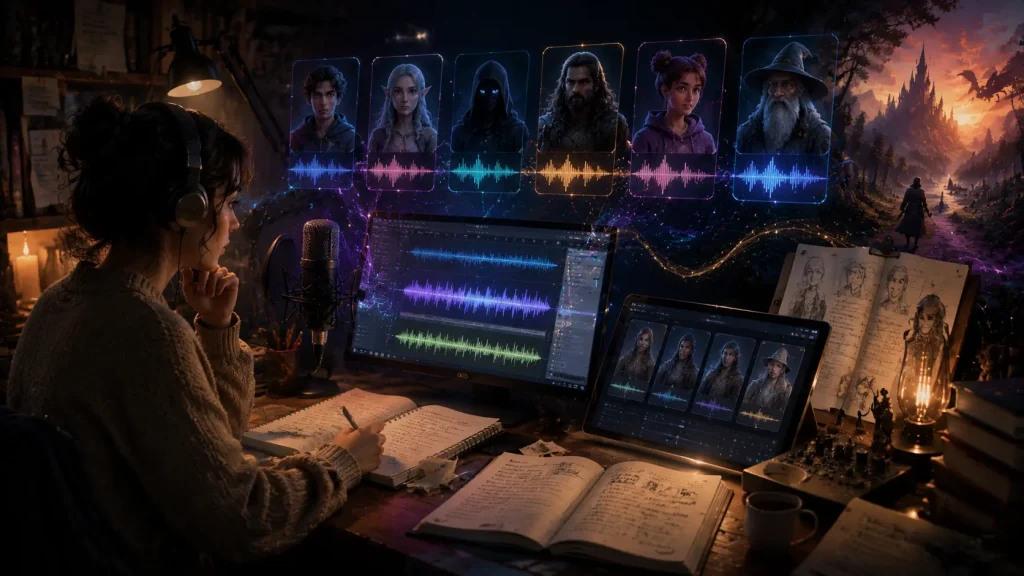
For fiction creators, AI voice characters open new possibilities for building immersive stories, fictional worlds, and character-driven audio experiences.
Writers and storytellers can use AI voices to transform written characters into personalities that audiences can hear, recognize, and connect with.
Whether creating audio dramas, fictional podcasts, or interactive stories, AI voice technology helps creators experiment with new storytelling formats.
Creating Audio Dramas With AI Voice Characters
Audio dramas depend heavily on strong characters and engaging performances. AI voice characters allow creators to develop complete casts without requiring traditional recording setups.
Creators can build:
- Multiple fictional characters
- Different voice identities
- Emotional character interactions
- Narrative-driven experiences
This makes audio storytelling more accessible for independent writers and small creative teams.
Fiction Podcasts With Unique Characters
Fiction podcasts often rely on memorable voices to create immersive experiences.
AI voice characters can help creators produce:
- Character-based episodes
- Serialized stories
- Fantasy adventures
- Mystery narratives
- Fictional conversations
Creators can maintain consistent character voices across multiple episodes, helping audiences build familiarity with the characters.
Character Stories and Interactive Fiction
AI voice characters allow creators to go beyond traditional storytelling formats.
Instead of only writing about characters, creators can build characters that communicate directly with audiences.
Examples include:
- Talking fictional companions
- Interactive story characters
- Digital storytellers
- AI-powered narrators
This creates a deeper connection between audiences and fictional worlds.
Benefits for Fiction Creators
AI voice characters provide several advantages for fiction creators:
Multiple Characters
Creators can develop entire fictional universes with different voices and personalities.
A single creator can experiment with:
- Heroes
- Villains
- Supporting characters
- Narrators
without requiring a full production team.
Consistent Voices
Character consistency is important in long-form storytelling.
AI voice technology helps maintain:
- The same voice identity
- Consistent speaking style
- Recognizable character personality
This improves continuity across episodes and stories.
Faster Production
AI tools can reduce the time required for voice production, allowing creators to focus more on:
- Story development
- Character design
- Audience engagement
Creative Experimentation
AI voice characters make it easier to test new ideas.
Creators can experiment with:
- Different character personalities
- New genres
- Alternative story formats
- Multiple narrative approaches
AI becomes a creative partner that expands storytelling possibilities.
AI Voice Characters for Game Creators
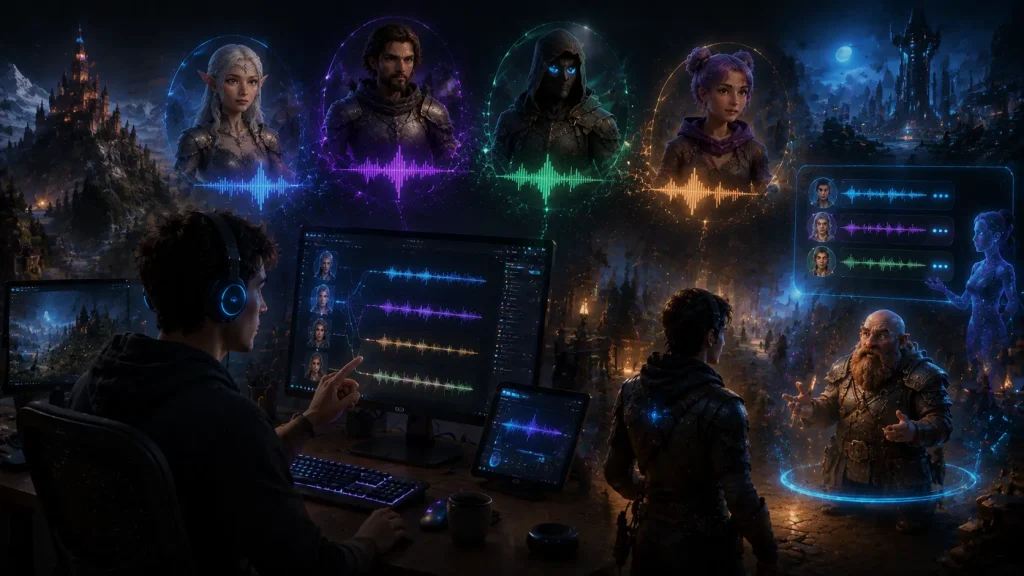
Gaming is one of the areas where AI voice characters have significant potential. Modern players expect immersive worlds, meaningful conversations, and characters that feel realistic.
AI voice technology helps game creators develop characters that can communicate naturally and enhance the overall gaming experience.
NPC Voices
Non-player characters (NPCs) play an important role in building game worlds.
AI voice characters can provide NPCs with:
- Unique voices
- Distinct personalities
- More realistic dialogue
- Greater interaction possibilities
Instead of repeating limited pre-recorded lines, AI-powered NPCs can create richer character experiences.
Game Dialogue
Dialogue is essential for storytelling in games.
AI voice characters can help creators develop:
- Character conversations
- Story missions
- Interactive discussions
- Narrative experiences
This allows developers to create deeper storylines while managing large amounts of dialogue.
Virtual Companions
Virtual companions are characters designed to support and interact with players.
AI voice technology can make these companions more engaging through:
- Personalized conversations
- Emotional responses
- Consistent personalities
Players can develop stronger connections with characters that feel more responsive.
Immersive Worlds
AI voice characters contribute to more immersive game environments by making digital worlds feel more alive.
Examples include:
- Fantasy worlds with talking characters
- Adventure games with interactive guides
- Simulation games with intelligent personalities
Characters become more than background elements — they become part of the player’s experience.
Benefits for Game Creators
Faster Dialogue Creation
AI can help developers generate and adapt dialogue faster, especially for games with large numbers of characters.
Multiple Character Voices
Creators can develop diverse character voices for:
- Different personalities
- Different locations
- Different story roles
Localization
AI voice technology can support multilingual game experiences by helping creators adapt characters for different regions and audiences.
This creates opportunities for games to reach more players while maintaining character identity across languages.
AI voice characters are helping game creators build richer, more interactive worlds where characters feel more dynamic, responsive, and memorable.
AI Voice Characters vs Traditional Voice Acting
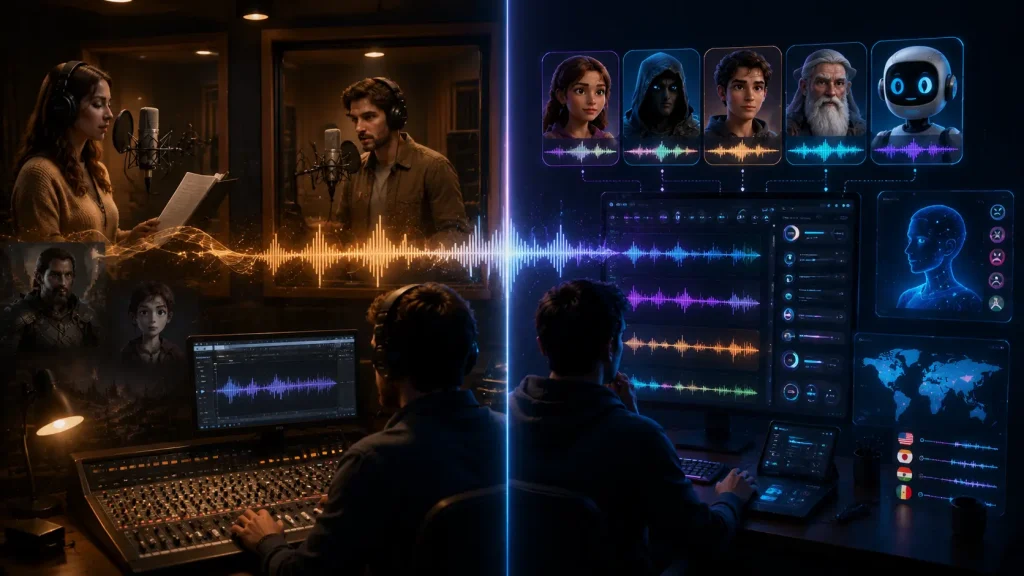
Voice is one of the most important elements of character storytelling. A character’s voice communicates personality, emotion, background, and identity. Traditionally, creators relied on professional voice actors and recording studios to bring characters to life.
AI voice characters introduce a new approach by allowing creators to generate digital voices using artificial intelligence. This creates new possibilities for experimentation, faster production, and scalable storytelling.
However, AI voice technology is not designed to completely replace human voice actors. Instead, it works as a creative tool that helps creators explore new formats, develop characters faster, and expand storytelling possibilities.
Comparison: Traditional Voice Acting vs AI Voice Characters
| Traditional Voice Acting | AI Voice Characters |
| Requires professional voice actors | Uses AI-generated voices |
| Requires recording sessions and studio setup | Generates voices through AI voice technology |
| Voice changes may require additional recording | Character voices can be modified easily |
| Multiple revisions can increase production time | Faster voice generation and experimentation |
| Higher production costs for large character casts | Lower barriers for creators and independent teams |
| Limited by actor availability and schedules | Allows creators to test multiple voice variations |
Traditional Voice Acting
Traditional voice acting has been the foundation of character storytelling for decades. Professional actors bring unique human qualities to characters through:
- Emotional delivery
- Acting experience
- Personal interpretation
- Performance techniques
Voice actors are especially important for projects where human expression, cultural understanding, and nuanced performances are essential.
Examples include:
- Animated films
- Video games
- Audio dramas
- Film and television productions
Human performances continue to play a significant role in creating emotional and memorable characters.
AI Voice Characters
AI voice characters use artificial intelligence to generate voices based on selected voice models and character requirements.
Creators can use AI voices to:
- Create character prototypes
- Generate narration
- Experiment with different personalities
- Develop multilingual characters
- Produce large amounts of dialogue
This makes AI voice technology useful for independent creators, game developers, writers, and storytellers who want to explore character-driven experiences.
How AI Complements Human Creativity
AI voice technology should be viewed as a creative assistant rather than a replacement for human performance.
AI helps creators with:
- Faster experimentation
- Character voice development
- Production scalability
- Content adaptation
Humans continue to provide:
- Original ideas
- Emotional storytelling
- Cultural understanding
- Creative direction
The future of character storytelling will likely combine human creativity with AI capabilities, allowing creators to build richer and more diverse experiences.
Best AI Voice Tools for Creating Characters
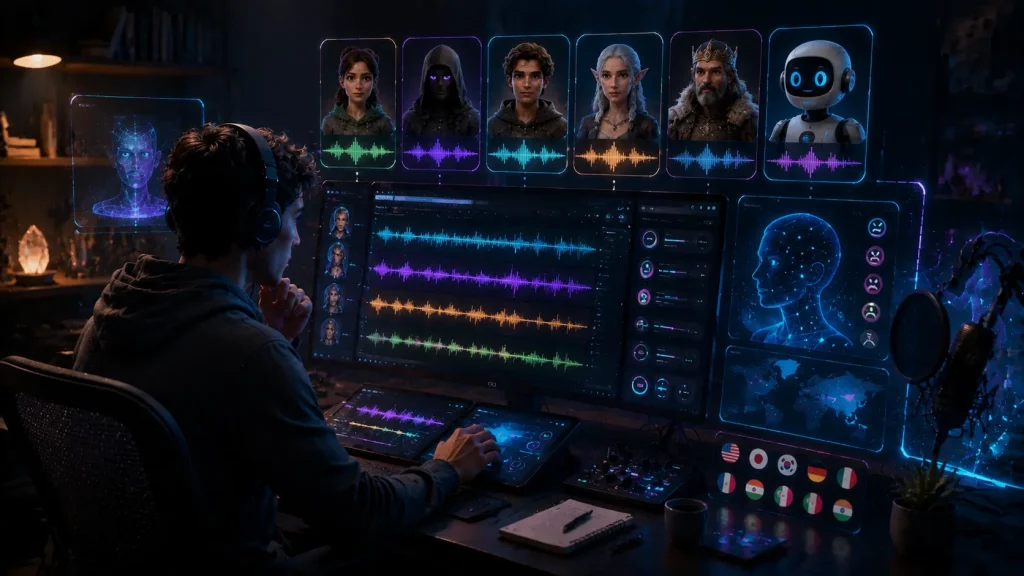
Creating an AI voice character requires multiple creative and technical elements, including character development, dialogue creation, voice generation, and audience engagement.
Different AI tools support different stages of the character creation process. Some focus on realistic voice generation, while others help creators develop personalities, stories, and interactive experiences.
Below are some categories of tools creators use when building AI voice characters.
Best AI Voice Generation Tool
ElevenLabs
Best for:
- Realistic AI voices
- Character narration
- Natural speech generation
AI voice generation platforms help creators transform written dialogue into realistic speech. They allow users to experiment with different voices, tones, and narration styles while developing characters.
For creators focused primarily on voice quality and realistic character narration, AI voice generation tools provide the foundation for building believable digital personalities.
Best Voice Character Platform
Arré Voice
Best for:
- Voice storytelling
- Creator communities
- Character-driven audio experiences
Arré Voice focuses on helping creators share voice-first experiences and connect with audiences through audio content.
The platform enables creators to explore storytelling through voice by creating, sharing, and discovering audio experiences within a community-driven environment.
The journey can be represented as:
Creation → Character → Community
Creators can move from developing voice-based ideas to sharing stories and building connections with listeners.
Best AI Writing Support
ChatGPT
Best for:
- Character development
- Dialogue creation
- Story ideation
AI writing assistants can support creators during the early stages of character development.
They can help with:
- Creating character backgrounds
- Developing personalities
- Writing conversations
- Exploring story directions
By combining AI writing support with AI voice generation, creators can develop complete character experiences from concept to final audio output.
How to Create AI Voice Characters Using AI Tools
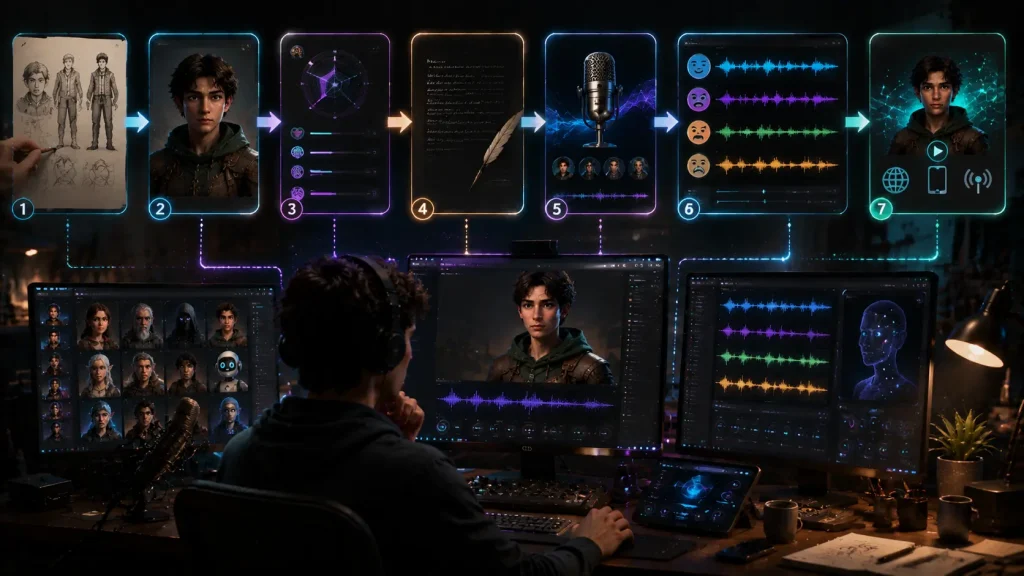
Creating an AI voice character involves combining storytelling decisions with AI-powered voice technology. A successful character is not only defined by how it sounds but also by its personality, purpose, and connection with audiences.
The process usually involves the following steps:
Step 1: Define Character Identity
The first step is deciding who the character is.
Creators should define:
- Character name
- Background story
- Purpose
- Role in the experience
- Audience relationship
For example, a fantasy narrator, gaming companion, and educational assistant would each require different identities.
Step 2: Create a Personality Profile
A personality profile helps shape how the character behaves and communicates.
Creators can define:
- Personality traits
- Emotional behaviour
- Communication style
- Strengths and weaknesses
A strong personality makes the character more recognizable and engaging.
Step 3: Write Character Dialogue
Dialogue gives the character its unique voice beyond audio generation.
Creators should consider:
- Speaking style
- Vocabulary
- Tone
- Conversation patterns
- Emotional responses
Well-written dialogue helps AI-generated characters feel more natural and consistent.
Step 4: Select the Voice
The next step is choosing a voice that matches the character identity.
Creators can evaluate:
- Voice style
- Tone
- Accent
- Speaking rhythm
- Emotional quality
The right voice strengthens the connection between the character and the audience.
Step 5: Generate Speech
AI voice tools transform written dialogue into spoken audio using voice generation technology.
Creators can generate:
- Character narration
- Conversations
- Story scenes
- Interactive responses
Modern AI voice systems allow creators to experiment with different voice variations quickly.
Step 6: Add Emotional Expression
Emotion makes AI voice characters more engaging.
Creators can adjust:
- Tone
- Pitch
- Speaking speed
- Voice intensity
- Expression
These elements help characters communicate feelings and create stronger storytelling experiences.
Step 7: Publish and Share
After creating the AI voice character, creators can share their work through:
- Audio stories
- Games
- Social platforms
- Creator communities
- Interactive experiences
Publishing allows audiences to discover, engage with, and connect with these digital personalities.
AI voice character creation is becoming more accessible because creators no longer need large production teams to experiment with character-driven storytelling. With the right combination of creativity and AI tools, individuals can build unique voices, personalities, and experiences for modern audiences.
From Character Creation to Voice Experiences
Creators can use AI tools to develop unique digital personalities, but storytelling becomes more meaningful when those characters are shared with listeners.
Arré Voice enables creators to explore voice-first experiences by allowing them to:
Share Voice Stories
Creators can transform ideas, characters, and narratives into audio experiences that audiences can discover and engage with.
Voice-based storytelling allows creators to focus on:
- Character-driven narratives
- Personal expressions
- Fictional experiences
- Audio conversations
Build Audiences Through Voice
Characters become more powerful when they connect with people.
Arré Voice helps creators build relationships with audiences by enabling them to:
- Share original voice content
- Develop a creator identity
- Reach listeners interested in storytelling
- Grow communities around shared interests
Connect With Communities
Storytelling is not only about creating content; it is also about creating connections.
Voice communities allow audiences and creators to:
- Discover new stories
- Participate in conversations
- Share perspectives
- Engage with different voices and ideas
This creates a more interactive storytelling environment where creators and listeners become part of the same experience.
Create Voice-First Experiences
The future of digital storytelling is moving beyond text and video alone. Voice enables more personal and immersive ways for people to experience content.
Through voice-first experiences, creators can explore:
- Character storytelling
- Audio narratives
- Community conversations
- Interactive content formats
Arré Voice provides a space where creators can move from developing characters to sharing meaningful voice experiences with audiences.
Frequently Asked Questions
What are AI voice characters?
AI voice characters are digital or fictional personalities created using artificial intelligence-generated voices. They combine character design, personality, dialogue, and voice technology to produce characters that can communicate through realistic speech. Creators use AI voice characters for storytelling, games, education, virtual experiences, and interactive content where audiences can engage with unique digital personalities.
How are AI voice characters created?
AI voice characters are created by combining character development with AI voice technology. Creators first define the character’s personality, background, and purpose, then write dialogue, select or generate a voice, and add emotional expressions. AI tools help transform these creative elements into digital characters that can speak, interact, and appear in different storytelling formats.
Can AI generate realistic character voices?
Yes, AI can generate realistic character voices using advanced text-to-speech and voice generation technology. Modern AI voice systems can create natural speech with different tones, styles, languages, and emotional expressions. These capabilities allow creators to develop believable characters for stories, games, animations, and interactive experiences while maintaining creative control over the character’s identity.
Can I create AI voices for fictional characters?
Yes, creators can create AI voices for fictional characters by combining character concepts, dialogue, and AI voice generation tools. Writers can design unique personalities, choose suitable voice styles, and generate speech that matches the character’s role. This allows independent creators to experiment with fictional worlds, audio dramas, interactive stories, and character-based experiences.
How are AI voice characters used in games?
AI voice characters are used in games to create more immersive and interactive experiences. Developers can use them for NPC voices, game dialogue, virtual companions, and character interactions. AI-generated voices help creators develop diverse characters, expand dialogue possibilities, and create gaming environments where digital personalities feel more responsive and engaging.
What is the best AI voice character generator?
The best AI voice character generator depends on the creator’s requirements, including voice quality, customization options, language support, and storytelling needs. Some tools focus on realistic voice generation, while others support character development and interactive experiences. Creators should choose solutions that help them build unique personalities and connect characters with audiences effectively.
Are AI voice characters replacing voice actors?
AI voice characters are not replacing all human voice actors. Instead, AI works as a creative tool that helps creators experiment with voices, develop characters faster, and produce new storytelling experiences. Human voice actors continue to provide emotional depth, interpretation, cultural understanding, and creative performance that remain essential for many storytelling projects.
Can AI voice characters speak multiple languages?
Yes, AI voice characters can support multiple languages through multilingual voice generation technology. Creators can adapt characters for different regions and audiences by generating voices in languages such as English, Hindi, Tamil, Telugu, and other languages. Multilingual AI characters create opportunities for regional storytelling, cultural content, and wider audience engagement.

[…] exploring digital storytelling can also experiment with AI Voice Characters to understand how voice identity influences character creation and audience […]
[…] Know more about→ AI Voice Characters […]
[…] For a deeper look at voice technology, see Text-to-Voice AI and AI Voice Characters. […]