
Why Voice Acting Matters in Modern Storytelling
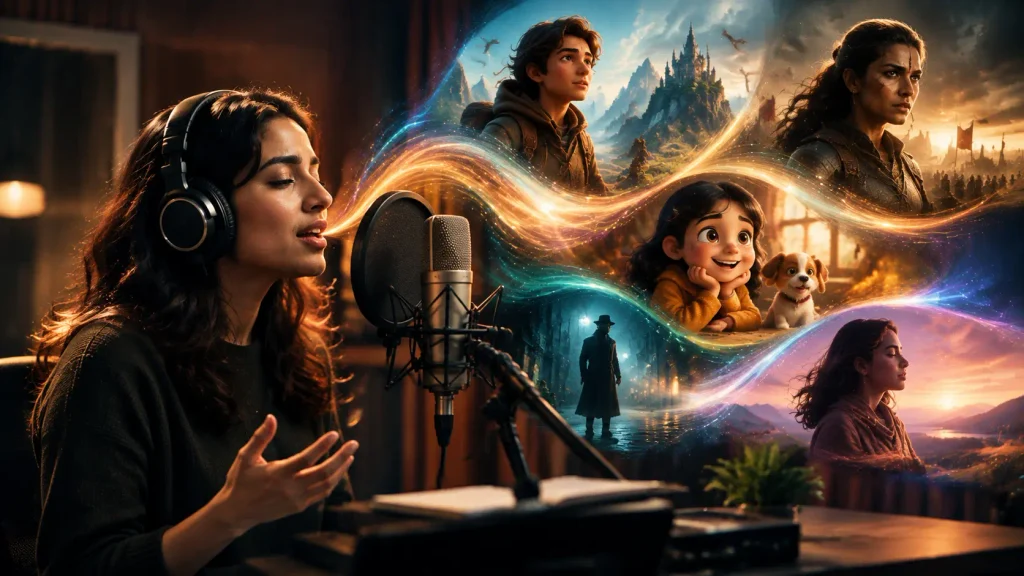
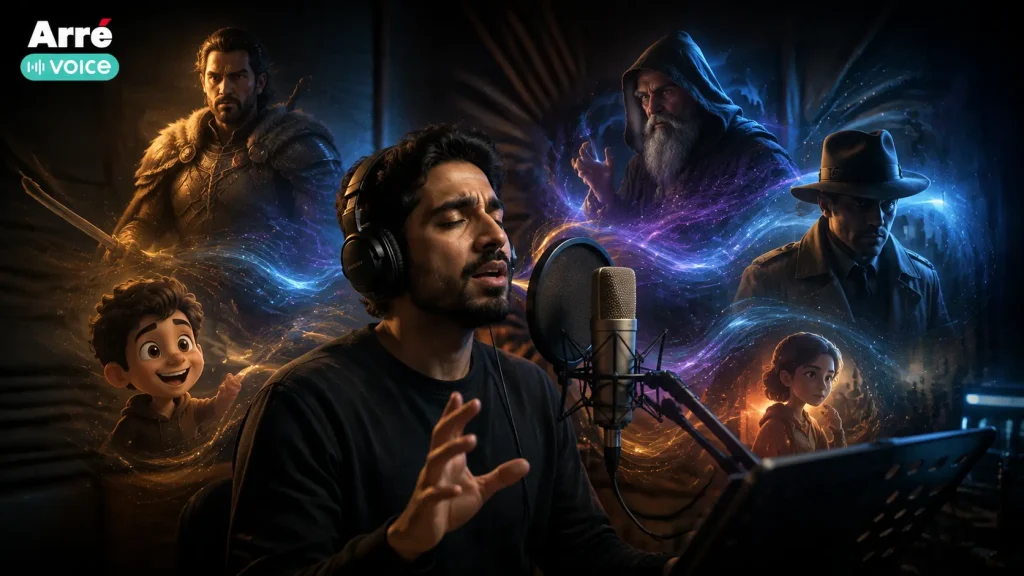
Voice acting is the art of using voice, emotion, and expression to bring characters, stories, and ideas to life. Professional voice acting combines vocal control, acting techniques, character interpretation, and storytelling skills to create engaging audio experiences that connect with audiences through sound alone.
Storytelling has always depended on the power of voice. Long before digital entertainment existed, stories were passed from one generation to another through spoken words, oral traditions, and performances. Today, voice has become even more important as audiences increasingly consume content through audio-first formats.
The rapid growth of podcasts, audiobooks, audio dramas, and voice-based digital experiences has transformed how people discover and experience stories. Listeners are no longer dependent only on visual entertainment. A powerful voice performance can create entire worlds, introduce memorable characters, and build emotional connections without a screen.
From animated films and video games to fictional audio series and creator-led storytelling platforms, voice actors play a crucial role in shaping how audiences experience narratives. A character’s personality, emotions, and identity often depend entirely on the voice behind it.
This makes voice acting more than simply reading words aloud. It is a performance skill that combines acting, vocal technique, emotional understanding, and storytelling ability.
What Is Voice Acting?
Voice acting is the process of using the human voice to perform characters, narrate stories, communicate emotions, and bring written scripts to life. Unlike regular speaking, voice acting requires intentional control over tone, pitch, rhythm, emotion, and delivery to create a specific experience for the listener.
A person speaking naturally in a conversation usually focuses on communicating information. A voice actor, however, focuses on creating a performance. They analyse the character, understand the emotions behind the words, and use their voice to express personality, mood, and intention.
For example, saying a sentence like:
“I can’t believe you did that.”
can have completely different meanings depending on how it is performed. It can express excitement, disappointment, anger, surprise, or sadness. Voice actors create these emotional differences through vocal choices.
Voice acting is widely used across multiple entertainment and communication formats, including:
- Animation and animated films
- Audio dramas and fictional storytelling
- Audiobooks
- Video games
- Podcasts
- Advertisements
- Digital storytelling platforms
- AI-powered voice experiences
In each format, the purpose of voice acting remains the same: using voice as a storytelling instrument.
Voice Acting vs Normal Speaking
Although everyone uses their voice to communicate, voice acting requires a different level of awareness and control.
Normal speaking focuses mainly on delivering information. Voice acting focuses on creating an emotional experience.
A voice actor must consider:
- Who is speaking?
- What emotions does the character feel?
- What does the character want?
- How should the audience feel during the scene?
This deeper understanding allows voice actors to transform simple dialogue into meaningful storytelling.
The Role of Voice Actors in Entertainment
Voice actors are responsible for creating the emotional identity of characters and stories. Their performance helps audiences connect with fictional worlds and understand characters beyond written words.
A successful voice actor can:
- Give a character a unique personality
- Create emotional moments
- Make stories more immersive
- Help audiences connect with characters
- Maintain engagement throughout a performance
In audio storytelling especially, the voice becomes the listener’s connection to the entire world of the story. Without visual elements, vocal performance carries the responsibility of creating imagination, emotion, and atmosphere.
Essential Skills Every Voice Actor Needs
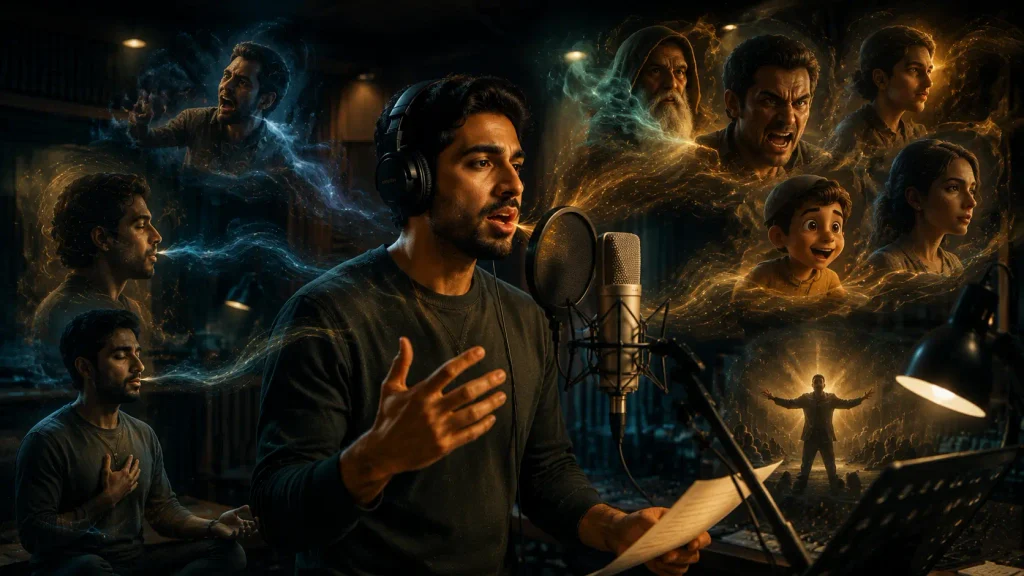
Becoming an effective voice actor requires more than having a pleasant voice. Professional voice performance combines technical control, acting ability, emotional intelligence, and storytelling skills.
Whether someone wants to perform in animation, audiobooks, podcasts, or digital storytelling, developing these core skills helps create more engaging performances.
Voice Control and Vocal Range
Voice control is one of the most important skills for any voice actor. It allows performers to adjust their voice according to different characters, emotions, and storytelling situations.
A strong vocal range helps actors create variety in their performances instead of delivering every line with the same tone.
Important elements of voice control include:
Pitch Control
Pitch refers to how high or low a voice sounds. Changing pitch can help communicate different emotions and character traits.
For example:
- A higher pitch may express excitement, curiosity, or nervousness.
- A lower pitch may create seriousness, confidence, or authority.
Voice actors use pitch changes to make characters feel unique and believable.
Tone Variation
Tone communicates the emotional quality behind words. The same sentence can feel completely different depending on the tone used.
A warm tone can make a character feel friendly and approachable, while a sharp tone can create tension or conflict.
Volume Control
Professional voice actors understand that louder does not always mean more emotional. Controlling volume helps create realistic performances.
A quiet voice can communicate:
- Fear
- Intimacy
- Mystery
- Sadness
A stronger voice can communicate:
- Confidence
- Excitement
- Anger
- Energy
Vocal Flexibility
Vocal flexibility allows actors to move naturally between different emotions, characters, and speaking styles.
This skill is especially important for:
- Animated characters
- Audio dramas
- Audiobooks with multiple characters
Developing vocal flexibility helps creators experiment with different voices and storytelling approaches.
For creators looking to improve their vocal expression, understanding [voice modulation] can help develop better control over tone, pitch, pace, and emotional delivery.
Emotional Expression
Voice acting depends heavily on emotional expression because audiences cannot always see the actor’s face or body language.
A voice actor must communicate feelings entirely through sound.
Important emotions communicated through voice include:
- Happiness
- Fear
- Anger
- Sadness
- Excitement
- Surprise
- Confidence
For example, a character experiencing fear may speak with:
- A faster pace
- A softer volume
- Increased hesitation
- Changes in breathing
A confident character may use:
- Controlled pacing
- Strong pronunciation
- Stable tone
Great voice acting allows listeners to understand what a character feels, even without visual clues.
Character Development
Creating memorable characters requires understanding who the character is beyond the script.
Before recording, voice actors often explore:
- Personality
- Background
- Motivation
- Relationships
- Speaking style
A character’s voice should reflect their experiences and personality.
For example:
A young, energetic character may have a faster speaking rhythm and expressive delivery.
A serious leader may use slower pacing, controlled emotion, and a stronger vocal presence.
Character development helps voice actors make performances feel authentic instead of simply reading dialogue.
Creators exploring digital storytelling can also experiment with AI Voice Characters to understand how voice identity influences character creation and audience connection.
Pronunciation and Clarity
Clear communication is essential in voice acting. Even an emotionally powerful performance can lose impact if listeners struggle to understand the words.
Voice actors improve clarity through:
- Proper pronunciation
- Strong diction
- Articulation exercises
- Controlled speech patterns
Good pronunciation does not mean every character must sound formal. A character may have an accent, unique vocabulary, or informal speech style while still remaining understandable.
The goal is natural and effective communication.
Acting Through Voice
At its core, voice acting is still acting.
A voice actor needs to understand:
- The character’s emotions
- The purpose behind each line
- The situation within the story
- How the audience should respond
Simply reading words from a script creates a flat performance. Acting through voice requires interpretation.
Professional voice actors ask questions such as:
- What does this character want?
- What emotion is hidden behind these words?
- How does this moment change the story?
This approach transforms voice performance from simple narration into immersive storytelling.
12 Voice Acting Tips to Improve Your Performance
Improving voice acting skills requires consistent practice, self-awareness, and experimentation. Whether you are a beginner creating your first recording or an experienced creator refining your performance, these voice acting tips can help develop stronger vocal storytelling abilities.
Understand Your Character Before Recording
Before speaking the first line, understand the character you are performing.
A strong voice performance begins with character preparation.
Consider:
- The character’s personality
- Their emotions in the scene
- Their background and experiences
- Their motivation and goals
A character who feels nervous should not sound identical to a character who feels confident. Understanding the character helps you make intentional voice choices instead of simply reading dialogue.
Practice Voice Warm-Up Exercises
Voice actors use warm-up exercises to prepare their voice before recording.
Warm-ups help improve:
- Vocal flexibility
- Breathing control
- Pronunciation
- Voice consistency
Useful exercises include:
Breathing Exercises
Controlled breathing helps maintain steady delivery and prevents vocal strain during longer recordings.
Vocal Relaxation
Relaxing the jaw, throat, and facial muscles helps create a more natural sound.
Articulation Practice
Exercises such as tongue twisters can improve clarity and speech accuracy.
Regular warm-up routines help creators maintain better vocal performance.
Control Your Voice Modulation
Voice modulation is the ability to change vocal elements such as tone, pitch, pace, and volume to create different emotional effects.
Without modulation, even an interesting story can sound flat.
Effective voice modulation helps communicate:
- Excitement
- Suspense
- Emotion
- Character differences
Understanding voice modulation techniques can significantly improve storytelling performance.
Use Emotion Instead of Just Reading Words
One of the biggest differences between reading a script and performing a story is emotional connection.
A reader focuses on the words.
A voice actor focuses on the meaning behind those words.
Before recording a line, understand:
- What emotion is present?
- What does the character want?
- What reaction should the listener experience?
Emotion transforms simple dialogue into memorable storytelling.
Experiment With Different Voice Styles
Strong voice actors are comfortable exploring different performance styles.
Experiment with:
- Character voices
- Narration styles
- Age variations
- Personality changes
- Speaking rhythms
Trying different approaches helps creators discover their unique voice and expand their creative possibilities.
Master Timing and Pauses
Silence is a powerful storytelling tool.
A well-placed pause can create:
- Suspense
- Emotional impact
- Dramatic tension
- Listener anticipation
Professional voice actors understand that storytelling is not only about the words spoken but also about when those words are delivered.
Record Yourself and Analyse Performance
Self-review is one of the fastest ways to improve voice acting skills.
Recording yourself helps identify:
- Unclear pronunciation
- Unnatural delivery
- Weak emotional moments
- Repetitive speaking patterns
Listening back allows creators to evaluate their performance objectively and make improvements.
Learn Microphone Techniques
Good voice acting also requires understanding recording techniques.
Important microphone practices include:
- Maintaining consistent distance
- Avoiding unwanted background noise
- Controlling volume levels
- Speaking clearly toward the microphone
Technical knowledge helps ensure that a strong performance sounds professional.
Study Professional Voice Actors
Learning from experienced performers helps beginners understand how great voice performances are created.
Study:
- Animation performances
- Audiobooks
- Audio dramas
- Character-based storytelling
Pay attention to:
- Emotional delivery
- Timing
- Character differences
- Voice control
Adapt Your Voice for Different Formats
Different content formats require different performance styles.
For example:
Audiobooks
Require sustained narration, character distinction, and consistent energy.
Podcasts
Often require a conversational and natural delivery style.
Characters
Require stronger personality, emotion, and vocal variation.
Narration
Requires clarity, pacing, and listener engagement.
Adapting your performance style helps voice actors work across different storytelling formats.
Improve Storytelling Ability
Great voice acting is not only about having a good voice. It is about understanding stories.
Strong voice actors focus on:
- Story structure
- Character emotions
- Audience connection
- Narrative flow
A technically perfect voice performance will not feel engaging without storytelling understanding.
Keep Practising Consistently
Like any creative skill, voice acting improves through regular practice.
Creators can improve by:
- Practising scripts daily
- Recording short performances
- Experimenting with different characters
- Reviewing previous recordings
- Learning from feedback
Consistency builds confidence, control, and creativity over time.
Voice Acting Techniques for Different Content Formats
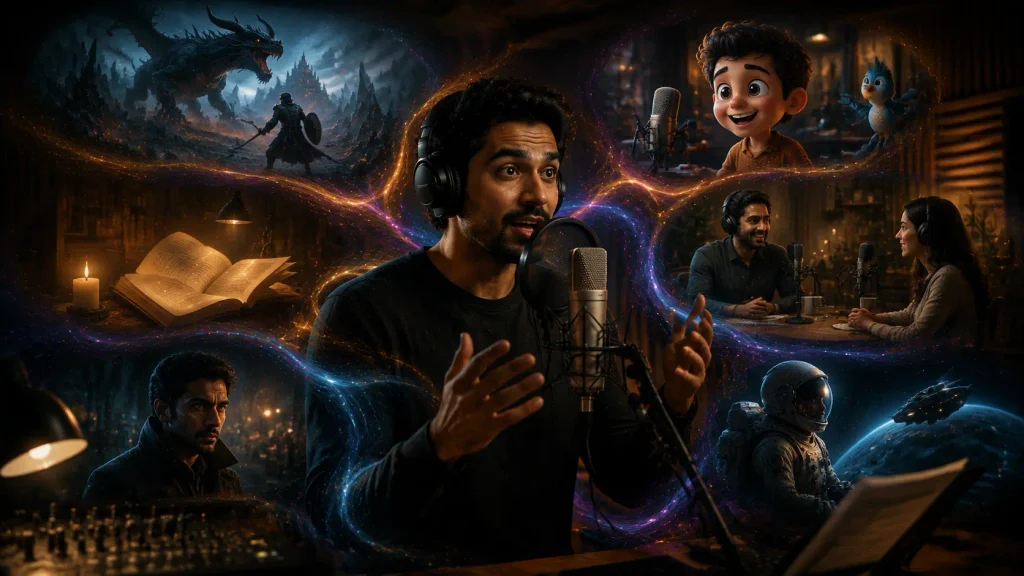
Voice acting techniques change depending on the type of content being created. A performance that works well for an animated character may not work for an audiobook or podcast.
Each format requires a different approach to voice, pacing, emotional expression, and audience connection.
Understanding these differences helps creators adapt their voice performance and create more engaging experiences across different storytelling platforms.
Voice Acting for Audio Stories
Audio storytelling depends almost entirely on voice performance to create characters, environments, and emotions. Since listeners cannot see facial expressions or visual scenes, voice actors must use their voice to help audiences imagine the story world.
A strong audio story performance combines character creation, narration skills, and emotional delivery.
Character Creation in Audio Stories
Characters in audio stories are built through vocal choices.
Voice actors create unique characters by adjusting:
- Tone
- Pitch
- Speaking rhythm
- Vocabulary
- Emotional style
For example, an energetic character may speak quickly with expressive changes in tone, while a mysterious character may use slower pacing and controlled delivery.
A memorable character voice should feel connected to the character’s personality, background, and role within the story.
Narration Techniques for Audio Stories
Narration guides the listener through the story and provides context between character interactions.
Effective narration requires:
- Clear pronunciation
- Natural pacing
- Emotional awareness
- Consistent storytelling flow
A narrator should avoid sounding like they are simply reading text. Instead, they should create the feeling of personally guiding the listener through the story.
Emotional Delivery in Audio Storytelling
Emotion is one of the most important elements of voice acting for audio stories.
Without visual elements, listeners depend on vocal performance to understand:
- Character emotions
- Story tension
- Important moments
- Relationships between characters
A change in tone, a carefully placed pause, or a softer delivery can completely change how a listener experiences a scene.
Creators interested in understanding how voice creates immersive narratives can explore more about audio storytelling techniques and how voice performance shapes listener experiences.
Voice Acting for Podcasts
Podcasts often require a more natural and conversational voice style compared to fictional storytelling.
Unlike character-based performances, podcast voice acting focuses on creating a connection between the speaker and the listener.
The goal is to make the audience feel as if they are part of a genuine conversation.
Developing a Conversational Tone
A successful podcast voice should feel authentic and approachable.
Effective podcast delivery includes:
- Natural speaking patterns
- Comfortable pacing
- Appropriate energy levels
- Clear communication
Overly scripted delivery can make a podcast feel distant, while a relaxed and natural tone helps build trust with listeners.
Creating Listener Connection
Great podcast hosts understand that voice creates a relationship with the audience.
Voice choices can communicate:
- Confidence
- Friendliness
- Curiosity
- Expertise
- Personality
A warm and engaging voice encourages listeners to stay connected throughout an episode.
Natural Delivery in Podcasts
Podcast voice acting requires balance.
The speaker should sound prepared but not robotic.
This involves:
- Understanding the topic
- Practising delivery
- Avoiding unnecessary pauses
- Maintaining a consistent speaking style
The best podcast performances feel effortless because the creator has developed strong control over their voice.
Voice Acting for Audiobooks
Audiobooks require a unique combination of narration skills and acting ability. Unlike short-form content, audiobook performances may continue for several hours, making consistency and vocal control extremely important.
A successful audiobook narrator must maintain listener engagement while carrying an entire story through voice.
Long-Form Narration Skills
Audiobook narration requires:
- Strong vocal stamina
- Consistent pacing
- Clear pronunciation
- Emotional awareness
The narrator must maintain the same character voices, energy levels, and storytelling style throughout a long recording.
Character Differentiation
Many audiobooks include multiple characters, requiring voice actors to create clear differences between personalities.
Character differentiation can be achieved through:
- Different speech patterns
- Changes in tone
- Unique vocal qualities
- Emotional variations
The goal is not always to create exaggerated voices but to make each character recognisable and believable.
Maintaining Energy Throughout a Performance
One of the biggest challenges in audiobook narration is maintaining engagement over long periods.
Professional narrators focus on:
- Managing breathing
- Maintaining vocal health
- Controlling pacing
- Understanding story progression
A consistent performance keeps listeners emotionally connected from the beginning to the end of the story.
Voice Acting for AI-Assisted Content
AI voice technology is creating new opportunities for creators by making voice experimentation, character development, and storytelling workflows more accessible.
Instead of replacing creative performance, AI tools are increasingly being used as creative assistants that help creators explore new possibilities.
AI Voice Experimentation
Creators can use AI voice technology to explore:
- Different character voices
- Alternative narration styles
- Voice variations
- Story prototypes
This allows creators to test ideas before final production.
For example, a storyteller developing an audio drama may experiment with different character voices to understand which performance style best fits the story.
Creating Digital Characters
AI-assisted voice tools can help creators develop digital characters with unique identities.
Character creation can involve:
- Voice personality
- Emotional style
- Speaking patterns
- Character consistency
This creates new possibilities for interactive storytelling and digital entertainment experiences.
Creative Voice Workflows
AI can support different stages of storytelling, including:
- Early concept development
- Character experimentation
- Script testing
- Audio production workflows
The future of voice storytelling will likely involve collaboration between human creativity, performance skills, and AI-powered tools.
Creators exploring these possibilities can learn more about AI Voice Technology and how emerging tools are transforming digital storytelling.
How Voice Actors Create Memorable Characters
A memorable character is not created only through a unique voice. It is created through a combination of personality, emotion, speech patterns, and consistent performance.
Great voice actors understand that the voice should reveal something about the character.
A character’s voice can communicate:
- Their personality
- Their experiences
- Their emotions
- Their worldview
Voice Personality
Every memorable character has a unique sound identity.
Voice personality refers to the qualities that make a character’s voice recognisable.
This can include:
- Vocal tone
- Speaking speed
- Energy level
- Confidence
- Emotional style
For example, a cheerful character may have an energetic and expressive voice, while a serious character may use controlled and measured speech.
Emotional Delivery
Emotion transforms a voice from simple dialogue into storytelling.
A character’s emotions influence:
- How words are spoken
- The pace of delivery
- The intensity of the performance
- The relationship with the audience
A skilled voice actor understands the emotion behind every line instead of focusing only on the words.
Speech Patterns
Speech patterns help define character identity.
Important elements include:
Rhythm
The speed and flow of speech can reveal personality.
A nervous character may speak quickly, while a thoughtful character may pause frequently.
Accent
Accent can provide information about a character’s background, location, or identity.
Vocabulary
The words a character chooses can reveal their personality, education, age, and experiences.
Character Consistency
A strong character voice must remain consistent throughout the story.
Consistency helps audiences recognise and connect with characters.
Voice actors maintain consistency by remembering:
- Vocal choices
- Emotional patterns
- Speaking style
- Character motivation
This is especially important in long-form storytelling such as audiobooks, audio dramas, and interactive experiences.
Voice Acting vs Voice Narration: What Is the Difference?
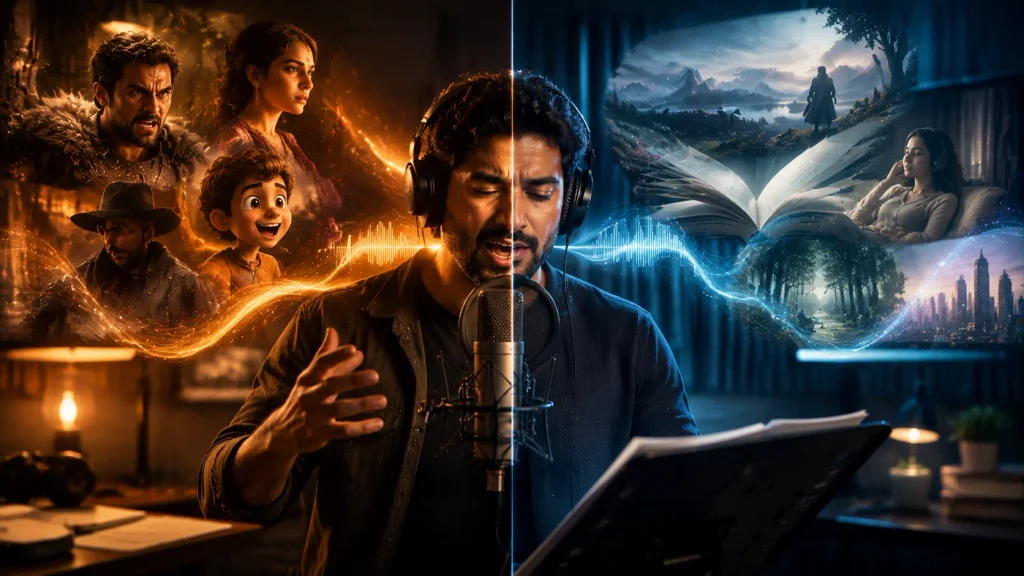
Voice acting and voice narration are closely related but serve different purposes in storytelling.
Both use vocal performance, but their goals are different.
| Voice Acting | Voice Narration |
| Creates and performs characters | Tells or explains the story |
| Uses different personalities and emotions | Focuses on guiding the audience |
| More performance-driven | More explanation-driven |
| Common in animation, games, and dramas | Common in audiobooks, documentaries, and educational content |
Understanding Voice Acting
Voice acting focuses on becoming a character.
The performer uses their voice to communicate:
- Personality
- Emotions
- Relationships
- Character development
The goal is to make the audience believe in the character.
Understanding Voice Narration
Voice narration focuses on guiding the listener through information or a story.
Narrators usually focus on:
- Clarity
- Flow
- Engagement
- Story structure
A narrator may not create separate character voices but still needs strong storytelling ability.
Which One Should Creators Learn?
The choice depends on the type of content being created.
Creators making:
- Fictional stories
- Audio dramas
- Animated content
may focus more on voice acting.
Creators creating:
- Podcasts
- Audiobooks
- Educational content
may focus more on narration skills.
However, strong storytelling often requires understanding both.
How AI Voice Technology Is Changing Voice Acting
AI voice technology is changing how creators approach voice production, character development, and digital storytelling.
Rather than replacing human creativity, AI is becoming a tool that helps creators experiment faster and explore new forms of storytelling.
AI-Assisted Character Voices
AI-powered voice tools allow creators to experiment with different character concepts.
Applications include:
- Testing character ideas
- Creating voice prototypes
- Exploring different performance styles
- Developing interactive experiences
Human creativity remains essential because emotional understanding and storytelling decisions shape meaningful performances.
Digital Voice Experimentation
Traditional voice production often requires significant time and resources.
AI tools can help creators quickly explore:
- Different voices
- Character variations
- Story possibilities
This makes voice experimentation more accessible for independent creators.
Faster Story Prototyping
Creators can use AI-assisted workflows during early development stages.
Examples include:
- Testing scripts
- Exploring dialogue
- Previewing character interactions
This allows creators to refine ideas before final production.
Human Creativity + AI Collaboration
The future of voice acting is likely to involve collaboration between human performers and AI technology.
Human creators bring:
- Emotion
- Imagination
- Story understanding
- Artistic decisions
AI tools provide:
- Experimentation
- Speed
- New creative possibilities
Together, they can expand the possibilities of digital storytelling.
Creators interested in the relationship between AI and voice performance can explore more about AI Voice Acting and emerging voice technologies.
Common Voice Acting Mistakes Beginners Should Avoid
Learning voice acting involves understanding what improves a performance and what can weaken it.
Many beginners focus only on having a good voice, but successful voice acting depends on technique, preparation, and storytelling ability.
Speaking Without Emotion
One of the most common mistakes is delivering lines without emotional connection.
A technically clear voice can still feel unnatural if the performer does not understand the feeling behind the words.
Solution:
Before recording, understand the character’s emotions and intentions.
Ignoring Character Context
A voice performance becomes stronger when the actor understands the complete story.
Ignoring:
- Character background
- Relationships
- Motivation
can make performances feel disconnected.
Poor Microphone Technique
Even a strong performance can lose quality because of poor recording practices.
Common issues include:
- Inconsistent distance from the microphone
- Incorrect volume levels
- Background noise
Learning basic microphone techniques improves overall production quality.
Overacting
Beginners sometimes exaggerate emotions too much.
Effective voice acting requires believable emotion, not forced performance.
The goal is to make listeners feel the emotion naturally.
Lack of Practice
Voice acting is a skill that improves through repetition.
Without regular practice, creators may struggle with:
- Vocal control
- Character consistency
- Emotional delivery
Inconsistent Delivery
A character should sound the same throughout a story.
Changing voice style, tone, or emotional approach without reason can reduce audience connection.
Consistency helps create believable characters and professional-quality performances.
How Beginners Can Start Their Voice Acting Journey
Starting a voice acting journey does not require expensive equipment or years of professional training. Many successful voice creators begin by practising basic vocal techniques, understanding storytelling, and consistently improving their performance.
Voice acting is a skill that develops over time through experimentation, feedback, and practice. Beginners can build confidence by creating a structured learning routine and exploring different types of voice performances.
Build a Practice Routine
Consistent practice is one of the most important parts of improving voice acting skills.
Like any creative discipline, voice performance improves through regular repetition and feedback.
A beginner-friendly practice routine can include:
- Vocal warm-up exercises
- Reading scripts aloud
- Practising different emotions
- Recording short performances
- Reviewing previous recordings
Even 15–30 minutes of focused practice each day can help improve:
- Voice control
- Confidence
- Emotional expression
- Speaking clarity
The goal is not just to make your voice sound different but to develop control over how your voice communicates meaning.
Create Sample Recordings
Creating sample recordings helps beginners understand their strengths and identify areas for improvement.
A simple voice portfolio can include different types of performances such as:
Character Performance
Record short dialogues using different personalities, emotions, and speaking styles.
Examples:
- A confident hero
- A mysterious character
- A humorous personality
- An emotional scene
Narration Sample
Practice reading:
- Story passages
- Articles
- Audiobook-style content
Focus on:
- Clear pronunciation
- Natural pacing
- Emotional connection
Conversational Sample
Record yourself speaking naturally, similar to a podcast style.
This helps improve:
- Authentic delivery
- Listener connection
- Natural expression
Reviewing these recordings over time helps beginners track their progress and improve their technique.
Explore Different Genres
Voice acting includes many different styles, and exploring multiple formats helps creators discover their strengths.
Beginners can experiment with:
- Animation characters
- Audiobooks
- Podcasts
- Audio dramas
- Advertisements
- Video game characters
- Educational content
Each genre develops different skills.
For example:
- Animation improves character expression.
- Audiobooks improve narration and vocal consistency.
- Podcasts improve conversational delivery.
- Audio dramas improve emotional acting.
Exploring different genres allows creators to build versatility and discover the type of voice storytelling they enjoy most.
Improve Storytelling Skills
Great voice actors understand that voice is only one part of storytelling.
A powerful performance requires understanding:
- Story structure
- Character motivations
- Emotional moments
- Audience expectations
A voice actor who understands the story can make better performance decisions.
Instead of asking:
“How should I say this line?”
A skilled performer asks:
“What is this character feeling, and what should the audience experience?”
This shift from reading words to understanding stories is what creates memorable voice performances.
Join Creator Communities
Learning from other creators can accelerate improvement.
Voice acting communities provide opportunities to:
- Share performances
- Receive feedback
- Learn new techniques
- Discover collaboration opportunities
Creator communities are especially valuable because voice acting is not only a technical skill but also a creative discipline.
Interacting with other storytellers, writers, and performers helps beginners understand how voice connects with broader storytelling experiences.
The Future of Voice Acting in Digital Storytelling
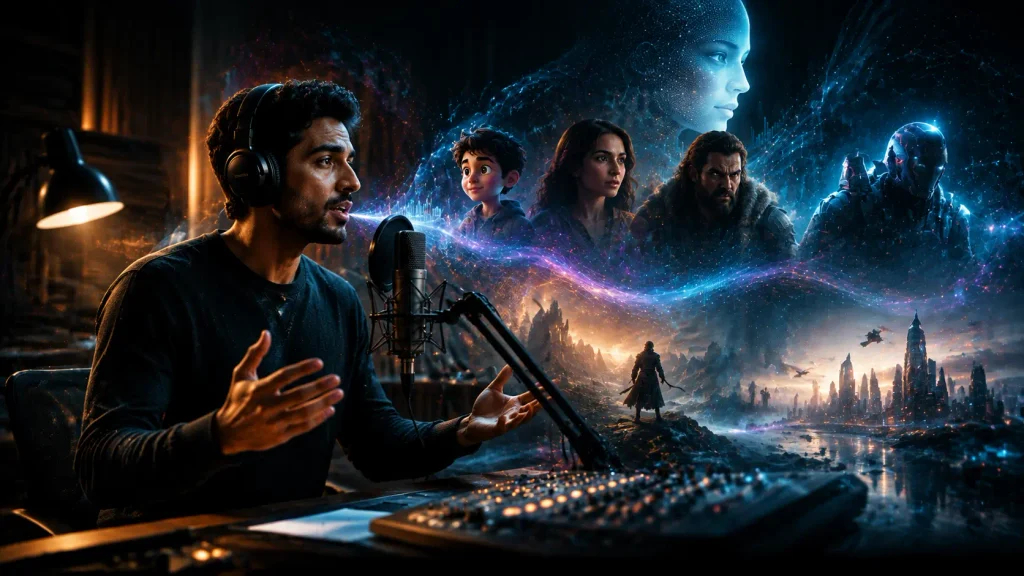
Voice acting is entering a new era where human performance, digital platforms, and emerging technologies are expanding the possibilities of storytelling.
The growth of podcasts, audiobooks, audio dramas, and interactive entertainment has increased demand for engaging voice experiences.
At the same time, AI-powered voice technology is creating new ways for creators to experiment with characters, develop stories, and build immersive digital experiences.
The future of voice acting will combine human creativity, emotional performance, and emerging voice technology.
Growth of Audio Entertainment
Audio has become one of the fastest-growing forms of digital entertainment because it allows audiences to consume stories while performing other activities.
People listen to content while:
- Travelling
- Exercising
- Working
- Relaxing
This shift has increased opportunities for:
- Voice actors
- Audio storytellers
- Podcast creators
- Digital performers
As audiences continue looking for personalised and immersive experiences, voice will remain an important storytelling medium.
AI-Powered Storytelling
Artificial intelligence is introducing new possibilities in voice creation and storytelling workflows.
AI tools can support creators by helping with:
- Voice experimentation
- Character development
- Story prototypes
- Creative exploration
Rather than replacing human storytelling, AI can help creators test ideas faster and explore new creative directions.
The most effective future workflows will likely combine:
- Human emotional intelligence
- Creative decision-making
- AI-assisted production tools
Creators can explore more about how technology is transforming voice experiences through AI Voice Technology and AI Voice Acting.
Interactive Characters and Digital Experiences
Future storytelling experiences may move beyond passive listening.
Interactive characters powered by voice technology can create more personalised experiences where audiences can:
- Communicate with characters
- Influence story directions
- Explore dynamic narratives
This creates opportunities for new forms of entertainment where voice becomes a bridge between creators, stories, and audiences.
Creator-Driven Voice Experiences
The creator economy is changing how stories are produced and shared.
Today, independent creators can build audiences through:
- Audio stories
- Podcasts
- Voice communities
- Digital storytelling platforms
Voice technology makes it easier for creators to experiment, publish ideas, and connect directly with listeners.
The future of voice acting will not only belong to traditional entertainment industries. It will also belong to individual creators building unique storytelling experiences.
How Arré Voice Helps Creators Explore Voice Storytelling
Modern storytelling is becoming increasingly voice-driven, creating new opportunities for creators to experiment with characters, narratives, and audio experiences.
Arré Voice helps creators explore voice-based storytelling by providing a space where they can create, discover, and engage with audio content.
Create Voice-Based Stories
Creators can use voice as a storytelling medium to share:
- Personal narratives
- Fictional stories
- Character-driven experiences
- Audio conversations
Voice allows creators to communicate emotion and personality in a way that feels direct and personal.
Experiment With Characters
Voice experimentation is an important part of developing memorable storytelling experiences.
Creators can explore:
- Different character personalities
- Emotional styles
- Storytelling approaches
- Unique voice expressions
This experimentation helps creators understand how voice influences character identity and audience connection.
Discover Audio Experiences
Listeners are increasingly discovering stories through audio formats.
Voice-based platforms allow audiences to explore:
- New storytellers
- Different genres
- Unique perspectives
- Creative audio experiences
This creates a connection between creators who produce stories and listeners who discover them.
Connect With Listeners
Voice creates a personal relationship between creators and audiences.
Unlike many traditional content formats, audio allows listeners to focus deeply on:
- The creator’s personality
- The emotion behind the story
- The meaning behind the words
Platforms built around voice storytelling help creators develop stronger relationships with their communities.
Create and discover stories with Arré Voice.
Frequently Asked Questions
What Is Voice Acting?
Voice acting is the practice of using vocal performance, emotion, and expression to bring characters, stories, and ideas to life. Voice actors use techniques such as tone variation, character development, and emotional delivery to create engaging experiences in animation, audiobooks, games, podcasts, and digital storytelling.
How Can Beginners Improve Voice Acting Skills?
Beginners can improve voice acting skills through consistent practice, vocal exercises, recording themselves, studying performances, and developing storytelling abilities. Building control over voice modulation, emotion, pronunciation, and character creation helps improve overall performance.
What Skills Do Voice Actors Need?
Voice actors need skills such as vocal control, emotional expression, character development, pronunciation, acting ability, and storytelling understanding. They also need technical skills related to recording equipment and microphone techniques to create professional-quality performances.
How Do Voice Actors Create Different Characters?
Voice actors create different characters by changing vocal elements such as pitch, tone, rhythm, accent, vocabulary, and emotional style. They also study the character’s personality, background, and motivations to create a believable performance.
How Can I Make My Voice Sound Better for Acting?
You can improve your voice for acting by practising breathing exercises, improving pronunciation, controlling voice modulation, recording yourself, and experimenting with different delivery styles. Regular practice helps develop vocal confidence and flexibility.
What Is the Difference Between Voice Acting and Narration?
Voice acting focuses on creating and performing characters, while narration focuses on guiding listeners through a story or information. Voice acting is commonly used in animation, games, and audio dramas, while narration is common in audiobooks, documentaries, and educational content.
Is Voice Modulation Important for Voice Acting?
Yes, voice modulation is essential for voice acting because it helps performers communicate emotions, create character differences, and maintain listener engagement. Changes in pitch, tone, pace, and volume allow voice actors to make performances more expressive.
Can AI Help Voice Actors?
AI can support voice actors by helping with experimentation, character development, voice prototypes, and creative workflows. AI tools can expand creative possibilities while human performers continue to provide emotional understanding, storytelling decisions, and artistic direction.
How Do I Practice Voice Acting at Home?
You can practise voice acting at home by reading scripts aloud, recording your voice, performing different characters, practising emotions, improving pronunciation, and analysing your recordings. A consistent daily routine can gradually improve vocal control and performance skills.
Is Voice Acting Important for Audio Storytelling?
Yes, voice acting is one of the most important elements of audio storytelling because listeners rely on voice to understand characters, emotions, and story moments. Strong voice performance helps create immersive experiences even without visual elements.




[…] interested in improving character performances can explore more about voice acting tips and how vocal techniques influence […]