
Why Fiction Podcasts Are Changing Digital Storytelling
Fiction podcasts are scripted audio stories that combine voice acting, narration, sound effects, music, and storytelling techniques to create immersive listening experiences. They allow audiences to explore fictional worlds, characters, mysteries, and emotional journeys through sound rather than visuals.
Storytelling has always evolved alongside the way people consume entertainment. From traditional oral storytelling around communities to books, films, television, and digital platforms, every era has introduced new ways for audiences to experience stories.
Today, audio is experiencing a powerful revival through podcasts, audiobooks, and fiction-based audio experiences. Fiction podcasts are becoming an important part of this transformation by bringing scripted storytelling into a format that fits modern lifestyles.
Unlike traditional visual entertainment, fiction podcasts allow listeners to create their own imagination-driven experiences. A carefully performed voice, a dramatic pause, background sounds, and music can help audiences visualise entire worlds without ever seeing them on screen.
The growth of smartphones, streaming platforms, and on-demand entertainment has made audio storytelling more accessible than ever. People can now experience fictional stories while travelling, exercising, working, or relaxing.
Fiction podcasts are not simply audio versions of written stories. They combine multiple creative disciplines, including:
- Scriptwriting
- Voice acting
- Character development
- Sound design
- Music composition
- Narrative direction
Together, these elements create immersive experiences where sound becomes the tool for building characters, emotions, and fictional worlds.
As audiences continue searching for more personalised and flexible entertainment formats, fiction podcasts represent the future of audio-first storytelling.
What Are Fiction Podcasts?
Fiction podcasts are scripted audio stories created specifically for digital listening platforms. They use voice performances, narration, sound effects, music, and storytelling techniques to create fictional experiences for audiences.
Unlike traditional podcasts that often focus on conversations, interviews, news, or educational discussions, fiction podcasts are designed around storytelling.
They can include:
- Fictional characters
- Scripted dialogue
- Dramatic performances
- Imaginary worlds
- Narrative structures similar to films or television shows
A fiction podcast allows listeners to experience stories through sound, where voices and audio elements replace visual scenes.
For example, a mystery fiction podcast may use:
- A narrator describing events
- Characters revealing information through dialogue
- Background sounds creating atmosphere
- Music building suspense
Together, these elements help listeners imagine the story in their own way.
Fiction Podcasts vs Regular Podcasts
Although both formats use audio, their purpose and structure are different.
Regular podcasts are generally based on real-world conversations or information sharing. They may include:
- Interviews
- Discussions
- Educational content
- News analysis
- Personal stories
Fiction podcasts, on the other hand, are built around imagined narratives.
They focus on:
- Characters
- Story arcs
- Emotional journeys
- Dramatic experiences
A regular podcast might feature a host discussing a topic, while a fiction podcast might feature a fictional detective solving a mystery through scripted episodes.
How Fiction Podcasts Combine Different Storytelling Elements
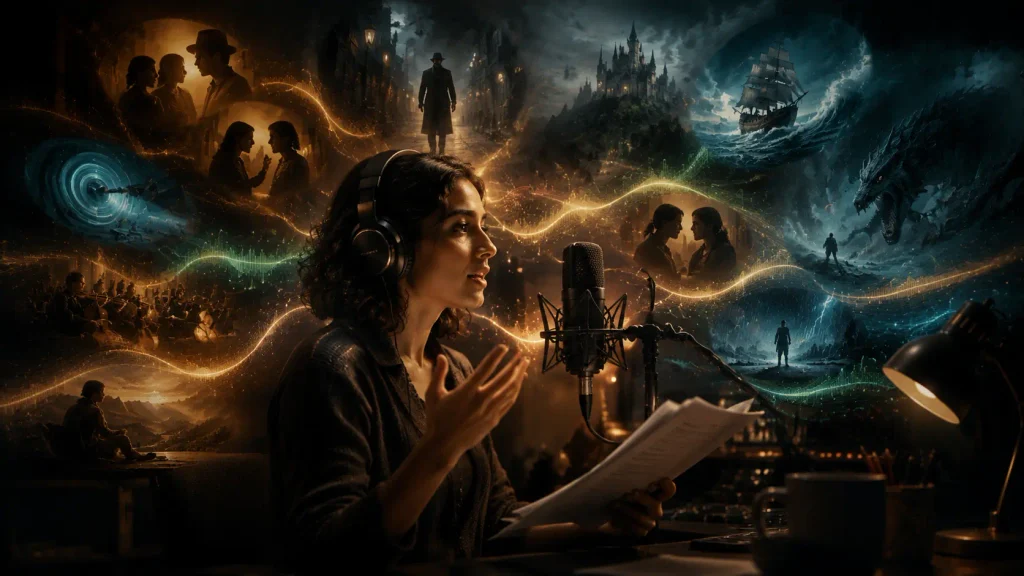
Creating a successful fiction podcast requires multiple creative skills working together.
Scriptwriting
The foundation of every fiction podcast is a strong script.
Writers develop:
- Characters
- Dialogue
- Story structure
- Conflicts
- Emotional moments
A well-written script helps voice actors understand character motivations and allows listeners to follow the story naturally.
Voice Acting
Voice acting gives characters their personality and emotional identity.
A voice actor helps audiences understand:
- How a character feels
- What kind of personality they have
- How they respond to situations
Through changes in:
- Tone
- Pitch
- Rhythm
- Emotion
voice actors transform written dialogue into believable performances.
Creators interested in improving character performances can explore more about voice acting tips and how vocal techniques influence storytelling.
Sound Design
Sound design creates the environment of a fiction podcast.
Background sounds can help listeners imagine:
- Locations
- Actions
- Atmosphere
- Emotional moments
For example:
- Footsteps can create tension.
- Rain sounds can establish mood.
- Background conversations can make a scene feel realistic.
Sound design acts as the invisible world-building layer of audio storytelling.
Music
Music helps control the emotional direction of a story.
A suspenseful soundtrack can increase tension, while softer music can create emotional depth.
Music helps communicate:
- Mood
- Energy
- Dramatic importance
- Story transitions
Character Performance
Characters are what make fiction podcasts memorable.
Strong character performances help listeners develop emotional connections with fictional personalities.
A memorable character usually has:
- A unique voice identity
- Clear motivations
- Emotional depth
- Consistent behaviour
This combination allows audiences to become invested in the character’s journey.
Popular Fiction Podcast Formats
Fiction podcasts are available in many storytelling formats, allowing creators to experiment with different narrative styles.
Audio Dramas
Audio dramas are among the most popular forms of fiction podcasts.
They are similar to traditional radio dramas and usually include:
- Multiple characters
- Scripted dialogue
- Sound effects
- Dramatic performances
The focus is on creating a cinematic experience through sound.
Fiction Series
Fiction podcast series tell stories across multiple episodes.
This format allows creators to develop:
- Longer story arcs
- Character growth
- Episode-based suspense
Listeners return regularly to follow the continuation of the story.
Serialized Stories
Serialized fiction podcasts release stories chapter by chapter.
This approach creates anticipation because each episode may introduce:
- New conflicts
- Character developments
- Unexpected events
It encourages long-term audience engagement.
Narrative Podcasts
Narrative podcasts combine storytelling with structured narration.
They often include:
- A central narrator
- Story explanations
- Character conversations
- Sound effects
This format works well for mystery, documentary-style fiction, and immersive storytelling.
Interactive Audio Stories
Interactive audio stories create more personalised experiences by allowing listeners to influence or engage with the story.
Future formats may include:
- Choose-your-own-adventure experiences
- Voice-controlled characters
- Adaptive storylines
These experiences represent the growing connection between storytelling, technology, and audience participation.
Why Are Fiction Podcasts Becoming Popular?

The popularity of fiction podcasts is connected to changing entertainment habits and the growing demand for flexible, immersive storytelling experiences.
Audiences are increasingly looking for content that fits into their daily routines while still providing emotional engagement.
Audio Entertainment Growth
The growth of digital audio has created new opportunities for fiction-based storytelling.
Podcasts have become a major entertainment format because they offer:
- Easy access
- On-demand listening
- Wide variety of topics
- Personalised experiences
Unlike traditional entertainment that requires dedicated screen time, audio allows people to consume stories while continuing other activities.
The rise of smartphones and streaming platforms has made fiction podcasts available to audiences around the world.
Mobile Listening Habits
Modern audiences increasingly consume content through mobile devices.
People now listen to stories during moments such as:
- Daily commutes
- Travel
- Exercise sessions
- Household activities
This convenience has made audio storytelling an attractive alternative to video-based entertainment.
Fiction podcasts allow listeners to experience complete narratives without requiring constant visual attention.
Imagination-Driven Experiences
One of the biggest strengths of fiction podcasts is their ability to activate imagination.
When watching a film, audiences see the characters and environments created by filmmakers.
With audio storytelling, listeners create their own mental images.
A single voice performance can inspire different interpretations among different listeners.
This personal imagination creates a deeper sense of participation because audiences become active creators of the story world in their minds.
Emotional Connection Through Sound
Sound has a powerful ability to influence emotions.
A character’s voice can communicate feelings such as:
- Happiness
- Fear
- Excitement
- Sadness
- Suspense
Small details such as breathing, pauses, and changes in tone can make fictional experiences feel more personal.
Convenience of Listening
Fiction podcasts fit naturally into modern lifestyles.
People listen while:
- Travelling
- Exercising
- Working
- Relaxing
- Performing daily tasks
This flexibility allows storytelling to become part of everyday routines.
Unlike video content, audio does not require visual attention, making it easier for audiences to consume stories throughout the day.
Rise of Immersive Storytelling
Modern fiction podcasts are becoming more cinematic through advanced production techniques.
Creators now use:
- Professional voice performances
- Detailed sound effects
- Atmospheric music
- Spatial audio experiences
These elements create immersive environments where listeners feel surrounded by the story.
The result is an entertainment experience that combines the imagination of books with the emotional impact of performance.
What Makes a Great Fiction Podcast?
A successful fiction podcast requires more than an interesting idea. Great audio stories combine strong writing, memorable characters, professional performances, and immersive production.
Compelling Story Structure
A strong fiction podcast begins with a compelling narrative structure.
Important storytelling elements include:
Strong Opening
The first episode or opening moments should capture attention quickly.
A strong beginning introduces:
- The world
- The characters
- The central conflict
Conflict
Conflict creates movement within the story.
It gives characters challenges and keeps audiences interested.
Character Journey
Great fiction podcasts show characters changing over time.
Listeners become more invested when they understand:
- Character goals
- Personal struggles
- Emotional growth
Resolution
A satisfying conclusion helps audiences feel connected to the overall story journey.
Memorable Characters
Characters are the emotional foundation of fiction podcasts.
A memorable character requires:
- Unique personality
- Emotional depth
- Distinct voice identity
- Clear motivations
Voice plays a major role in making characters recognisable.
Different vocal styles, speech patterns, and emotional expressions help audiences remember and connect with fictional personalities.
Creators exploring character development can learn more through AI Voice Characters and how voice identity shapes digital characters.
Professional Voice Acting
Voice acting is one of the most important elements of fiction podcasts because audiences experience the entire story through sound.
Strong voice performances include:
- Emotional delivery
- Character variation
- Natural dialogue
- Expressive storytelling
Professional voice actors understand how to communicate meaning beyond words.
They use:
- Tone
- Timing
- Pauses
- Vocal expression
to make characters feel authentic.
Creators can improve their performances by learning more about voice acting techniques and developing stronger vocal storytelling skills.
Immersive Sound Design
Sound design transforms a simple recording into an immersive experience.
Important elements include:
- Background sounds
- Environmental atmosphere
- Music
- Audio effects
- Spatial audio
For example, a horror fiction podcast may use:
- Distant footsteps
- Wind sounds
- Silence
- Sudden audio changes
to create tension and suspense.
Sound design allows listeners to imagine the world beyond the dialogue.
Consistent Storytelling
Successful fiction podcasts maintain consistency throughout their episodes.
This includes:
- Character behaviour
- Episode structure
- Story progression
- Emotional tone
Consistency helps audiences stay connected and encourages them to continue listening.
A well-developed fiction podcast does not only tell a story; it creates an ongoing relationship between the audience and the fictional world.
Best Fiction Podcasts to Listen To
Fiction podcasts are available across a wide range of genres, allowing listeners to choose stories based on their interests, moods, and preferred storytelling styles.
Whether someone enjoys suspenseful mysteries, imaginative fantasy worlds, futuristic adventures, or emotional human stories, audio fiction offers a unique way to experience narratives through voice, sound, and imagination.
Unlike traditional entertainment formats, fiction podcasts allow listeners to create their own mental images while experiencing professionally performed stories.
Below are some popular fiction podcast categories that showcase the diversity of audio storytelling.
Best Fiction Podcasts for Mystery and Thriller Fans
Mystery and thriller fiction podcasts are among the most engaging audio storytelling formats because they use suspense, investigation, and unexpected twists to keep listeners connected.
These stories often focus on:
- Unsolved mysteries
- Crime investigations
- Psychological conflicts
- Hidden secrets
- Suspenseful character journeys
Without visual elements, mystery podcasts rely heavily on:
- Voice performances
- Sound effects
- Story pacing
- Atmospheric audio
A carefully designed sound environment can make listeners feel as if they are inside the investigation.
For example, the sound of footsteps, a distant conversation, or a change in background music can create tension and encourage listeners to imagine what happens next.
What Makes Mystery Fiction Podcasts Engaging?
Successful mystery podcasts usually include:
- A strong central mystery
- Characters with hidden motivations
- Unexpected story developments
- Gradual discovery of information
The audio format works especially well for mystery because imagination becomes part of the experience. Listeners actively interpret clues and build their own theories as the story unfolds.
Best Fiction Podcasts for Horror Fans
Horror fiction podcasts create fear and suspense by using the power of sound and imagination.
Unlike visual horror, where audiences see the threat directly, audio horror allows listeners to create their own version of fear.
Horror storytelling often uses:
- Atmospheric sound design
- Silence and pauses
- Disturbing environments
- Emotional voice performances
- Paranormal themes
Types of Horror Fiction Podcasts
Popular horror formats include:
- Paranormal investigations
- Supernatural stories
- Psychological horror
- Dark fantasy
- Creature-based fiction
A whisper, a sudden sound, or an unfamiliar voice can create powerful emotional reactions because listeners fill the gaps using their imagination.
This makes audio horror one of the strongest examples of immersive storytelling.
Best Fiction Podcasts for Fantasy Lovers
Fantasy fiction podcasts allow creators to build entirely new worlds through sound.
These stories often include:
- Magical worlds
- Mythical characters
- Epic adventures
- Imaginary civilizations
- Heroic journeys
Fantasy audio storytelling depends heavily on world-building because creators need to help listeners imagine places and characters without visual support.
Elements of Strong Fantasy Fiction Podcasts
Great fantasy stories usually focus on:
- Detailed fictional worlds
- Memorable characters
- Emotional journeys
- Rich storytelling environments
Voice acting plays an important role in fantasy because different characters, creatures, and cultures require unique vocal identities.
A powerful performance can make an imaginary world feel real.
Creators interested in developing unique digital characters can explore how AI Voice Characters are helping storytellers experiment with new character possibilities.
Best Fiction Podcasts for Science Fiction Fans
Science fiction fiction podcasts explore possibilities beyond the present by imagining future worlds, advanced technologies, and alternative realities.
Common themes include:
- Artificial intelligence
- Space exploration
- Future societies
- Technology-driven conflicts
- Human relationships with machines
Audio is particularly effective for science fiction because it allows creators to build futuristic environments through sound.
A combination of:
- Electronic soundscapes
- Futuristic music
- Character voices
- Environmental effects
can transport listeners into worlds that do not exist.
Why Science Fiction Works Well in Audio
Science fiction often depends on imagination, making it naturally suited for audio storytelling.
Listeners can create their own interpretation of:
- Future cities
- Alien worlds
- Advanced technology
- Unknown environments
This freedom of imagination makes science fiction podcasts a powerful storytelling format.
Best Fiction Podcasts for Emotional Drama
Emotional drama podcasts focus on human experiences, relationships, and personal journeys.
Unlike action-focused genres, these stories often depend on emotional depth and character development.
They explore themes such as:
- Love
- Friendship
- Family relationships
- Personal struggles
- Life-changing decisions
Why Emotional Drama Works in Audio
Voice is one of the strongest tools for expressing emotion.
Small changes in:
- Tone
- Breathing
- Pauses
- Delivery style
can communicate feelings that may not be explicitly mentioned in the script.
Character-driven audio stories allow listeners to develop strong emotional connections because they spend more time imagining and understanding the characters.
Best Fiction Podcasts From India
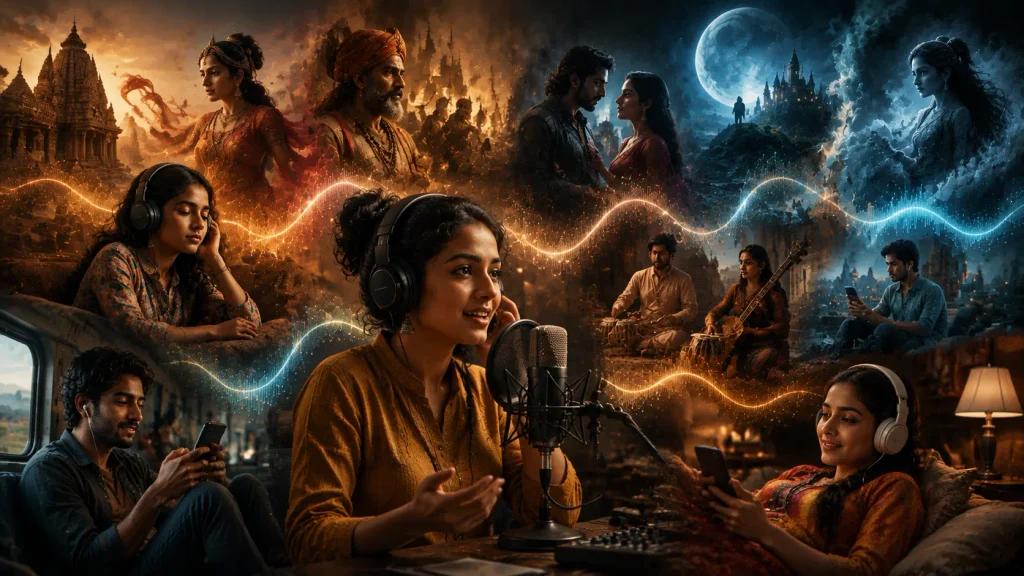
India has a rich history of oral storytelling, folk traditions, regional narratives, and performance-based entertainment.
Modern fiction podcasts continue this tradition by adapting storytelling for digital audiences through audio platforms.
Indian audio storytelling combines traditional narrative techniques with modern formats such as:
- Fiction podcasts
- Audio dramas
- Serialized stories
- Regional language content
Indian Audio Storytelling Growth
Storytelling has always been deeply connected with Indian culture.
Traditional forms such as:
- Folk tales
- Mythological narratives
- Community storytelling
- Regional legends
have passed stories between generations through spoken formats.
Today, fiction podcasts are bringing similar storytelling experiences to digital audiences.
They allow creators to explore:
- Indian characters
- Local cultures
- Regional languages
- Contemporary social themes
This connection between traditional storytelling and modern technology creates a unique opportunity for Indian audio creators.
Creators exploring India’s storytelling heritage can learn more about Indian Storytelling Traditions and how cultural narratives continue evolving in digital formats.
Hindi Fiction Podcasts and Regional Audio Stories
One of the biggest strengths of Indian fiction podcasts is language diversity.
Creators can tell stories in:
- Hindi
- English
- Tamil
- Bengali
- Marathi
- Telugu
- Other regional languages
Regional audio storytelling allows audiences to experience stories that reflect their own:
- Culture
- Language
- Community experiences
This creates a more personal connection between creators and listeners.
Indian Narrative Podcasts and Audio Dramas
Indian fiction podcasts often combine traditional storytelling with modern production techniques.
They may include:
- Character-driven narratives
- Dramatic voice performances
- Background music
- Cinematic sound effects
This creates immersive experiences that connect familiar storytelling traditions with new digital formats.
Fiction Podcasts vs Audiobooks: What Is the Difference?
Although fiction podcasts and audiobooks both use voice storytelling, they are different formats with different listening experiences.
| Fiction Podcasts | Audiobooks |
| Episodic storytelling | Complete book narration |
| Often feature multiple characters | Usually focused on one narrator |
| Include sound effects, music, and dramatic production | Focus mainly on adapting written text |
| Created in podcast format | Based on published books |
Fiction Podcasts
Fiction podcasts are usually created specifically for audio platforms.
They often include:
- Multiple voice actors
- Scripted dialogue
- Sound effects
- Episode-based storytelling
The experience is closer to listening to a television series without visuals.
They are ideal for listeners who enjoy:
- Short episodes
- Ongoing stories
- Character-driven experiences
- Audio drama formats
Audiobooks
Audiobooks are audio versions of written books.
They usually focus on:
- Narration
- Story interpretation
- Long-form listening
A single narrator often guides the listener through the complete book, although some audiobooks may include multiple performers.
Audiobooks are ideal for people who want to experience:
- Novels
- Non-fiction books
- Long-form storytelling
Which One Should You Choose?
The choice depends on the type of experience a listener prefers.
Choose fiction podcasts if you enjoy:
- Episodic stories
- Dramatic performances
- Multiple characters
- Sound-rich experiences
Choose audiobooks if you prefer:
- Complete stories
- Long-form narration
- Book-based storytelling
Both formats provide unique ways to experience stories through sound.
Fiction Podcasts vs Audio Dramas: Are They the Same?
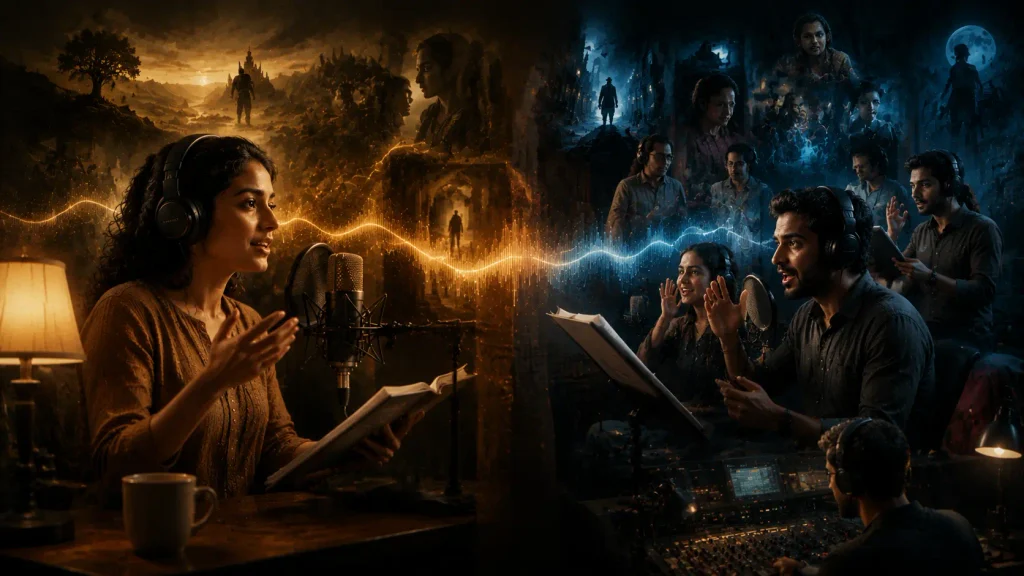
Fiction podcasts and audio dramas are closely connected, but they are not always exactly the same.
Both use:
- Voice performances
- Scripted storytelling
- Sound effects
- Character-driven narratives
However, their distribution methods and formats can differ.
Fiction Podcasts
Fiction podcasts refer to scripted fictional stories distributed through podcast platforms.
They can include:
- Episodic fiction
- Narrative storytelling
- Serialized stories
- Experimental audio formats
The term describes the broader category of fictional content created for podcast distribution.
Audio Dramas
Audio dramas are a specific style of performance-based storytelling.
They are similar to traditional radio dramas and usually focus on:
- Multiple actors
- Dramatic dialogue
- Sound effects
- Theatre-style performances
The emphasis is often on creating a cinematic experience through sound.
How Are They Connected?
Many modern audio dramas are published as fiction podcasts.
This means:
- An audio drama can be a fiction podcast.
- A fiction podcast can use an audio drama format.
The difference is mainly in how the content is structured and presented.
Both formats demonstrate how voice, sound, and storytelling can create powerful experiences without visual media.
How Creators Make Fiction Podcasts
Creating a fiction podcast involves much more than recording a voice and publishing an episode. A successful audio story combines creative writing, voice performance, sound production, and audience development.
Behind every engaging fiction podcast is a structured workflow where creators transform an idea into a complete audio experience.
The production process usually involves four major stages:
- Story development
- Voice production
- Sound design
- Publishing and audience building
Each stage plays an important role in creating an immersive listening experience.
Story Development
Every fiction podcast begins with an idea. Before recording begins, creators need to develop the story world, characters, and narrative structure.
A strong foundation helps ensure that the final audio experience feels engaging and meaningful.
Developing the Story Idea
The first step is identifying the core idea behind the story.
Creators may begin with questions such as:
- What is the central concept?
- Who are the main characters?
- What conflict drives the story?
- What emotions should listeners experience?
A simple idea can become a complete fiction podcast when it is developed into a structured narrative.
For example:
A basic idea about a missing person can become a mystery audio series involving:
- Multiple characters
- Hidden clues
- Emotional conflicts
- Unexpected discoveries
The strength of the final story depends on how well the original concept is developed.
Writing the Script
The script acts as the blueprint for a fiction podcast.
Unlike written stories, audio scripts must consider how information will be communicated through sound.
A strong audio script includes:
- Dialogue
- Character interactions
- Narration
- Sound cues
- Emotional moments
Writers need to think about what listeners can understand without visual support.
For example, instead of showing a character entering a room, the script may use:
- Footsteps
- A door opening
- Character dialogue
- Environmental sounds
to help audiences imagine the scene.
Creating Characters
Characters are the emotional foundation of fiction podcasts.
Creators develop characters by defining:
- Personality
- Background
- Goals
- Motivations
- Relationships
A well-developed character feels believable because listeners understand not only what they say but why they say it.
Character creation also influences voice performance. A confident character may require a different vocal style compared to a nervous or mysterious character.
Creators exploring digital character development can also learn more about AI Voice Characters and how voice identity shapes storytelling experiences.
Voice Production
Once the story and characters are developed, creators begin the voice production process.
This stage transforms written scripts into performances through casting, recording, and voice direction.
Casting Voice Actors
Choosing the right voice actors is an important part of creating believable characters.
Creators consider:
- Voice quality
- Emotional range
- Character suitability
- Performance style
The right voice can make a character feel authentic and memorable.
A voice actor does not simply read dialogue. They interpret the character and bring emotional depth to every line.
Recording Performances
Professional recording helps capture clear and engaging performances.
During recording, creators focus on:
- Voice clarity
- Emotional delivery
- Timing
- Character consistency
Actors may record multiple versions of a scene to find the strongest performance.
Small changes in:
- Tone
- Pause timing
- Speaking speed
- Emotional intensity
can significantly change how audiences experience a scene.
Voice Direction
Voice direction helps actors understand how a scene should feel.
A voice director guides performers by providing feedback on:
- Character emotions
- Scene context
- Delivery style
- Performance choices
Good direction ensures that every voice performance supports the overall story.
Sound Design
Sound design is what transforms a recorded script into an immersive fictional world.
In fiction podcasts, listeners rely on audio elements to imagine locations, actions, and emotions.
Creating Sound Effects
Sound effects help audiences understand what is happening within the story.
Examples include:
- Footsteps
- Weather sounds
- Doors opening
- Vehicles
- Environmental sounds
These details make scenes feel more realistic.
A horror story, for example, may use subtle sounds to create suspense, while an adventure story may use dramatic effects to increase excitement.
Adding Music
Music helps shape the emotional direction of a fiction podcast.
It can be used to:
- Build tension
- Create atmosphere
- Highlight emotional moments
- Support transitions between scenes
A carefully selected soundtrack can make storytelling more memorable.
Building Atmosphere
Atmosphere is created through the combination of:
- Voice performances
- Sound effects
- Music
- Silence
The right balance helps listeners feel present inside the story world.
A quiet background environment can create intimacy, while layered sounds can create a sense of scale and adventure.
Publishing and Audience Building
After production is complete, creators need to distribute their fiction podcast and build an audience.
Publishing is not only about making content available; it is about helping the right listeners discover the story.
Choosing Distribution Platforms
Creators publish fiction podcasts through platforms where audiences discover and listen to audio content.
Important considerations include:
- Accessibility
- Audience reach
- Episode organisation
- Discoverability
A consistent publishing schedule can help build listener habits.
Building an Audience
Growing a fiction podcast requires connecting with listeners beyond individual episodes.
Creators can build communities through:
- Social media
- Creator collaborations
- Listener feedback
- Behind-the-scenes content
Strong audience relationships encourage listeners to return for future episodes.
Using Technology to Improve Creation
Modern creators can use technology to support different stages of fiction podcast production.
AI-powered tools can assist with:
- Story brainstorming
- Script development
- Voice experimentation
- Audio workflows
Creators interested in exploring AI-supported storytelling can learn more about [Create Audio Stories Using AI] and [AI Storytelling Tools].
How AI Is Changing Fiction Podcasts
Artificial intelligence is introducing new possibilities for fiction podcast creators by making storytelling workflows faster, more flexible, and more accessible.
AI is not replacing the creative decisions behind storytelling. Instead, it is becoming a tool that helps creators experiment with ideas, develop characters, and explore new audio experiences.
The future of fiction podcasts will likely combine human creativity with AI-assisted production.
AI-Assisted Story Creation
AI tools can support creators during the early stages of storytelling.
They can help with:
- Generating story ideas
- Exploring different plot directions
- Developing character concepts
- Improving creative workflows
For example, a creator developing a fiction series may use AI to explore different story possibilities before choosing the final direction.
Human creativity remains essential because creators decide:
- What stories matter
- How characters behave
- What emotions audiences should experience
AI Voice Characters
One of the most exciting developments in fiction podcasts is the ability to experiment with AI-generated character voices.
AI voice technology allows creators to explore:
- Different character personalities
- Multiple voice styles
- New storytelling formats
This can help creators prototype characters before final production.
For example, a creator developing a fantasy audio series may experiment with different voices to understand how each character should sound.
Character Experimentation
AI voice tools can make it easier to test:
- Character identities
- Emotional styles
- Speaking patterns
This creates new opportunities for independent creators who want to explore complex stories without large production resources.
AI Narration
AI narration technology is changing how creators approach audio production.
It can support:
- Faster narration workflows
- Multilingual storytelling
- Early story prototypes
For example, creators producing stories for different audiences may experiment with multiple languages and narration styles more efficiently.
However, emotional storytelling still depends heavily on creative direction and human understanding.
A successful fiction podcast requires more than a voice. It requires:
- Emotion
- Character depth
- Storytelling decisions
Creators exploring this area can learn more about AI Voice Technology and AI Voice Narration.
Personalized Fiction Experiences
The future of fiction podcasts may move beyond traditional episode-based storytelling.
AI and interactive technologies could enable more personalised experiences where stories adapt based on listener choices.
Future possibilities include:
- Interactive characters
- Adaptive storylines
- Personalised narratives
- Voice-controlled experiences
This could transform audiences from passive listeners into active participants within fictional worlds.
How Arré Voice Is Building the Future of Fiction Storytelling
The future of storytelling is becoming increasingly voice-driven, creating new opportunities for creators and listeners to connect through audio experiences.
Arré Voice represents this shift by bringing together:
- Audio-first storytelling
- Voice-based communities
- Creator-driven content
- Technology-supported creative experiences
Rather than focusing only on content consumption, Arré Voice creates a space where stories, voices, and communities come together.
Discover Fiction Stories Through Voice
Voice creates a direct connection between creators and audiences.
Through audio storytelling, listeners can discover:
- Fictional worlds
- Unique characters
- Different storytelling styles
- New creator perspectives
The experience is personal because audiences connect with the emotion and personality behind every voice.
Create Voice-Based Stories
Arré Voice enables creators to explore storytelling through sound.
Creators can experiment with:
- Fictional narratives
- Character performances
- Voice-based experiences
- Audio storytelling formats
Voice gives creators a powerful way to express ideas and build connections with listeners.
Build Communities Around Stories
Modern storytelling is not only about creating content; it is also about building relationships.
Voice-based communities allow creators and listeners to:
- Discover new stories
- Share experiences
- Connect around common interests
This creates a more interactive relationship between storytellers and audiences.
Human Creativity Supported by Technology
The future of fiction storytelling will be shaped by the combination of human imagination and emerging technology.
Human creators bring:
- Emotional understanding
- Original ideas
- Storytelling ability
Technology provides:
- Creative experimentation
- Faster workflows
- New production possibilities
Together, they create new opportunities for audio storytelling.
Discover immersive audio stories with Arré Voice.
Frequently Asked Questions
What Are Fiction Podcasts?
Fiction podcasts are scripted audio stories that use voice acting, narration, sound effects, music, and storytelling techniques to create immersive listening experiences. They feature fictional characters, imagined worlds, and narrative-driven plots across genres such as mystery, horror, fantasy, science fiction, and drama, allowing audiences to experience stories entirely through sound.
What Is the Difference Between Fiction Podcasts and Regular Podcasts?
Fiction podcasts focus on scripted storytelling with characters, dialogue, performances, and fictional narratives. Regular podcasts usually feature conversations, interviews, news, or educational discussions. While both use audio as the medium, fiction podcasts are designed to create immersive story experiences similar to films or dramas, whereas regular podcasts primarily share information or real-world discussions.
What Are the Best Fiction Podcasts to Listen To?
The best fiction podcasts depend on personal interests and preferred genres. Popular categories include mystery, thriller, horror, fantasy, science fiction, and emotional dramas. Great fiction podcasts usually combine engaging stories, memorable characters, professional voice acting, and immersive sound design to create experiences that keep listeners connected from one episode to the next.
Are Fiction Podcasts Free?
Many fiction podcasts are available for free through podcast platforms, audio streaming services, and creator websites. Some creators also offer premium episodes, exclusive stories, or subscription-based content. Availability depends on the platform and production model. Listeners can explore different genres and discover free fiction podcasts based on their interests and preferred storytelling styles.
Are Fiction Podcasts Similar to Audiobooks?
Fiction podcasts and audiobooks both use voice storytelling, but they offer different experiences. Fiction podcasts are usually episodic, character-driven, and enhanced with sound effects and music. Audiobooks are typically complete adaptations of written books with narration-focused performances. Fiction podcasts often feel like audio dramas, while audiobooks focus on delivering long-form written stories through voice.
Why Are Fiction Podcasts Becoming Popular?
Fiction podcasts are becoming popular because they offer immersive storytelling that fits modern lifestyles. Listeners can enjoy stories while travelling, exercising, working, or relaxing. The growth of smartphones, audio platforms, and on-demand entertainment has increased accessibility, while voice performances and sound design help create emotional connections without requiring visual attention.
What Genres Are Available in Fiction Podcasts?
Fiction podcasts are available across a wide range of genres, including mystery, thriller, horror, fantasy, science fiction, romance, comedy, drama, adventure, and historical fiction. Each genre uses different storytelling approaches, but all rely on voice performance, sound design, and imagination to create engaging audio experiences for listeners around the world.
How Are Fiction Podcasts Created?
Fiction podcasts are created through multiple stages, including story development, scriptwriting, voice production, sound design, and publishing. Creators develop characters and narratives, record voice performances, add music and sound effects, and distribute episodes through audio platforms. Successful fiction podcasts combine creative writing, acting, production skills, and audience engagement strategies.
Can AI Help Create Fiction Podcasts?
AI can support fiction podcast creation by helping with story ideas, character development, voice experimentation, narration workflows, and production processes. It allows creators to explore concepts faster and test creative possibilities. However, human creativity remains essential for emotional storytelling, character decisions, artistic direction, and creating meaningful connections with listeners.
Where Can I Listen to Fiction Podcasts?
Fiction podcasts can be found on various podcast apps, audio streaming platforms, creator websites, and dedicated storytelling platforms. Listeners can discover stories by searching genres, languages, or themes that match their interests. Many platforms provide recommendations, making it easier to explore new fiction podcasts and discover immersive audio storytelling experiences.