AI storytelling tools help creators develop ideas, write scripts, generate characters, create visuals, and produce voice-based stories. Tools like ChatGPT, Canva, NovelAI, and AI voice platforms help storytellers move from concept creation to complete digital storytelling experiences.
How AI Storytelling Tools Are Changing Content Creation
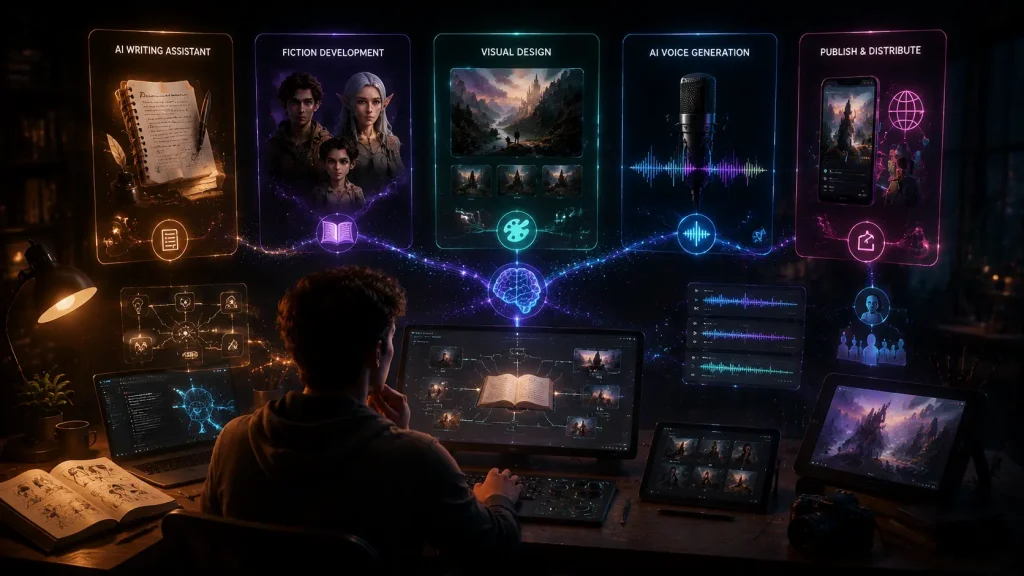
Storytelling has always been driven by human imagination, creativity, and the ability to connect with audiences. However, the way creators develop and share stories is changing rapidly with the growth of artificial intelligence.
The rise of the creator economy has created new opportunities for writers, filmmakers, audio creators, educators, and independent storytellers. More people are creating content than ever before, but traditional storytelling workflows often require significant time, technical skills, and production resources.
AI storytelling tools are helping creators overcome these challenges by supporting different stages of the creative process. From generating ideas and developing scripts to creating visuals, voices, and complete storytelling experiences, artificial intelligence is becoming a creative assistant for modern storytellers.
AI-assisted creativity allows creators to:
- Generate new story ideas
- Develop characters and narratives
- Experiment with different storytelling formats
- Create content faster
- Produce multiple versions of creative work
Instead of replacing human creativity, AI tools are helping creators focus more on ideas, emotions, and storytelling decisions while reducing time spent on repetitive production tasks.
The storytelling workflow is also shifting from individual creators managing every production step manually to AI-powered production systems where creators can combine multiple tools to build complete experiences.
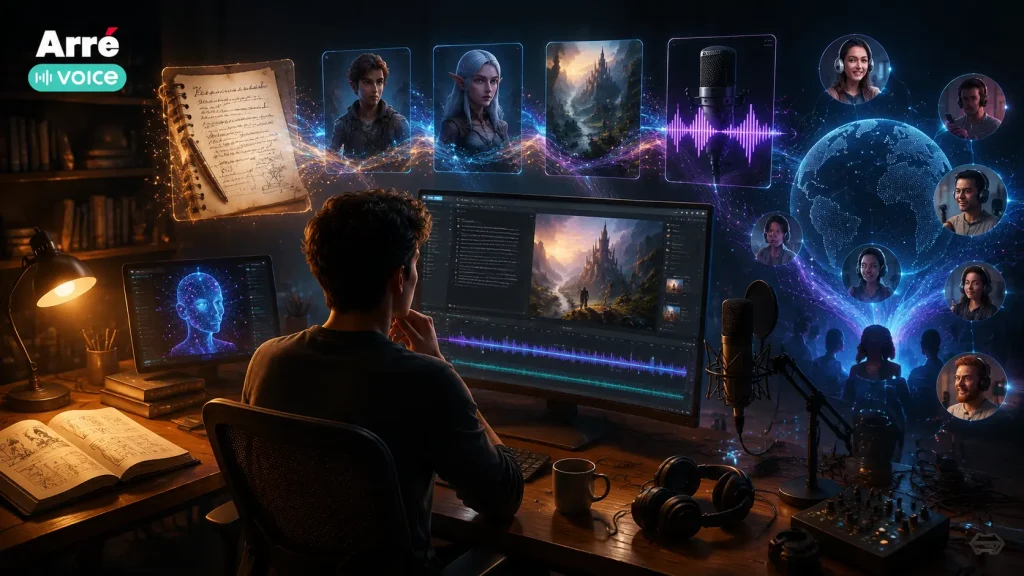
Today, a creator can move from an initial idea to a finished story by using AI for:
- Story development
- Script assistance
- Visual creation
- Voice generation
- Audio production
- Content distribution
This transformation is making storytelling more accessible and allowing more creators to share their ideas with global audiences.
AI storytelling tools are not changing the importance of human creativity. Instead, they are expanding what creators can achieve by combining human imagination with artificial intelligence.
What Are AI Storytelling Tools?
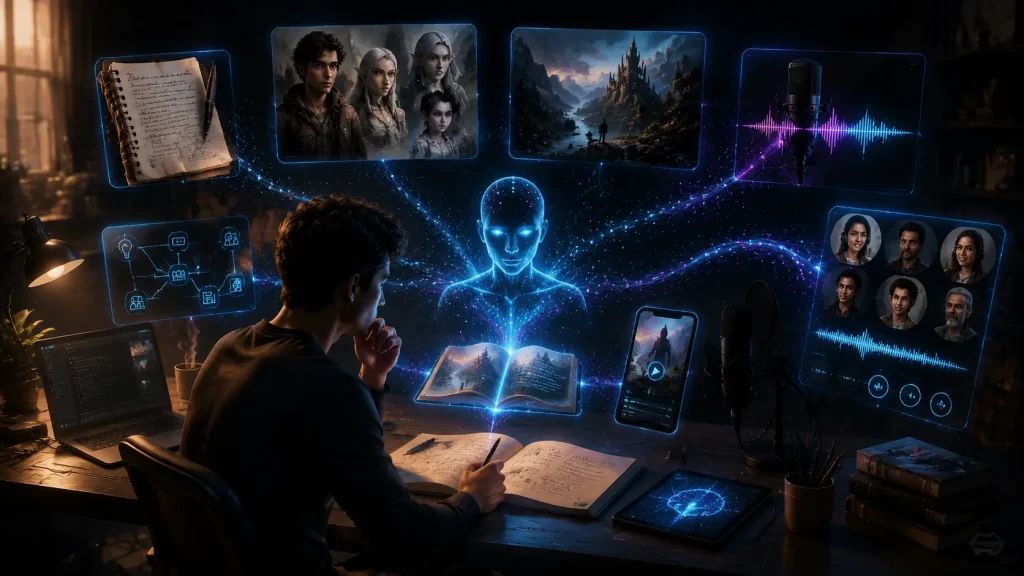
AI storytelling tools are software platforms that use artificial intelligence to help creators develop stories, scripts, characters, visuals, voices, and complete storytelling experiences.
These tools use AI models to support different parts of the creative process, from generating initial ideas to producing finished content. They can help writers overcome creative blocks, assist creators with story structure, and make complex production workflows faster and more accessible.
AI storytelling tools can support creators with:
- Story idea generation
- Plot development
- Character creation
- Script writing
- Visual storytelling
- AI voice generation
- Audio production
Unlike traditional storytelling workflows that may require separate tools, teams, or technical skills for each stage, AI-powered platforms allow creators to experiment with multiple creative formats within a single workflow.
For example, a creator can use AI to develop a fictional story concept, create character descriptions, generate supporting visuals, convert scripts into voice narration, and prepare content for digital platforms.
Different types of AI storytelling tools focus on different creative needs:
- AI writing tools help create ideas, outlines, scripts, and narratives.
- AI visual tools help generate images, characters, and visual scenes.
- AI voice tools help transform written stories into narrated audio experiences.
- AI video tools help creators produce animated or video-based storytelling content.
For modern creators, AI storytelling tools act as creative assistants that improve speed, experimentation, and production efficiency while keeping human creativity at the center of the storytelling process.
Types of AI Storytelling Tools
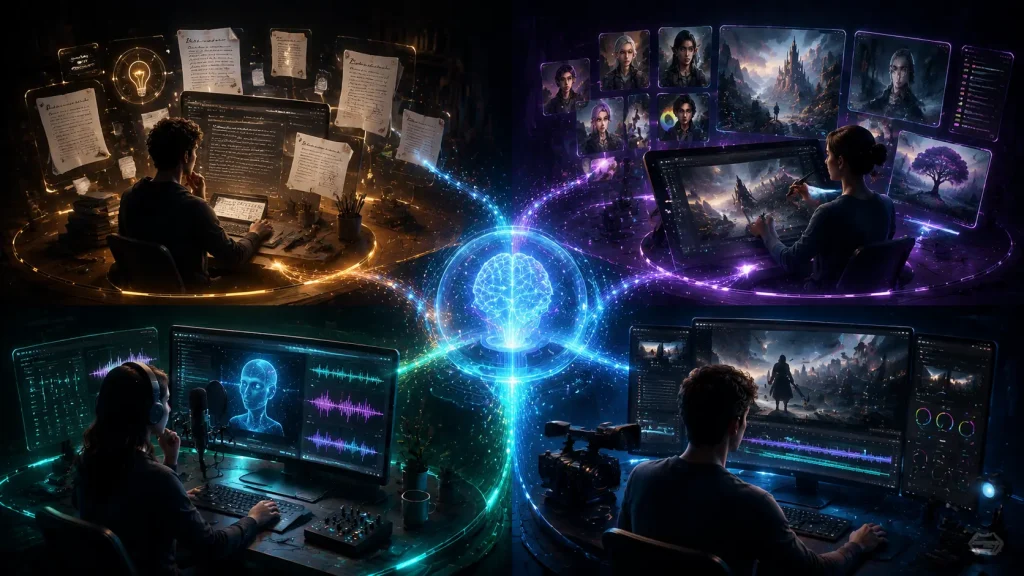
AI storytelling tools are designed for different stages of the creative process. Some tools help creators develop ideas and write scripts, while others focus on visuals, voice generation, video creation, and publishing.
Understanding the different categories helps creators choose the right AI tools based on their storytelling goals.
1. AI Story Writing Tools
AI story writing tools help creators develop ideas, structure narratives, create characters, and improve written storytelling.
These tools are useful for writers who need assistance with brainstorming, storytelling frameworks, and creative development.
Popular AI story writing tools include:
- ChatGPT
- Claude
- NovelAI
- Sudowrite
Creators use AI writing tools for:
- Story idea generation
- Plot development
- Dialogue creation
- Character building
- Story structure improvement
- Creative brainstorming
For example, a writer can use AI to explore different story directions, develop character backgrounds, or create multiple versions of a storyline before selecting the final creative approach.
These tools work best as creative assistants that support human imagination rather than replacing the storytelling process.
2. AI Visual Storytelling Tools
AI visual storytelling tools help creators transform written ideas into images, characters, illustrations, and visual scenes.
These tools are useful for creators developing:
- Story illustrations
- Digital characters
- Animated scenes
- Visual narratives
- Social media storytelling content
Popular AI visual storytelling tools include:
- Canva AI
- Pika
- Artflow
Visual AI tools allow creators to bring fictional worlds and storytelling concepts to life without requiring advanced design or animation skills.
For example, a creator can develop a fantasy story concept, generate character visuals, create supporting artwork, and use those visuals across digital storytelling platforms.
3. AI Voice Storytelling Tools
AI voice storytelling tools help creators transform written stories into engaging audio experiences using artificial intelligence-generated voices.
This category is becoming increasingly important as audiences move toward voice-first content, podcasts, audio stories, and interactive listening experiences.
Popular AI voice storytelling tools include:
- Arré Voice
- ElevenLabs
- AI voice generation platforms
Creators use AI voice storytelling tools for:
- Narration
- Character voices
- Audio stories
- Multilingual storytelling
- Voice-based communities
Unlike traditional audio production, AI voice technology allows creators to experiment with different voices, emotions, languages, and storytelling styles without requiring professional recording setups.
For creators focused on audio storytelling, platforms like Arré Voice combine voice creation with audience discovery and community interaction, allowing storytellers to move beyond production and build meaningful connections with listeners.
The future of storytelling is not only about creating content but also about creating communities around voices and stories.
4. AI Video Storytelling Tools
AI video storytelling tools help creators convert ideas, scripts, and concepts into short-form videos, animations, and visual storytelling experiences.
These tools are becoming popular among social media creators, marketers, and digital storytellers who want to produce engaging video content faster.
Examples include:
- Text-to-video tools
- AI animation platforms
- AI video generation tools
Creators use AI video storytelling tools for:
- Short videos
- Social media storytelling
- Creator content
- Animated narratives
- Promotional storytelling
AI video tools reduce the technical barriers involved in video production and allow creators to experiment with new storytelling formats.
Best AI Storytelling Tools for Creators
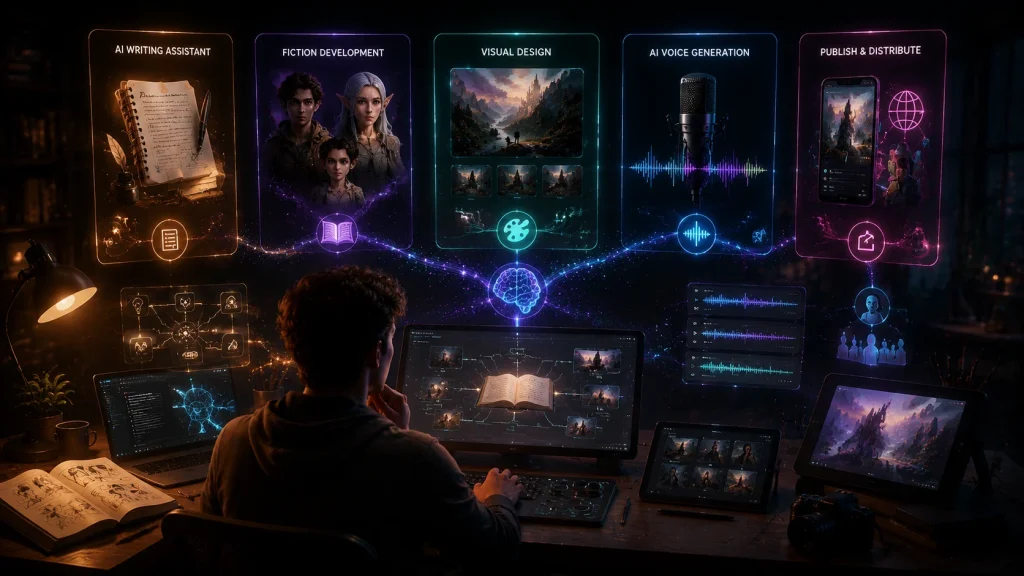
The best AI storytelling tool depends on the creator’s objective. Some creators need help writing stories, while others need voice generation, visuals, or platforms to share their content.
Instead of choosing one universal tool, creators should select tools based on their storytelling workflow.
Best Platform for Voice Story Creators: Arré Voice
Best for:
- Audio storytelling
- Voice-first content
- Creator communities
- Sharing voice experiences
Arré Voice is designed for creators who want to explore storytelling through voice. It combines audio content creation with a community-driven experience where creators can share stories, connect with listeners, and discover audiences.
Unlike traditional AI tools that mainly focus on content generation, Arré Voice focuses on the complete voice storytelling journey:
- Creating voice content
- Sharing stories
- Building audiences
- Joining voice communities
- Connecting with listeners
For creators interested in audio storytelling, voice communities, and human connection through content, Arré Voice represents the next evolution of voice-first storytelling.
Best Overall AI Storytelling Tool: ChatGPT
Best for:
- Story ideas
- Story outlines
- Creative brainstorming
- Script assistance
ChatGPT is a versatile AI storytelling assistant that helps creators develop concepts, explore narratives, generate ideas, and improve writing workflows.
Creators can use it for:
- Brainstorming story concepts
- Developing characters
- Creating dialogue
- Structuring narratives
It works well as an early-stage creative partner before moving stories into visual, voice, or publishing workflows.
Best AI Tool for Fiction Writers: Sudowrite / NovelAI
Best for:
- Fiction writing
- Character development
- Long-form storytelling
Sudowrite and NovelAI are designed specifically for creative writers who want assistance developing fictional worlds, characters, and detailed narratives.
They help creators with:
- Expanding story ideas
- Building fictional universes
- Improving descriptions
- Exploring different plot directions
These tools are especially useful for novelists, fiction writers, and creators developing long-form stories.
Best AI Visual Storytelling Tool: Canva AI
Best for:
- Story graphics
- Visual content
- Creative designs
Canva AI helps creators transform ideas into visual storytelling assets such as illustrations, social media graphics, presentations, and creative designs.
Creators can use Canva AI to:
- Generate visuals
- Design story content
- Create supporting graphics
- Develop branded storytelling assets
It is useful for creators who want to combine written stories with visual experiences.
Best AI Voice Generation Tool: ElevenLabs
Best for:
- AI voice generation
- Narration
- Voice experimentation
ElevenLabs is known for generating realistic AI voices that creators can use for narration, storytelling, and audio production.
Features include:
- Natural voice generation
- Multiple voice styles
- Voice customization
- Expressive narration
It is commonly used by creators who want high-quality AI-generated voices for storytelling projects.
How to Create a Story Using AI Tools
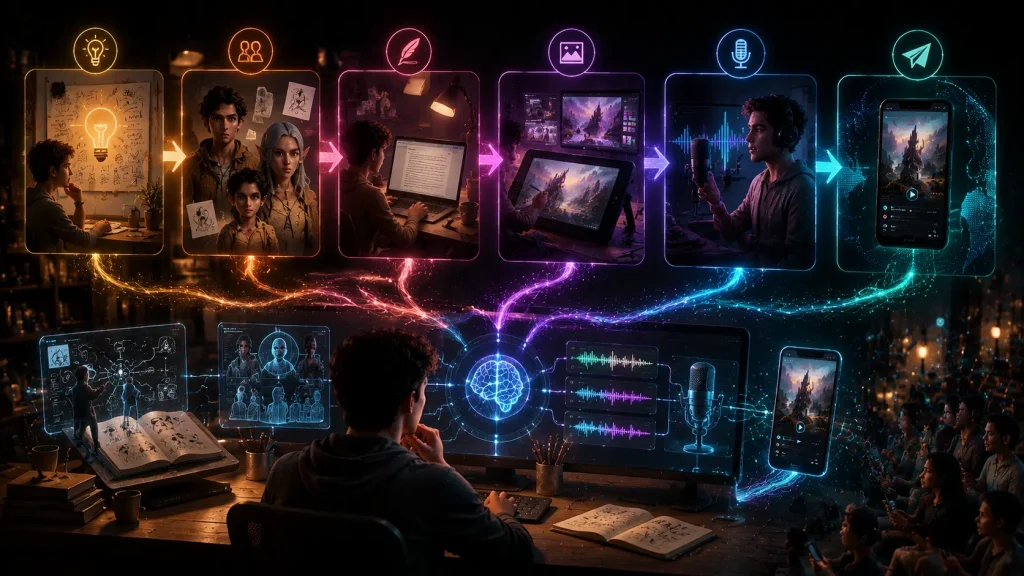
Creating a story with AI involves combining human creativity with artificial intelligence tools that support different stages of the storytelling process. AI can help creators move from an initial idea to a complete storytelling experience by assisting with writing, visuals, voice generation, and publishing.
A typical AI storytelling workflow includes the following steps:
1. Generate Story Ideas
The first step in creating a story with AI is developing a strong concept.
AI storytelling tools can help creators explore:
- Story themes
- Plot ideas
- Creative directions
- Different genres
- Audience-focused concepts
Creators can use AI for brainstorming while maintaining control over the story’s purpose, emotion, and creative vision.
For example, a creator can use AI to generate ideas for:
- Fiction stories
- Cultural narratives
- Educational content
- Personal experiences
- Character-driven stories
2. Develop Characters
Characters are the foundation of engaging stories. AI tools can help creators build detailed character profiles and explore different personalities.
Creators can use AI assistance to develop:
- Character backgrounds
- Motivations
- Personality traits
- Relationships
- Character journeys
AI can help speed up character development, but the creator’s understanding of emotions and human experiences gives characters depth and authenticity.
3. Write the Script
Once the story concept and characters are developed, creators can use AI tools to assist with script creation.
AI can support:
- Story structure
- Dialogue development
- Scene descriptions
- Narrative flow
- Script improvements
Creators should review and refine AI-generated content to ensure the final story maintains originality, creativity, and a personal storytelling style.
4. Create Visuals
For visual storytelling formats, AI tools can help transform story concepts into images, illustrations, and animated scenes.
Creators can use AI visual tools to develop:
- Character designs
- Story illustrations
- Background scenes
- Social media visuals
This allows creators to build richer storytelling experiences without requiring advanced design skills.
5. Generate AI Voice
AI voice technology helps creators transform written scripts into narrated audio experiences.
Creators can:
- Select AI voices
- Generate narration
- Create character voices
- Add emotional expression
- Produce multilingual audio content
For creators focused on audio storytelling, AI voice tools make it easier to produce engaging voice content without traditional recording limitations.
You can learn more about creating AI-powered audio stories in our guide:
How to Create Audio Stories Using AI Voice Technology
6. Publish and Share
The final step is sharing the story with audiences.
Creators can publish AI-assisted stories through:
- Audio platforms
- Creator communities
- Social media channels
- Video platforms
- Digital storytelling platforms
Publishing is not only about distribution. Building an audience, receiving feedback, and creating meaningful connections are essential parts of modern storytelling.
AI Storytelling Tools vs Traditional Story Creation
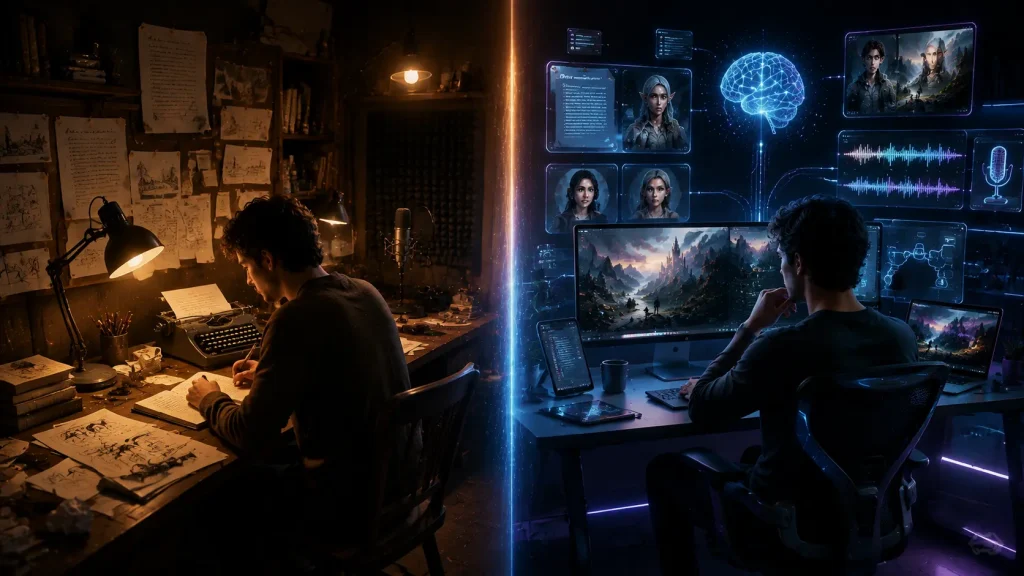
AI storytelling tools are changing how creators approach content production. Traditional storytelling depends heavily on manual processes, while AI-assisted workflows provide additional support for idea generation, production, and experimentation.
| Traditional Story Creation | AI-Assisted Story Creation |
| Manual brainstorming and idea development | AI-assisted ideas and creative exploration |
| Individual production workflow | Faster AI-supported workflows |
| Expensive production requirements | Lower production barriers |
| Limited experimentation due to time and cost | Ability to create multiple versions quickly |
AI does not remove the creative role of storytellers. Instead, it helps creators explore more possibilities, reduce repetitive tasks, and focus on the parts of storytelling that require human imagination.
Can AI Replace Human Storytellers?
No, AI cannot replace human storytellers because storytelling depends on creativity, emotions, experiences, and cultural understanding.
AI helps creators by making storytelling faster and more accessible. It can support:
- Generating ideas
- Developing drafts
- Creating voices
- Producing visuals
- Testing different creative approaches
However, human storytellers remain responsible for:
- Original ideas
- Emotional connection
- Cultural context
- Personal experiences
- Unique perspectives
The strongest stories come from the combination of human creativity and AI capabilities.
AI works as a creative assistant, helping storytellers expand what they can create while keeping human imagination at the center of the process.
Voice creates a more personal relationship between creators and audiences by bringing emotion, personality, and storytelling together.
The complete journey becomes:
AI Creation → Arré Voice → Audience Connection
Frequently Asked Questions
What are AI storytelling tools?
AI storytelling tools are software platforms that use artificial intelligence to help creators develop stories, scripts, characters, visuals, voices, and complete storytelling experiences. These tools support different stages of content creation, including brainstorming ideas, improving narratives, generating AI voices, creating visuals, and producing digital stories. They help creators produce content faster while keeping human creativity at the center.
Which AI tool is best for storytelling?
The best AI storytelling tool depends on the creator’s specific needs. Tools like ChatGPT are useful for brainstorming and script development, while NovelAI and Sudowrite support fiction writing. Canva AI helps with visual storytelling, and AI voice platforms help create narration. For voice-based storytelling and creator communities, Arré Voice supports sharing and audience connection.
Can AI create complete stories?
Yes, AI can help create complete stories by assisting with ideas, plots, characters, scripts, visuals, and voice narration. However, the best results come when creators guide the process with their own creativity, experiences, and storytelling style. AI works as a creative assistant that helps improve speed, experimentation, and production rather than replacing human imagination.
Can AI storytelling tools create audio stories?
Yes, AI storytelling tools can help create audio stories by combining script generation, AI voice technology, narration, and sound design. Creators can develop story ideas, write scripts, generate realistic AI voices, add background elements, and publish audio experiences. These tools make audio storytelling more accessible for writers, creators, and beginners.
What is the best AI voice tool for storytellers?
The best AI voice tool for storytellers depends on voice quality, language support, customization options, and content goals. AI voice platforms such as ElevenLabs provide realistic narration and voice generation features. For creators focused on audio storytelling, platforms like Arré Voice help combine voice content creation with audience discovery and community engagement.
Are AI storytelling tools free?
Many AI storytelling tools offer free plans with limited features, while advanced features usually require paid subscriptions. Free versions may include basic writing assistance, story generation, or limited AI voice capabilities. Creators should compare features such as output quality, usage limits, customization options, and publishing support before choosing a tool.
Can writers use AI for fiction?
Yes, writers can use AI tools for fiction writing to generate ideas, develop characters, explore plots, improve dialogue, and overcome creative blocks. AI can support fiction writers during brainstorming and drafting stages. However, writers remain responsible for originality, emotional depth, storytelling choices, and the unique perspectives that make fictional stories meaningful.
How do creators use AI for storytelling?
Creators use AI for storytelling by combining multiple tools across the creative workflow. They use AI to generate ideas, develop characters, write scripts, create visuals, generate voices, enhance audio, and publish content. AI helps creators produce stories faster, experiment with different formats, and reach audiences through platforms focused on digital storytelling and communities.