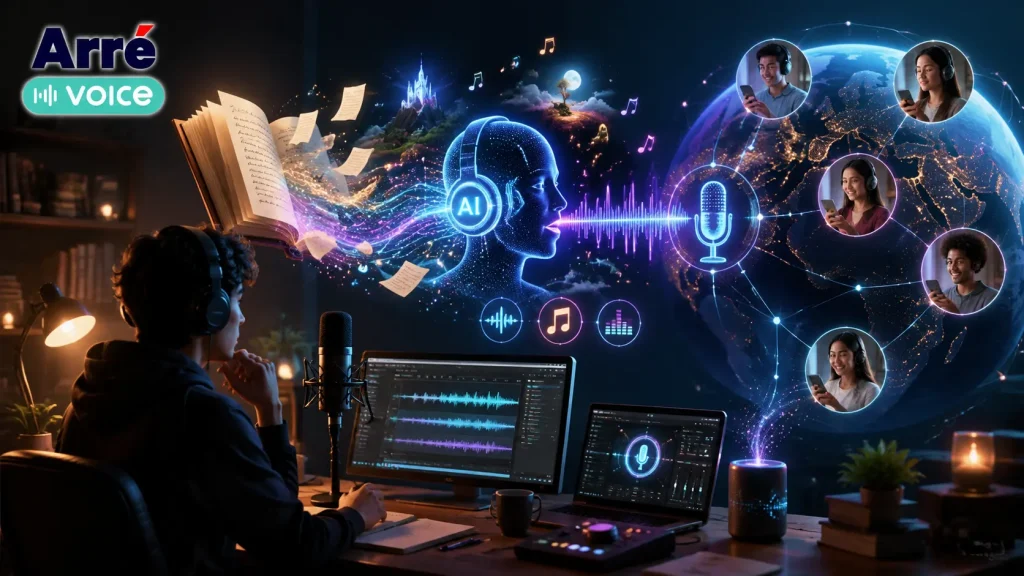
AI voice technology allows creators to transform written ideas, scripts, and stories into natural-sounding audio experiences. With AI voice tools, creators can generate narration, add emotions, customize voices, and publish engaging audio stories faster without requiring professional recording equipment.
The Rise of AI-Powered Audio Storytelling
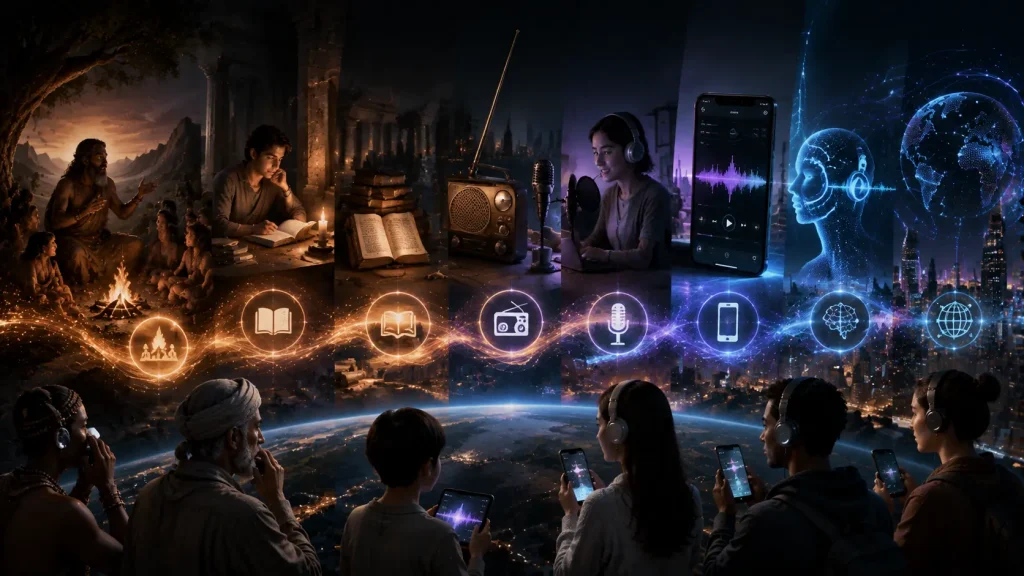
Audio content has become one of the fastest-growing forms of digital storytelling. From podcasts and audiobooks to short-form audio stories and interactive voice communities, audiences are increasingly choosing to consume stories through listening experiences.
The way people discover and engage with content is changing. Earlier, storytelling was primarily driven by books, written articles, television, and video platforms. Today, voice-first experiences allow audiences to connect with stories while travelling, working, exercising, or performing daily activities.
This shift has created new opportunities for creators. Independent storytellers no longer need expensive recording studios, professional equipment, or large production teams to share their ideas with the world.
The rise of the creator economy has accelerated this transformation. More creators are exploring audio as a medium to build communities, share personal experiences, create entertainment content, and connect directly with listeners.
AI voice technology is further changing the storytelling landscape by making audio production faster and more accessible. Creators can now transform written ideas into narrated experiences using AI-generated voices, automated production tools, and digital publishing platforms.
AI is reducing the barrier for anyone to become an audio storyteller.
What Are AI Audio Stories?
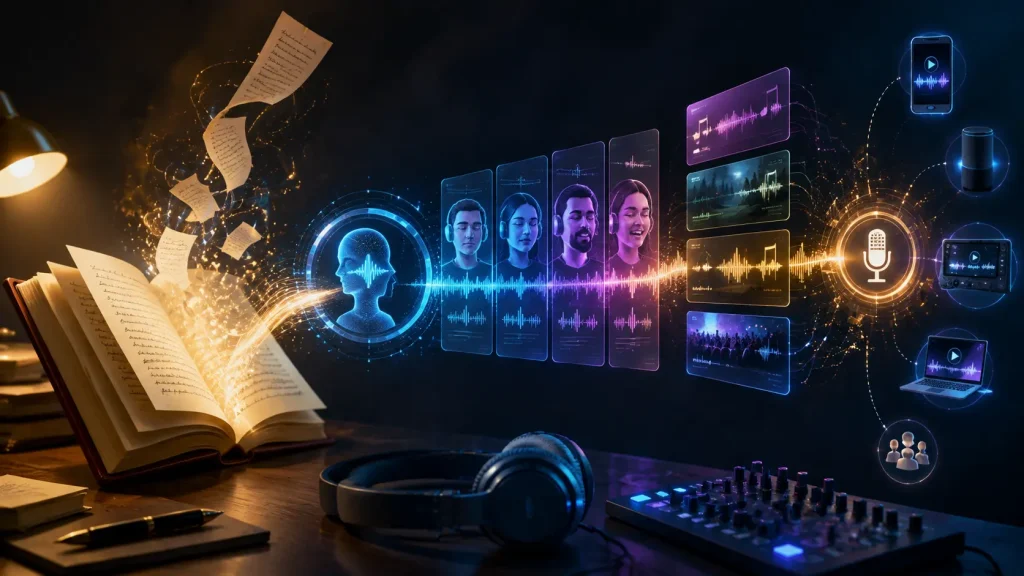
AI audio stories are narrative experiences created using artificial intelligence technologies to transform written scripts, ideas, or concepts into engaging audio content.
Unlike traditional narration, where creators usually require voice actors, recording equipment, and professional editing support, AI audio storytelling uses artificial intelligence to generate realistic voices, enhance narration, and simplify the production process.
AI voice technology allows creators to produce stories with different voice styles, languages, emotions, and storytelling formats without requiring advanced audio production skills.
AI audio stories combine multiple creative elements:
- Story scripts that define the narrative, characters, and storyline
- AI-generated voices that convert written content into natural speech
- Emotional narration that adds personality and expression
- Background music that enhances the listening experience
- Sound effects that create atmosphere and immersion
- Publishing platforms where creators can share stories with audiences
AI audio storytelling is not only about converting text into speech. It combines creativity, technology, and sound design to create a complete listening experience.
For creators, AI provides a new way to experiment with storytelling formats, reach wider audiences, and produce content more efficiently.
How Does AI Voice Technology Create Audio Stories?
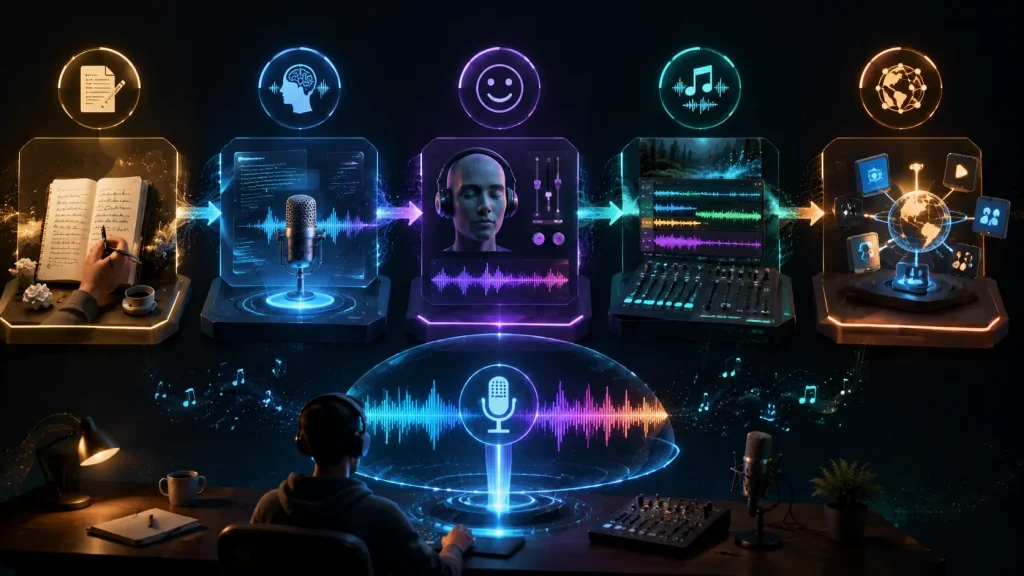
Creating an AI-powered audio story involves multiple stages, from developing the initial idea to publishing the final listening experience.
The workflow typically includes:
Step 1: Create or Write a Story Script
Every audio story begins with a strong idea and a structured script.
Creators can develop different types of stories using AI-assisted workflows, including:
- Fiction stories
- Personal experiences
- Cultural stories
- Educational content
- Character-based storytelling
- Brand storytelling
- Community stories
A good audio script is designed differently from written content because listeners depend entirely on sound. Strong openings, clear narration, engaging characters, and emotional storytelling help maintain audience attention.
Step 2: Convert Text Into AI Voice
Once the script is ready, AI voice technology converts written text into spoken narration.
Modern text-to-speech technology uses artificial intelligence models to create voices that sound more natural and human-like.
AI voice generation can provide:
- Realistic speech patterns
- Multiple language options
- Different voice styles
- Adjustable narration speed
- Voice variations for different characters
Creators can select voices based on the type of story they are producing. For example, a dramatic story may require an expressive voice, while an educational story may require a clear and conversational narration style.
Step 3: Add Emotion and Voice Expression
Voice expression plays an important role in storytelling.
AI voice tools can help creators adjust:
- Tone
- Speaking speed
- Pauses
- Emphasis
- Character voices
- Emotional delivery
These elements make the narration feel more engaging and help listeners connect with the story.
For example, a suspense story may require slower pacing and dramatic pauses, while a motivational story may require an energetic and inspiring voice style.
Step 4: Add Audio Elements
A complete audio story is more than just narration.
Creators can enhance the experience by adding:
- Background music
- Sound effects
- Environmental sounds
- Audio atmosphere
These elements help create immersion and make listeners feel part of the story.
For example:
- Rain sounds can create a dramatic atmosphere
- Background music can increase emotional impact
- Environmental sounds can make fictional worlds feel realistic
Sound design transforms simple narration into a richer storytelling experience.
Step 5: Publish and Share
After creating and editing the audio story, creators can publish it across digital platforms.
Distribution opportunities include:
- Audio storytelling platforms
- Creator communities
- Social media channels
- Podcast platforms
- Mobile applications
Publishing platforms help creators discover new audiences, build communities, and develop long-term relationships with listeners.
Platforms like Arré Voice create opportunities for creators to share voice-based content, connect with communities, and participate in the growing audio storytelling ecosystem.
How to Create Audio Stories Using AI: Step-by-Step Guide
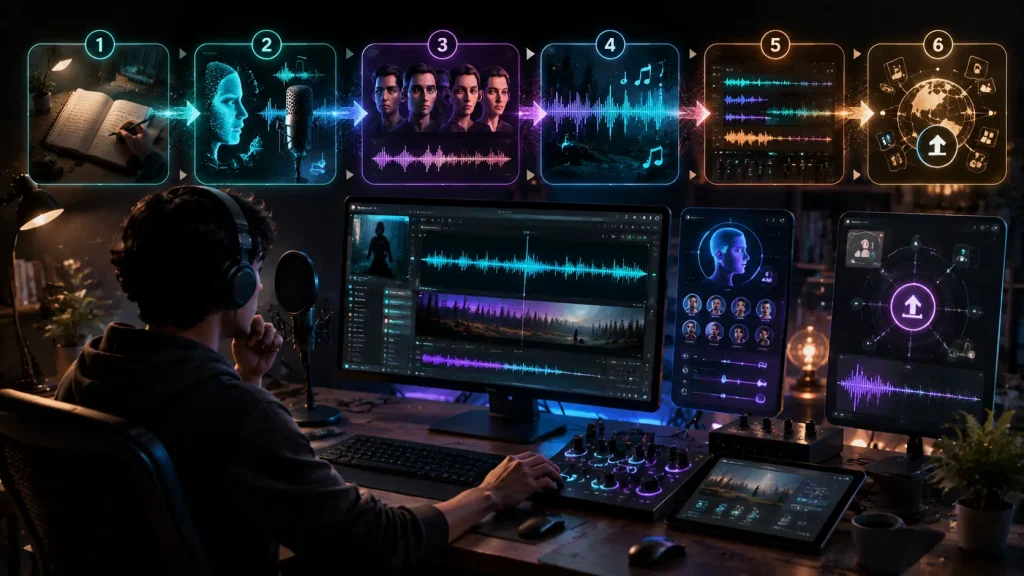
Creating an audio story with AI involves combining storytelling skills with modern voice technology. Whether you want to create fictional stories, personal narratives, cultural content, or educational audio experiences, AI tools can help simplify the production process.
The AI audio storytelling workflow allows creators to move from an initial idea to a complete audio experience by using AI for script development, voice generation, audio enhancement, and publishing.
Follow these steps to create your own AI-powered audio story.
1. Choose Your Story Idea
Every engaging audio story starts with a strong concept. Before using AI voice technology, creators need to decide what type of story they want to tell and who they want to reach.
The story idea determines the tone, narration style, characters, and overall listening experience.
Popular AI audio story formats include:
- Short stories
- Horror stories
- Romance stories
- Children’s stories
- Regional stories
- Personal experiences
- Fictional adventures
- Educational stories
- Motivational stories
Creators can also explore cultural storytelling by transforming traditional stories, local experiences, folklore, and personal memories into audio formats.
When choosing a story idea, consider:
- Who is the target audience?
- What emotion should the listener experience?
- What makes the story unique?
- Why would someone choose to listen to this story?
A clear story concept creates a stronger foundation for AI-generated narration.
2. Write an Engaging Script
A well-written script is the foundation of every successful audio story. AI voice technology can generate realistic narration, but the quality of the final output depends heavily on the story structure and writing.
Audio scripts are different from traditional written content because listeners cannot see the text. The story must communicate emotions, characters, and situations entirely through sound.
Good audio scripts should include:
Strong Opening Hook
The first few seconds are important for capturing listener attention.
A strong opening can include:
- A surprising statement
- An emotional moment
- A mysterious situation
- A question that creates curiosity
Clear Characters
Characters should have:
- Distinct personalities
- Clear motivations
- Recognizable voices or speaking styles
For stories with multiple characters, creators can assign different AI voices to improve clarity.
Conversational Language
Audio content works best when the script sounds natural when spoken.
Instead of complex written sentences, creators should focus on:
- Simple language
- Natural conversations
- Listener-friendly narration
Emotional Moments
Great stories create emotional connections.
Scripts should include moments that communicate:
- Suspense
- Happiness
- Sadness
- Surprise
- Inspiration
A strong script helps AI voice technology produce a more engaging storytelling experience.
3. Select an AI Voice
Choosing the right AI voice is an important step because the voice becomes the connection between the story and the listener.
Different stories require different voice characteristics.
When selecting an AI voice, consider:
Voice Quality
The voice should sound:
- Natural
- Clear
- Comfortable to listen to
- Consistent throughout the story
Language
AI voice technology enables creators to produce stories in multiple languages, helping them reach wider audiences.
Creators can explore:
- English storytelling
- Regional Indian languages
- Multilingual content
Accent
The right accent improves audience connection.
For example:
- Regional stories may benefit from culturally familiar voices
- Global stories may require internationally understandable narration
Emotion
Different storytelling genres require different emotional delivery.
Examples:
- Horror stories → suspenseful and dramatic voices
- Children’s stories → warm and friendly voices
- Educational stories → clear and informative voices
Audience Preference
The selected voice should match the expectations of the target audience.
A professional audience may prefer a calm narration style, while entertainment audiences may prefer expressive and energetic voices.
4. Generate AI Narration
After preparing the script and selecting a voice, creators can generate the audio narration using AI voice technology.
The basic workflow includes:
- Upload the completed script
- Select the preferred AI voice
- Adjust voice settings if available
- Generate the audio
- Review the output
During review, creators should check:
- Pronunciation accuracy
- Voice naturalness
- Timing and pacing
- Emotional delivery
- Overall storytelling quality
AI-generated narration can significantly reduce production time compared to traditional recording methods while allowing creators to experiment with different voice styles.
5. Improve Audio Quality
The first AI-generated version may need additional refinement before publishing.
Audio enhancement helps create a more professional listening experience.
Creators can improve quality by:
Removing Unnatural Pauses
Adjust pauses that feel:
- Too long
- Too short
- Disconnected from the story flow
Adjusting Pacing
The speed of narration should match the story type.
Examples:
- Suspense stories may require slower pacing
- Educational content may require steady narration
- Children’s stories may require expressive pacing
Adding Background Effects
Additional audio elements can improve immersion.
Creators can include:
- Background music
- Environmental sounds
- Character effects
- Transition sounds
These elements help transform AI-generated narration into a complete audio storytelling experience.
6. Publish Your AI Audio Story
Once the audio story is complete, the next step is sharing it with listeners.
Creators can publish AI audio stories through:
- Audio storytelling platforms
- Creator communities
- Social media platforms
- Podcast platforms
- Mobile applications
Publishing is not only about distribution. It is also about building an audience and creating meaningful connections with listeners.
Platforms like Arré Voice provide creators with opportunities to share voice-based content, discover communities, and engage with audiences who enjoy storytelling.
By combining AI creation tools with a voice-first platform, creators can move from having a story idea to building a complete audio storytelling presence.
Benefits of Creating Audio Stories With AI
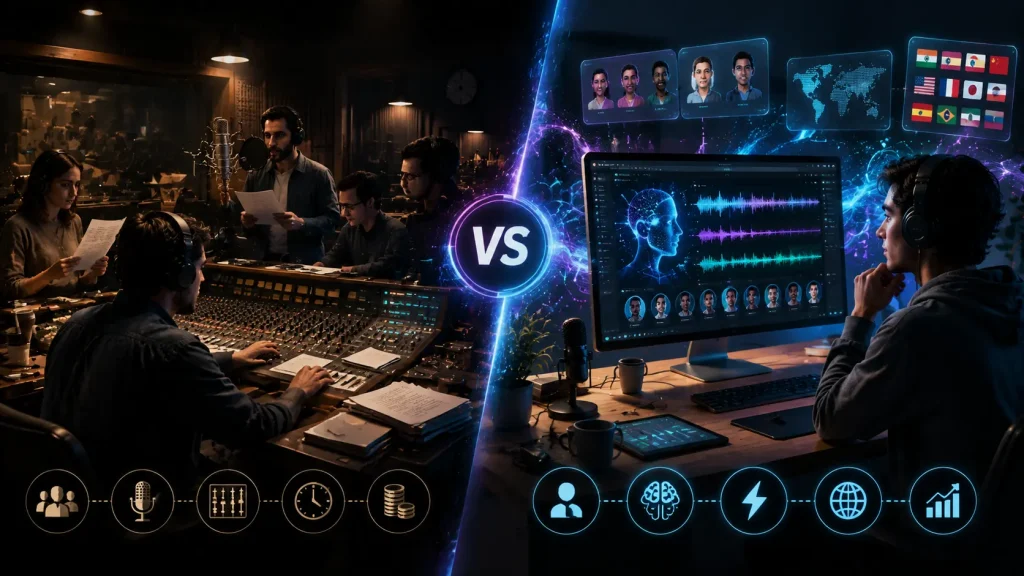
AI-powered audio storytelling is changing how creators produce and share stories. Traditional audio production often required professional recording equipment, voice artists, studios, and technical editing skills. AI voice technology reduces many of these barriers by allowing creators to transform ideas into engaging audio experiences with fewer resources.
For independent creators, writers, educators, and storytellers, AI provides a faster and more accessible way to experiment with audio content.
Traditional Recording vs AI Audio Creation
| Traditional Recording | AI Audio Creation |
| Requires professional recording equipment | Works with simple digital tools |
| Often involves expensive production processes | Lower production costs |
| Requires professional voice artists | Uses AI-generated narration |
| Longer recording and editing timelines | Faster content creation workflow |
| Limited voice options | Multiple AI voices and styles available |
Key Benefits of Creating Audio Stories With AI
Faster Storytelling and Production
AI voice technology allows creators to move from script to audio much faster compared to traditional recording methods.
Instead of coordinating recording sessions, voice artists, and studio requirements, creators can generate narration, review the output, and improve the final audio experience within a shorter timeframe.
This helps creators publish more stories and experiment with different formats.
Lower Production Barriers
Traditional audio production can require:
- Recording equipment
- Studio environments
- Voice professionals
- Audio editing knowledge
AI-powered audio creation reduces these requirements, making storytelling more accessible to beginners and independent creators.
Anyone with a story idea and a digital workflow can begin creating audio content.
Multilingual Content Creation
AI voice technology enables creators to produce stories in multiple languages, helping them reach diverse audiences.
Creators can explore:
- Regional language storytelling
- Multilingual content
- Local cultural narratives
- Global audience expansion
This is especially valuable for platforms focused on cultural and regional storytelling, where language plays an important role in audience connection.
Experiment With Different Voices
AI allows creators to explore different narration styles without recording multiple versions manually.
Creators can experiment with:
- Different voice personalities
- Character voices
- Emotional tones
- Storytelling styles
This flexibility helps creators find the right voice experience for each type of story.
Scale Content Production
AI audio creation helps creators produce more content efficiently.
A single creator can use AI tools to develop:
- Multiple story formats
- Different language versions
- Series-based content
- Community-driven audio experiences
This makes it easier to build a consistent content library and engage audiences regularly.
AI Audio Stories vs Podcasts: What’s the Difference?
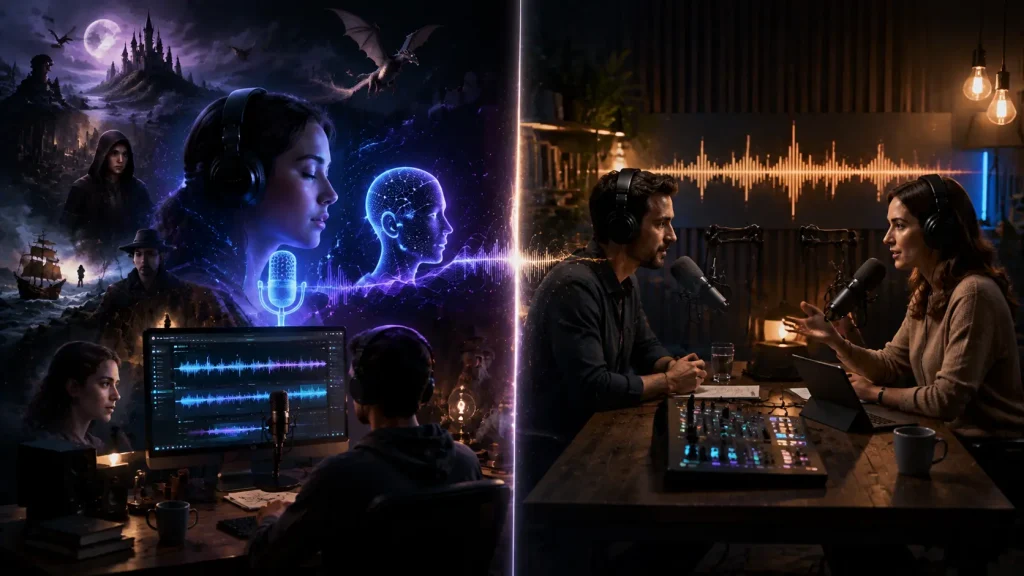
AI audio stories and podcasts are both popular forms of digital audio content, but they serve different storytelling purposes.
While podcasts are usually focused on conversations, interviews, discussions, or commentary, AI audio stories are designed around narrative experiences using scripts, characters, and immersive storytelling elements.
Understanding the difference helps creators choose the right format based on their content goals.
AI Audio Stories vs Podcasts Comparison
| AI Audio Stories | Podcasts |
| Story-focused content | Conversation-focused content |
| Usually script-driven | Usually host-driven |
| Built around fiction, narratives, and storytelling | Built around discussions, interviews, and opinions |
| Can include multiple character voices | Usually features one or multiple hosts |
| Uses narration, sound effects, and atmosphere | Often relies mainly on spoken conversation |
| Designed for immersive listening experiences | Designed for ongoing conversations and episodes |
AI Audio Stories
AI audio stories focus on creating structured narratives where the listener experiences a story through voice, sound, and emotion.
Common examples include:
- Fiction stories
- Horror stories
- Romance stories
- Children’s stories
- Cultural storytelling
- Character-based narratives
AI voice technology allows creators to develop different voices, emotions, and sound environments to make stories more engaging.
Podcasts
Podcasts are generally built around spoken conversations or discussions.
Common formats include:
- Interviews
- News discussions
- Educational conversations
- Expert opinions
- Host-led storytelling
Podcasts are effective for building relationships between hosts and audiences through regular conversations.
Which Format Should Creators Choose?
The choice depends on the type of content being created.
Choose AI audio stories when the goal is:
- Creating fictional worlds
- Sharing narratives
- Building immersive experiences
- Experimenting with character-based storytelling
Choose podcasts when the goal is:
- Hosting conversations
- Sharing opinions
- Interviewing guests
- Building discussion-based content
Both formats serve different storytelling needs. AI audio stories focus on narrative experiences, while podcasts focus on conversations and discussions. Many creators can also combine both approaches to create unique voice-first content experiences.
Best AI Voice Technology Features for Story Creators
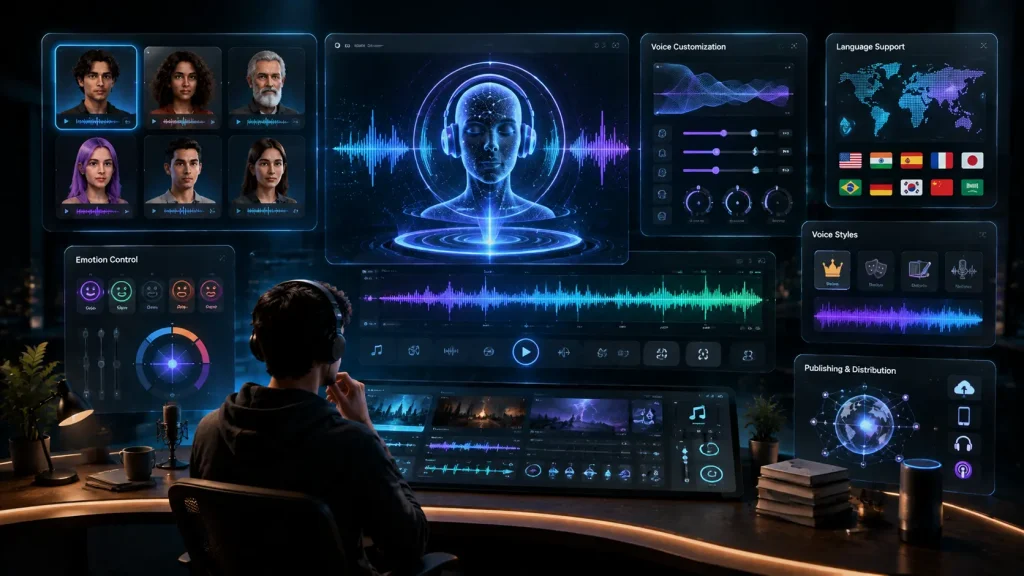
Choosing the right AI voice technology can significantly improve the quality, speed, and scalability of audio storytelling. For creators, the best AI voice solutions are not only about converting text into speech. They provide tools that help transform ideas into engaging listening experiences.
Modern AI voice technology supports creators throughout the storytelling process, from generating realistic narration to publishing content for audiences.
Important features that story creators should look for include:
Natural AI Voices
Voice quality is one of the most important factors in creating engaging audio stories.
Advanced AI voice technology uses artificial intelligence models to generate voices that sound more natural, expressive, and human-like.
Natural AI voices help creators achieve:
- Clear pronunciation
- Realistic speech patterns
- Smooth narration flow
- Better listener engagement
A natural voice experience allows audiences to focus on the story rather than the technology behind the narration.
Multiple Languages
Language plays an important role in reaching diverse audiences.
AI voice technology enables creators to produce audio stories in multiple languages, helping them connect with regional and global listeners.
Multilingual AI storytelling can support:
- Regional language content
- Local cultural stories
- Translated storytelling experiences
- Wider audience reach
For creators building communities around storytelling, multilingual capabilities create opportunities to connect with listeners across different regions and cultures.
Emotional Voice Generation
Great storytelling depends on emotion. A story is not only about the words; it is about how the listener experiences those words.
Emotional AI voice generation helps creators create more expressive narration by adjusting:
- Tone
- Voice intensity
- Speaking style
- Story mood
- Emotional delivery
Different genres require different emotional approaches:
- Horror stories need suspense and tension
- Romance stories need warmth and expression
- Motivational stories need energy and inspiration
Emotional voice generation helps AI-created stories feel more engaging and immersive.
Voice Customization
Every story has a different identity, and voice customization allows creators to match narration with their content style.
Creators can customize:
- Voice personality
- Speaking pace
- Character styles
- Narration tone
- Audio presentation
For stories with multiple characters, customized voices can help listeners easily identify different personalities and follow the narrative.
Fast Audio Production
Traditional audio production can take significant time due to recording, editing, and voice coordination.
AI voice technology speeds up the production process by allowing creators to:
- Convert scripts into audio quickly
- Test different narration styles
- Edit and regenerate sections
- Produce multiple content versions
This enables creators to focus more on storytelling and less on production limitations.
Creator Publishing Tools
Creating audio content is only one part of the storytelling journey. Creators also need platforms where they can share their work and build audiences.
Creator-focused publishing tools help with:
- Content distribution
- Audience discovery
- Community engagement
- Listener interaction
- Building a creator identity
A complete AI audio storytelling ecosystem connects creation, publishing, and audience growth.
How Creators Can Use AI Audio Stories on Arré Voice
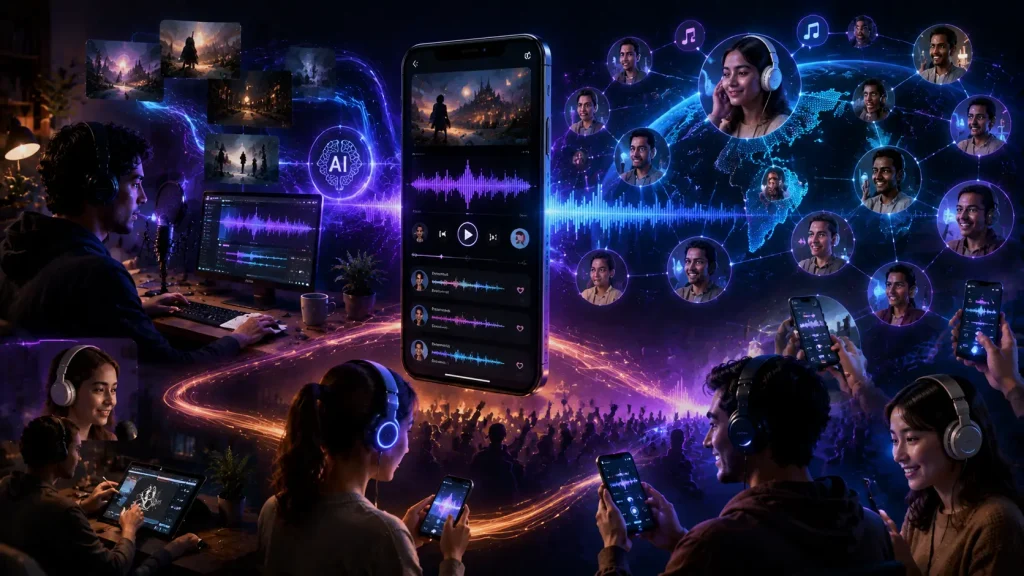
AI technology makes audio creation easier, but creators need the right ecosystem to share stories, connect with listeners, and build communities.
Arré Voice brings together AI-powered creation possibilities with a voice-first social experience where creators can share stories and engage with audiences.
Creators can use audio storytelling platforms like Arré Voice to:
Create Voice Content
Creators can transform their ideas, scripts, and experiences into voice-based content.
Audio storytelling opens opportunities for:
- Fiction creators
- Writers
- Regional storytellers
- Educators
- Community voices
With AI voice technology, creators can experiment with different storytelling formats and produce engaging audio experiences.
Share Stories With Audiences
Creating a story is only the beginning. Distribution helps creators reach listeners who are interested in their content.
Creators can share:
- Short audio stories
- Narrative experiences
- Personal stories
- Cultural content
- Community conversations
Build Audiences Through Voice
Voice creates a more personal connection between creators and listeners.
Unlike text-only content, audio allows audiences to experience:
- Emotion
- Personality
- Storytelling style
- Human connection
Consistent voice content can help creators develop loyal audiences.
Join Voice Communities
Communities help creators discover like-minded audiences and other storytellers.
Voice communities allow users to:
- Participate in conversations
- Discover new creators
- Share experiences
- Build connections around common interests
Discover Listeners
AI audio creation combined with a community-driven platform helps creators find audiences who are interested in their stories.
The complete journey becomes:
AI Creation → Audio Story → Community Discovery → Audience Growth
Arré Voice enables creators to move beyond content creation and participate in a larger voice storytelling ecosystem.
Types of Audio Stories You Can Create With AI
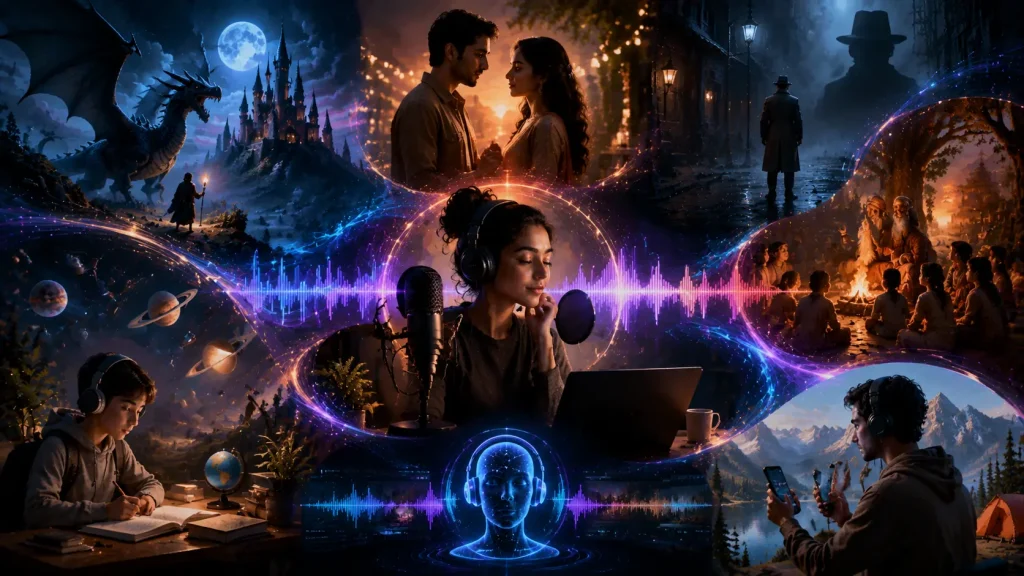
AI voice technology gives creators the flexibility to produce different types of audio stories across entertainment, education, culture, and community content.
From fictional narratives to real-life experiences, AI-powered audio creation can support many storytelling formats.
Fiction Stories
Fiction remains one of the most popular formats for audio storytelling because voice can create immersive worlds and memorable characters.
Creators can produce:
Fantasy Stories
AI voices can help bring imaginary worlds, characters, and adventures to life through expressive narration.
Examples:
- Magical worlds
- Adventure journeys
- Fictional characters
Romance Stories
Romantic storytelling can use emotional narration to create stronger listener connections.
Examples:
- Love stories
- Relationship journeys
- Emotional narratives
Mystery Stories
AI audio production is especially useful for suspense-based storytelling.
Examples:
- Detective stories
- Crime mysteries
- Thriller narratives
Cultural Stories
AI audio storytelling provides new ways to preserve and share cultural experiences.
Creators can explore:
Folklore
Examples:
- Traditional stories
- Local legends
- Ancient narratives
Regional Traditions
Examples:
- Community stories
- Local customs
- Regional experiences
Heritage Stories
Examples:
- Historical narratives
- Forgotten traditions
- Cultural memories
Audio formats allow cultural stories to reach younger audiences through engaging listening experiences.
Educational Stories
AI audio stories are also useful for learning and knowledge sharing.
Creators can develop:
Learning Content
Examples:
- Educational lessons
- Skill-based content
- Knowledge stories
Explainers
Examples:
- Complex topics simplified through storytelling
- Educational narratives
- Concept-based audio content
Creator Stories
Personal storytelling is becoming an important part of the creator economy.
Creators can share:
Personal Experiences
Examples:
- Life journeys
- Personal lessons
- Inspirational moments
Community Conversations
Examples:
- Listener discussions
- Shared experiences
- Interest-based conversations
AI audio technology allows more people to transform their ideas and experiences into meaningful voice content. Combined with platforms like Arré Voice, creators can build connections through stories, communities, and conversations.
Is AI Replacing Human Storytellers?
No, AI is not replacing human storytellers. Instead, AI voice technology is becoming a creative tool that helps storytellers produce content faster, explore new formats, and connect with larger audiences.
Storytelling has always been driven by human creativity, imagination, and emotional understanding. AI can assist with the production process, but the ideas, experiences, and perspectives behind meaningful stories continue to come from people.
AI works as a creative partner by helping creators overcome technical barriers and focus more on storytelling.
How AI Helps Story Creators
Produce Stories Faster
Traditional audio production can involve multiple stages, including recording, editing, voice coordination, and post-production.
AI voice technology helps creators speed up the process by allowing them to:
- Convert scripts into audio quickly
- Test different narration styles
- Create multiple versions of a story
- Improve production efficiency
This allows creators to spend more time developing ideas and improving storytelling quality.
Experiment With New Storytelling Formats
AI gives creators the flexibility to explore different creative possibilities.
Creators can experiment with:
- Different AI voices
- Multiple languages
- Character-based narration
- New audio formats
- Interactive storytelling experiences
This opens opportunities for creators to try ideas that may have been difficult or expensive to produce traditionally.
Reach Wider Audiences
AI-powered audio creation makes it easier to create content for diverse audiences.
Creators can use AI technology to:
- Produce multilingual stories
- Adapt content for different listeners
- Create accessible audio experiences
- Share stories across digital platforms
This helps storytellers connect with audiences beyond geographical and language limitations.
Why Human Creativity Still Matters
While AI can assist with audio production, human creativity remains the foundation of great storytelling.
Human storytellers are responsible for:
Ideas
Every meaningful story begins with a unique idea, observation, or personal experience. AI can help develop content, but the original creative direction comes from humans.
Emotions
Stories connect with audiences because they reflect human emotions and experiences.
Creators bring:
- Empathy
- Personal understanding
- Emotional depth
- Human connection
Cultural Context
Culture shapes how stories are created and understood.
Human creators provide:
- Local perspectives
- Traditional knowledge
- Social understanding
- Cultural authenticity
Original Perspectives
The most memorable stories come from unique viewpoints and personal experiences.
AI can support the storytelling process, but human imagination and originality determine what makes a story meaningful.
The Future of Storytelling: Human Creativity + AI Technology
The future of audio storytelling is not about AI replacing creators. It is about creators using AI as a tool to expand their capabilities.
The combination of:
- Human imagination
- Creative storytelling
- AI voice technology
- Digital communities
allows more people than ever before to share their voices with the world.
AI makes storytelling more accessible, but humans remain the storytellers behind every meaningful story.
Frequently Asked Questions
What is an AI audio story?
An AI audio story is a narrative created using artificial intelligence to transform written scripts into spoken audio experiences. It combines AI-generated voices, text-to-speech technology, sound effects, and background audio to create engaging stories. Creators can use AI audio storytelling to produce fiction, educational content, cultural stories, personal experiences, and character-driven narratives.
How can I create audio stories using AI?
You can create audio stories using AI by developing a story idea, writing a script, selecting an AI voice, generating narration, improving the audio quality, and publishing the final content. AI tools help creators convert written ideas into professional audio experiences without requiring advanced recording equipment or traditional voice production workflows.
Can AI generate realistic voices for stories?
Yes, AI can generate realistic voices for stories using advanced text-to-speech and voice generation technology. Modern AI voice tools can create natural narration with different voices, languages, speaking styles, and emotional expressions. These capabilities allow creators to produce engaging audio stories while reducing the need for professional recording studios or voice actors.
Can I create audio stories without recording my voice?
Yes, you can create audio stories without recording your own voice by using AI voice technology. Creators can write a script, choose an AI-generated voice, and generate narration automatically. This makes audio storytelling more accessible for writers and beginners who want to share stories without microphones, recording equipment, or professional voice training.
What are the best AI voice tools for storytellers?
The best AI voice tools for storytellers provide realistic voices, multiple language support, voice customization, and simple audio production features. Important capabilities include emotional narration, character voices, voice control, and editing options. Creators should choose AI voice solutions that support the complete journey from creating audio stories to publishing and reaching audiences.
Can AI create stories in Indian languages?
Yes, AI can create audio stories in Indian languages using multilingual voice generation technology. Creators can produce stories in languages such as Hindi, Tamil, Telugu, Marathi, Bengali, and other regional languages. AI-powered multilingual storytelling helps preserve cultural narratives, expand audience reach, and make audio content accessible to diverse communities across India.
How long does it take to create an AI audio story?
The time required to create an AI audio story depends on the story length, script quality, and level of editing required. Short stories can often be created within minutes or hours, while longer productions may require additional time for writing, narration, sound design, and review. AI significantly reduces traditional production time.
Can creators earn from AI-generated audio stories?
Yes, creators can build opportunities from AI-generated audio stories by publishing content, growing audiences, and developing creator communities. AI helps creators produce content faster, experiment with formats, and reach more listeners. However, long-term success depends on original ideas, storytelling quality, audience engagement, and consistent content creation.
What is the difference between AI audio stories and podcasts?
AI audio stories focus on scripted narratives, fictional content, character voices, and immersive storytelling experiences. Podcasts usually focus on conversations, interviews, discussions, and host-led episodes. Both formats serve different purposes. AI audio stories are designed for narrative experiences, while podcasts are mainly created for sharing discussions, opinions, and conversations.
Where can I publish AI audio stories?
You can publish AI audio stories on audio platforms, creator communities, podcast platforms, social media channels, and voice-based applications. The right platform helps creators discover listeners, build communities, and grow their audience. Platforms like Arré Voice enable creators to share voice content and connect with audiences through storytelling experiences.