
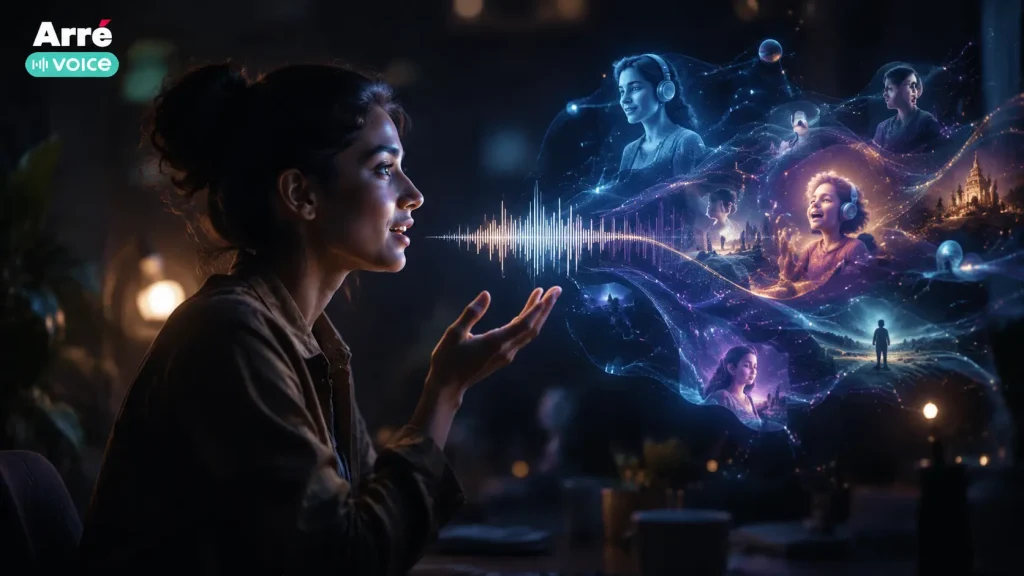
How AI Voice Agents Are Changing Human-AI Interaction

AI voice agents are AI-powered systems that understand spoken language, respond naturally, and perform tasks through voice conversations. They combine speech recognition, artificial intelligence, and voice generation to create more human-like digital interactions.
Voice has always been one of the most natural forms of human communication. As technology evolves, people are increasingly moving beyond traditional screens and text-based interactions toward more conversational digital experiences.
AI voice agents are at the centre of this shift. They allow users to communicate with artificial intelligence through natural speech, creating interactions that feel faster, simpler, and more intuitive. Instead of typing commands or navigating multiple screens, users can simply speak and receive meaningful responses.
The growth of voice-based AI experiences has been driven by improvements in speech recognition, artificial intelligence models, and realistic voice generation. These technologies are helping create systems that can understand conversations, respond with context, and adapt to individual users.
While traditional chatbots mainly rely on text-based conversations, AI voice agents introduce a more human approach to digital interaction. They combine listening, understanding, and speaking capabilities to create experiences that feel closer to real conversations.
For creators and digital platforms, AI voice agents are opening new possibilities in storytelling, entertainment, and audience engagement. They can power interactive characters, voice-based experiences, and personalised conversations that transform how people discover and consume content.
As voice technology continues to develop, AI voice agents are expected to become an important part of the future of digital experiences, where communication becomes more natural, personalised, and immersive.
What Are AI Voice Agents?
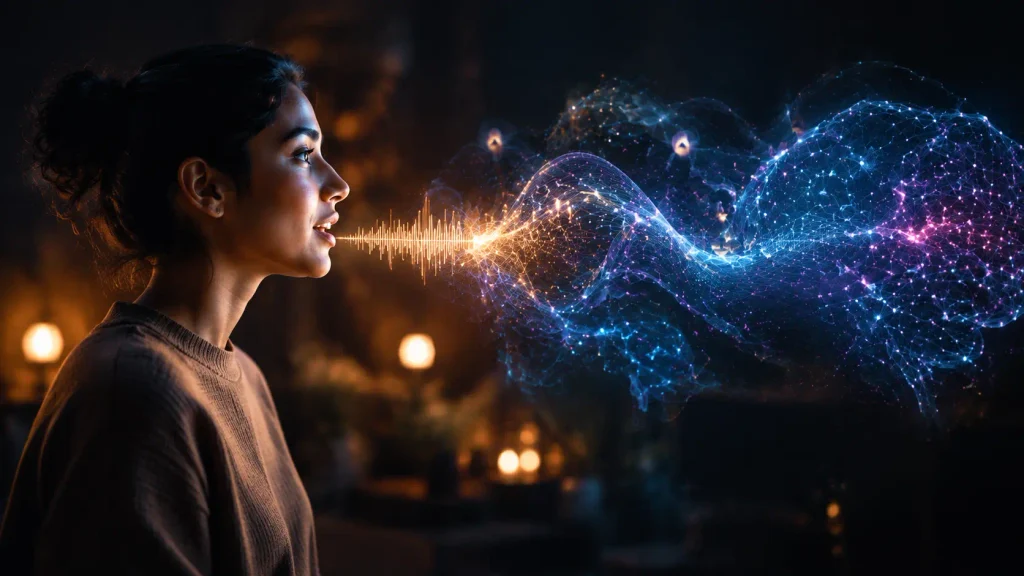
AI voice agents are artificial intelligence-powered systems that communicate with users through spoken conversations. They can understand voice inputs, process information, generate responses, and deliver those responses using natural-sounding voices.
Unlike traditional automated systems that follow fixed commands, AI voice agents are designed to understand the meaning behind conversations. They can identify user intent, maintain context, and provide responses based on the specific situation.
AI voice agents combine multiple technologies, including:
- Speech recognition to convert spoken words into digital information
- Artificial intelligence to understand requests and generate responses
- Voice generation technology to create natural audio output
The main goal of an AI voice agent is to make human-computer interaction more conversational. Instead of users learning how to communicate with technology, AI voice agents are designed to understand how humans naturally communicate.
AI voice agents can help with:
- Understanding voice commands
- Answering questions
- Maintaining conversations
- Providing personalised experiences
- Automating voice interactions
AI Voice Agents vs Chatbots vs Voice Assistants
Although AI voice agents, chatbots, and voice assistants are related technologies, they serve different purposes.
Chatbots are primarily designed for text-based communication. They are commonly used on websites and applications to answer questions, provide information, or guide users through specific processes.
Voice assistants allow users to interact with technology through speech. However, many traditional voice assistants are designed around specific commands and predefined actions.
AI voice agents take this further by combining conversational intelligence with voice interaction. They can understand more complex conversations, respond dynamically, and create personalised experiences.
The key difference is that AI voice agents focus on creating ongoing conversations rather than simply completing individual commands.
How Do AI Voice Agents Work?
AI voice agents work by combining several artificial intelligence technologies that allow systems to listen, understand, process, and respond through voice.
The process involves multiple stages, from recognising spoken language to generating a natural voice response.
Speech Recognition
Speech recognition is the technology that allows AI voice agents to understand spoken words.
When a user speaks, the system converts the audio input into text that artificial intelligence can analyse. This allows the AI agent to understand what the user is saying and identify the purpose behind the request.
Modern speech recognition systems can process:
- Different accents
- Various speaking patterns
- Natural conversations
- Multiple languages
This technology removes the need for users to rely on specific commands, allowing more flexible and natural interactions.
Natural Language Understanding
After converting speech into text, AI voice agents need to understand the meaning behind the conversation.
Natural Language Understanding (NLU) helps AI systems identify:
- User intent
- Conversation context
- Important information
- Expected outcomes
For example, a user asking, “Suggest something interesting to listen to” requires the AI to understand that the user wants recommendations rather than a direct answer.
Context awareness helps AI voice agents provide more relevant responses and maintain conversations naturally.
AI Response Generation
Once the user’s request is understood, the AI voice agent generates an appropriate response.
AI models analyse the conversation and create responses based on:
- User input
- Previous interactions
- Available information
- Conversation context
Unlike traditional systems that rely on fixed responses, AI voice agents can generate new responses dynamically.
This allows them to support more engaging experiences, including personalised recommendations, interactive conversations, and creative applications.
AI Voice Generation
The final stage involves converting the AI-generated response into spoken audio.
AI voice generation technology creates the voice output users hear during conversations. Modern AI voices can deliver:
- Natural pronunciation
- Realistic speech patterns
- Different tones and styles
- Emotional expression
This advancement is making AI conversations feel more human and engaging.
Generative Voice AI is playing an important role in improving how machines create realistic voices and personalised audio experiences.
Key Features of AI Voice Agents
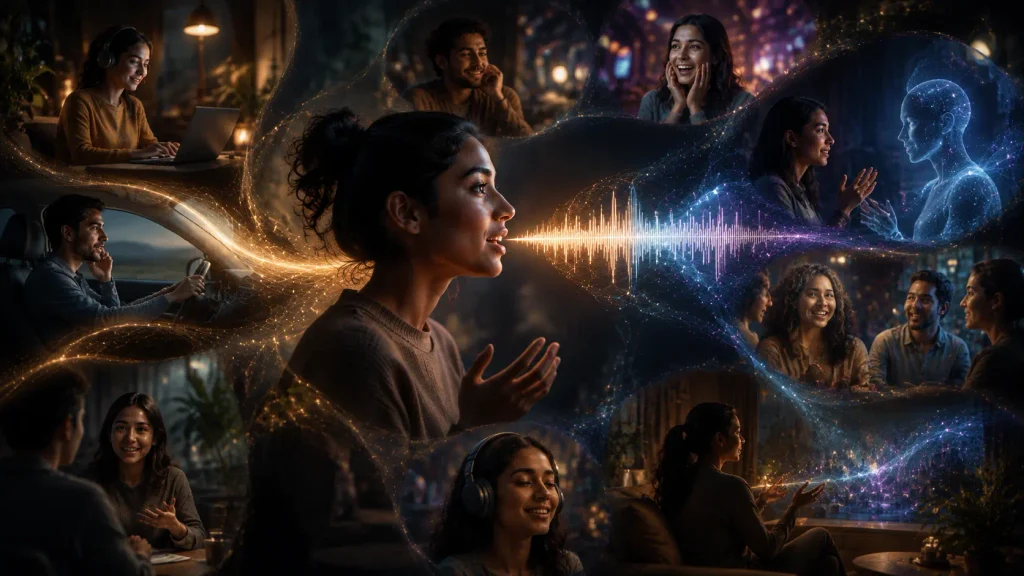
AI voice agents are becoming more advanced because of their ability to create natural, personalised, and interactive conversations.
Real-Time Conversations
One of the biggest advantages of AI voice agents is their ability to provide real-time communication.
Unlike traditional systems where users wait for responses or navigate through multiple steps, AI voice agents can respond instantly during conversations.
Real-time voice interaction enables:
- Faster communication
- More natural dialogue
- Two-way conversations
- Immediate assistance
This makes voice interactions more engaging and closer to human communication.
Context-Aware Interactions
AI voice agents can understand and use conversation context to provide better responses.
Instead of treating every interaction as a separate request, advanced AI systems can remember previous information and use it to create more relevant conversations.
Context-aware interactions help with:
- Understanding user preferences
- Providing personalised recommendations
- Maintaining conversation flow
- Creating more meaningful experiences
For creators and entertainment platforms, this capability enables more interactive experiences where users can engage with AI-powered characters and personalised content.
Human-Like Voice Experiences
Modern AI voice agents focus on creating voices that feel natural and expressive.
Beyond converting text into speech, advanced voice systems can include:
- Natural tone variation
- Emotional delivery
- Realistic speaking patterns
- Conversational rhythm
Human-like voice experiences are especially important in areas like storytelling, digital characters, and audio entertainment, where emotional connection plays a major role.
Multi-Language Support
AI voice agents are also expanding access by supporting multiple languages and regional voices.
Multi-language voice capabilities help creators and platforms reach wider audiences by enabling:
- Regional language experiences
- Global content distribution
- Improved accessibility
- More inclusive communication
As voice AI continues to develop, regional language support will become increasingly important for creating personalised experiences across different cultures and communities.
AI Voice Agents vs Traditional Chatbots

AI voice agents and traditional chatbots both help users interact with digital systems, but the way they communicate and deliver experiences is different.
Traditional chatbots mainly rely on text-based conversations. Users type questions, and the chatbot provides responses based on predefined rules or AI-generated answers.
AI voice agents take this interaction further by allowing users to communicate naturally through speech. They combine voice recognition, artificial intelligence, and voice generation to create more human-like conversations.
| AI Voice Agents | Traditional Chatbots |
| Voice-based conversations | Text-based interactions |
| More natural communication | Typed responses |
| Real-time interaction | Limited conversations |
| Human-like experiences | Command-based responses |
Voice is becoming the next evolution of digital communication because it removes friction between users and technology. Instead of typing, searching, or navigating through multiple options, users can simply speak naturally and receive immediate responses.
This shift is especially important as digital experiences become more personalised. Voice interactions allow technology to become more accessible, conversational, and engaging across different use cases, including entertainment, education, and content creation.
For creators, voice-based AI opens new possibilities by allowing audiences to interact with stories, characters, and digital experiences in more immersive ways.
How AI Voice Agents Are Transforming Digital Experiences
AI voice agents are changing how people interact with digital platforms by making conversations more natural, personalised, and interactive. Beyond simple assistance, they are creating new possibilities in storytelling, entertainment, and creator-driven experiences.
Interactive Storytelling
AI voice agents are creating new opportunities for interactive storytelling by allowing audiences to engage with stories in real time.
Instead of passively consuming content, listeners can interact with AI-powered characters, explore different story paths, and experience personalised narratives.
AI voice agents can support:
- AI-powered characters with unique personalities
- Voice-based storytelling experiences
- Personalised story interactions
- Dynamic conversations within fictional worlds
This creates a new form of storytelling where audiences become active participants rather than only listeners.
Storytelling bots are helping creators explore these possibilities by combining artificial intelligence with creative writing and character development.
Know more about
→ Storytelling Bot
Entertainment and Media
The entertainment industry is exploring AI voice agents to create more engaging and interactive experiences.
From digital characters to immersive audio content, voice AI is changing how audiences connect with entertainment.
Applications include:
- Interactive audio experiences
- Digital personalities
- AI-powered characters
- Voice-driven entertainment formats
For audio-first platforms, AI voice agents can help create experiences where listeners can communicate with characters, explore stories, and discover content in new ways.
This represents a shift from traditional one-way entertainment toward more interactive and personalised media experiences.
Creator Experiences
AI voice agents are also creating new opportunities for creators by making voice-based production and experimentation more accessible.
Creators can use AI voice technology to explore:
- Voice-based storytelling formats
- Character experimentation
- Interactive content creation
- New ways of engaging audiences
For example, creators can experiment with different character voices, build conversational personalities, and develop more immersive audio experiences without requiring traditional production resources.
As AI voice technology improves, creators will have more tools to develop unique storytelling formats that combine human creativity with artificial intelligence.
Know more about
→ AI Voice Characters
Personalised User Experiences
One of the biggest advantages of AI voice agents is their ability to create personalised interactions.
Unlike traditional digital experiences that provide the same content to every user, AI voice agents can adapt conversations based on individual preferences and behaviour.
Personalised voice experiences can include:
- Adaptive conversations
- Custom recommendations
- Individual content suggestions
- User-specific interactions
In storytelling and entertainment, this can help create experiences where users discover content that matches their interests and interact with digital experiences in more meaningful ways.
As voice AI continues to evolve, personalised interactions will become an important part of how people discover, consume, and engage with digital content.
How Creators Can Use AI Voice Agents
AI voice agents are becoming valuable tools for creators by helping them build interactive experiences, experiment with characters, and create new forms of voice-based content.
Instead of using AI only for automation, creators can use voice agents as creative partners that support storytelling, audience engagement, and content development.
Story Development
Creators can use AI voice agents to explore new storytelling possibilities and develop interactive narratives.
They can help with:
- Interactive character conversations
- Exploring story ideas
- Testing different narrative directions
- Developing immersive story experiences
This allows creators to experiment with stories beyond traditional formats and create experiences where audiences can engage more deeply with the content.
Voice-Based Characters
AI voice agents can bring fictional and digital personalities to life through realistic conversations.
Creators can develop:
- Digital personalities
- Character-driven interactions
- Conversational characters
- Voice-based fictional experiences
This creates opportunities for building characters that audiences can interact with rather than simply listen to.
The combination of AI voice agents and AI voice characters can help creators design more engaging and memorable storytelling experiences.
Audio Experiences
Voice agents are opening new possibilities for interactive audio content.
Creators can use them to develop:
- Interactive audio stories
- Immersive listening experiences
- Conversational narratives
- Voice-powered entertainment formats
This moves audio storytelling beyond traditional narration by allowing listeners to participate and influence their experience.
Community Engagement
AI voice agents can also help creators build stronger relationships with their audiences.
They can support:
- Voice-based communities
- Audience interactions
- Personalised conversations
- New engagement formats
For creator platforms, voice technology provides an opportunity to move from simple content consumption toward deeper audience participation and connection.
Benefits of AI Voice Agents

AI voice agents are transforming digital interactions by making communication faster, more natural, and more personalised. For creators, businesses, and digital platforms, they provide new ways to engage audiences and deliver meaningful experiences through voice.
More Natural Communication
One of the biggest advantages of AI voice agents is their ability to make technology feel more human.
Instead of typing queries or selecting options from menus, users can communicate naturally through speech. AI voice agents can understand conversational language and respond in a way that feels closer to a human interaction.
This creates smoother experiences where users can express their needs naturally without learning specific commands or formats.
Faster User Interactions
AI voice agents reduce the time required to access information or complete tasks.
With voice-based interactions, users can quickly ask questions, receive responses, and continue conversations without navigating through multiple screens or interfaces.
This makes digital experiences more efficient by enabling:
- Instant responses
- Faster information discovery
- Seamless conversations
- Reduced user effort
For content platforms, this can help audiences discover stories, recommendations, and experiences more easily.
Personalised Experiences
AI voice agents can create more personalised interactions by understanding user preferences, conversation history, and individual needs.
Instead of providing identical experiences to every user, AI voice agents can adapt responses based on context.
Personalised experiences can include:
- Custom recommendations
- Relevant content suggestions
- User-specific conversations
- Adaptive interactions
In storytelling and entertainment, this can help create unique experiences where users engage with content in ways that feel more personal.
Accessibility Improvements
Voice technology makes digital experiences more accessible for a wider range of users.
AI voice agents can help people interact with technology without depending on traditional text-based interfaces. This is especially valuable for users who prefer voice communication or face challenges with conventional digital interactions.
Voice AI can support:
- Hands-free interactions
- Multiple language experiences
- Easier access to information
- More inclusive digital experiences
As voice technology improves, accessibility will become an important part of how people interact with digital platforms.
New Creative Possibilities
AI voice agents are creating entirely new opportunities for creators.
Beyond traditional content formats, creators can build:
- Interactive characters
- Conversational stories
- Voice-based communities
- Personalised audio experiences
This allows storytelling to become more dynamic, where audiences can participate and interact rather than only consume content.
For creators, AI voice agents represent a new creative tool that combines human imagination with artificial intelligence.
Challenges and Limitations of AI Voice Agents
While AI voice agents are creating new possibilities, they also come with challenges that need careful consideration. Building trustworthy voice experiences requires balancing technological innovation with accuracy, privacy, and human creativity.
Accuracy and Understanding
One of the biggest challenges for AI voice agents is accurately understanding human communication.
People speak differently depending on:
- Accent
- Language
- Speaking style
- Context
AI voice agents may sometimes misunderstand user intent or provide responses that are not fully relevant.
Improving accuracy requires continuous advancements in speech recognition, language understanding, and AI training.
Privacy Concerns
Since AI voice agents process spoken conversations, privacy and data protection are important considerations.
Users need confidence that their conversations and personal information are handled responsibly.
Important areas include:
- Secure data handling
- User consent
- Transparent AI practices
- Responsible information management
Trust will play a major role in the wider adoption of voice-based AI experiences.
Maintaining Human Connection
Although AI voice agents can create realistic conversations, they do not replace genuine human creativity and emotional connection.
The most effective experiences combine AI capabilities with human input.
For storytelling and entertainment, AI can support creators by helping develop characters, generate ideas, and build interactive experiences, but human creativity remains essential for meaningful stories.
Voice Authenticity
As AI-generated voices become more realistic, questions around voice identity and authenticity are becoming increasingly important.
Creators and platforms need to consider:
- Responsible voice creation
- Clear disclosure of AI-generated voices
- Ethical use of voice technology
Maintaining transparency helps build trust between creators, audiences, and AI-powered experiences.
Responsible AI Usage
The future success of AI voice agents depends on responsible development and usage.
Creators and technology platforms need to focus on:
- Ethical AI practices
- Respecting user privacy
- Avoiding misuse of voice technology
- Maintaining human oversight
AI voice agents should be developed as tools that enhance creativity and communication rather than replace human expression.
The Future of AI Voice Agents

AI voice agents are expected to become an important part of the next generation of digital experiences. As artificial intelligence, voice generation, and conversational technology continue to improve, voice interactions will become more natural, personalised, and immersive.
The future of AI voice agents will move beyond simple assistance toward creating intelligent digital experiences that understand users, adapt to conversations, and support meaningful interactions.
Key developments will include:
- AI-powered digital personalities
- Interactive characters
- Voice-first applications
- Personalised AI experiences
- Human + AI collaboration
AI-powered digital personalities will allow users to interact with virtual characters, assistants, and creative experiences that feel more engaging and responsive.
Interactive characters will create new opportunities in entertainment and storytelling, allowing audiences to communicate with characters and explore personalised narratives.
Voice-first applications will also become more common as people increasingly prefer natural conversations over traditional interfaces.
The future of AI voice agents will not be about replacing human creativity. Instead, it will focus on combining artificial intelligence with human imagination to create richer and more meaningful experiences.
The future of AI voice agents will combine artificial intelligence, natural conversations, and human creativity to create more immersive digital experiences.
How Arré Voice Connects AI and Voice-Based Storytelling
Arré Voice explores how voice, storytelling, and technology can come together to create new ways for creators and audiences to connect.
As voice technology evolves, creators have new opportunities to build immersive audio experiences, experiment with characters, and engage audiences through interactive storytelling.
Arré Voice focuses on bringing together:
- AI-powered storytelling experiences
- Voice-based communities
- Character-driven audio experiences
- Creator-focused innovation
By combining the power of voice with creative storytelling, platforms like Arré Voice represent the future of audio experiences where creators can build deeper connections with audiences.
Create and discover immersive voice stories with Arré Voice.
Frequently Asked Questions
What are AI voice agents?
AI voice agents are artificial intelligence-powered systems that communicate with users through voice conversations. They can understand spoken language, process requests, generate responses, and reply using natural-sounding voices. Unlike basic voice assistants, AI voice agents can handle more complex conversations, remember context, and create personalised interactions.
How do AI voice agents work?
AI voice agents work by combining speech recognition, natural language understanding, AI response generation, and voice synthesis. They first convert spoken words into text, understand the user’s intent, generate an appropriate response, and convert that response back into realistic speech for a natural conversation experience.
What is the difference between AI voice agents and chatbots?
The main difference is how users interact with them. Chatbots usually rely on text-based conversations, while AI voice agents enable real-time voice interactions. AI voice agents can understand spoken language, respond naturally, and create more human-like conversations, making them better suited for personalised and immersive digital experiences.
Are AI voice agents the same as voice assistants?
No, AI voice agents and voice assistants are related but different. Traditional voice assistants mainly perform specific tasks using predefined commands, while AI voice agents use artificial intelligence to understand context, maintain conversations, and generate dynamic responses based on user needs.
What are AI voice agents used for?
AI voice agents are used for customer interactions, virtual assistance, entertainment, education, content creation, and interactive experiences. Creators can use them to build AI characters, voice-based stories, and personalised audio experiences, while businesses use them to automate and improve voice communication.
Can AI voice agents create conversations with characters?
Yes, AI voice agents can power conversations with digital characters by combining AI language models, voice generation, and character personalities. This allows users to interact with fictional characters, virtual personalities, and storytelling experiences in a more engaging and personalised way.
How are AI voice agents changing storytelling?
AI voice agents are transforming storytelling by enabling interactive narratives where audiences can communicate with characters and influence their experiences. Instead of only listening to stories, users can engage with AI-powered characters, explore different conversations, and experience personalised voice-based storytelling.
Are AI voice agents replacing human voice actors?
AI voice agents are not replacing human voice actors. Instead, they are becoming creative tools that help creators experiment with characters, generate voice experiences, and produce content faster. Human creativity, emotional expression, and storytelling skills remain essential for creating meaningful audio experiences.
What are the benefits of AI voice agents?
AI voice agents provide more natural communication, faster interactions, personalised experiences, and improved accessibility. They also create new opportunities for creators by enabling interactive storytelling, digital characters, and voice-based experiences that were previously difficult or expensive to develop.
What is the future of AI voice agents?
The future of AI voice agents will focus on more realistic conversations, personalised digital experiences, AI-powered characters, and voice-first applications. As voice technology improves, AI agents will become more integrated into entertainment, communication, and creative platforms, combining artificial intelligence with human imagination.