Table of contents
- What Is Digital Entertainment?
- What Are the Main Types of Digital Entertainment?
- What Are Some Real Examples of Digital Entertainment?
- How Does Digital Entertainment Work?
- How Is Digital Entertainment Different From Traditional Entertainment?
- Why Do People Choose Digital Entertainment?
- How Is Audio Entertainment Different From Video Entertainment?
- How Are Digital Creators Changing Entertainment?
- What Should You Consider When Choosing Digital Entertainment Platforms?
- How Does Arré Voice Fit Into Digital Entertainment?
- What Are the Challenges of Digital Entertainment?
- How Is Digital Entertainment Evolving?
- Frequently Asked Questions
- Conclusion: Understanding Today’s Digital Entertainment Choices
Digital entertainment includes the films, music, games, podcasts and creator-led experiences people enjoy through digital devices and platforms.
From streaming a series to playing online games or listening to spoken stories, entertainment now extends across multiple formats, devices and languages.
Understanding the types of digital entertainment helps audiences choose experiences that suit their interests, while giving creators new ways to share original content and connect with communities.
This guide explores the major formats, practical examples and ways digital entertainment works in everyday life.
What Is Digital Entertainment?
Digital entertainment refers to content and interactive experiences delivered through electronic devices and digital technologies for enjoyment, recreation or creative engagement.
It includes streaming movies, listening to music, playing video games, exploring podcasts and engaging with creator-produced content.
People typically access digital entertainment through smartphones, computers, tablets, gaming consoles and smart televisions. Some experiences require continuous internet access, while certain platforms allow downloaded content to be enjoyed offline.
Unlike entertainment defined by a single medium, digital entertainment brings together visual, audio and interactive formats.
For example, watching a film on Netflix, playing Minecraft with friends and listening to an audio story represent different forms of digital entertainment.
The category also includes social participation, where audiences create, respond to or discuss content instead of simply consuming it.
What Are the Main Types of Digital Entertainment?
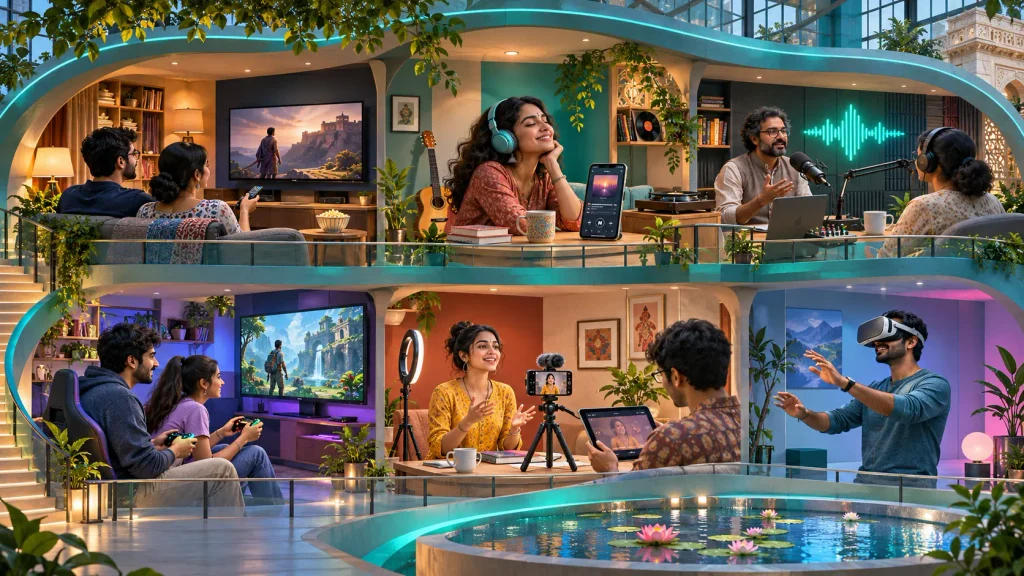
The main types of digital entertainment include video streaming, music and digital audio, podcasts, online gaming, social media and immersive experiences. Each offers a different combination of content, interaction and accessibility.
Video Streaming and On-Demand Shows
Video streaming allows audiences to watch films, television series, documentaries and other audiovisual content through internet-connected platforms.
Services such as Netflix provide on-demand access, allowing viewers to choose what they watch instead of following a fixed broadcast schedule.
Streaming content can be enjoyed through smartphones, televisions or computers. Some services also support offline downloads, depending on the subscription and content availability.
Music Streaming and Digital Audio
Music streaming provides digital access to songs, albums, playlists and other recorded audio.
Platforms such as Spotify, Apple Music and YouTube Music help listeners explore different artists, genres and languages.
Users can discover new music through recommendations, create personal playlists and revisit their favorite recordings.
Unlike traditional physical music collections, streaming libraries are accessed digitally, although availability and offline listening conditions differ between services.
Podcasts and Audio Storytelling
Podcasts are episodic audio or video programs covering subjects such as entertainment, education, culture and personal experiences.
Audio storytelling focuses on narratives delivered through spoken words, dialogue, sound design or narration.
Examples include fiction podcasts, audio dramas, personal stories and spoken-word performances.
These formats can suit people who enjoy listening while commuting, relaxing or completing routine activities.
For more examples, explore audio stories and their different narrative formats.
Online Gaming and Interactive Entertainment
Online gaming lets people engage with digital environments through gameplay, challenges and collaboration.
Games may involve competition, problem-solving, exploration or creative world-building.
Multiplayer experiences allow participants to cooperate or compete with other players, while story-driven games emphasize characters and narrative choices.
Unlike conventional video viewing, gaming generally requires active decisions that influence the experience.
Social Media and Creator-Led Entertainment
Social media entertainment includes short videos, comedy sketches, livestreams, digital stories and other content shared by independent creators.
Platforms such as YouTube and Instagram allow audiences to discover entertainment according to their interests.
Some experiences encourage participation through comments, collaborative projects or community discussions.
Creator-led entertainment also includes audio-first experiences, where personality, spoken expression and storytelling become central to audience engagement.
Virtual and Immersive Experiences
Immersive digital entertainment uses technologies or creative techniques that encourage audiences to feel involved in an experience.
Virtual reality can place users inside simulated environments through compatible headsets.
Augmented reality adds digital elements to views of the physical world, while interactive narratives allow audiences to influence certain story outcomes.
Not every immersive experience requires specialized hardware. Explore immersive storytelling for a closer look at narrative-based experiences.
What Are Some Real Examples of Digital Entertainment?
Real examples of digital entertainment include Netflix films and series, Minecraft multiplayer worlds, fiction podcasts, short audio stories and creator-produced videos.
These examples demonstrate how entertainment differs across watching, listening, playing and participating.
Streaming Films and Series
Netflix is an example of a subscription-based digital entertainment service offering films, series and documentaries on supported devices.
Viewers can browse its available catalog, select content and watch according to their schedules.
The platform also offers recommendations informed by viewing activity. Available titles and download options can vary by region and subscription.
Other streaming services use similar on-demand models, although their catalogs, pricing and features differ.
Multiplayer and Story-Based Games
Minecraft demonstrates how digital entertainment can combine creativity, exploration and social interaction.
Its Creative mode emphasizes building and experimentation, while Survival mode introduces resource management and environmental challenges.
Players can also participate in supported multiplayer experiences, making collaboration part of the entertainment.
Story-based games offer another approach by guiding players through fictional environments, characters and narrative decisions.
These examples illustrate how gaming differs from passive viewing: the player’s actions become part of the experience.
Fiction Podcasts and Short Audio Stories
Fiction podcasts use narration, dialogue and sometimes sound effects to communicate stories through recorded episodes.
Audio dramas may feature multiple performers and carefully designed soundscapes, while short audio stories can focus on a single event, memory or fictional situation.
Listeners might choose a mystery podcast for an episodic experience or a brief spoken story when they have limited time.
Explore short audio stories and best fiction podcasts for more format-specific examples.
Creator-Led Entertainment and Online Communities
Creator-led entertainment includes independent comedy, commentary, storytelling, performances and interest-based discussions.
A YouTube creator might publish a comedy series, while a voice storyteller could share original narrations and invite audience responses.
Arré Voice offers another example through Voicepods, which support recordings of up to 60 minutes, Voicepools for recorded responses to prompts, and Voiceclubs for shared-interest communities.
These formats show how digital entertainment can extend beyond watching or listening into creative participation and community connection.
How Does Digital Entertainment Work?
Digital entertainment works by delivering movies, music, games, podcasts and other content through digital devices and platforms. Depending on the service, audiences can stream content, download supported titles, interact with other users or participate in online communities.
On-Demand and Subscription-Based Access
On-demand entertainment allows users to select content whenever they want, rather than following a fixed broadcast schedule.
Subscription services such as Netflix provide access to available films and series through recurring payments. Music platforms may offer paid plans with additional listening features.
Subscriptions differ in pricing, supported devices, content catalogs and download options. Users should review these conditions before choosing a platform.
Free and Advertising-Supported Content
Some digital entertainment platforms provide content without requiring a paid subscription.
Advertising-supported services generate revenue by displaying advertisements alongside or within available content.
YouTube, for example, offers access to many videos without a paid subscription, although advertisements and feature limitations may apply.
Other services combine free access with optional premium plans. Free content does not necessarily mean unrestricted access to every feature.
Discovery Through Recommendations and Communities
Digital entertainment platforms help audiences discover content through search, recommendations, playlists and community activity.
Recommendations may consider viewing or listening behavior, expressed preferences and other signals.
However, discovery also happens through personal suggestions, creator communities and shared interests.
For example, someone interested in storytelling might discover a new audio creator through a community discussion rather than an automated recommendation.
How Is Digital Entertainment Different From Traditional Entertainment?
The main difference between digital and traditional entertainment lies in how content is delivered, accessed and experienced. Digital platforms commonly offer on-demand access and interactive features, while traditional formats often rely on physical venues, scheduled broadcasts or established distribution channels.
| Feature | Digital Entertainment | Traditional Entertainment |
| Access | Apps, websites and digital devices | Cinemas, television broadcasts and physical venues |
| Scheduling | Frequently available on demand | Often scheduled or event-based |
| Participation | May include comments, gaming and community interaction | Often audience-focused, with participation depending on the format |
| Content discovery | Search, recommendations and online communities | Broadcast schedules, advertising and personal recommendations |
| Distribution | Internet-based and downloadable formats | Broadcast, physical media and live performances |
| Examples | Streaming platforms, online games, podcasts | Cinema screenings, radio broadcasts, theatre |
These categories can overlap. Traditional television programs may appear on streaming services, while live concerts can reach audiences through digital broadcasts.
Digital entertainment therefore expands entertainment choices rather than completely replacing traditional experiences.
Why Do People Choose Digital Entertainment?
People choose digital entertainment because it offers flexible access, varied content and opportunities to participate in experiences that match their interests.
Convenience and Flexible Access
Digital platforms make it possible to enjoy entertainment through smartphones, laptops and other compatible devices.
A commuter might listen to a podcast, while a family may watch a film on a smart television.
On-demand access also allows users to pause, resume or revisit supported content.
However, internet requirements, subscriptions and device compatibility influence convenience.
More Content Formats and Language Choices
Digital entertainment brings together films, music, games, spoken stories and interactive experiences.
Many platforms offer content in multiple languages, enabling audiences to explore entertainment beyond their immediate geographical surroundings.
For Indian audiences, regional-language storytelling, music and creator-led content can provide culturally familiar experiences.
Content availability depends on platform libraries, licensing and regional access.
Participation and Shared Experiences
Digital entertainment can encourage audiences to become active participants rather than remaining exclusively viewers or listeners.
Multiplayer games support collaboration, while creator communities allow people to discuss content and share their own contributions.
Voice-based communities introduce another form of participation through recorded expression and shared interests.
These experiences can make entertainment more personally engaging, although meaningful interaction depends on how people use each platform.
How Is Audio Entertainment Different From Video Entertainment?
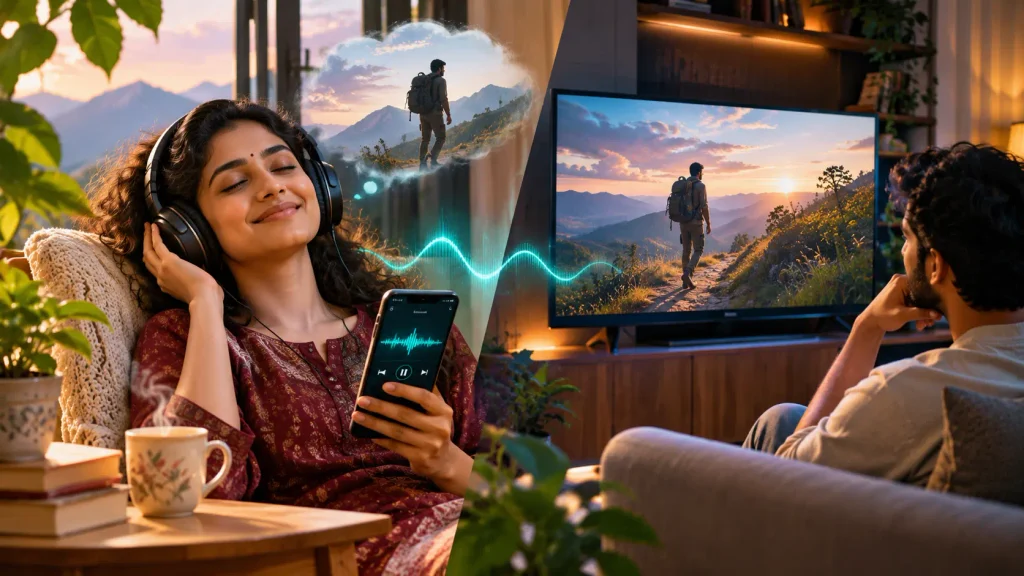
Audio entertainment communicates content primarily through sound, while video entertainment combines moving visuals with sound. Both can support storytelling, education and creative expression, but they place different demands on audience attention.
| Aspect | Audio Entertainment | Video Entertainment |
| Primary medium | Spoken words, music and sound | Moving images and sound |
| Examples | Podcasts, audio stories, music | Films, series, video podcasts |
| Attention | Often allows listening without watching a screen | Usually requires visual attention |
| Storytelling | Uses narration, dialogue and sound design | Uses visuals, dialogue and cinematography |
| Typical activities | Listening during suitable routine tasks | Watching during dedicated viewing time |
| Creator requirements | Can begin with basic recording equipment | Usually requires visual recording or production |
Audio can be useful when audiences prefer a screen-free experience, while video is especially effective when visuals are essential to understanding the content.
Neither format is universally better.
A fictional story might work as an audio drama or a short film, depending on its creative direction.
Explore digital storytelling to understand how creators combine different media to communicate narratives.
How Are Digital Creators Changing Entertainment?
Digital creators are changing entertainment by producing original content independently and building direct relationships with audiences. Smartphones, accessible editing applications and publishing platforms allow individuals to share creative work without relying entirely on traditional production companies.
Independent Content and Personal Storytelling
Independent creators produce entertainment across formats, including comedy videos, fiction podcasts, music performances and personal stories.
Digital publishing gives creators greater flexibility over their subjects, presentation styles and publishing schedules.
For example, an independent storyteller might record a fictional narrative using a smartphone, while a musician could share an original performance through an online platform.
This accessibility also supports regional-language expression and distinctive cultural perspectives.
Explore how creators use digital storytelling to communicate ideas through different media.
Audience Interaction and Community Participation
Digital entertainment increasingly includes opportunities for audiences to respond, contribute and participate.
Creators can receive feedback, discuss ideas and develop recurring content around audience interests.
For example, a storytelling creator might invite listeners to suggest themes or share their interpretations of a narrative.
However, meaningful engagement depends on genuine participation rather than follower counts alone.
Interest-based communities can help creators establish ongoing connections with people who appreciate their work.
What Should You Consider When Choosing Digital Entertainment Platforms?
Choosing a digital entertainment platform depends on content preferences, availability, affordability, accessibility and privacy. The best option is one that provides relevant entertainment while meeting your practical needs.
Content Quality and Availability
Check whether a platform offers the films, music, games or stories you want to experience.
Consider language choices, content variety, playback quality and regional availability.
Some platforms specialize in particular entertainment formats, while others provide broader catalogs.
A large library is not necessarily more useful than a smaller collection that matches your interests.
Pricing and Accessibility
Compare free access, subscription plans, advertising and additional charges.
Review supported devices, internet requirements, download options and accessibility features such as captions.
For example, a platform offering offline listening may suit someone with inconsistent connectivity.
Check current subscription terms before paying, as pricing and available features can change.
Privacy and Digital Wellbeing
Review how platforms handle personal information, account permissions and content-sharing settings.
Avoid sharing sensitive information unnecessarily, especially in public communities.
Consider notification controls, viewing habits and the time spent using entertainment applications.
Maintaining a healthy balance between digital activities and offline experiences can support more intentional entertainment choices.
Read more about digital wellbeing.
How Does Arré Voice Fit Into Digital Entertainment?
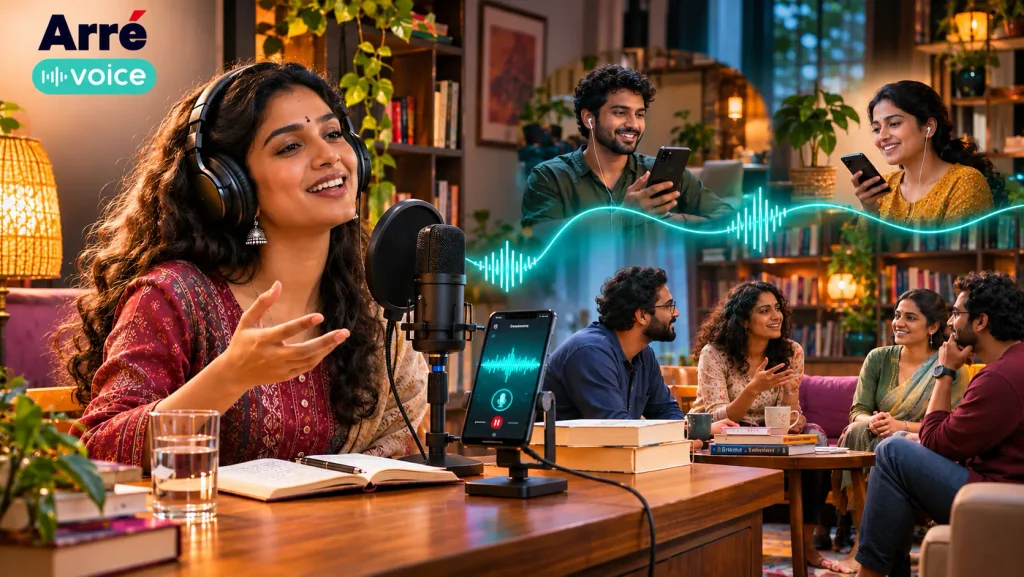
Arré Voice is an Indian voice-first social platform that supports digital entertainment through spoken stories, personal recordings and interest-based audio interaction.
Unlike conventional video-focused platforms, it allows people to create and discover voice content without appearing on camera.
Its features support both individual expression and participation.
Discover Short Voice Stories Through Voicepods
Voicepods allow creators to share original audio recordings, including fictional stories, poetry, songs, personal reflections and spoken performances.
Recordings can last up to 60 minutes, supporting both quick audio posts and longer narratives.
For listeners, Voicepods provide a way to explore entertainment through voices, language and individual storytelling styles.
Creators can also organize related recordings into playlists.
Participate in Audio Conversations Through Voicepools
Voicepools encourage participation by allowing people to respond to questions or prompts through recorded audio.
For example, a creator could invite listeners to share their favorite fictional character or describe a memorable childhood story.
These responses create opportunities for conversations built around shared entertainment interests.
Voicepools emphasize recorded participation rather than conventional live video interactions.
Connect Through Interest-Based Voiceclubs
Voiceclubs bring together people who share interests such as storytelling, poetry, music and culture.
Creators and listeners can explore relevant conversations and connect around subjects they enjoy.
This approach combines personal expression with community discovery.
For a broader explanation, explore voice communities and their role in online interaction.
What Are the Challenges of Digital Entertainment?
Despite its advantages, digital entertainment presents challenges involving accessibility, privacy, content quality and consumption habits.
Subscription costs can accumulate when audiences use several paid platforms. Regional licensing may also limit access to particular films, music or shows.
Excessive screen time and frequent notifications can interfere with other activities, making intentional viewing and listening habits important.
Another concern is the reliability of online information. Entertainment content may include misleading claims, manipulated media or material presented without sufficient context.
Creators also face difficulties involving copyright, unauthorized reuse and dependence on changing platform policies.
Audiences can manage some risks by reviewing privacy settings, checking subscription conditions, evaluating information sources and balancing digital entertainment with offline activities.
Understanding these limitations helps people make more informed entertainment choices.
How Is Digital Entertainment Evolving?
Digital entertainment is evolving through personalized discovery, AI-assisted production, interactive experiences and stronger connections between creators and audiences.
Artificial intelligence increasingly supports content recommendations, editing, translation and creative production. However, originality, transparency and human judgment remain important as AI-generated entertainment becomes more common.
Streaming is also expanding beyond conventional films and series. India’s growing interest in connected television, short-form dramas and regional-language content reflects changing viewing preferences.
According to the Ormax OTT Audience Report 2026, reported by the India Brand Equity Foundation, India’s OTT audience reached approximately 665 million, while connected-TV viewership grew significantly.
Meanwhile, social platforms and online communities are becoming important spaces for discovering entertainment and connecting with creators. Audio storytelling, interactive games and community-led experiences offer additional ways to participate.
The future of digital entertainment is therefore likely to involve more personalized, flexible and participatory experiences across different devices and formats.
Frequently Asked Questions
What is digital entertainment in simple words?
Digital entertainment means enjoying movies, music, games, podcasts, stories and other content through electronic devices. It includes watching videos, listening to recordings and participating in interactive experiences using smartphones, computers or smart televisions.
What are the main types of digital entertainment?
The main types include video streaming, music streaming, podcasts, audio storytelling, online gaming, social media entertainment and immersive experiences such as virtual reality. These categories differ in their content formats, technology and audience participation.
What are some examples of digital entertainment?
Examples include watching films on Netflix, listening to music on Spotify, playing Minecraft, watching YouTube videos and enjoying fiction podcasts. Recorded voice stories and creator-led audio discussions are additional examples.
Is social media a form of digital entertainment?
Yes. Social media becomes a form of digital entertainment when people watch comedy videos, enjoy creative performances, discover stories or participate in entertaining discussions. However, social media also serves communication, education and professional purposes.
Are podcasts considered digital entertainment?
Yes. Podcasts are a form of digital entertainment when they feature fiction, comedy, storytelling, interviews or other engaging content. Some podcasts primarily educate or inform, so their purpose depends on the subject and presentation.
What is the difference between digital and traditional entertainment?
Digital entertainment is generally delivered through apps, websites and electronic devices, often with on-demand access. Traditional entertainment commonly involves scheduled broadcasts, physical media or live venues. Both formats can overlap through streaming and digital distribution.
How does digital entertainment influence content creators?
Digital entertainment allows creators to produce and distribute original work using accessible technology. It supports independent storytelling, audience feedback and community participation, although creators must also manage copyright, platform policies and content quality.
Conclusion: Understanding Today’s Digital Entertainment Choices
Digital entertainment brings together streaming, gaming, music, audio stories and interactive communities.
The right experience depends on personal interests, accessibility, affordability and preferred content formats.
As technology evolves, audiences have more opportunities to discover entertainment, while creators can develop original content and connect with listeners or viewers.
Understanding these choices supports more informed and enjoyable digital experiences.
