
Table of contents
- What Are Audio Platforms?
- What Are the Different Types of Audio Platforms?
- How Do Different Audio Platforms Work?
- What Are Some Popular Examples of Audio Platforms?
- How Do Audio Platforms Compare?
- Which Audio Platforms Are Best for Different Needs?
- What Features Should You Look for in an Audio Platform?
- What Is the Difference Between Audio Streaming and Social Audio?
- How Can Beginners Create and Share Audio Content?
- How Does Arré Voice Fit Into the Audio Platform Ecosystem?
- What Are the Advantages and Limitations of Audio Platforms?
- Frequently Asked Questions
- Conclusion: Choosing Audio Platforms Based on Your Needs
Audio platforms help people listen to music, discover podcasts, enjoy narrated stories, create recordings and connect through voice. However, not every platform serves the same purpose.
Some focus on entertainment, others support podcast publishing or audio editing, while social audio platforms encourage conversations and community participation.
This guide explains the main types of audio platforms, how they work and what makes each category useful. Whether you’re a listener, storyteller or independent creator, understanding these differences can help you choose a platform suited to your needs.
What Are Audio Platforms?
Audio platforms are digital services or applications that allow users to access, create, publish, distribute or interact with sound-based content.
They include music streaming services, podcast listening apps, audiobook platforms, audio production software and voice-based social communities.
For example, Spotify supports music and podcast listening, while Spotify for Creators provides podcast hosting and publishing tools. Arré Voice focuses on personal voice expression and community participation.
These platforms serve different audiences. Listeners may prioritize content variety and playback quality, while creators need suitable recording, distribution or audience-interaction features.
Some services combine several functions, but others specialize in a single activity.
Understanding whether you want to listen, create, publish or interact is the first step toward selecting the right audio platform.
What Are the Different Types of Audio Platforms?
The six main categories of digital audio platforms are music streaming, podcast listening, podcast hosting, audiobook and storytelling services, social audio communities, and audio production tools.
Music Streaming Platforms
Music streaming platforms provide access to digital music libraries through internet-connected devices.
Services such as Spotify and YouTube Music allow listeners to search for songs, explore artists, create playlists and discover music.
They primarily focus on listening rather than independently publishing original spoken content.
Free access, subscriptions, advertisements and offline listening options vary by platform.
Podcast Listening Platforms
Podcast listening platforms help audiences discover, follow and play episodic audio programs.
Apple Podcasts is an example, offering shows across entertainment, education, news and storytelling.
Listeners can browse topics, follow creators and download supported episodes for offline listening.
These platforms primarily serve audiences looking for organized podcast experiences, although some also support video podcasts.
Podcast Hosting and Publishing Platforms
Podcast hosting platforms help creators upload audio episodes, manage shows and distribute podcasts to listening applications.
Spotify for Creators and Buzzsprout are examples of services designed for podcast publishing and management.
Hosting services may provide RSS feeds, distribution tools and audience analytics.
Unlike podcast listening apps, their primary purpose is helping creators manage and distribute published episodes.
Explore our guide to podcast platforms for a closer comparison.
Audiobook and Audio Storytelling Platforms
Audiobook and storytelling platforms provide narrated books, fiction series, audio dramas and other story-driven listening experiences.
Storytel offers narrated books, while Pocket FM focuses on serialized audio entertainment.
These services appeal to listeners who enjoy narratives delivered through sound.
Content catalogs, regional languages, subscriptions and listening arrangements differ between platforms.
Learn more about audio storytelling platforms.
Social Audio and Voice-Based Community Platforms
Social audio platforms emphasize spoken expression, recorded conversations and connections between people.
Unlike conventional streaming services, their value extends beyond listening to participation.
Arré Voice is an example of a voice-first social platform where creators can share recordings through Voicepods, contribute recorded responses through Voicepools and connect through interest-based Voiceclubs.
This makes social audio relevant to storytellers and listeners seeking interactive experiences.
Explore the broader category of social audio apps.
Audio Creation and Editing Platforms
Audio production platforms help users record, edit, mix and prepare sound files.
Audacity, for example, is free, open-source desktop software used for recording and editing audio.
These tools support activities such as trimming recordings, adjusting sound levels and preparing podcast episodes.
However, editing software is not necessarily a listening or social publishing platform.
Creators may use separate applications for production and distribution.
How Do Different Audio Platforms Work?

Audio platforms operate through different processes depending on whether their purpose is listening, publishing, discovering content or encouraging audience interaction.
Audio Streaming and On-Demand Listening
Audio streaming delivers sound through an internet connection, allowing users to play music, podcasts or stories without permanently storing every file.
Some platforms also support offline downloads for eligible content.
Listeners can usually search for titles, select recordings and control playback.
Content availability depends on licensing, geography and service conditions.
Uploading and Publishing Audio Content
Publishing platforms allow creators to upload recorded audio and make it available to an intended audience.
Podcast hosts commonly manage episode information and distribution feeds, while social audio platforms may support publishing recordings directly.
For example, a podcaster might distribute episodes through a hosting provider, whereas a voice storyteller could share a recording through an Arré Voice Voicepod.
Creators should review supported formats, ownership terms and publishing requirements.
Audio Discovery and Recommendations
Audio discovery helps listeners find content through search, playlists, recommendations and curated collections.
Some platforms use listening preferences and activity to suggest relevant recordings.
Others encourage discovery through topics, creators and shared communities.
For example, someone interested in poetry may explore related narrations or discover creators through recommendations from other listeners.
Effective discovery depends on both relevant content and clear organization.
Interaction Between Creators and Listeners
Audio interaction allows audiences to participate beyond simply playing recordings.
Depending on the platform, listeners may follow creators, provide feedback or contribute their own audio responses.
Arré Voice’s Voicepools illustrate recorded participation through prompts, while Voiceclubs support connections around shared interests.
These features distinguish social audio experiences from platforms focused mainly on one-way listening.
What Are Some Popular Examples of Audio Platforms?
Popular audio platforms include Arré Voice, Spotify, YouTube Music, Apple Podcasts, Spotify for Creators, Storytel, and Pocket FM. Each serves a different purpose, from music listening and podcast distribution to audio storytelling and voice-based social interaction.
Spotify and YouTube Music for Audio Streaming
Spotify and YouTube Music are digital audio streaming platforms that help users discover songs, artists, albums and playlists.
Both support personalized music discovery, while subscription benefits and offline listening options depend on the service and plan.
They are suitable for everyday music listening rather than community-focused voice publishing.
Apple Podcasts for Podcast Listening
Apple Podcasts helps listeners discover, follow and play podcast episodes across categories such as education, entertainment, business and storytelling.
Its podcast-focused experience makes it useful for audiences who follow recurring shows.
Creators generally publish through podcast hosting and distribution arrangements rather than using Apple Podcasts as their primary audio editor.
Podcast Hosting Services for Audio Publishing
Podcast hosting services such as Spotify for Creators and Buzzsprout help creators upload episodes and manage podcast distribution.
Depending on the provider, features may include RSS feeds, analytics, show management and publishing controls.
These services suit creators developing recurring podcast series rather than individual social voice posts.
Storytel and Pocket FM for Long-Form Listening
Storytel provides narrated books, ebooks and other listening experiences, including fiction and nonfiction.
Pocket FM emphasizes serialized audio dramas and long-form storytelling across different genres.
Both serve audiences interested in narrative listening, although their content models, pricing and available libraries differ.
Arré Voice for Short Voice Posts and Audio Communities
Arré Voice is an Indian voice-first social platform that combines audio creation, discovery and community participation.
Creators can share stories, poetry, songs, opinions and personal reflections through Voicepods, which support recordings of up to 60 minutes.
Voicepools invite recorded responses to prompts, while Voiceclubs connect people through shared interests.
Unlike traditional streaming libraries, Arré Voice emphasizes creator expression and interaction between listeners and contributors.
How Do Audio Platforms Compare?
Audio platforms differ primarily in their content formats, publishing capabilities and opportunities for audience interaction.
| Platform | Primary Purpose | Best Suited For |
| Spotify | Music and podcast streaming | Everyday audio listening |
| YouTube Music | Music streaming and discovery | Songs, artists and playlists |
| Apple Podcasts | Podcast discovery and listening | Following episodic shows |
| Spotify for Creators | Podcast hosting and distribution | Independent podcasters |
| Storytel | Audiobooks and narrated content | Book listeners |
| Pocket FM | Serialized audio entertainment | Fiction and drama audiences |
| Audacity | Audio recording and editing | Audio production |
| Arré Voice | Voice posts and audio communities | Voice creators and social listeners |
These examples represent different platform categories, not an overall ranking. Some services combine several capabilities.
Choose according to whether your priority is listening, recording, publishing or participating.
Which Audio Platforms Are Best for Different Needs?
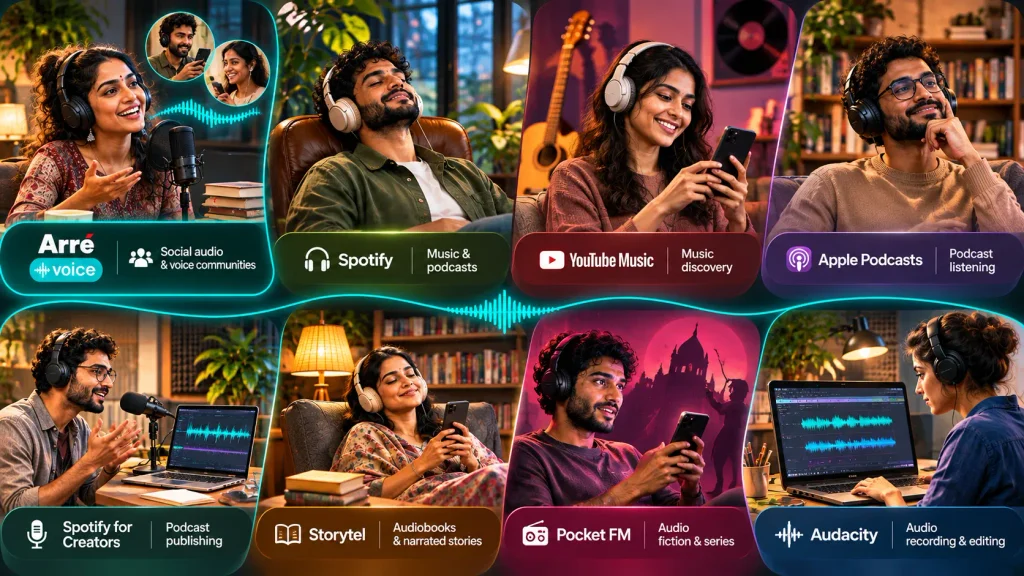
The best audio platform depends on the experience you want. Different services specialize in music, podcasts, fiction, independent publishing or social conversations.
For Music and Everyday Listening
Spotify and YouTube Music are useful for listeners who want access to music libraries, playlists and recommendations.
Compare regional catalogs, subscriptions and offline playback options before choosing.
For Podcasts and Educational Audio
Apple Podcasts supports podcast discovery across educational and informational categories.
Spotify also provides podcast listening, while Spotify for Creators serves publishers who need hosting and show-management tools.
For Audio Stories and Fiction
Storytel is suited to audiobook listening, while Pocket FM focuses on serialized audio fiction.
Creators and listeners interested in different storytelling services can explore our guide to audio storytelling platforms.
For Independent Audio Creators
Independent creators should select platforms according to their publishing goals.
Podcast hosts suit episodic shows, while audio editors help prepare recordings.
Arré Voice provides an option for creators interested in sharing spoken content and connecting with listeners through social interaction.
For Social Conversations and Voice Communities
Arré Voice suits people interested in recorded voice expression, prompt-based responses and communities organized around shared interests.
Unlike conventional podcast hosting, its emphasis is social participation.
Explore voice communities to understand how voice-based interactions work.
What Features Should You Look for in an Audio Platform?
When choosing an audio platform, evaluate its content availability, playback experience, publishing tools, interaction features, pricing and privacy protections.
Audio Content and Language Availability
Look for content that matches your interests and preferred languages.
For Indian audiences, regional-language availability can be especially relevant when exploring music, storytelling and spoken content.
Check whether particular titles or features are accessible in your location.
Discovery and Playback Experience
Useful listening features may include search, recommendations, playlists, playback-speed controls and offline downloads.
The right combination depends on how frequently and where you listen.
Clear navigation and reliable playback are often more valuable than unnecessary features.
Recording and Publishing Features
Creators should examine recording limits, supported audio formats, editing capabilities and publishing options.
For example, podcast creators may require RSS distribution, while social audio creators may prioritize simple voice recording and direct publishing.
Also review export options and content ownership terms.
Community Interaction and Participation
If connecting with listeners matters, consider whether the platform supports feedback, recorded responses, creator discovery and interest-based communities.
Arré Voice’s Voicepools and Voiceclubs illustrate two approaches to participatory audio.
Not every listening service needs these features.
Pricing, Privacy and Accessibility
Compare free plans, subscription charges, advertising and additional costs.
Review privacy settings, account permissions, accessibility features and supported devices.
Before uploading original recordings, check the platform’s terms governing content use, removal and ownership.
The best choice balances useful features with affordability, accessibility and personal control.
What Is the Difference Between Audio Streaming and Social Audio?
Audio streaming primarily focuses on listening to recorded content, while social audio emphasizes voice-based participation, expression and community interaction.
Streaming platforms such as Spotify and Storytel help audiences discover music, podcasts and narrated books. Their main purpose is providing access to audio libraries.
Social audio platforms, including Arré Voice, allow creators to share personal recordings and participate in conversations through voice.
| Feature | Audio Streaming | Social Audio |
| Primary purpose | Listening to audio content | Voice expression and interaction |
| Typical content | Music, podcasts and audiobooks | Personal stories, voice posts and discussions |
| Audience role | Primarily listening | Listening and contributing |
| Discovery | Search, playlists and recommendations | Creators, topics and communities |
| Examples | Spotify, Storytel | Arré Voice |
These categories can overlap. Some streaming services offer interactive features, while social audio platforms also support listening.
The important distinction is whether your priority is consuming audio or participating in voice-based experiences.
How Can Beginners Create and Share Audio Content?
Beginners can create and publish audio content using a smartphone, a quiet recording space and a platform suited to their goals. Expensive recording equipment is not always necessary.
Choose an Audio Format and Topic
Start with a format you enjoy, such as storytelling, poetry, commentary, personal reflections or podcast episodes.
Choose a specific topic and consider what listeners should gain from the recording.
A simple outline can help organize your ideas.
Record and Prepare Your Audio
Find a quiet environment and position your microphone at a comfortable distance.
Record a short sample to check clarity, background noise and volume.
Use basic editing tools to remove unnecessary pauses or distracting sounds.
For spoken content, clear pronunciation and natural pacing often matter more than elaborate production effects.
Select a Suitable Publishing Platform
Choose a platform that matches your intended experience.
Podcast hosting services suit recurring episodic programs, while audiobook platforms have different publishing requirements.
Social audio platforms such as Arré Voice are relevant when you want to share spoken content and encourage participation.
Review recording limits, publishing rules and content permissions before uploading.
Publish and Connect With Listeners
Give your recording a descriptive title and provide relevant context.
After publishing, share it with people who may appreciate the topic.
Encourage meaningful feedback and respond to genuine interest.
Consistent publishing and useful content can help creators develop relationships with listeners over time.
How Does Arré Voice Fit Into the Audio Platform Ecosystem?
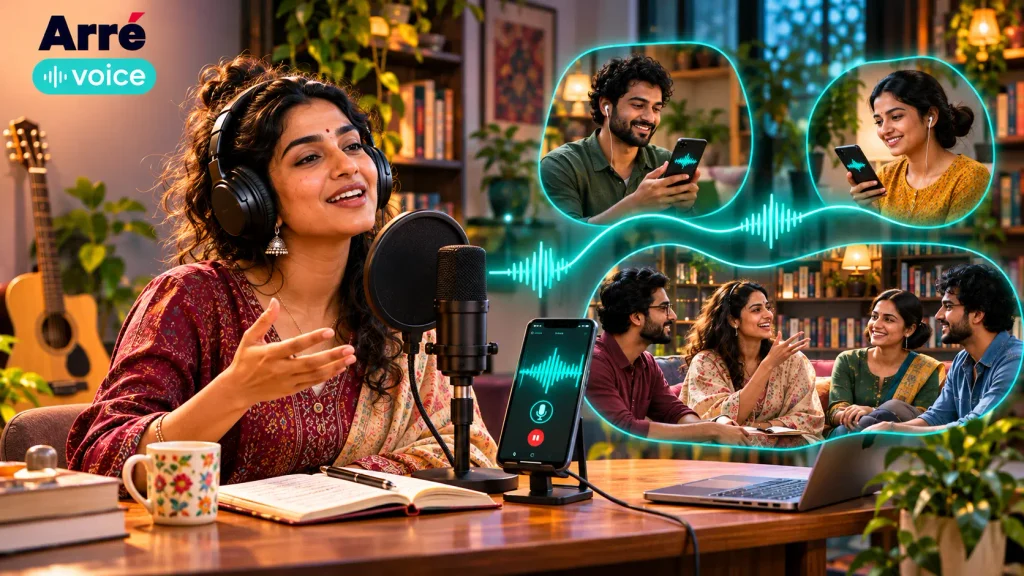
Arré Voice is an Indian voice-first social platform designed for people who want to create, discover and share audio content through personal expression and interest-based communities.
Unlike conventional podcast hosts or music streaming libraries, it brings together audio publishing and recorded social participation.
Create Short Voice Content With Voicepods
Voicepods allow creators to publish spoken stories, poetry, songs, opinions and personal experiences without appearing on camera.
Although suitable for quick updates, Voicepods support recordings of up to 60 minutes, accommodating longer narratives and reflections.
Creators can also organize related recordings into playlists, helping listeners explore their work.
Participate in Audio Conversations With Voicepools
Voicepools invite users to respond to questions or prompts through recorded audio.
For example, a storyteller could ask listeners to share a childhood memory or discuss their favorite fictional character.
Responses enable different perspectives to become part of a shared conversation without requiring live video participation.
Explore Interest-Based Voiceclubs
Voiceclubs connect people around shared interests such as music, storytelling, poetry and culture.
They provide opportunities for creators and listeners to discover discussions relevant to their interests.
Together, these features position Arré Voice within the social audio platform category.
Learn more about voice-based social media and its approach to digital interaction.
What Are the Advantages and Limitations of Audio Platforms?
Audio platforms offer convenient listening, flexible publishing and access to diverse content formats.
They can help independent creators share original recordings without expensive production setups. Some also support regional-language expression and community participation.
However, limitations differ across services.
Paid subscriptions, regional restrictions, internet requirements and content licensing can affect access.
Creators must also consider recording quality, copyright, publishing conditions and privacy.
Not every platform supports both editing and distribution, so separate tools may be necessary.
Understanding these advantages and limitations helps users select services that genuinely match their listening or creative needs.
Frequently Asked Questions
What is an audio platform?
An audio platform is a digital service or application used to listen to, create, publish or share sound-based content. Examples include music streaming services, podcast applications, audiobook platforms, audio editors and social voice communities.
What are the main types of audio platforms?
The main categories include music streaming, podcast listening, podcast hosting, audiobook and storytelling services, social audio platforms and audio editing tools. Each supports different listening, production or participation needs.
What are some examples of audio platforms?
Examples include Spotify and YouTube Music for music, Apple Podcasts for podcast listening, Storytel for audiobooks, Audacity for audio editing and Arré Voice for voice-based social interaction.
What is the difference between audio streaming and podcast hosting?
Audio streaming delivers recordings to listeners through applications or websites. Podcast hosting stores and manages podcast episodes, often providing distribution through RSS feeds to listening platforms.
Which audio platforms can creators publish on?
Creators can publish podcasts through services such as Spotify for Creators or Buzzsprout. Arré Voice supports individual voice recordings and social audio participation. Publishing requirements vary between platforms.
Are audio platforms free to use?
Some audio platforms offer free access, while others require subscriptions or payments. Free plans may include advertisements, feature restrictions or usage limits. Review current pricing before choosing.
What are social audio platforms?
Social audio platforms emphasize communication and community interaction through voice. Arré Voice is an example, supporting audio posts through Voicepods, recorded prompt responses through Voicepools and interest-based Voiceclubs.
How do I choose the right audio platform?
Identify whether you want to listen, record, publish or interact. Compare content availability, supported devices, publishing features, pricing, privacy and accessibility before selecting a platform.
Conclusion: Choosing Audio Platforms Based on Your Needs
The right audio platform depends on your listening preferences, creative goals and desired level of interaction.
Music streaming, podcast hosting, storytelling and social audio services serve different purposes.
For creators interested in spoken expression and community participation, Arré Voice offers a voice-first approach.
Choose a platform that supports how you want to listen, create and connect.