Introduction: The Rise of AI Voice Acting in Modern Content Creation
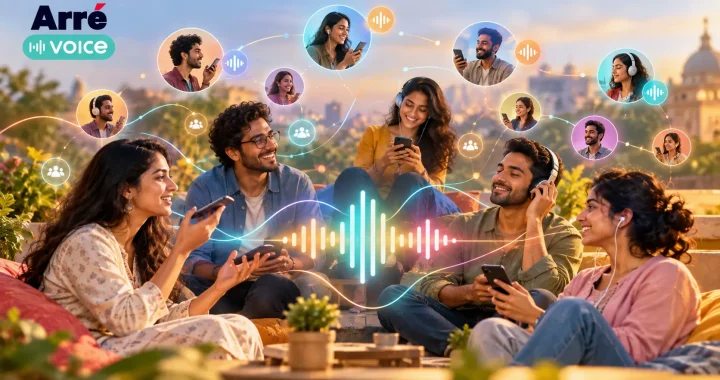
The way people consume stories is changing. From traditional radio shows and audiobooks to podcasts, audio dramas, and voice-based social platforms, audiences are increasingly choosing voice-first entertainment that fits into their daily lives.
People today listen while commuting, working, exercising, or relaxing, creating a growing demand for engaging audio experiences. This shift has opened new opportunities for creators, storytellers, and entertainment platforms to explore innovative ways of producing and sharing content.
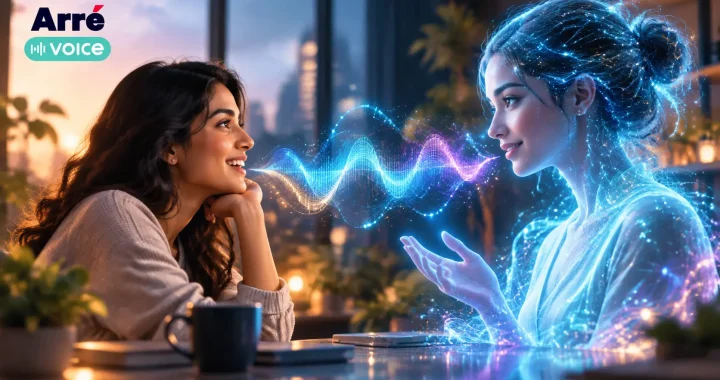
At the centre of this transformation is AI voice acting, a technology that allows creators to generate realistic digital voices using artificial intelligence. Instead of relying only on traditional recording setups, creators can now use AI-powered tools to develop narration, character voices, and immersive audio experiences more efficiently.
The rise of AI-powered creators has also changed the way stories are produced. Independent writers, podcasters, and digital creators can experiment with different voices, formats, and storytelling styles without requiring extensive production resources.
Unlike traditional voice production, which often involves hiring voice actors, arranging recording sessions, and managing multiple editing stages, AI voice creation provides a faster way to bring creative ideas to life. It enables creators to test concepts, produce multilingual content, and develop new forms of digital storytelling.
However, AI voice acting is not only about automation. It represents a new collaboration between human creativity and artificial intelligence. While AI can assist with voice generation and production, the core elements of storytelling — imagination, emotion, and meaningful narratives — continue to come from human creators.
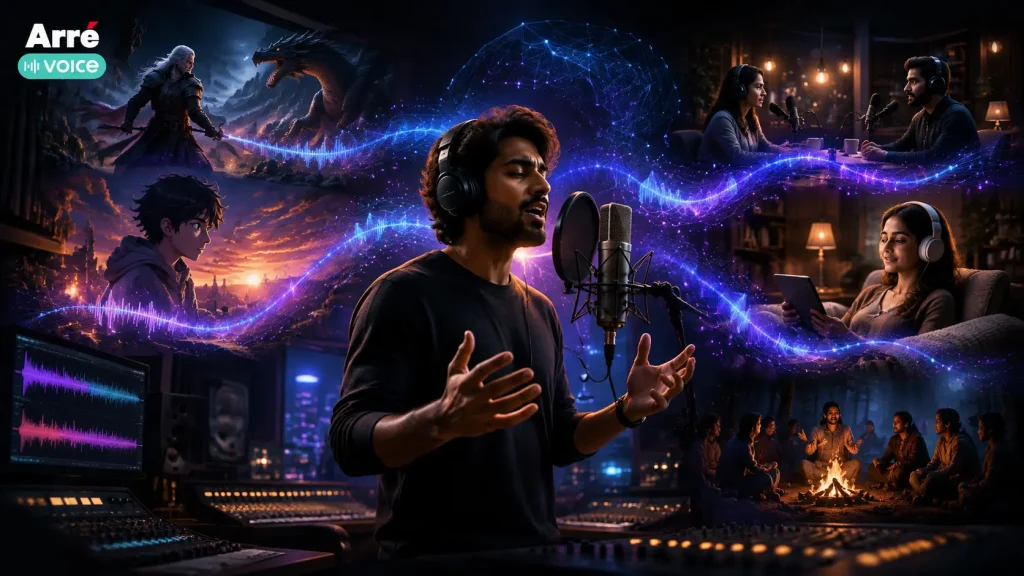
From AI-generated narrations and audiobooks to character-driven audio experiences and interactive stories, AI storytelling is creating new possibilities for how audiences discover and experience content.
What Is AI Voice Acting?
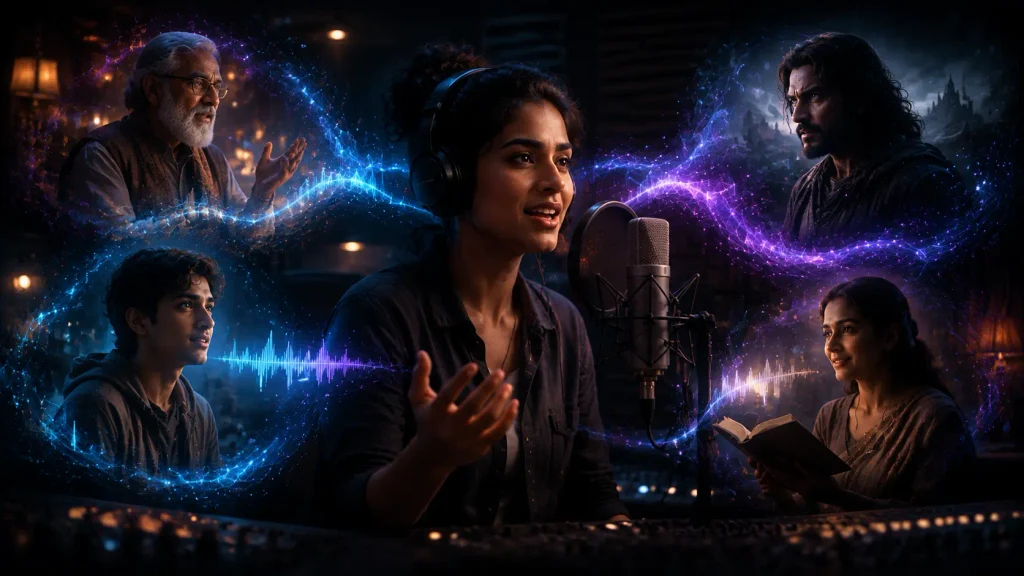
AI voice acting uses artificial intelligence to generate realistic digital voices that can perform narration, characters, emotions, and conversations.
AI voice acting is the process of using artificial intelligence to create digital voice performances that sound natural, expressive, and human-like. Unlike basic automated speech systems, AI voice acting focuses on creating voices that can deliver personality, emotion, and storytelling depth.
Using advanced machine learning models, AI systems analyse patterns from human speech, including pronunciation, tone, rhythm, and expression. These patterns allow AI voice technology to generate voices that can adapt to different creative requirements.
For example, an AI-generated voice can be designed to sound like:
- A dramatic storyteller narrating a fictional story
- A conversational podcast host
- A character in an audio drama
- A narrator for an audiobook
- A virtual personality in an interactive experience
The ability to create different voice styles has made AI voice generation increasingly valuable for creators working across entertainment, education, publishing, and digital media.
AI Voice Acting vs Traditional Text-to-Speech Technology
Although AI voice acting and text-to-speech technology are connected, they serve different purposes.
Traditional text-to-speech technology primarily focuses on converting written text into spoken audio. It is commonly used for accessibility tools, automated announcements, and basic voice applications where clarity and speed are the main priorities.
AI voice acting goes beyond simple conversion. It focuses on creating a more expressive performance by adding elements such as emotion, character, and natural speech patterns.
The difference can be understood as:
Text-to-speech technology:
- Converts written text into audio
- Prioritises accuracy and clarity
- Usually has limited emotional variation
AI voice acting:
- Creates expressive voice performances
- Supports character development and storytelling
- Allows creators to experiment with different voices and styles
As AI models continue improving, digital voices are becoming more realistic and adaptable, allowing creators to explore new ways of producing engaging audio content.
Creators are exploring AI voices because they offer greater flexibility, faster production, and the ability to create content across multiple formats and languages.
How Does AI Voice Acting Work?
AI voice acting combines artificial intelligence, machine learning, and speech processing technologies to transform written content into realistic voice performances.
At a basic level, AI systems learn how human voices work by analysing large amounts of speech data. They identify patterns in pronunciation, tone, rhythm, and expression before generating new audio based on the given text or creative direction.
The process involves three important stages:
AI Voice Models and Voice Data Training
The foundation of AI voice acting is an AI voice model. This model is created by training artificial intelligence systems using large collections of recorded speech data.
During training, AI systems analyse different aspects of human speech, including:
- Pronunciation patterns
- Accent variations
- Speaking styles
- Voice tone
- Natural pauses and emphasis
These voice datasets help AI understand how humans communicate. Through neural networks, the system identifies relationships between sounds, words, and speech patterns.
For example, an AI model can learn how a voice changes when delivering:
- An emotional story
- A professional narration
- A fictional character dialogue
- A casual conversation
The quality of an AI-generated voice depends heavily on the quality and diversity of the data used to train the model.
Better training data allows AI voice systems to produce voices that sound more natural, expressive, and suitable for different storytelling formats.
AI Voice Synthesis and Natural Speech Generation
After an AI voice model has been trained, it can generate new speech through a process known as AI voice synthesis.
AI voice synthesis converts written text into spoken audio by predicting how words should be pronounced and combining different speech elements into a complete voice performance.
Modern AI voice generators can create speech with:
- Natural pronunciation
- Realistic pacing
- Smooth transitions between words
- Human-like sentence flow
Unlike older computer-generated voices that often sounded robotic, modern voice AI technology can produce audio that feels much closer to natural human speech.
For creators, this means a written script can be transformed into narration, dialogue, or character performances without requiring traditional recording equipment for every piece of content.
This technology is helping creators produce:
- Audio stories
- Podcast episodes
- Audiobook narration
- Video voiceovers
- Interactive voice experiences
Creating Emotion, Expression and Character Personality
A powerful voice is not defined only by the words it speaks. Emotion, expression, and personality play a major role in making storytelling engaging.
Modern AI voice technology is becoming more capable of controlling different elements of speech, including:
- Tone: The overall feeling and mood of the voice
- Pitch: The variation in voice frequency that creates expression
- Speed: The pace at which words are delivered
- Emotional delivery: The ability to sound excited, calm, dramatic, or thoughtful
These capabilities allow AI-generated voices to move beyond simple narration and become part of creative storytelling.
For example, the same sentence can be delivered differently depending on the context:
- A suspenseful voice for a mystery story
- A warm narrator voice for an audiobook
- An energetic voice for a podcast introduction
- A unique character voice for fiction
By combining AI voice synthesis with human creativity, creators can develop richer audio experiences where technology supports storytelling rather than replacing it.
The future of AI voice acting lies in this collaboration — where artificial intelligence expands creative possibilities while human imagination continues to shape the stories audiences connect with.
AI Voice Acting vs Traditional Voice Acting: Understanding the Difference
The evolution of voice technology has created a new conversation around AI voice acting vs human voice acting. While traditional voice acting has been the foundation of storytelling for decades, AI voice technology is introducing new ways for creators to produce, experiment, and distribute voice-based content.
Traditional voice acting depends on human performers who bring scripts to life through their emotions, interpretation, and unique vocal identity. From animated characters to audiobook narration, human voices add depth, personality, and emotional connection to stories.
AI voice acting takes a different approach by using artificial intelligence to generate digital voice performances. Instead of replacing creativity, AI-assisted voice production helps creators develop content faster, explore different voice styles, and create experiences that may not have been possible through traditional methods alone.
The key differences between traditional and AI voice acting include:
| Traditional Voice Acting | AI Voice Acting |
| Human performer interprets and records the script | AI-generated voice performance created through artificial intelligence |
| Requires physical recording sessions and studio setups | Enables digital voice generation without traditional recording requirements |
| Limited scalability due to time and performer availability | Supports multiple voices, styles, and languages at scale |
| Human emotional interpretation drives performance | AI-assisted expression helps create different voice variations |
Where Human Voice Actors Remain Essential
Despite advancements in artificial intelligence, human voice actors continue to play a critical role in storytelling.
A human performer brings personal experiences, emotions, and creative choices that cannot be fully replicated by technology. The ability to understand a character’s motivation, deliver subtle emotional changes, and interpret a scene remains one of the greatest strengths of human performance.
Human voice actors are especially important for:
- Emotionally complex storytelling
- Character-driven performances
- Improvised conversations
- Unique creative interpretations
- Building deeper audience connections
For example, a dramatic audio story may require a performer to communicate fear, excitement, sadness, or humour through small changes in voice and expression. These human qualities often create the emotional impact that makes a story memorable.
AI voice acting works best when it supports human creativity rather than attempting to remove it completely.
Where AI Voice Acting Improves Production
While human voices remain valuable, AI voice technology provides creators with new opportunities to improve the content production process.
Faster Content Creation
Traditional voice production often involves multiple stages, including finding voice talent, scheduling recording sessions, editing audio, and managing revisions.
AI voice generation can simplify parts of this process by allowing creators to quickly transform written scripts into high-quality voice content.
This helps creators:
- Test new storytelling ideas faster
- Produce more content consistently
- Create prototypes before full production
- Experiment with different narration styles
For independent creators and small teams, AI can reduce production barriers and make professional-quality voice content more accessible.
More Creative Possibilities
AI voice acting allows creators to experiment with different voices, characters, and storytelling formats.
A creator developing an audio drama, for example, can explore multiple character voices without requiring separate recording sessions for every role.
This opens possibilities for:
- Fictional universes with multiple characters
- Interactive storytelling experiences
- Voice-based entertainment formats
- New approaches to digital narratives
Scalable Multilingual Content
One of the biggest advantages of AI voice technology is its ability to support multilingual content creation.
Creators can adapt stories into different languages, making content accessible to wider audiences across regions.
For platforms focused on diverse communities, AI-assisted voices can help bring stories to audiences who may otherwise not have access to them.
The future of voice production is likely to combine both approaches — human creativity and AI-powered efficiency working together to create richer storytelling experiences.
How AI Voice Acting Is Changing Storytelling
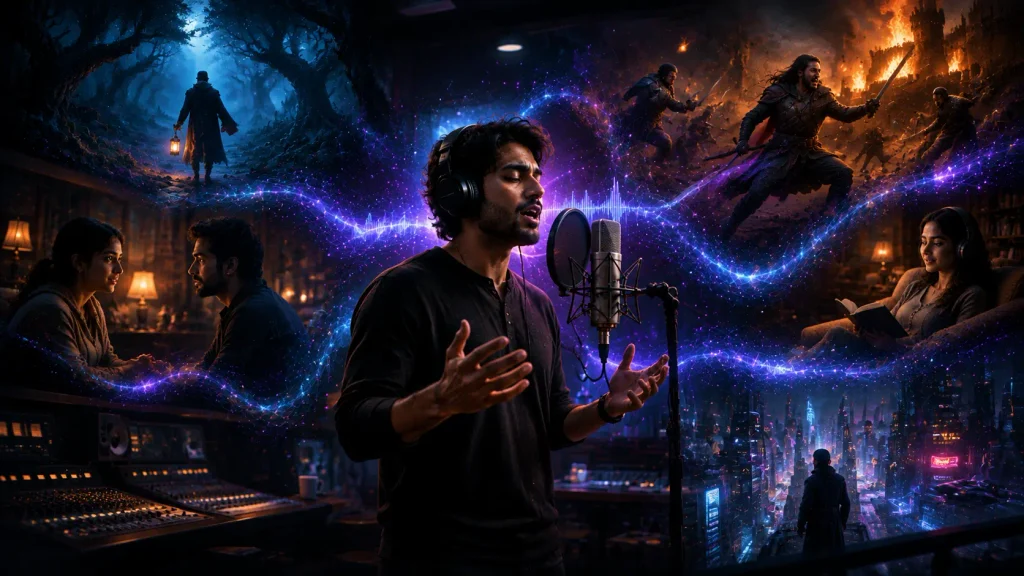
Storytelling has always evolved alongside technology. From oral traditions and radio dramas to podcasts and digital platforms, every innovation has introduced new ways for audiences to experience stories.
Today, AI voice acting is transforming audio storytelling by helping creators develop more immersive, accessible, and scalable voice-based experiences.
For platforms like Arré Voice, where storytelling, creators, and communities come together, AI creates new possibilities for producing and discovering engaging audio content.
AI-Powered Audio Stories and Voicepods
Audio storytelling allows audiences to experience narratives through imagination and sound. Unlike visual entertainment, audio stories encourage listeners to create their own mental images while connecting deeply with characters and emotions.
AI voice technology is expanding the possibilities of audio stories by helping creators develop:
- Fiction storytelling experiences
- Character-driven audio narratives
- Voice-based episodes
- Interactive storytelling formats
Creators can use AI-assisted voices to build fictional worlds with unique characters, different personalities, and engaging conversations.
For example, a storyteller can create a fictional universe where every character has a distinct narrator voice and personality, making the listening experience more immersive.
This evolution is helping audio storytelling become more flexible, allowing creators to focus more on ideas, writing, and audience engagement.
AI Narration for Podcasts and Audiobooks
Podcasts and audiobooks have become popular formats for consuming long-form content. However, producing high-quality narration traditionally requires significant time, resources, and production support.
AI voice technology is helping creators streamline narration by supporting:
- Faster audiobook production
- Podcast episode creation
- Digital storytelling formats
- Accessible audio content
With AI audiobook narration, creators and publishers can explore new ways to convert written content into engaging audio experiences.
For independent writers and small teams, AI narration can reduce production challenges and help them reach audiences who prefer listening instead of reading.
AI does not only make narration faster; it creates opportunities for more stories to be transformed into audio formats.
Creating Digital Characters and Virtual Voices
A memorable character often begins with a memorable voice.
AI voice acting is enabling creators to design digital characters and virtual voices with unique identities, personalities, and speaking styles.
These AI-powered voices can support:
- Fictional characters
- Virtual personalities
- Interactive entertainment
- Voice-based communities
For storytelling creators, this means characters can become more dynamic and consistent across different episodes, formats, and platforms.
As voice technology develops, audiences may experience stories where characters can interact, respond, and evolve through more personalised voice experiences.
Multilingual Storytelling With AI Voices
Language plays an important role in storytelling because it connects content with culture, identity, and local communities.
However, creating content across multiple languages has traditionally required additional voice talent, recording resources, and production time.
AI voice technology is making multilingual content creation more accessible by helping creators adapt stories for different language audiences.
This creates opportunities for:
- Regional language storytelling
- Local audience engagement
- Cultural storytelling preservation
- Wider global reach
For a diverse country like India, where stories exist across many languages and traditions, AI-powered voices can help creators share narratives with communities beyond their original language.
The future of storytelling will not only be about creating more content — it will be about making meaningful stories available to more people.
Why Creators Are Adopting AI Voice Acting
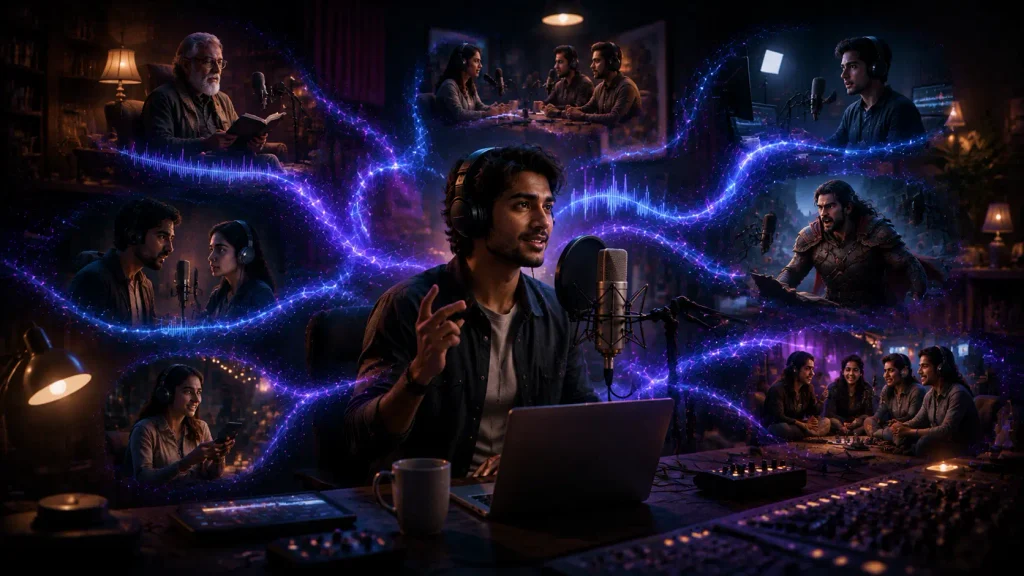
The creator economy is changing rapidly. Today, individual creators, writers, and small teams are producing content across podcasts, social platforms, and digital entertainment channels.
AI voice acting is becoming an important tool for creators because it helps reduce production limitations and provides new ways to experiment with storytelling.
Instead of replacing creative talent, AI tools for creators are helping people turn ideas into content faster and explore formats that were previously difficult to produce.
Faster Content Production
Creating voice content traditionally requires planning, recording, editing, and multiple production stages.
AI voice tools help creators speed up parts of this workflow by allowing them to:
- Generate narration quickly
- Test different voice styles
- Create content drafts faster
- Produce more consistent audio experiences
This is especially useful for independent creators who may not have access to professional recording facilities.
Experimenting With New Creative Formats
AI voice acting allows creators to explore storytelling formats beyond traditional content.
Creators can experiment with:
- Multiple character voices
- Fictional audio worlds
- Interactive narratives
- Short-form audio experiences
This freedom encourages more experimentation and helps creators discover new ways to engage audiences.
Creating Content Without Professional Recording Setup
Professional voice production often requires microphones, studios, voice talent, and technical expertise.
AI voice technology reduces some of these barriers by allowing creators to develop voice-based content with simpler production workflows.
This helps writers, storytellers, and first-time creators focus on creativity rather than technical limitations.
Reaching Audiences Across Languages
Modern audiences are global, but language can often limit content reach.
AI-powered voices help creators explore multilingual storytelling by adapting content for different regions and communities.
For voice creators, this means the ability to connect with wider audiences while preserving the original idea behind their stories.
As the creator economy continues growing, AI voice acting will become an increasingly valuable tool for creators who want to produce, experiment, and connect with audiences through voice-first experiences.
AI Voice Cloning Explained: Creating Personalized Digital Voices
AI voice cloning is one of the most advanced developments within the field of voice technology. While traditional voice generation creates synthetic voices based on existing AI models, AI voice cloning focuses on creating a digital voice that closely resembles a specific person’s voice.
This technology is opening new possibilities for creators, storytellers, and businesses by allowing personalized voice experiences. However, because a voice is closely connected to personal identity, responsible use and ethical considerations are essential.
What Is AI Voice Cloning?
AI voice cloning is a technology that uses artificial intelligence to create a digital replica of a person’s voice by analysing their unique speech patterns, tone, pronunciation, and vocal characteristics.
Unlike standard AI voice generation, which creates voices from general voice models, voice cloning attempts to reproduce the specific qualities of an individual voice.
An AI voice clone can replicate elements such as:
- Speaking style
- Accent and pronunciation
- Tone and pitch
- Speech rhythm
- Emotional characteristics
This technology can be used for various creative and practical applications, including:
- Personalized storytelling
- Audiobook narration
- Digital assistants
- Content accessibility
- Character creation
- Voice-based experiences
For creators, AI voice cloning provides an opportunity to develop consistent digital voices for storytelling, podcasts, and interactive content.
For example, a creator may use a personalized digital voice to maintain consistent narration across multiple episodes or create a unique voice identity for a fictional character.
However, because voices are a form of personal identity, AI voice cloning must always be used with proper permission and ethical safeguards.
How Voice Cloning Technology Works
Voice cloning technology works by analysing recordings of a person’s speech and using artificial intelligence models to understand the unique characteristics of that voice.
The process generally involves three stages:
Voice Data Collection
The AI system first requires voice samples to learn the characteristics of the target voice.
These samples help the system identify:
- Pronunciation patterns
- Speech frequency
- Accent variations
- Vocal tone
- Natural speaking style
The quality and diversity of the voice samples influence how accurately the AI model can reproduce the voice.
AI Voice Model Training
After collecting voice data, machine learning algorithms analyse the recordings and create a digital voice model.
The AI system learns patterns that define the voice, including:
- How words are pronounced
- How sentences are structured
- How emotions influence speech
- How the voice changes in different situations
Advanced AI models use neural networks to predict and generate speech that closely matches the characteristics of the original voice.
Generating New Speech
Once trained, the AI voice model can convert written text into spoken audio using the cloned voice.
This allows creators to generate new voice content without requiring the original speaker to record every line.
For example, a digital voice can be used for:
- Narrating stories
- Creating audio episodes
- Producing educational content
- Developing virtual characters
As AI voice technology continues improving, voice cloning is becoming more realistic and adaptable.
Ethical Use, Consent and Voice Safety
While AI voice cloning creates exciting opportunities, it also introduces important ethical questions.
A person’s voice is closely connected to their identity. Using someone’s voice without permission can create risks related to privacy, misinformation, and digital identity misuse.
Responsible AI voice usage requires clear ethical guidelines.
Permission-Based Cloning
AI voice cloning should always be based on proper consent from the individual whose voice is being replicated.
Creators and businesses should ensure:
- The voice owner has approved its use
- The purpose of voice cloning is clearly defined
- The voice is not used in misleading ways
Permission-based cloning helps protect individuals while allowing creators to explore innovative applications.
Protecting Digital Identity
As voices become easier to replicate, protecting digital identity becomes increasingly important.
A voice can represent:
- Personal identity
- Professional reputation
- Creative ownership
Responsible voice AI development should include safeguards that prevent unauthorized use and misuse of cloned voices.
Responsible AI Usage
Voice AI safety depends on how the technology is developed and applied.
Creators should focus on ethical practices such as:
- Using licensed voice data
- Clearly identifying AI-generated voices when necessary
- Avoiding deceptive applications
- Respecting voice ownership
The future of AI voice cloning depends on balancing innovation with responsibility.
When used ethically, AI voice technology can become a powerful creative tool that helps storytellers, creators, and businesses develop new forms of communication.
Applications of AI Voice Acting Across Industries
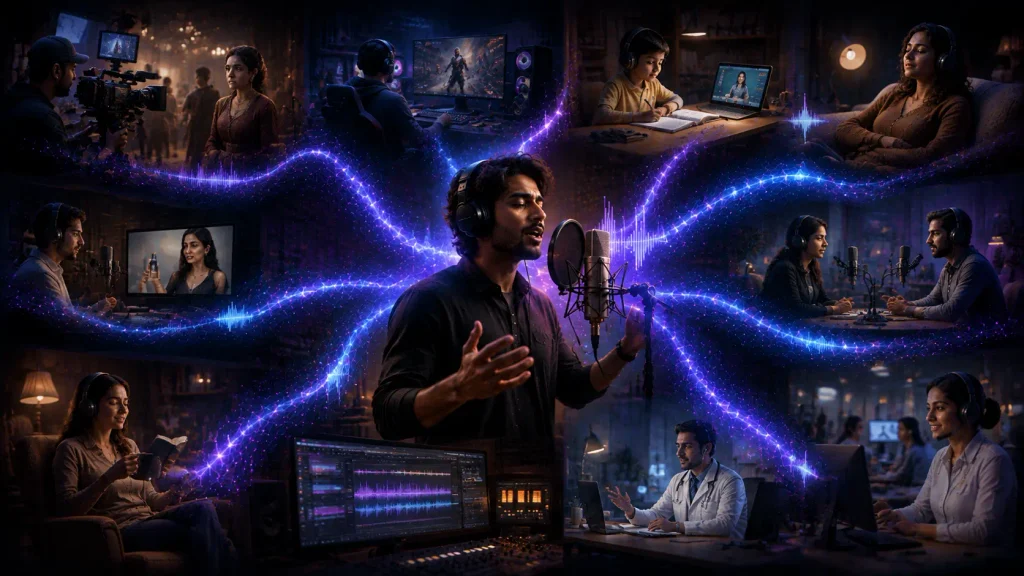
AI voice acting is expanding beyond entertainment and becoming useful across multiple industries. From digital storytelling and publishing to education and gaming, AI-generated voices are helping organisations create more engaging and accessible experiences.
The ability to generate realistic narration, character voices, and multilingual audio content is changing how brands, creators, and audiences interact with voice-based media.
Entertainment and Digital Storytelling
Entertainment is one of the biggest areas where AI voice acting is creating new possibilities.
Creators are using AI voices for:
- Audio stories
- Fictional characters
- Interactive narratives
- Digital entertainment experiences
AI voice technology allows storytellers to build immersive worlds with multiple characters and unique voice personalities.
For audio-first platforms, AI can support creators by making it easier to produce engaging stories while allowing them to experiment with new formats.
From short audio fiction to long-form storytelling, AI-powered voices are helping expand the possibilities of digital entertainment.
Audiobooks and Publishing
The popularity of audiobooks has created growing demand for high-quality narration.
AI audiobook narration is helping publishers and independent authors explore faster and more flexible production methods.
AI voices can support:
- Converting written books into audio formats
- Creating multilingual audiobook versions
- Improving accessibility for listeners
- Producing narration for large content libraries
For authors and publishers, AI-assisted narration can help more stories reach audiences who prefer listening over reading.
However, maintaining storytelling quality remains important. The best audiobook experiences combine technology with thoughtful direction and creative editing.
Advertising and Brand Voiceovers
Brands rely on voice to create memorable customer experiences. From advertisements and promotional videos to digital assistants, voice plays an important role in communication.
AI voiceover technology allows businesses to create consistent brand voices across different content formats.
Applications include:
- Commercial voice acting
- Product videos
- Marketing campaigns
- Social media content
- Digital advertisements
AI-generated voices can help brands produce content faster while maintaining consistency across multiple platforms.
Education and Learning Platforms
Education is another area where AI voice technology can improve accessibility and engagement.
AI voices can support:
- Online courses
- Educational videos
- Language learning
- Digital learning assistants
- Audio-based study materials
Multilingual AI voices can also help educational content reach learners from different language backgrounds.
This creates opportunities for more inclusive learning experiences where students can access information in formats that suit their needs.
Gaming and Interactive Experiences
Gaming relies heavily on character voices and immersive storytelling.
AI voice acting is helping game developers create:
- Dynamic character voices
- Interactive conversations
- Virtual companions
- Expansive fictional worlds
Instead of limiting characters to pre-recorded dialogue, AI-powered voices can create more flexible and responsive experiences.
As interactive entertainment continues evolving, AI voices may play a larger role in creating personalised experiences for players.
Can AI Replace Human Voice Actors?
The growth of AI voice technology has created an important question: Will AI replace human voice actors?
The answer is more complex than simply choosing between humans and machines.
AI voice acting can improve production speed, accessibility, and creative experimentation, but human performers continue to bring emotional depth, interpretation, and authenticity that technology cannot fully replicate.
The future of voice acting is likely to involve collaboration between human talent and artificial intelligence rather than complete replacement.
Why Human Emotion Still Matters
Storytelling is not only about producing words; it is about creating emotional connections.
Human voice actors understand:
- Character motivation
- Emotional context
- Story intention
- Subtle changes in expression
A skilled performer can transform a simple sentence into a powerful emotional moment through timing, delivery, and personal interpretation.
These human qualities remain essential for:
- Film voice over
- Animation
- Audio dramas
- Character performances
- Emotional storytelling
AI can replicate patterns of speech, but human creativity gives stories meaning.
AI as a Creative Partner, Not a Replacement
AI voice technology is best viewed as a creative assistant that expands what creators can achieve.
Instead of replacing voice actors, AI can support them by helping with:
- Faster content production
- Voice experimentation
- Character development
- Multilingual adaptation
- Creative prototyping
A creator may use AI to test ideas before working with professional performers, or combine human performances with AI-generated elements to create unique experiences.
The relationship between creators and AI is becoming more collaborative.
The Future of Human-AI Collaboration
The future of voice acting will likely combine the strengths of both humans and artificial intelligence.
AI can provide:
- Speed
- Scalability
- Accessibility
- Creative experimentation
Humans provide:
- Emotion
- Creativity
- Direction
- Storytelling perspective
Together, they can create new forms of voice-based entertainment and communication.
As the future of voice acting develops, successful creators will be those who understand how to use AI responsibly while preserving the human elements that make stories meaningful.
AI creativity will continue expanding possibilities, but human imagination will remain the foundation of great storytelling.
How Creators Can Use AI Voice Technology for Audio Storytelling
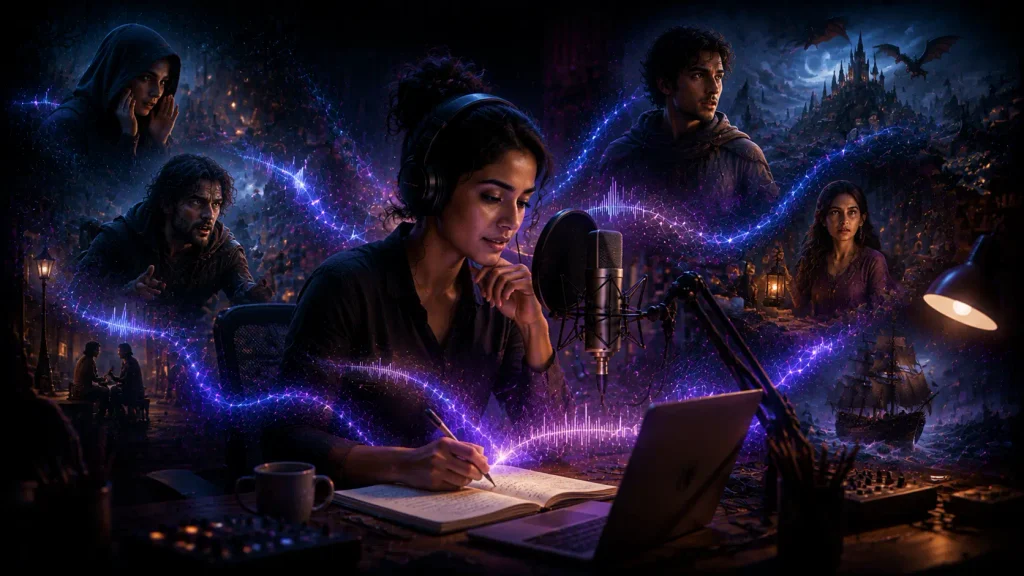
The rise of AI voice technology has made audio storytelling more accessible for creators at every level. Writers, independent storytellers, podcasters, and digital creators can now explore new ways to transform ideas into engaging voice-based experiences.
Earlier, creating professional audio stories often required recording equipment, voice actors, studios, and extensive post-production work. Today, AI-assisted tools can help creators streamline parts of this process while allowing them to focus more on storytelling, creativity, and audience connection.
For creators looking to create audio stories, AI voice technology can support the entire creative workflow — from developing characters to producing finished audio experiences.
Platforms like Arré Voice are building new opportunities for creators by combining storytelling, voice technology, and communities where audiences can discover and engage with voice-based content.
Step 1: Develop a Story Concept
Every memorable audio story begins with a strong idea.
Before creating voices or producing audio, creators need to define the foundation of their story, including:
- The main theme
- Characters and their personalities
- Story structure
- Target audience
- Emotional experience they want to create
AI tools can support the creative process by helping writers explore ideas, develop story outlines, and experiment with different narrative directions.
However, the core of storytelling remains human creativity. AI can assist with the process, but the imagination behind the story comes from the creator.
Whether it is a fictional drama, a personal story, a podcast episode, or a short audio experience, a strong concept is what creates meaningful connections with listeners.
Step 2: Create Characters and Voices
Characters are what make stories memorable. A unique voice can help audiences understand a character’s personality, emotions, and role within a story.
AI voice technology allows creators to experiment with different character voices by exploring:
- Voice styles
- Speaking patterns
- Character personalities
- Emotional expressions
For example, a creator developing an audio drama can create different voices for multiple characters, helping each personality feel distinct and engaging.
AI-generated voices can be useful for:
- Fictional characters
- Story narrators
- Virtual personalities
- Interactive storytelling experiences
This gives independent creators more flexibility when building voice-driven stories without requiring a separate voice performer for every role.
Step 3: Generate Narration
Narration plays an important role in guiding listeners through an audio story.
With AI voice generation, creators can transform written scripts into natural-sounding narration while experimenting with different delivery styles.
AI narration can help creators develop:
- Story introductions
- Character dialogues
- Podcast segments
- Audiobook-style content
Creators can adjust elements such as:
- Tone
- Pace
- Voice style
- Emotional delivery
This allows storytellers to test different approaches and choose the narration style that best fits their content.
For creators building an audio series, AI-assisted narration can also help maintain consistency across multiple episodes.
Step 4: Add Music and Sound Effects
Great audio storytelling is not only about voices. Sound design plays a major role in creating atmosphere and emotional impact.
Adding background music and sound effects can help listeners:
- Visualise scenes
- Feel emotions more strongly
- Connect with characters
- Experience immersive storytelling
Creators can combine AI-generated voices with:
- Background music
- Environmental sounds
- Character effects
- Scene-based audio elements
This combination creates richer audio experiences similar to traditional audio dramas and modern voice-based entertainment formats.
Step 5: Publish and Build an Audience
Creating an audio story is only the beginning. The next step is connecting the content with the right audience.
Modern creators need platforms where listeners can discover, engage, and interact with their stories.
A voice storytelling platform allows creators to:
- Share original stories
- Build listener communities
- Receive audience feedback
- Grow their creative identity
Platforms like Arré Voice bring together storytelling and community by creating spaces where creators can publish voice-based content and audiences can discover new stories.
The future of the audio creator platform ecosystem will not only focus on content creation but also on building meaningful relationships between creators and listeners.
AI voice technology provides the tools, but communities provide the connection that makes storytelling powerful.
The Future of AI Voice Acting: From Digital Voices to Interactive Storytelling
The future of AI voice technology is moving beyond simple voice generation. As artificial intelligence continues evolving, voices are becoming more personalised, expressive, and interactive.
AI voice acting is expected to play an important role in the future of entertainment, allowing creators and audiences to experience stories in completely new ways.
From personalised digital voices to regional language storytelling, the next generation of voice experiences will focus on making content more accessible, engaging, and connected.
Personalized AI Voices
Personalisation is becoming one of the biggest trends in digital experiences.
Future AI voice systems may allow creators and audiences to develop more customised voice interactions based on individual preferences.
Personalized AI voices could support:
- Custom narration styles
- Unique character voices
- Personalised learning experiences
- Adaptive storytelling
This could create experiences where stories feel more relevant and tailored to individual listeners.
Regional Language Expansion
Language diversity will play an important role in the future of AI-powered storytelling.
Across countries like India, millions of stories exist in different languages, dialects, and cultural traditions. However, producing content for every language audience has often required significant resources.
AI voice technology can help creators expand storytelling into more regional languages by making multilingual content creation easier.
This creates opportunities for:
- Local language entertainment
- Regional storytelling
- Cultural preservation
- Wider audience access
By supporting more languages, AI can help bring diverse voices and stories to global audiences.
Interactive Voice Experiences
The future of storytelling may move beyond passive listening.
Instead of simply consuming stories, audiences may interact with characters, influence narratives, and experience personalised journeys.
AI-powered voices could enable:
- Interactive characters
- Conversational storytelling
- Dynamic narratives
- Voice-based entertainment experiences
This shift could transform stories from fixed experiences into evolving conversations between creators, characters, and audiences.
AI-Powered Communities
The future of voice entertainment will not only be about technology — it will also be about communities.
AI tools can help creators produce content faster, but audiences create the conversations, connections, and culture around stories.
Voice-based communities can help people:
- Discover new creators
- Participate in discussions
- Share their own stories
- Build connections through voice
Platforms focused on voice communities can become important spaces where storytelling and social interaction come together.
The Future of Voice-First Entertainment
The future of entertainment is becoming increasingly voice-driven.
As audiences look for more convenient, immersive, and personalised ways to consume content, AI voice acting will continue shaping how stories are created and experienced.
The future of AI storytelling will not be defined by technology replacing creativity. Instead, it will be shaped by creators using AI as a tool to expand imagination, reach new audiences, and build deeper connections through voice.
For creators, the opportunity is clear: combine human storytelling with AI-powered innovation to create the next generation of voice-first experiences.
Frequently Asked Questions
What is AI voice acting?
AI voice acting is the use of artificial intelligence to create realistic digital voice performances for narration, characters, conversations, and storytelling. Unlike basic text-to-speech systems, AI voice acting can generate voices with different tones, emotions, and expressions, making it useful for audio stories, podcasts, audiobooks, and digital entertainment.
How does AI voice acting work?
AI voice acting works by training artificial intelligence models using large amounts of voice data to understand speech patterns, pronunciation, tone, and expression. These AI voice models then use voice synthesis technology to convert text into natural-sounding speech with realistic pacing, emotion, and character variation.
Is AI voice acting replacing human voice actors?
AI voice acting is not replacing human voice actors completely. While AI can help creators produce voices faster and experiment with different styles, human performers remain essential for emotional depth, creative interpretation, and authentic storytelling. The future of voice acting is likely to involve collaboration between human talent and AI technology.
Can AI create realistic character voices?
Yes, AI can create realistic character voices by analysing speech patterns and generating voices with different personalities, tones, and expressions. Creators can use AI voice technology to develop fictional characters, virtual personalities, and immersive audio experiences while adjusting factors such as pitch, speed, and emotional delivery.
What is the difference between AI voice acting and text-to-speech?
Text-to-speech technology primarily converts written text into spoken audio, focusing on clarity and accessibility. AI voice acting goes further by creating expressive performances with emotion, character, and personality. It is designed for creative applications such as storytelling, podcasts, audiobooks, and voice-based entertainment.
Is AI voice cloning legal?
AI voice cloning can be legal when it is used with proper permission and consent from the person whose voice is being replicated. Laws and regulations vary by location, but responsible voice cloning requires protecting voice ownership, digital identity, and preventing unauthorized or misleading use of someone’s voice.
Can AI voices be used commercially?
Yes, AI voices can be used commercially when creators and businesses have the appropriate rights, permissions, and licensing agreements. AI-generated voices are increasingly used for advertisements, audiobooks, educational content, podcasts, and digital experiences, but responsible usage and transparency are important.
How can creators use AI voices for storytelling?
Creators can use AI voices for storytelling by generating narration, developing fictional characters, creating audio dramas, producing podcasts, and adapting stories into different languages. AI voice technology helps creators experiment with new formats while making voice-based content production faster and more accessible.
What are the best AI voice tools for creators?
The best AI voice tools for creators depend on their goals, such as narration, character creation, podcasts, or multilingual content. Modern AI voice platforms offer features like voice generation, emotional control, voice customization, and text-to-speech capabilities. Creators should choose tools based on quality, ethical usage policies, and content requirements.
How is AI changing the future of audio entertainment?
AI is transforming the future of audio entertainment by enabling personalised voices, multilingual storytelling, interactive experiences, and faster content creation. As AI voice technology evolves, creators will be able to build more immersive voice-first experiences where storytelling, communities, and audiences connect in new ways.