
What Is Retro Music?
Retro music refers to songs from earlier musical eras that people continue to enjoy, rediscover or reinterpret today. In India, the term commonly describes older Bollywood melodies, regional film songs, classic pop and familiar hits from the 1970s, 1980s, 1990s and early 2000s. Their lasting appeal comes from memorable melodies, emotional storytelling and connections to personal or cultural memories.
Retro music is not a separate musical genre. It is a way of describing music associated with an earlier period, particularly when its sound, style or cultural identity feels different from contemporary releases.
A romantic Hindi film song from the 1980s, a Tamil melody from the 1990s or a popular track from the early 2000s can all be described as retro, depending on the audience and context.
What Makes a Song Retro?
A song becomes retro when listeners associate it with a recognisable musical period from the past. Its age matters, but its sound, cultural significance and continued popularity also shape how people describe it.
Common characteristics of retro music include:
- Distinctive melodies: Musical arrangements and vocal styles associated with an earlier era.
- Recognisable production: Instruments, recording techniques and arrangements that reflect the period in which the song was created.
- Emotional familiarity: Lyrics and melodies that remind listeners of relationships, family gatherings, films or important life experiences.
- Cultural significance: Songs connected to memorable films, performers or moments in popular culture.
- Lasting relevance: Music that continues to attract listeners beyond its original release period.
In India, retro music is particularly closely connected with cinema. Film soundtracks have helped preserve songs across generations, allowing people to discover music long after its original theatrical release.
However, a song does not need to come from a film to qualify as retro. Older independent music, regional folk recordings and Indian pop can also belong to retro listening culture.
Retro Music vs Vintage Music vs Classic Music
Although these terms are sometimes used interchangeably, they describe different qualities of music.
| Term | Meaning | Example |
| Retro music | Music associated with an earlier era, or newer music deliberately inspired by an older style | A 1990s Bollywood song rediscovered through Instagram Reels |
| Vintage music | Older recordings valued for their historical period, original sound or recording character | An original mid-20th-century film or gramophone recording |
| Classic music | Music recognised for its lasting quality, influence or popularity | A widely admired film song that remains popular across generations |
A classic song can also be retro or vintage. The difference lies in what the listener is emphasising: the period, the recording’s historical character or the song’s enduring reputation.
Retro music should also not be confused with classical music. Indian classical music refers to established musical traditions, including Hindustani and Carnatic music, rather than simply music recorded many years ago.
Does Retro Music Belong to a Specific Decade?
No. Retro music does not have a universally fixed decade or age requirement. The label changes as generations grow older and newer musical styles emerge.
In India, songs from the 1970s and 1980s have long been considered retro favourites. Music from the 1990s is also firmly associated with nostalgia, while early 2000s songs increasingly feature in throwback playlists and social media content.
For example, someone who grew up listening to cassette-era Bollywood music may associate retro songs with the 1980s and 1990s. A younger listener may describe music from the early 2000s as retro because it belongs to a period before their own musical discovery.
The most useful definition is therefore cultural rather than strictly chronological: retro music connects listeners with the sound and identity of an earlier era.
Why Is Retro Music Trending Again in 2026?
Retro music is trending again in India in 2026 because short-form videos, nostalgia-driven content, film soundtracks and digital discovery are introducing older songs to new audiences. Instagram Reels and YouTube Shorts make familiar melodies easy to encounter, while remixes, covers and streaming playlists encourage listeners to explore the original recordings.
The revival is not limited to people who remember these songs from childhood. Younger audiences are discovering older music through edits, memes, film scenes and recommendations from friends.
An April 2026 India Today report highlighted how social media and Bollywood reinterpretations have helped songs from earlier decades return to contemporary listening culture.
How Instagram Reels and YouTube Shorts Revive Old Songs
Instagram Reels and YouTube Shorts give older songs a new context. A melody originally created for a film may become the soundtrack to a travel montage, a wedding video, a friendship tribute or a nostalgic collection of photographs.
These short videos often introduce listeners to only a small part of a song. A memorable chorus, instrumental passage or emotional lyric can attract attention before viewers discover the complete recording.
The process typically follows a simple pattern:
- A creator uses an older song in a relatable video.
- Viewers recognise or become curious about the audio.
- Other creators reuse the same sound in different contexts.
- Interested listeners search for the original song or explore related music.
This does not guarantee that every reused song becomes viral. However, repeated exposure can help older recordings reach audiences beyond their original generation.
In its 2025 Instagram India Year-in-Review, Meta identified nostalgia and lo-fi visual aesthetics as notable cultural trends. It also highlighted renewed interest in films and songs associated with Rockstar, including “Nadaan Parinde” and “Shehar Mein.”
These examples show how older cultural works can remain relevant through contemporary social media conversations.
Why Gen Z Is Rediscovering Music From Earlier Decades
Gen Z listeners are discovering older songs through digital platforms, even when they have no personal memories of the music’s original release.
For younger audiences, retro music can offer something different from contemporary trends: unfamiliar arrangements, expressive vocals, distinctive lyrics or a connection to earlier periods of Indian popular culture.
Several discovery pathways contribute to this interest.
Social media discovery: A song heard in a Reel can lead someone to search for its original film, singer or complete soundtrack.
Family influence: Music played by parents, grandparents or older siblings can introduce younger listeners to earlier decades.
Film and television culture: Older soundtracks gain renewed attention when films are revisited, discussed or referenced online.
Personal expression: Younger creators may choose older songs because the lyrics or mood communicate feelings that remain relevant today.
Retro music therefore appeals to Gen Z for more than nostalgia alone. For someone hearing a song for the first time, the attraction may come from discovering a musical style that feels fresh precisely because it differs from current releases.
How Nostalgia, Memories and Emotions Drive Repeat Listening
Nostalgia is one of the strongest reasons older music continues to connect with listeners.
A familiar song can remind someone of a school journey, a family celebration, a childhood home or a particular stage of life. Music becomes associated with the people and experiences surrounding it.
For example, a song repeatedly played during family road trips may later evoke memories of those journeys. A film soundtrack heard during college can become closely connected with friendships and relationships from that period.
These emotional associations can encourage people to return to the same music years later.
Nostalgia also works socially. When listeners share favourite songs and the memories behind them, music becomes a starting point for conversation between generations.
This is particularly meaningful in India, where film music frequently forms part of weddings, festivals, family gatherings and everyday cultural life.
Why Familiar Melodies Work So Well in Short Videos
Familiar melodies can communicate emotion quickly, making them useful for short-form storytelling.
A recognisable tune may establish a romantic, playful, celebratory or reflective mood before the viewer has heard the complete song. This allows creators to communicate a feeling within the limited duration of a Reel or Short.
Older songs can also create contrast. A classic melody paired with modern visuals may feel nostalgic, humorous or unexpectedly fresh.
However, familiarity is not the only factor behind a successful video. The visual storytelling, relevance to the audience, timing and creative execution also matter.
For creators, the important lesson is to select audio that supports the story rather than assuming an old song will automatically generate engagement.
How Are Old Bollywood Songs Going Viral Again?

Old Bollywood songs are gaining renewed attention through social media edits, film soundtracks, remixes, covers and nostalgia-focused playlists. Tracks originally released decades ago can reach new listeners when creators reuse memorable musical moments or filmmakers introduce familiar songs in contemporary scenes.
This renewed attention is best understood as rediscovery rather than a single, uniform trend. Different songs return to public attention for different reasons, and popularity can vary across platforms, regions and audiences.
The Return of 70s, 80s and 90s Bollywood Music
Hindi film music from the 1970s, 1980s and 1990s remains an important part of India’s retro listening culture.
Songs from these decades are associated with influential playback singers, composers, lyricists and memorable films. Their melodies continue to circulate through radio programming, streaming collections, family playlists and social media.
The appeal of these decades is not identical.
1970s Bollywood music is often remembered for its expressive melodies, orchestral arrangements and enduring film soundtracks.
1980s Bollywood music includes romantic ballads, dance numbers and synthesiser-influenced arrangements that reflect changing musical production styles.
1990s Bollywood music is closely associated with romantic film soundtracks, memorable duets and the cassette and television era.
These are broad characteristics rather than strict boundaries. Indian film music has always included a wide range of styles.
The renewed interest in older soundtracks is also visible in contemporary cinema. India Today’s April 2026 coverage discussed how films such as Dhurandhar and its sequel used reworked older songs to create fresh cinematic associations.
This illustrates how an existing composition can acquire another cultural life when introduced in a different setting.
Why Early 2000s Songs Are Becoming Nostalgic Favourites
Songs from the early 2000s occupy an interesting position in India’s retro music revival.
They are recent enough for many millennials to remember their original popularity, yet old enough for younger audiences to encounter them as music from a previous era.
This period also marked an important transition in how Indians accessed entertainment. Film songs circulated through television music channels, CDs, radio, mobile phones and eventually digital music services.
As a result, early 2000s music is associated with changing listening habits as well as familiar films and performers.
For some listeners, these songs recall school days, friendships and the early years of mobile entertainment. For others, they represent an unfamiliar but appealing musical period.
Social media throwback formats make this connection easier to share. Videos centred on school memories, old photographs or earlier fashion trends often use music from the same period to create a recognisable atmosphere.
A song does not need to be decades old to evoke nostalgia. What matters is its connection to a meaningful period in the listener’s life.
How Films, Remixes and Covers Introduce Classics to New Fans
Films, remixes and cover versions can introduce older songs to audiences who may not have encountered the originals.
A remix changes elements of an existing recording or composition, often through new rhythms, arrangements or production techniques.
A cover is a new performance of an existing song, potentially with a different vocal style or musical arrangement.
A film reuse or reinterpretation places an older song, or a new version of it, within a contemporary cinematic context.
Each approach creates a different discovery opportunity.
Someone who enjoys a remixed chorus may search for the original recording. A cover performed by a younger singer may introduce listeners to the original composer or playback artist. A memorable film scene can also renew interest in a soundtrack released years earlier.
A documented 2026 example is the renewed attention surrounding “Vaaroon” from Mirzapur. In September, India Today reported on lyricist Ginny Diwan’s reflections about the song finding a wider audience through Instagram Reels and its new version, Vaaroon Forever.
Although not an example of a 1970s–1990s Bollywood classic, it demonstrates how an earlier song can gain another phase of attention through digital discovery and reinterpretation.
Importantly, remixes and covers do not replace the originals. They can act as entry points, encouraging listeners to explore earlier recordings and the artists behind them.
How to Identify a Genuine Viral Retro Music Trend
A retro song becomes a genuine viral trend when it gains widespread attention through repeated social media use, growing listener interest and measurable engagement. A single popular Instagram Reel or YouTube Short does not necessarily mean an old song is trending across India.
To identify an authentic retro music trend, consider these five indicators:
- Social media usage: Check whether multiple independent creators are using the same song across Instagram Reels and YouTube Shorts.
- Search interest: Use Google Trends to identify increases in searches for the song title, singer or original film.
- Streaming popularity: Look for appearances on Spotify, YouTube Music or other publicly available music charts.
- Audience engagement: Observe whether listeners are actively sharing memories, discussing the original recording or creating new interpretations.
- Credible media coverage: Verify whether established publications have reported the song’s renewed popularity with specific dates and supporting evidence.
For example, an old Bollywood melody appearing in nostalgic Reels may indicate renewed interest. However, stronger evidence comes when that activity coincides with rising search interest, wider creator participation and documented streaming activity.
The key distinction is between temporary social media exposure and sustained musical rediscovery. Comparing multiple signals helps creators, listeners and music enthusiasts understand which retro songs are genuinely making a comeback in 2026.
Which Retro Music Styles Are Popular in India?
Popular retro music styles in India include classic Hindi film songs, Tamil film melodies, regional-language soundtracks, older Indian pop and traditional music recordings. These styles remain culturally significant because they combine memorable compositions with stories, languages and experiences that listeners continue to value.
Although Bollywood is often the first association with Indian retro music, India’s musical heritage extends across numerous regional film industries and independent traditions. Telugu, Malayalam, Bengali, Punjabi, Marathi and other language communities have their own collections of evergreen songs.
Classic Hindi Film Songs and Evergreen Melodies
Classic Hindi film songs remain a prominent part of India’s retro music culture. Their appeal comes from memorable melodies, expressive lyrics, distinctive vocal performances and associations with influential films.
Playback singers such as Mohammed Rafi, Lata Mangeshkar, Kishore Kumar, Asha Bhosle and Mukesh helped define different periods of Hindi film music. Composers including S. D. Burman, R. D. Burman, Naushad and Laxmikant–Pyarelal created soundtracks that continue to attract listeners.
These songs cover a wide range of emotions and occasions, from romantic ballads and reflective melodies to energetic dance numbers and celebratory compositions.
Well-known examples include:
- “Lag Ja Gale” (1964): A romantic song from Woh Kaun Thi?, sung by Lata Mangeshkar.
- “Pal Pal Dil Ke Paas” (1973): A Kishore Kumar song from Blackmail, remembered for its romantic melody.
- “Chura Liya Hai Tumne Jo Dil Ko” (1973): A popular song from Yaadon Ki Baaraat, performed by Asha Bhosle and Mohammed Rafi.
- “Ek Ladki Ko Dekha” (1994): A romantic melody from 1942: A Love Story, sung by Kumar Sanu.
These examples illustrate the range of music commonly described as evergreen Bollywood classics. They are not presented as a ranking of the most-streamed or currently viral retro songs.
For listeners, classic Hindi film music offers more than entertainment. Songs can recall favourite films, family gatherings and personal experiences, helping older compositions remain meaningful across generations.
Tamil Retro Music and Timeless Film Soundtracks
Tamil retro music includes classic film songs, romantic melodies, folk-influenced compositions and soundtracks from earlier decades of Tamil cinema. Its appeal reflects the close relationship between Tamil film storytelling, expressive lyrics and distinctive musical arrangements.
Composers such as M. S. Viswanathan, Ilaiyaraaja and A. R. Rahman have contributed significantly to the evolution of Tamil film music across different periods.
Ilaiyaraaja’s compositions, particularly from the late 1970s onward, are associated with memorable melodies and arrangements that combine Indian musical influences with orchestral and electronic elements.
A. R. Rahman’s early 1990s work introduced another influential sound, combining electronic production, layered arrangements and diverse musical traditions.
Examples of widely recognised Tamil film songs include:
- “Ilaya Nila” (1982): From Payanangal Mudivathillai, composed by Ilaiyaraaja.
- “Mandram Vandha Thendralukku” (1986): From Mouna Ragam, composed by Ilaiyaraaja.
- “Chinna Chinna Aasai” (1992): From Roja, composed by A. R. Rahman.
- “Ennavale Adi Ennavale” (1994): From Kadhalan, composed by A. R. Rahman.
Tamil retro songs are frequently associated with emotional film scenes, relationships and memories of earlier listening habits.
Their appeal also reaches beyond Tamil-speaking audiences. Film soundtracks, subtitled content, cover performances and digital playlists allow listeners from different linguistic backgrounds to discover these compositions.
Regional Retro Music Across Indian Languages
India’s retro music landscape extends far beyond Hindi and Tamil cinema. Different regional traditions offer distinctive melodies, instruments, lyrical themes and cultural references.
| Language or tradition | Retro music heritage | What listeners can explore |
| Telugu | Classic film soundtracks and playback singing | Melodic film songs and compositions associated with earlier generations of Telugu cinema |
| Malayalam | Film melodies and poetry-rich songwriting | Reflective songs, romantic compositions and classic soundtracks |
| Bengali | Bengali modern songs, film music and Rabindra Sangeet | Literary songwriting, older recordings and culturally significant compositions |
| Punjabi | Folk recordings, traditional singing and older Punjabi pop | Folk storytelling, regional instruments and dance-oriented music |
| Marathi | Marathi film music, bhavgeet and natya sangeet | Poetry-based songs, musical theatre traditions and classic recordings |
| Kannada | Earlier Kannada film soundtracks and bhavageethe | Expressive film melodies and poetry-based musical works |
Not every traditional recording should automatically be classified as retro. A living musical tradition may be centuries old while still producing new compositions and performances today.
The term retro is most useful when discussing a particular older recording, arrangement or period of popular music.
Exploring regional retro songs helps listeners discover the diversity of India’s musical history rather than limiting nostalgia to a single film industry.
How to Explore Retro Songs Beyond Bollywood
The easiest way to discover regional retro music is to search by language, decade, composer, singer or film rather than relying only on general “old songs” playlists.
Try these approaches:
- Search by language and decade. Queries such as “1990s Tamil film songs” or “classic Malayalam melodies” can reveal more focused collections.
- Explore influential composers and singers. Their discographies provide a useful starting point for discovering related films and musical styles.
- Use curated streaming playlists. Look for collections organised around regional classics, particular decades or specific musical traditions.
- Visit official music channels. Record-label and rights-holder channels can help listeners find authorised recordings and information about their original releases.
- Ask family members about favourite songs. Personal recommendations often reveal regional classics that may not appear in mainstream discovery lists.
- Explore the stories behind the music. Learning about a song’s film, lyrics or cultural context can make listening more meaningful.
For creators, regional retro music also offers opportunities to share memories, discuss influential artists and tell stories about how particular songs shaped family or community experiences.
Why Does Retro Music Connect Different Generations?
Retro music connects generations because songs carry emotions, memories and cultural experiences that can be shared across age groups. Older listeners may associate a melody with events from their lives, while younger listeners may discover the same song through family, films or social media.
Music can therefore create a shared experience even when people first encounter it decades apart.
A song remembered by a grandparent, enjoyed by a parent and newly discovered by a teenager can become a common point of conversation. Each listener may attach a different meaning to the recording, but the music gives them something familiar to share.
The Psychology of Music and Nostalgia
Nostalgia is an emotional response to memories of the past. Music can evoke nostalgia because people often associate particular songs with places, relationships and significant life events.
Research on music-evoked autobiographical memories suggests that familiar music can prompt recollections of personal experiences, sometimes accompanied by strong emotions.
For example, hearing a song played repeatedly during school years may bring back memories of friends, classrooms or journeys home. A film melody associated with a family celebration may recall the people who were present.
These responses help explain why listeners sometimes return to older songs even when newer music is readily available.
Music-related nostalgia can involve several experiences:
- Emotional recognition: A melody recalls feelings associated with an earlier period.
- Autobiographical memory: A song becomes linked to a particular person, place or event.
- Social connection: Shared musical memories encourage conversations with family and friends.
- Continuity of identity: Familiar songs can remind listeners of earlier versions of themselves.
However, nostalgia is not always entirely positive. Some songs evoke sadness, longing or mixed emotions. Their emotional importance may come from the personal experiences they represent rather than from happiness alone.
How Family Memories Shape Musical Preferences
Family listening habits play an important role in introducing people to music from earlier generations.
In many Indian households, songs are heard during everyday activities, road trips, festivals, weddings and family celebrations. Children may become familiar with music chosen by parents or grandparents long before developing their own listening preferences.
Over time, these songs can become part of shared family memory.
For example, someone may associate a particular Hindi film melody with their parents’ favourite movie. Another listener may remember Tamil songs played during childhood journeys or regional folk recordings heard at family gatherings.
These experiences can influence musical preferences in several ways.
Repeated exposure builds familiarity. Songs heard frequently during childhood may remain recognisable years later.
Shared experiences create associations. A melody connected to a family celebration can acquire personal meaning beyond its lyrics.
Stories add cultural context. When older relatives explain why a song mattered to them, younger listeners gain insight into the period in which it became popular.
This is one reason retro music can connect generations without requiring everyone to share the same memories.
For people interested in the relationship between memory and narration, exploring Indian storytelling traditions offers another perspective on how cultural experiences are passed between generations.
Why Younger Listeners Connect With Songs They Never Grew Up With
Younger listeners do not need personal memories of an earlier decade to enjoy its music.
A song released before someone was born can still feel emotionally meaningful because of its melody, lyrics, vocal performance or association with a film.
For younger audiences, retro music can be a form of discovery rather than personal nostalgia.
Several factors contribute to this connection:
- Musical curiosity: Older compositions introduce different instruments, vocal styles and arrangements.
- Emotional storytelling: Themes such as love, friendship, separation and hope remain relatable across generations.
- Cultural discovery: Songs provide insight into the films, language and popular culture of earlier periods.
- Digital exposure: Reels, Shorts and streaming recommendations introduce recordings outside a listener’s usual preferences.
- Shared experiences: Family conversations and recommendations give older songs new personal meaning.
A teenager discovering a 1990s romantic soundtrack may appreciate its lyrics without remembering the film’s original release. Similarly, someone encountering an older regional song through a cover performance may become interested in its composer or cultural background.
This distinction matters when discussing the retro music revival. Older listeners may return to familiar recordings, while younger listeners may be discovering those recordings for the first time.
Both experiences help sustain interest in music from earlier eras.
How Is Technology Bringing Retro Music Back?
Technology is bringing retro music back by making older recordings easier to discover, access, preserve and share. Streaming services, recommendation systems, remastered releases and short-form video platforms allow listeners to encounter music that may have originally circulated through records, cassettes, CDs or radio.
Digital access has also reduced some of the barriers between musical generations. Listeners no longer need to own a physical recording to explore songs released decades earlier.
However, availability varies by recording, region and licensing arrangements. Not every historic song is accessible on every platform.
Streaming Playlists and Algorithmic Music Discovery
Streaming platforms have changed how people discover music from earlier decades.
Instead of searching only for a particular song or album, listeners can explore playlists organised around moods, languages, artists, decades and musical styles.
For example, someone interested in 1990s Hindi film music might begin with a decade-specific playlist and discover related soundtracks through recommendations.
Similarly, a listener exploring Tamil retro melodies may encounter older compositions through artist collections or recommendations based on previous listening.
Music recommendation systems can use signals such as listening history, user preferences and relationships between tracks to suggest additional recordings.
These systems can introduce older songs to people who would not otherwise search for them directly.
Several digital discovery methods are particularly relevant:
- Decade-based playlists: Collections featuring songs from the 1970s, 1980s, 1990s or early 2000s.
- Artist and composer collections: Playlists built around influential singers, composers or performers.
- Mood-based listening: Romantic, reflective, celebratory or nostalgic music collections.
- Personalised recommendations: Suggested recordings based on a listener’s activity and preferences.
- Social sharing: Songs discovered through friends, creators and online communities.
The result is a more flexible listening experience in which older and newer recordings can appear alongside one another.
For Indian audiences, language-based discovery is especially valuable because it provides access to music across different regional traditions.
Remastered Recordings and Digital Music Preservation
Many older recordings were originally distributed through analogue formats such as vinyl records and magnetic tapes.
Over time, physical media can deteriorate, while playback equipment becomes harder to maintain. Digitisation allows audio from these formats to be converted into digital files that can be stored, processed and distributed.
Remastering involves preparing an existing recording for improved playback or a new release format. Depending on the source material, engineers may adjust equalisation, dynamics, noise levels and other audio characteristics.
For listeners, a carefully remastered release may offer clearer sound or a more consistent listening experience on modern devices.
However, remastering does not automatically make every recording better. The outcome depends on the quality of the original source, the restoration process and the mastering decisions.
Digital preservation also serves a different purpose from commercial remastering.
Preservation focuses on maintaining access to recordings and associated information for future generations. This can involve careful digitisation, secure storage, documentation and preservation of original source materials.
For Indian retro music, these practices are relevant to historic film soundtracks, regional recordings and other culturally significant audio collections.
Vinyl Records, Lo-Fi Aesthetics and Retro Listening Culture
Retro music culture is not limited to the songs themselves. It also includes the formats, artwork and listening experiences associated with earlier periods.
Vinyl records, cassette tapes, vintage audio equipment and old album covers can appeal to listeners interested in the physical history of recorded music.
Some people value vinyl for its tangible format, large artwork and the experience of playing an album from beginning to end.
Others are drawn to the visual and sonic aesthetics associated with older media, including film grain, cassette imagery and lo-fi production styles.
Lo-fi is not the same as retro music. Lo-fi generally describes an aesthetic that incorporates or imitates audible imperfections, such as tape hiss, distortion or a deliberately softened sound.
A contemporary lo-fi track may borrow stylistic elements associated with older recordings without being an old song itself.
Likewise, a classic film song can be digitally remastered and presented with clean audio while still being considered retro.
These distinctions help explain why retro listening culture includes both appreciation for historic recordings and modern reinterpretations of older sounds.
How Remastering Differs From Remixing an Old Song
Remastering improves or adapts the sound of an existing recording, while remixing changes how the music is assembled or presented. The two processes serve different creative and technical purposes.
| Feature | Remastering | Remixing |
| Primary purpose | Improve or prepare an existing recording for playback | Create a different version or interpretation |
| Original performance | Usually retained | May be retained, rearranged or combined with new elements |
| Musical arrangement | Generally unchanged | May be significantly altered |
| Typical changes | Equalisation, dynamics, noise treatment and overall sound levels | Beats, instrumentation, effects, structure or tempo |
| Listening experience | Familiar song with potentially improved audio presentation | A recognisable song presented in a new musical style |
For example, a remastered release of a 1980s film song may preserve its original vocals and arrangement while adjusting the audio for contemporary playback.
A remix of the same song might introduce new percussion, electronic elements or structural changes.
A third approach, re-recording, involves performing the song again rather than simply processing or rearranging its existing recording.
Understanding these differences helps listeners recognise whether they are hearing the original performance, a technically updated release or a new interpretation.
It also matters for creators. Using an older recording, remix or cover in published content can involve copyright and licensing requirements. A song’s age or retro status does not automatically make it free to use.
How Can Creators Use Retro Music in Their Content?
Creators can use retro music as inspiration for nostalgic storytelling, personal memories, cultural discussions and short-form videos. Old songs provide familiar emotional references that can help audiences connect with stories about childhood, relationships, family traditions and earlier generations.
For Indian content creators, retro music offers opportunities to explore Bollywood memories, regional soundtracks, influential singers and the cultural experiences associated with different decades.
However, using a song as inspiration is different from including its copyrighted recording in a published video or audio post. Creators should understand music licensing requirements before using existing recordings.
Nostalgic Storytelling Ideas Inspired by Old Songs
Retro music can inspire engaging content without requiring creators to reproduce an original song.
A familiar melody may remind someone of a childhood journey, a family celebration or a memorable film scene. These associations can become the starting point for a personal story.
Here are some retro-inspired content ideas:
- Songs that remind you of childhood: Describe a song frequently played at home and the memories associated with it.
- The soundtrack of your school days: Share how music shaped friendships, celebrations or important experiences.
- Favourite songs from your parents’ generation: Discuss a classic recording introduced by a family member.
- Bollywood memories: Explore how a particular film song connects with a memorable character, scene or cultural moment.
- Regional music discoveries: Introduce listeners to an older Tamil, Telugu, Malayalam, Bengali or other regional-language song and explain its significance.
- Then-versus-now conversations: Compare how different generations discover, discuss and experience music.
These ideas work particularly well when creators add original perspectives rather than simply repeating familiar information about a song.
For example, instead of posting only the title of a favourite 1990s Bollywood melody, a creator could explain why the song reminds them of a family road trip.
The strongest nostalgic content gives audiences a personal story to connect with, not just a familiar musical reference.
Sharing Personal Memories Through Voice and Audio
Voice storytelling offers a natural way to communicate the emotions associated with retro music.
Unlike a text-only post, a spoken story can convey excitement, affection, humour or reflection through tone, pacing and expression.
A creator might describe the first time they heard a favourite song, explain why an older soundtrack matters to their family or share a memory connected to a particular singer.
These stories do not need to include the original recording to be meaningful.
For example, a short voice post could begin with:
“Every Sunday morning, my father used to play old Hindi songs while making breakfast. Even today, those memories come back whenever someone mentions those melodies.”
This type of storytelling invites listeners to reflect on their own experiences.
On Arré Voice, creators interested in voice-first expression can explore sharing personal stories and conversations through audio. Retro music memories provide one possible theme for this kind of original content.
Creators can also encourage participation by asking questions such as which song reminds listeners of home or which older artist they discovered through their parents.
The focus should remain on personal experiences and conversations rather than distributing copyrighted music recordings.
Copyright and Music Licensing for Reels and Audio Posts
Retro songs are not automatically copyright-free because they were released decades ago. Copyright may protect the musical composition, lyrics and sound recording, and different rights may belong to different owners.
Creators should check the applicable permissions before including existing songs in Instagram Reels, YouTube Shorts, podcasts or audio posts.
The requirements depend on how the music is used, the platform, the recording and the relevant copyright rules.
For example, a platform may offer a licensed music library for certain uses within its own service. That permission does not necessarily allow creators to download the track and reuse it on another platform.
Similarly, purchasing a song or subscribing to a streaming service generally does not provide permission to incorporate the recording into publicly distributed content.
Creators should consider the following:
- Music-library permissions: Check whether the platform permits the intended use, including any commercial or promotional activity.
- Sound-recording rights: Using an existing recording may require permission from its rights holder.
- Composition and lyric rights: Creating a new recording or adaptation may still involve rights in the underlying song.
- Commercial usage: Brand promotions and advertising may be subject to different licensing conditions.
- Cross-platform reuse: Permission on one platform does not automatically extend to another.
- Public-domain claims: Verify the applicable copyright status instead of assuming an old song is free to use.
In India, copyright protection is governed by the Copyright Act, 1957, as amended. Different categories of works can have different protection periods and ownership arrangements.
For legal details, creators can consult the Copyright Office, Government of India and the relevant platform’s official music-usage policies.
When permission is unclear, the safer approach is to create original spoken content without including the protected recording.
How to Create Retro-Inspired Content Without Copying Songs
Creators can produce retro-inspired content by discussing memories, musical history and cultural experiences without reproducing copyrighted songs.
The following approaches help preserve the nostalgic theme while keeping the creative contribution original:
- Tell a personal story. Explain how a particular musical era shaped your childhood, relationships or family traditions.
- Discuss a favourite artist. Share your appreciation for a singer or composer using your own words.
- Explore cultural history. Describe how cassette players, radio programmes or music television influenced listening habits.
- Create original narration. Use your own voice to communicate the emotions associated with an earlier decade.
- Ask audience questions. Invite listeners to discuss their favourite retro songs and the memories behind them.
- Use properly licensed audio. If background music is essential, choose material licensed for the intended platform and purpose.
For example, a creator could publish a short spoken reflection titled “The Songs That Remind Me of My Grandparents” without including any original soundtrack.
Another creator could discuss how Tamil film music from the 1980s influenced their appreciation of storytelling.
These formats allow nostalgia to remain the central theme while making the creator’s own perspective the main attraction.
Where Can You Discover Retro Music Today?
Retro music can be discovered through streaming playlists, official music channels, radio archives, film soundtracks and recommendations from other listeners. Digital platforms make it easier to explore older Hindi and regional-language songs by decade, artist, composer or mood.
The best discovery method depends on whether someone wants to listen to familiar favourites, explore unfamiliar recordings or understand the stories behind particular songs.
Streaming Playlists and Official Music Channels
Streaming services provide convenient access to many older recordings through searchable catalogues and curated playlists.
Platforms such as Spotify, YouTube Music, Apple Music and JioSaavn offer music discovery features that can help listeners explore songs from earlier decades, although catalogue availability varies.
Useful searches include:
- 1970s Hindi film songs
- Evergreen Bollywood melodies
- 1980s Tamil classics
- 1990s romantic Hindi songs
- Classic Malayalam film music
- Old Bengali songs
- Early 2000s Bollywood hits
Listeners can also explore official channels operated by record labels and other rights holders.
These channels may provide original recordings, music videos, remastered releases and information about the artists or films associated with particular songs.
For a more meaningful discovery experience, consider exploring an entire film soundtrack or a composer’s work rather than listening only to individual viral clips.
Radio Archives, Film Soundtracks and Curated Collections
Radio has played an important role in introducing Indian audiences to popular music across generations.
Older radio programmes, retrospective broadcasts and curated collections can provide valuable context about songs, singers and musical periods.
Film soundtracks are another useful starting point because they bring together compositions created for a particular story.
Listening to a complete soundtrack can reveal how different songs support romance, conflict, celebration or emotional reflection within a film.
For example, exploring a classic Hindi or Tamil film soundtrack may introduce listeners to songs that receive less attention than its most recognisable hit.
Curated collections can also organise music around themes such as:
- Romantic melodies from earlier decades
- Songs associated with influential playback singers
- Regional film music and folk-influenced compositions
- Festival and celebration songs
- Historic recordings and remastered releases
When exploring archival material, prioritise official broadcasters, rights holders and reputable cultural institutions. Availability and reproduction permissions may vary.
Voice-Led Conversations About Favourite Songs and Memories
Discovering retro music is not limited to listening. Conversations about songs can introduce people to recordings and cultural experiences they might otherwise overlook.
A family member might recommend a classic melody and explain the memories associated with it. A friend could introduce an older regional soundtrack, while a creator might discuss the influence of a particular singer.
These conversations add meaning to music discovery because they connect recordings with personal experiences.
Voice-first storytelling can make these exchanges especially expressive.
For example, someone could share a short spoken memory about hearing a favourite song during childhood. Another person might respond with their own experience or recommend a recording from a different language.
Platforms such as Arré Voice provide a space for original voice-based expression and community interaction. Creators can use these conversations to explore musical memories without presenting the platform as a licensed music-streaming service.
This approach connects retro music with a broader tradition of oral storytelling, where personal experiences and cultural memories are shared through spoken narratives.
Frequently Asked Questions
What Is Considered Retro Music?
Retro music generally refers to songs associated with an earlier musical era that remain popular or are rediscovered by contemporary listeners. In India, the term commonly includes older Bollywood songs, regional film melodies and Indian pop recordings from the 1970s through the early 2000s. There is no universally fixed age requirement.
Why Is Retro Music Popular Again?
Retro music is gaining renewed attention through nostalgia, Instagram Reels, YouTube Shorts, streaming recommendations, remixes and film references. These channels help older songs reach younger audiences while encouraging existing fans to revisit familiar recordings. The popularity of individual songs varies by platform, region and period.
Are 90s and 2000s Songs Considered Retro?
Yes, many songs from the 1990s and early 2000s are now described as retro, particularly in nostalgic playlists and throwback content. The classification depends on cultural context and audience perception rather than a strict number of years since release.
Why Does Gen Z Listen to Old Songs?
Gen Z listeners discover older music through social media, films, family recommendations and streaming platforms. Many appreciate the melodies, lyrics, vocal styles and emotional storytelling of earlier recordings. For younger listeners, the appeal may come from discovering something unfamiliar rather than remembering the song’s original release.
What Is the Difference Between Retro Music and a Remix?
Retro music describes music associated with an earlier era, while a remix is a new version that changes elements of an existing recording or composition. A retro song may be remixed, but not every remix is retro. Likewise, a newly produced song can imitate an older musical style without being an original recording from that period.
How Can I Find Retro Songs in Different Indian Languages?
Search streaming platforms and official music channels using combinations of language, decade, singer, composer or film title. For example, try “classic Tamil film songs,” “1990s Telugu melodies” or “old Bengali songs.” Regional playlists, family recommendations and curated film-soundtrack collections can also help listeners discover unfamiliar recordings.
Final Thoughts: Why Retro Music Still Matters in 2026
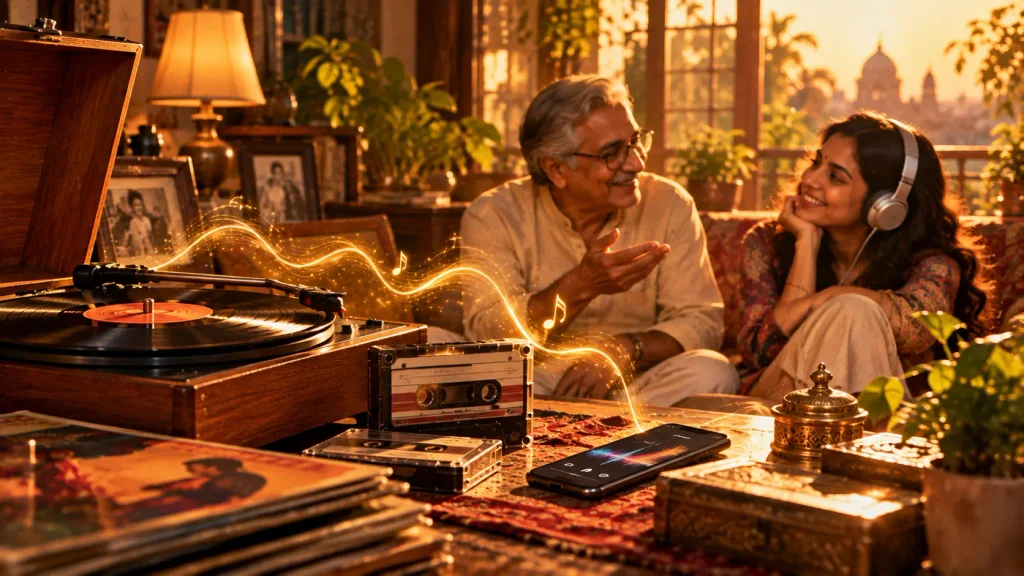
Retro music continues to matter in 2026 because its appeal extends beyond the period in which individual songs were released.
Classic Bollywood melodies, Tamil film soundtracks, regional recordings and early 2000s favourites connect listeners with emotions, memories and cultural experiences that remain meaningful today.
Digital platforms have changed how people discover these songs. Instagram Reels, YouTube Shorts, streaming playlists and remastered releases make older recordings accessible to audiences who may never have encountered them through radio, cassettes or CDs.
Yet the lasting attraction of retro music is not simply technological. It comes from the stories people associate with familiar melodies.
For older generations, a song may bring back memories of childhood, relationships or family celebrations. For younger listeners, the same recording can offer a new musical experience or an introduction to an earlier cultural period.
Creators can contribute to this ongoing rediscovery by sharing personal reflections, discussing regional musical traditions and inviting conversations about the songs that shaped people’s lives.
Ultimately, retro music remains relevant because great songs do more than reflect the past—they continue to create connections in the present.
Whether discovered through a playlist, a film, a family conversation or a voice-led story, an older melody can still inspire a new memory.
