
Introduction: Why Voice Modulation Matters in Modern Storytelling
A powerful story is not created only through words. The way those words are delivered can completely change how audiences understand, feel, and remember a story. A simple sentence can create excitement, curiosity, suspense, or emotion depending on the speaker’s voice.
This is where voice modulation becomes an important skill for storytellers, podcasters, narrators, and content creators.
Voice modulation is the ability to control changes in voice tone, pitch, pace, volume, and expression to communicate emotions and make content more engaging.
In traditional storytelling, performers have always used their voices as a creative tool. From oral storytelling traditions and radio dramas to modern podcasts and audio stories, the human voice has helped audiences connect with characters, ideas, and emotions.
Today, the growth of podcasts, audio platforms, voice-based communities, and digital storytelling has created new opportunities for creators to use voice more effectively. Listeners are not only looking for information; they want experiences that feel personal, immersive, and emotionally engaging.
For audio creators, a well-modulated voice can make the difference between a story that is simply heard and a story that is truly experienced.
Whether it is a narrator building suspense in an audio drama, a podcast host creating a conversational connection, or a character performer bringing fiction to life, voice delivery plays a major role in audience engagement.
Modern voice creators are also exploring new technologies, including AI-assisted voice tools, to experiment with different storytelling formats. However, the foundation remains the same: understanding how voices communicate emotions and meaning.
Learning voice techniques helps creators:
- Make stories more engaging
- Build stronger connections with listeners
- Create memorable characters
- Improve narration quality
- Develop a unique storytelling style
For platforms like Arré Voice, where creators and audiences connect through voice-based experiences, understanding voice modulation is an essential part of creating meaningful audio storytelling.
What Is Voice Modulation?
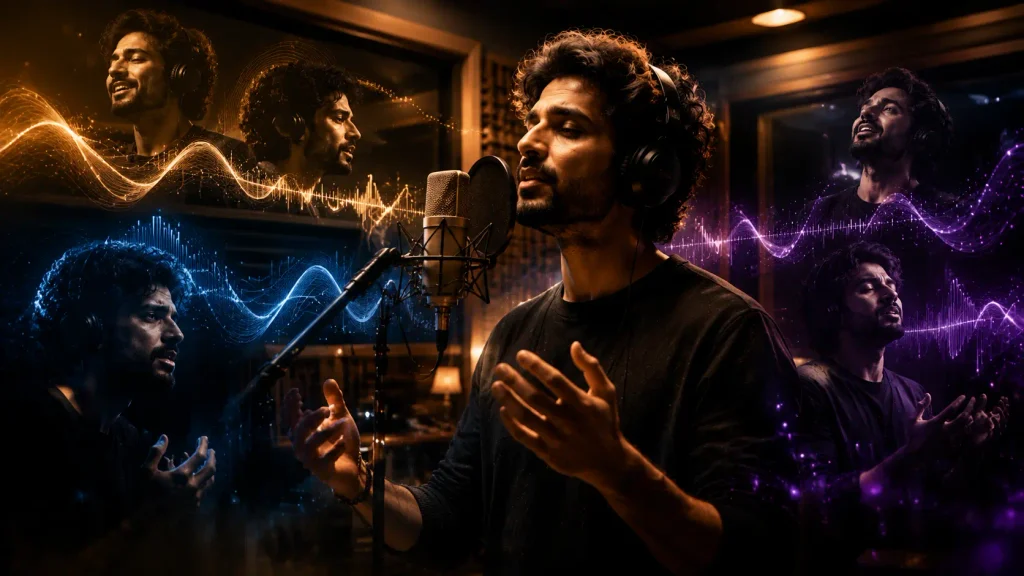
Voice modulation is the ability to consciously control different elements of your voice, such as tone, pitch, pace, volume, and expression, to communicate ideas and emotions more effectively.
In simple terms, voice modulation means changing the way you speak to match the message, situation, or emotion you want to convey.
A speaker using the same voice tone throughout a conversation or story may sound flat or less engaging. In contrast, a person who changes their voice naturally can create interest, highlight important moments, and make listeners feel more connected.
The voice modulation meaning goes beyond simply speaking louder or softer. It involves understanding how different aspects of voice work together to create expression.
For example:
- A slower pace can create suspense in a mystery story
- A softer tone can communicate sadness or emotion
- A higher pitch can show excitement or surprise
- A stronger volume can create emphasis during an important moment
Voice modulation is especially important in storytelling because audiences rely heavily on the voice to understand the mood, personality, and emotion behind the words.
The key elements of voice modulation include:
- Tone
- Pitch
- Pace
- Pause
- Volume
- Emotional expression
Each element contributes to how a message is received by the listener.
Tone and Emotional Expression
Tone refers to the emotional quality or feeling behind a person’s voice. It helps listeners understand the attitude, mood, or intention behind spoken words.
The same sentence can have completely different meanings depending on the tone used.
For example:
“I knew you would come.”
This sentence can sound:
- Excited and welcoming
- Angry and disappointed
- Surprised and emotional
- Calm and reassuring
The words remain the same, but the meaning changes because the tone changes.
For storytellers, tone is one of the most important tools for creating emotional connection. A narrator telling a suspenseful story may use a serious and mysterious tone, while a storyteller sharing a humorous experience may use a lighter and more energetic tone.
In audio storytelling, tone helps listeners understand:
- Character emotions
- Story atmosphere
- Relationship between characters
- Importance of specific moments
A skilled creator uses tone intentionally to guide the audience through the emotional journey of a story.
Pitch and Voice Variation
Pitch refers to how high or low a person’s voice sounds. Changes in pitch help create variation and prevent speech from becoming monotonous.
A voice that remains at the same pitch throughout a story can feel less engaging, even if the content itself is interesting.
Creators use pitch variation to:
- Show different emotions
- Create character differences
- Highlight important information
- Add personality to narration
For example, a character expressing excitement may naturally use a higher pitch, while a serious or powerful character may use a deeper and slower voice.
Voice actors often use pitch differences to create unique character identities. A hero, villain, narrator, or comic character may each have different vocal qualities that help audiences recognise and connect with them.
For audio creators, learning pitch control is an important part of developing effective voice expression.
Pace, Pause and Rhythm
The speed at which someone speaks can strongly influence how a listener experiences a story.
Pace refers to how quickly or slowly words are delivered, while rhythm refers to the natural flow and pattern of speech.
A creator can use pace and pauses to control audience attention.
For example:
- A fast pace can create excitement or urgency
- A slower pace can create emotion or seriousness
- A pause before an important statement can build anticipation
In storytelling, pauses are especially powerful. A well-placed pause allows listeners to process information and creates dramatic impact.
Audio storytellers often use pauses before revealing important details, introducing characters, or creating suspenseful moments.
Without variation in pace and rhythm, even a well-written story may lose its emotional impact.
Volume and Voice Control
Volume refers to how loud or soft a voice is during communication. Effective voice control allows creators to emphasise important moments while maintaining listener comfort.
Increasing volume can communicate:
- Excitement
- Urgency
- Confidence
- Strong emotion
Reducing volume can create:
- Intimacy
- Suspense
- Calmness
- Emotional depth
Good storytellers do not maintain the same volume throughout an entire performance. Instead, they adjust their voice depending on the scene, character, and emotional context.
For podcast creators, narrators, and voice artists, developing strong voice control techniques helps create a more professional and engaging listening experience.
Why Voice Modulation Is Important for Storytelling
Storytelling is not only about what is being said; it is also about how the audience experiences the message.
A well-written story can lose its impact if it is delivered without emotion or variation. Similarly, a simple idea can become powerful when communicated through expressive voice techniques.
This is why voice modulation in storytelling plays such an important role.
Unlike visual content, audio storytelling depends almost entirely on sound to create imagination. Listeners cannot see facial expressions, body language, or visual scenes, so the voice becomes the primary tool for communicating emotion and meaning.
A creator’s voice helps audiences understand:
- Who the characters are
- How a scene feels
- Which moments are important
- What emotions the story is trying to create
For platforms focused on audio storytelling, strong voice performance becomes a key part of creating memorable experiences.
Creating Emotional Connection With Listeners
The strongest stories are those that make audiences feel something.
Voice modulation helps creators create emotional connections by adding depth and personality to spoken content.
A narrator who changes their voice according to the emotions of a story can make listeners feel:
- Excitement during important moments
- Empathy for characters
- Curiosity about what happens next
- Connection with the overall message
For example, a character experiencing fear should not sound the same as a character celebrating success. Emotional differences in voice help audiences understand and connect with the character’s journey.
This is particularly important in:
- Audio dramas
- Fiction storytelling
- Audiobooks
- Personal storytelling
- Podcasts
A strong voice performance transforms words into an experience.
Making Characters More Engaging
Characters are remembered not only by their actions but also by their voices.
Voice modulation helps creators develop characters with unique personalities and identities.
A storyteller can use differences in:
- Tone
- Pitch
- Speaking style
- Rhythm
to make each character feel distinct.
For example:
- A confident leader may have a calm and powerful voice
- A mysterious character may speak slowly with controlled emotion
- A humorous character may have an energetic and expressive delivery
These variations help listeners imagine characters and become more invested in the story.
For creators producing audio fiction or voice-based content, understanding character voice development is an important storytelling skill.
Improving Podcast and Audio Content Quality
Podcasts and audio content depend heavily on the listener’s ability to stay engaged.
A presenter with strong voice modulation can make conversations feel more natural, professional, and enjoyable.
Voice techniques help podcast creators improve:
- Listener attention
- Story flow
- Emotional impact
- Professional delivery
A podcast host who varies tone, pace, and expression can create a stronger connection with audiences compared to a flat, monotone delivery.
As audio content continues growing, creators who develop effective narration skills will have a stronger ability to stand out in an increasingly competitive voice-first environment.
Voice Modulation Techniques Every Creator Should Learn
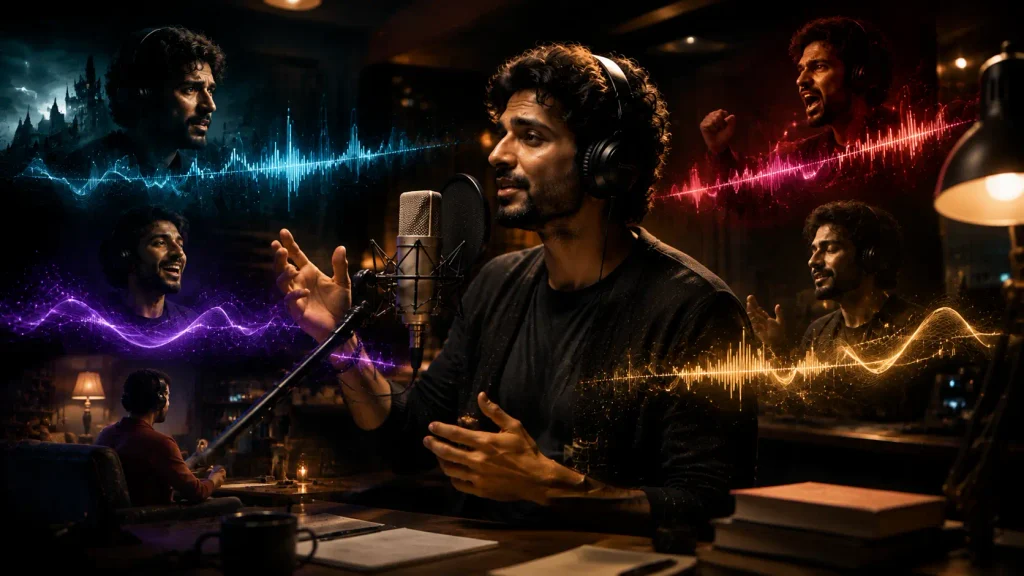
Developing a strong voice is a skill that improves with practice and awareness. For creators, voice modulation is not about changing who they are; it is about learning how to use their natural voice more effectively.
Whether creating podcasts, audio stories, videos, or character-based content, mastering voice modulation techniques helps creators communicate emotions clearly and keep audiences engaged.
A powerful voice performance comes from understanding when to slow down, when to add emphasis, and how to adjust delivery based on the story being told.
Use Pauses to Create Impact
A pause is one of the most powerful tools in storytelling. While silence may seem like the absence of sound, intentional pauses can create emotion, curiosity, and anticipation.
Many beginners focus only on speaking clearly and quickly, but professional storytellers understand that silence can be just as meaningful as words.
Creators use pauses to:
- Build suspense
- Highlight important moments
- Allow listeners to process information
- Create dramatic impact
For example, in a mystery story, a narrator may pause before revealing an important detail. That brief moment of silence creates anticipation and encourages listeners to stay engaged.
Similarly, a pause after an emotional statement gives the audience time to connect with the feeling behind the words.
In podcasts and audio storytelling, well-placed pauses prevent content from feeling rushed and create a more natural listening experience.
Change Tone to Match the Story
Tone is one of the most important elements of voice expression. The tone of a voice communicates emotion, attitude, and personality even before listeners fully process the words.
Creators should adjust their tone depending on the mood and purpose of their content.
For example:
Happy scenes:
A brighter and more energetic tone can communicate excitement, joy, and positivity.
Emotional moments:
A softer and slower tone can help communicate vulnerability, sadness, or reflection.
Serious storytelling:
A deeper and controlled tone can create importance, authority, or tension.
A storyteller narrating a dramatic event should not use the same tone they would use for a casual conversation. Matching voice delivery with the emotional context makes stories feel more authentic.
For creators, learning to control tone is one of the most effective ways to improve voice modulation.
Control Speaking Speed
Speaking speed, also known as pace, has a major impact on how audiences experience content.
A creator who speaks at the same speed throughout an entire performance may sound less engaging. Effective storytellers adjust their pace based on the emotion and importance of each moment.
Fast-paced storytelling can be useful for:
- Action scenes
- Exciting moments
- Building energy
- Creating urgency
Slow emotional narration can help with:
- Reflective moments
- Serious conversations
- Emotional storytelling
- Creating deeper connections
For example, a narrator describing an intense scene may increase speed to create excitement, then slow down during an emotional moment to allow listeners to absorb the feeling.
Controlling speaking speed helps creators maintain audience attention and create a more dynamic experience.
Practice Voice Inflection
Voice inflection refers to the way the voice changes during speech, including variations in pitch, tone, and emphasis.
Without inflection, even interesting content can sound flat or repetitive.
A monotone delivery happens when a speaker uses the same vocal pattern throughout their content. This can make listeners lose interest, especially in longer formats such as podcasts, audiobooks, and educational content.
Creators can improve voice inflection by practicing:
- Changing emphasis on important words
- Adjusting pitch naturally
- Adding emotional variation
- Reading scripts with different expressions
For example, the sentence:
“You actually did that?”
can have completely different meanings depending on the inflection:
- Surprise
- Anger
- Excitement
- Disbelief
Developing better inflection helps creators add personality and emotional depth to their voice performances.
Voice Modulation for Different Types of Content
Different forms of content require different approaches to voice delivery. A podcast host, audiobook narrator, storyteller, and video creator may all use voice modulation, but the techniques they apply will vary depending on their audience and format.
Understanding how to adapt voice style for different content types helps creators produce more engaging experiences.
Voice Modulation for Podcasts
Podcasts depend heavily on creating a personal connection between the host and the listener.
Unlike visual content, podcasts rely almost entirely on voice to communicate personality, emotion, and trust.
Effective podcast voice techniques include:
- Using a conversational tone
- Maintaining natural pacing
- Adding emotion to important points
- Creating a sense of connection with listeners
A podcast host should sound natural rather than like they are reading from a script. Small variations in tone, pauses, and expression can make conversations feel more authentic.
For storytelling podcasts, voice modulation becomes even more important because the host often needs to create atmosphere, introduce characters, and maintain listener curiosity.
Voice Modulation for Audiobooks
Audiobook narration requires a different level of voice control because the narrator carries the entire storytelling experience.
A strong narrator voice helps listeners imagine characters, settings, and emotions without visual support.
Audiobook narrators use voice modulation to:
- Differentiate characters
- Match the mood of each scene
- Maintain listener engagement
- Create emotional depth
For example, a narrator may use subtle voice changes to distinguish between multiple characters in a story without making the performance feel unnatural.
Good audiobook narration combines clarity, consistency, and emotional expression.
Voice Modulation for Audio Stories
Audio stories depend heavily on imagination. Since listeners cannot see the characters or environments, the voice becomes the main tool for creating a mental picture.
Creators use voice modulation in audio storytelling to:
- Build fictional worlds
- Create character personalities
- Increase emotional impact
- Guide listeners through the narrative
A suspense story may require slower pacing and dramatic pauses, while a comedy story may require faster timing and energetic delivery.
Strong voice techniques help transform simple narration into an immersive experience.
For platforms focused on audio storytelling, creators who understand voice performance can create deeper connections with audiences.
Voice Modulation for Video Creators
Although video content includes visuals, voice remains an important part of audience engagement.
YouTube creators, educators, and digital content producers use voice modulation for:
- Video narration
- Explainer videos
- Documentaries
- Tutorials
- Voiceovers
Effective voiceover techniques include:
- Clear pronunciation
- Expressive delivery
- Appropriate pacing
- Matching voice energy with visuals
A strong voiceover can improve storytelling, maintain viewer attention, and make content feel more professional.
How Voice Actors Use Modulation to Create Characters

Voice actors use modulation as a creative tool to transform written characters into believable personalities.
A character is not defined only by dialogue. The way a character speaks reveals their emotions, background, confidence level, and personality.
Professional voice actors carefully adjust elements such as:
- Tone
- Pitch
- Rhythm
- Accent
- Emotional expression
to create unique character identities.
This process is known as character voice creation.
For example, two characters saying the same sentence can feel completely different depending on their voice delivery.
A confident hero may speak with a strong and steady voice, while a nervous character may speak with hesitation and changing pitch.
Creating Different Character Personalities
One of the most important voice acting techniques is developing distinct personalities through voice.
Creators and voice actors often design voices based on the role and characteristics of the character.
Examples include:
Hero voice:
A hero character may have a confident, clear, and powerful voice that communicates courage and leadership.
Villain voice:
A villain may use slower pacing, deeper tones, or controlled expressions to create mystery and authority.
Narrator voice:
A narrator voice often focuses on clarity, warmth, and emotional balance to guide the audience through the story.
Comic character voice:
A humorous character may use energetic delivery, unusual rhythm, or exaggerated expressions to create entertainment.
These differences help listeners immediately recognise characters and become more invested in the story.
Using Emotion to Build Character Identity
Emotion is what makes characters feel real.
A skilled voice actor understands that every emotion changes the way a character speaks.
For example:
Fear:
A fearful character may use a softer voice, faster pace, or uncertain delivery.
Happiness:
A joyful character may have higher energy, brighter tone, and faster rhythm.
Anger:
An angry character may use stronger volume, sharper words, and controlled intensity.
Mystery:
A mysterious character may use slower pacing, lower tone, and carefully placed pauses.
By combining emotional understanding with voice control, creators can build characters that feel authentic and memorable.
As audio storytelling continues growing, voice modulation remains one of the most valuable skills for creators who want to build engaging stories, podcasts, and immersive voice experiences.
How AI Voice Technology Is Changing Voice Modulation
Artificial intelligence is introducing new possibilities in the way voices are created, controlled, and experienced. While traditional voice modulation depends on a human performer adjusting tone, pitch, pace, and expression naturally, modern AI voice technology is helping creators explore new ways of generating expressive digital voices.
AI-generated voices are no longer limited to simple text-to-speech systems. Advances in voice AI technology now allow digital voices to produce more natural variations in emotion, delivery, and personality.
For creators, this means AI can become a creative assistant that helps experiment with different voice styles, develop characters, and produce engaging audio experiences.
AI voice technology is being used across:
- Audio storytelling
- Podcasts
- Audiobooks
- Virtual characters
- Digital entertainment
- Educational content
The goal is not simply to automate speech but to create voices that feel more natural, expressive, and adaptable.
AI Voice Modulation and Digital Voices
Traditional voice modulation requires a performer to consciously adjust elements such as tone, pitch, speed, and emotional expression during a performance.
With AI voice modulation, artificial intelligence systems can analyse and adjust these elements digitally to create different voice experiences.
Modern AI voice systems can modify:
- Tone adjustment
- Pitch control
- Speaking pace
- Emotional delivery
- Voice style
For example, the same written sentence can be transformed into different voice expressions depending on the intended purpose:
- A dramatic narration for an audio story
- A warm voice for an audiobook
- An energetic voice for a promotional video
- A mysterious voice for a fictional character
AI-generated voices can also help creators maintain consistency. A character voice developed for one episode can continue across future content while maintaining similar vocal characteristics.
This capability is particularly valuable for creators working on long-form storytelling projects where characters, narration styles, and voice identities need to remain consistent.
You can learn more about how AI creates digital voice performances in our guide on AI Voice Acting: How Artificial Intelligence Is Transforming Voice Creation and Storytelling.
AI-Assisted Voice Creation for Storytellers
For storytellers, one of the biggest advantages of AI voice technology is the ability to experiment quickly.
Creating traditional voice content often requires finding voice talent, arranging recording sessions, and completing multiple production stages. AI-assisted voice creation allows creators to explore ideas faster before finalising their content.
Creators can use AI voice generation to experiment with:
- Different narrator styles
- Multiple character voices
- Various emotional expressions
- Alternative storytelling approaches
For example, a creator developing an audio drama can test different voices for characters before deciding which style best fits the story.
AI voice tools can also support independent creators who may not have access to professional recording setups. They can use technology to develop prototypes, explore creative ideas, and produce early versions of voice-based content.
AI voice creation is especially useful for:
- Fiction writers creating audio adaptations
- Podcasters experimenting with narration
- Storytellers building character-driven experiences
- Digital creators exploring new formats
Creators interested in exploring AI-powered voice creation can also explore resources around AI Voice Generator and AI Voice Creator technologies to understand how digital voices are developed.
AI does not replace the storytelling process. Instead, it expands the creative possibilities available to creators.
How Creators Can Improve Their Voice Modulation Skills
While AI voice technology is creating new opportunities, human voice skills remain one of the most valuable tools for creators.
A strong storyteller understands how to use their own voice to communicate emotion, build characters, and connect with audiences.
Improving voice modulation requires regular practice, observation, and experimentation. Creators can develop stronger narration skills by focusing on how they use their voice during different storytelling situations.
Practice Reading Scripts Aloud
One of the simplest ways to improve voice modulation is regular script reading practice.
Reading aloud helps creators understand:
- Natural speaking rhythm
- Voice variation
- Emotional delivery
- Pronunciation clarity
Creators can practice by reading different types of scripts, including:
- Fiction scenes
- News articles
- Podcast introductions
- Character dialogues
The goal is not only to read the words but to experiment with different ways of delivering them.
Try reading the same paragraph with different emotions:
- Excitement
- Sadness
- Curiosity
- Suspense
- Confidence
This helps develop better control over voice expression.
Record and Analyse Your Voice
Many creators improve faster when they listen to their own recordings.
Recording your voice allows you to identify areas such as:
- Speaking too quickly
- Limited voice variation
- Unclear pronunciation
- Lack of emotional expression
After recording, creators can analyse:
- Is the tone matching the message?
- Are important moments receiving enough emphasis?
- Does the delivery sound natural?
- Are pauses being used effectively?
Self-analysis helps creators understand their strengths and improve their weaknesses.
Study Professional Narrators
Professional narrators, voice actors, and podcast hosts provide valuable examples of effective voice techniques.
Creators can study how experienced performers use:
- Tone changes
- Emotional expression
- Pauses
- Character voices
- Speaking rhythm
When listening to professional narration, pay attention to:
- How they introduce a story
- How they build suspense
- How they transition between emotions
- How they maintain audience attention
Learning from skilled performers helps creators develop their own unique voice style.
Experiment With Different Emotions
Voice modulation improves when creators actively experiment with different emotional styles.
A storyteller should understand how emotions influence voice delivery.
Practice creating different versions of the same sentence:
- A happy version
- A serious version
- A dramatic version
- A mysterious version
- A humorous version
This type of narration practice helps creators develop flexibility and confidence.
Over time, creators become better at matching their voice with the emotional needs of their content.
How Arré Voice Helps Creators Build Voice-Based Stories
The growth of voice-first content has created new opportunities for creators to share stories, build communities, and connect with audiences through audio experiences.
Arré Voice supports this evolution by creating a space where creators can explore voice-based storytelling and audiences can discover engaging audio content.
A modern voice storytelling platform is not only about publishing content. It is about creating meaningful connections between storytellers and listeners.
Creators can use voice-based platforms to:
- Share original stories
- Experiment with different storytelling formats
- Build audience communities
- Connect with listeners through voice
With AI-assisted creation becoming more accessible, creators can explore new ways to develop audio stories while focusing on creativity and audience engagement.
For creators interested in producing AI-assisted audio experiences, tools and workflows around Create Audio Stories Using AI can help transform written ideas into engaging voice content.
Similarly, understanding how different Audio Storytelling Platforms work can help creators choose the right environment to publish, distribute, and grow their stories.
The future of content creation is moving beyond simply producing content. It is about building communities around stories, voices, and shared experiences.
Arré Voice brings together storytelling, creators, and audiences to support the growth of the audio creator ecosystem.
The Future of Voice Modulation in Digital Storytelling
Voice modulation has always been central to storytelling, but emerging technologies are expanding what voices can do.
The future of voice technology will likely combine human creativity with AI-assisted innovation to create more personalised, interactive, and immersive experiences.
As AI voice systems continue improving, creators will have access to more advanced tools for developing expressive digital voices while audiences will experience new forms of voice-first entertainment.
AI-Assisted Voice Expression
Future AI systems will continue improving their ability to understand and generate emotional expression.
AI voices may become better at:
- Adapting tone based on context
- Creating realistic emotional delivery
- Matching voices with different storytelling styles
- Generating personalised experiences
This will allow creators to explore new forms of digital storytelling where voices feel more dynamic and responsive.
Personalised Voices and Experiences
Personalisation will become an important part of future storytelling.
Audiences may experience content where:
- Characters have adaptive voices
- Narration styles match listener preferences
- Stories become more interactive
- Voice experiences feel more personal
Personalised voices could create deeper connections between audiences and digital content.
Growth of Voice-First Entertainment
The popularity of podcasts, audio stories, and voice communities shows that audiences are increasingly comfortable consuming content through listening.
Future voice-first content may include:
- Interactive audio stories
- AI-powered characters
- Personalised storytelling journeys
- Community-driven voice experiences
As more creators enter the audio space, voice will continue becoming an important medium for entertainment and communication.
The Future of Interactive Storytelling
The next generation of digital storytelling may move from passive listening to active participation.
Instead of simply hearing a story, audiences may interact with characters, influence narratives, and experience personalised journeys.
The combination of AI voice technology, human creativity, and creator communities will shape the future of digital storytelling.
Voice modulation will remain at the centre of this evolution because the power of a story depends not only on what is created, but also on how it is experienced.
Frequently Asked Questions
What is voice modulation?
Voice modulation is the ability to control different elements of your voice, including tone, pitch, pace, volume, and expression, to communicate emotions and ideas more effectively. In storytelling, voice modulation helps creators make content more engaging by adding personality, emotion, and depth to their narration.
Why is voice modulation important in storytelling?
Voice modulation is important in storytelling because it helps audiences connect emotionally with characters, scenes, and narratives. A well-modulated voice can create suspense, excitement, empathy, and curiosity, making audio stories, podcasts, and narration more immersive for listeners.
What are the main elements of voice modulation?
The main elements of voice modulation include tone, pitch, pace, pauses, volume, and emotional expression. These elements work together to control how a message is delivered. Creators use them to highlight important moments, build atmosphere, and create more engaging voice experiences.
How can I improve my voice modulation?
You can improve voice modulation by practising script reading, recording and analysing your voice, experimenting with different emotions, and studying professional narrators. Regular practice helps develop better control over tone, pitch, pace, and expression, allowing creators to deliver more engaging content.
How do voice actors use voice modulation?
Voice actors use voice modulation to create unique characters and communicate emotions. They adjust tone, pitch, rhythm, and delivery style to develop different personalities, such as heroes, villains, narrators, or fictional characters. These techniques help make performances more realistic and memorable.
What is the difference between voice modulation and voice tone?
Voice tone is one element of voice modulation that describes the emotional quality or feeling behind a voice. Voice modulation is a broader concept that includes tone along with pitch, pace, volume, pauses, and expression. Together, these elements influence how effectively a voice communicates a message.
Can AI improve voice modulation?
Yes, AI voice technology can improve voice modulation by helping generate voices with different tones, pitches, pacing styles, and emotional expressions. AI-assisted voice tools can support creators in experimenting with digital voices, character creation, and storytelling formats while enhancing creative possibilities.
How does voice modulation help podcast creators?
Voice modulation helps podcast creators maintain listener attention and create stronger emotional connections. By adjusting tone, pace, and expression, podcasters can make conversations feel more natural, improve storytelling quality, and create a more engaging experience for their audience.
How can beginners practice voice modulation?
Beginners can practice voice modulation by reading scripts aloud, recording their voice, experimenting with different emotions, and practising changes in tone and pace. Listening to professional narrators and analysing their delivery techniques can also help beginners develop stronger voice control skills.
Is voice modulation important for audio storytelling?
Yes, voice modulation is essential for audio storytelling because listeners rely on voice to understand emotions, characters, and the atmosphere of a story. Since audio content does not use visual elements, effective voice modulation helps creators build immersive experiences and keep audiences engaged.