Table of contents
- What Are Tamil Moral Stories?
- 6 Short Tamil Moral Stories with Meaningful Lessons
- What Moral Lessons Can We Learn from These Tamil Stories?
- Where Can You Listen to Tamil Moral Stories?
- How Do Tamil Moral Stories Relate to Traditional Indian Storytelling?
- How Can You Share Your Own Moral Stories on Arré Voice?
- Frequently Asked Questions
- Conclusion: Keeping Tamil Moral Stories Alive Through Voice
Tamil moral stories (தமிழ் நீதிக் கதைகள்) use simple narratives to explore honesty, kindness, wisdom, friendship, patience and responsibility. These stories help readers reflect on everyday decisions through memorable characters and relatable situations.
Below are six original short Tamil moral stories, each accompanied by a clear moral lesson. Whether you’re reading with children, exploring Tamil literature or discovering audio storytelling, these stories offer meaningful ideas to discuss and remember.
You can also explore independently created Tamil story recordings through the Arré Voice listening links provided later in this article.
What Are Tamil Moral Stories?
Tamil moral stories, known as தமிழ் நீதிக் கதைகள், are stories that communicate ethical values and practical life lessons through characters, situations and their consequences.
They may involve people, animals, families or imaginary events. Some draw from traditional storytelling customs, while others explore modern everyday experiences.
A good moral story does more than tell readers what is right or wrong. It shows how decisions affect others, encouraging readers to think about their own choices.
Common themes include truthfulness, compassion, respect, courage and perseverance.
Tamil moral stories for kids often use accessible language and memorable endings. However, their lessons can also resonate with adults, making them suitable for family reading, classroom discussions and spoken storytelling.
6 Short Tamil Moral Stories with Meaningful Lessons
The following six original stories explore different values through everyday situations. Each Tamil narrative is followed by its central lesson in Tamil and English.
Story 1 — Honesty and Truthfulness
நேர்மையின் பரிசு — The Reward of Honesty
ஒரு சிறிய கிராமத்தில் அருண் என்ற சிறுவன் வாழ்ந்து வந்தான். அவன் தினமும் பள்ளிக்குச் செல்லும் வழியில் ஒரு பழைய ஆலமரத்தைக் கடந்து செல்வான்.
ஒருநாள் அந்த மரத்தின் அருகே ஒரு பணப்பை கிடப்பதைக் கண்டான். அதை எடுத்துப் பார்த்தபோது, அதில் பணமும் சில முக்கியமான ஆவணங்களும் இருந்தன.
அருணின் குடும்பம் வசதியான குடும்பம் அல்ல. அன்றைய தினம் அவனுடைய தாயாருக்கு மருந்து வாங்க வேண்டியிருந்தது. வீட்டில் போதுமான பணமும் இல்லை.
ஒரு கணம் அந்தப் பணத்தை எடுத்துக்கொள்ளலாமா என்று அவன் யோசித்தான். ஆனால் உடனே, “இந்தப் பணத்தைத் தொலைத்தவர் எவ்வளவு கவலைப்படுவார்?” என்று நினைத்தான்.
பணப்பையை எடுத்துக்கொண்டு பள்ளிக்குச் சென்ற அருண், நடந்ததை ஆசிரியரிடம் கூறினான்.
ஆசிரியர் ஆவணங்களில் இருந்த தகவல்களைப் பார்த்து, பணப்பையின் உரிமையாளரைக் கண்டுபிடித்தார்.
அது கிராமத்தில் வசிக்கும் வயதான விவசாயியின் பணப்பை. அவர் தனது மனைவியின் மருத்துவச் செலவுக்காகச் சேமித்த பணத்தைத் தொலைத்திருந்தார்.
பணப்பையைத் திரும்பப் பெற்றதும் விவசாயியின் கண்களில் கண்ணீர் வந்தது.
“நீ இந்தப் பணத்தை வைத்துக்கொண்டிருந்தாலும் யாருக்கும் தெரியாது. ஆனால் நீ நேர்மையாக நடந்துகொண்டாய்,” என்றார்.
அருண் புன்னகையுடன், “மற்றவருக்குச் சொந்தமானதை வைத்துக்கொண்டால் என் மனம் நிம்மதியாக இருக்காது,” என்றான்.
அன்றைய தினம் ஆசிரியர் அருணின் செயலுக்காக அவனைப் பாராட்டினார். அவனுடைய நண்பர்களும் நேர்மையின் மதிப்பை உணர்ந்தனர்.
அருணுக்குக் கிடைத்த மிகப்பெரிய பரிசு பணமல்ல; மற்றவர்களின் நம்பிக்கையும் தன் மனநிறைவுமே.
நீதி: யாரும் பார்க்காத நேரத்திலும் நேர்மையாக நடப்பதே உண்மையான ஒழுக்கம்.
Moral: True honesty means doing the right thing even when nobody is watching.
Story 2 — Kindness and Helping Others
ஒரு சிறிய உதவி — A Small Act of Kindness
மீனா என்ற சிறுமி தினமும் பேருந்தில் பள்ளிக்குச் செல்வாள். அவள் அமைதியானவள். ஆனால் மற்றவர்களின் கஷ்டத்தைக் கவனிக்கும் நல்ல பழக்கம் கொண்டிருந்தாள்.
ஒருநாள் மழை பெய்துகொண்டிருந்தபோது பேருந்து நிறுத்தத்தில் ஒரு வயதான பெண்மணி நின்றுகொண்டிருந்தார்.
அவருடைய கைகளில் இரண்டு கனமான பைகள் இருந்தன. மழையிலிருந்து தப்பிக்க அவர் சிரமப்பட்டார்.
மீனாவிடம் சிறிய குடை ஒன்று மட்டுமே இருந்தது. அந்தக் குடையின் கீழ் இருவர் நிற்பது சற்று கடினமாக இருந்தாலும், அவள் பெண்மணியின் அருகே சென்றாள்.
“பாட்டி, என்னுடன் குடையின் கீழ் வாருங்கள்,” என்றாள்.
பெண்மணி நன்றியுடன் புன்னகைத்தார்.
பேருந்து வந்தபோது மீனா அவருடைய பைகளை எடுத்துச் செல்ல உதவினாள். பேருந்தில் இருக்கை கிடைத்ததும் முதலில் அந்தப் பெண்மணியை அமரச் செய்தாள்.
இதைக் கவனித்த மற்றொரு பயணி மீனாவுக்காக இடம் கொடுத்தார்.
சிறிது நேரத்தில் அருகில் அமர்ந்திருந்த கல்லூரி மாணவரும் தனது இருக்கையை ஒரு வயதானவருக்கு வழங்கினார்.
ஒரு சிறிய உதவி பேருந்தில் இருந்த பலரையும் நல்ல செயல்களைச் செய்யத் தூண்டியது.
இறங்கும்போது பெண்மணி, “உன்னுடைய உதவி எனக்கு மட்டுமல்ல, இங்குள்ள பலருக்கும் ஒரு நல்ல நினைவூட்டலாக அமைந்தது,” என்றார்.
மீனா வீடு திரும்பியதும் நடந்ததைத் தாயாரிடம் கூறினாள்.
“நல்ல செயல்கள் பல நேரங்களில் மற்றவர்களுக்கும் நல்லது செய்யும் எண்ணத்தை ஏற்படுத்துகின்றன,” என்று தாயார் சொன்னார்.
மீனா செய்த உதவி பெரிதாகத் தோன்றவில்லை. ஆனால் அதன் தாக்கம் அந்தப் பேருந்தில் பயணம் செய்த பலரின் மனதிலும் நீடித்தது.
நீதி: சிறிய உதவியும் பிறருடைய வாழ்க்கையில் பெரிய மாற்றத்தை ஏற்படுத்தலாம்.
Moral: Even a small act of kindness can inspire positive change.
Story 3 — Wisdom and Quick Thinking
புத்திசாலி விவசாயி — The Clever Farmer
ஒரு கிராமத்தில் செல்வம் என்ற விவசாயி வாழ்ந்து வந்தார். அவர் அதிகம் படித்தவர் அல்ல. ஆனால் எந்தப் பிரச்சினையையும் அமைதியாகச் சிந்தித்து எதிர்கொள்ளும் பழக்கம் கொண்டிருந்தார்.
ஒரு கோடைக்காலத்தில் கிராமத்தின் கிணற்றில் நீர் குறைந்துவிட்டது.
கிணற்றில் இருக்கும் தண்ணீரை யார் முதலில் பயன்படுத்துவது என்று விவசாயிகளுக்குள் வாக்குவாதம் ஏற்பட்டது.
சிலர் தங்களுடைய வயல்களுக்கு அதிக நீர் தேவை என்றனர். மற்றவர்கள் குடிநீருக்கே முன்னுரிமை கொடுக்க வேண்டும் என்று வலியுறுத்தினர்.
செல்வம் அனைவரையும் அழைத்து, “நாம் சண்டையிட்டால் தண்ணீர் அதிகரிக்கப்போவதில்லை. முதலில் எவ்வளவு நீர் இருக்கிறது என்பதைக் கணக்கிடுவோம்,” என்றார்.
கிராம மக்கள் சேர்ந்து கிணற்றின் நீர்மட்டத்தைக் கவனித்தனர். அடுத்த சில நாட்களுக்கு எவ்வளவு நீர் தேவை என்பதையும் கணக்கிட்டனர்.
பிறகு செல்வம் ஒரு திட்டத்தை முன்வைத்தார்.
முதலில் குடிநீர் மற்றும் அத்தியாவசிய வீட்டுத் தேவைகளுக்குத் தண்ணீர் ஒதுக்கப்பட்டது. மீதமிருந்த நீரை விவசாயிகள் ஒப்புக்கொண்ட நேர அட்டவணைப்படி பகிர்ந்துகொண்டனர்.
மேலும், மழைக்காலத்தில் நீரைச் சேமிக்க ஒரு சிறிய பொதுக் குளத்தைச் சீரமைக்க முடிவு செய்தனர்.
இந்தத் திட்டத்தால் உடனடியாகத் தண்ணீர் அதிகரிக்கவில்லை. ஆனால் தேவையற்ற வீணாக்கமும் சண்டைகளும் குறைந்தன.
கிராமத் தலைவர் செல்வத்தைப் பாராட்டினார்.
செல்வம், “பிரச்சினை வந்தவுடன் கோபப்படாமல் அதன் காரணத்தைப் புரிந்துகொண்டால் தீர்வைக் கண்டுபிடிக்க முடியும்,” என்றார்.
அந்த அனுபவம் கிராம மக்களுக்குப் புத்திசாலித்தனம் என்பது வெறும் வேகமான பதில் அல்ல; சரியான சிந்தனையும் என்பதை உணர்த்தியது.
நீதி: அமைதியான சிந்தனையும் சரியான திட்டமிடலும் கடினமான பிரச்சினைகளைத் தீர்க்க உதவும்.
Moral: Wisdom begins with understanding a problem before reacting.
Story 4 — Friendship and Trust
நட்பின் உண்மையான மதிப்பு — The True Value of Friendship
கார்த்திக் மற்றும் சுரேஷ் சிறுவயதிலிருந்தே நெருங்கிய நண்பர்கள். இருவரும் ஒரே பள்ளியில் படித்தனர்.
ஒருநாள் பள்ளியில் அறிவியல் கண்காட்சி நடத்தப்பட்டது. இருவரும் சேர்ந்து ஒரு மாதிரியை உருவாக்க முடிவு செய்தனர்.
கார்த்திக் மாதிரியின் வடிவமைப்பைத் தயாரித்தான். சுரேஷ் தேவையான பொருட்களைச் சேகரித்து அவற்றை இணைக்க உதவினான்.
கண்காட்சிக்கு முந்தைய நாள் மாதிரியின் ஒரு பகுதி உடைந்துவிட்டது.
அதைப் பார்த்த கார்த்திக் கோபமடைந்தான்.
“நீதான் கவனக்குறைவாக இருந்ததால் இது உடைந்தது!” என்று சுரேஷை குற்றம் சாட்டினான்.
சுரேஷ் வருத்தமடைந்தான். ஆனால் உடைந்த பகுதி எப்படி ஏற்பட்டது என்பதை இருவரும் அறிந்திருக்கவில்லை.
சிறிது நேரம் கழித்து ஆசிரியர் அவர்களுடைய மாதிரியைப் பார்த்தார்.
ஒட்டுவதற்குப் பயன்படுத்திய பொருள் சரியாகப் பொருந்தாததே பிரச்சினைக்குக் காரணம் என்று தெரியவந்தது.
கார்த்திக் தனது தவறை உணர்ந்தான்.
“உண்மை தெரியாமல் உன்னைக் குற்றம் சாட்டிவிட்டேன். என்னை மன்னித்துவிடு,” என்றான்.
சுரேஷ், “நாம் நண்பர்கள். பிரச்சினை வந்தால் ஒருவரையொருவர் குற்றம் சாட்டாமல் சேர்ந்து தீர்க்க வேண்டும்,” என்றான்.
இருவரும் மீண்டும் வேலை செய்யத் தொடங்கினர்.
அன்றிரவு கூடுதல் நேரம் எடுத்துக்கொண்டு மாதிரியைச் சரிசெய்தனர்.
மறுநாள் கண்காட்சியில் அவர்களுடைய முயற்சிக்கு பாராட்டு கிடைத்தது.
பரிசைப் பெற்றதைவிட, ஒருவரை ஒருவர் புரிந்துகொண்டு பிரச்சினையைத் தீர்த்தது இருவருக்கும் அதிக மகிழ்ச்சியைத் தந்தது.
அன்றிலிருந்து எந்தச் சூழ்நிலையிலும் உண்மையை அறியாமல் குற்றம் சாட்டக்கூடாது என்று அவர்கள் முடிவு செய்தனர்.
நீதி: உண்மையான நட்புக்கு நம்பிக்கையும் தவறை ஒப்புக்கொள்ளும் மனப்பக்குவமும் அவசியம்.
Moral: Strong friendships depend on trust, understanding and the willingness to admit mistakes.
Story 5 — Patience and Perseverance
விடாமுயற்சியின் வெற்றி — The Power of Perseverance
ஒரு சிறிய நகரத்தில் நந்தினி என்ற சிறுமி வாழ்ந்து வந்தாள். அவளுக்கு ஓவியம் வரைவதில் மிகுந்த ஆர்வம் இருந்தது.
பள்ளியில் நடைபெறும் ஓவியப் போட்டியில் வெற்றி பெற வேண்டும் என்பது அவளுடைய ஆசை.
முதல் முறையாகப் போட்டியில் கலந்துகொண்டபோது அவளுக்குப் பரிசு கிடைக்கவில்லை.
அவளுடைய நண்பர்களில் சிலர் பரிசுகளைப் பெற்றனர். இதனால் நந்தினி மனமுடைந்தாள்.
“என்னால் அழகாக ஓவியம் வரைய முடியாது போலிருக்கிறது,” என்று தந்தையிடம் கூறினாள்.
அவரோ, “ஒரு போட்டியின் முடிவு உன் திறமையை முழுமையாகத் தீர்மானிக்காது. நீ கற்றுக்கொள்ள வேண்டியதை அறிந்துகொள்,” என்றார்.
மறுநாள் நந்தினி தனது ஓவிய ஆசிரியரைச் சந்தித்தாள்.
ஆசிரியர் நிறங்களின் பயன்பாடு, ஒளி மற்றும் நிழல், உருவங்களின் விகிதம் ஆகியவற்றில் பயிற்சி செய்ய அறிவுரை வழங்கினார்.
நந்தினி தினமும் சிறிது நேரம் ஒதுக்கி ஓவியம் வரையத் தொடங்கினாள்.
முதலில் அவளுக்குப் பல தவறுகள் ஏற்பட்டன. சில ஓவியங்களை மீண்டும் மீண்டும் வரைய வேண்டியிருந்தது.
ஆனால் ஒவ்வொரு முயற்சியிலும் அவள் புதிய விஷயங்களைக் கற்றுக்கொண்டாள்.
சில மாதங்களுக்குப் பிறகு மற்றொரு போட்டியில் கலந்துகொண்டாள்.
இந்த முறையும் முதல் பரிசு கிடைக்கவில்லை. ஆனால் அவளுடைய ஓவியம் சிறப்புப் பாராட்டைப் பெற்றது.
ஆசிரியர், “உன்னுடைய முன்னேற்றத்தைப் பார்த்தால் எனக்கு மகிழ்ச்சியாக இருக்கிறது,” என்றார்.
நந்தினியும் புன்னகைத்தாள்.
முன்பு பரிசுக்காக மட்டுமே ஓவியம் வரைந்த அவள், இப்போது கற்றுக்கொள்வதிலும் முன்னேறுவதிலும் மகிழ்ச்சியைக் கண்டாள்.
அவளுடைய விடாமுயற்சி ஒரு போட்டிக்காக மட்டும் அல்லாமல் வாழ்நாள் முழுவதும் பயன்படும் பழக்கமாக மாறியது.
நீதி: பொறுமையுடன் தொடர்ந்து முயற்சி செய்தால் திறமையும் தன்னம்பிக்கையும் வளரும்.
Moral: Patience and consistent effort help us improve, even when success takes time.
Story 6 — Responsibility and Good Decisions
பொறுப்பான முடிவு — The Responsible Choice
ஒரு கிராமத்தில் தினேஷ் என்ற சிறுவன் வாழ்ந்து வந்தான். அவன் பள்ளியின் சுற்றுச்சூழல் குழுவில் உறுப்பினராக இருந்தான்.
ஒருநாள் பள்ளியில் மரக்கன்றுகள் நடும் நிகழ்ச்சி நடைபெற்றது.
ஒவ்வொரு மாணவருக்கும் ஒரு மரக்கன்றைப் பராமரிக்கும் பொறுப்பு வழங்கப்பட்டது.
தினேஷ் பள்ளித் தோட்டத்தின் ஓரத்தில் ஒரு வேப்பமரக் கன்றை நட்டான்.
முதல் சில நாட்கள் தினமும் தண்ணீர் ஊற்றி அதைக் கவனித்தான்.
ஆனால் சில வாரங்கள் கழித்து நண்பர்களுடன் விளையாடுவதில் அதிக நேரம் செலவிட்டதால் மரக்கன்றைக் கவனிக்க மறந்துவிட்டான்.
ஒருநாள் அதன் இலைகள் வாடியிருப்பதைக் கண்டான்.
“மரம் நட்டதோடு என் வேலை முடிந்துவிட்டது என்று நினைத்துவிட்டேன்,” என்று ஆசிரியரிடம் வருத்தத்துடன் கூறினான்.
ஆசிரியர், “ஒரு நல்ல செயலைத் தொடங்குவது முக்கியம். ஆனால் அதைத் தொடர்ந்து கவனிப்பதும் பொறுப்பின் ஒரு பகுதி,” என்றார்.
தினேஷ் தனது தவறைச் சரிசெய்ய முடிவு செய்தான்.
மரத்திற்குத் தேவையான நீர் கிடைக்கிறதா என்பதை ஆசிரியரின் உதவியுடன் சரிபார்த்தான். மண்ணைச் சரிசெய்து பாதுகாப்பு வளையமும் அமைத்தான்.
விடுமுறை நாட்களில் மரக்கன்றுகளைப் பராமரிக்க மாணவர்கள் மாறிமாறி வருவதற்கான திட்டத்தையும் முன்வைத்தான்.
சில வாரங்களுக்குப் பிறகு மரக்கன்றில் புதிய இலைகள் தோன்றின.
அதைக் கண்ட தினேஷ் மகிழ்ச்சியடைந்தான்.
“நாம் எடுக்கும் முடிவுகளுக்கு நாமே பொறுப்பு ஏற்க வேண்டும்,” என்று தனது நண்பர்களிடம் கூறினான்.
அந்த அனுபவம் அவனுக்குப் பொறுப்புணர்வு என்பது பெரிய செயல்களில் மட்டுமல்ல; சிறிய கடமைகளைத் தொடர்ந்து நிறைவேற்றுவதிலும் இருப்பதை உணர்த்தியது.
நீதி: ஒரு செயலைத் தொடங்குவதோடு நிறுத்தாமல் அதன் விளைவுகளுக்கும் பொறுப்பேற்க வேண்டும்.
Moral: Responsibility means following through on commitments and learning from mistakes.
What Moral Lessons Can We Learn from These Tamil Stories?
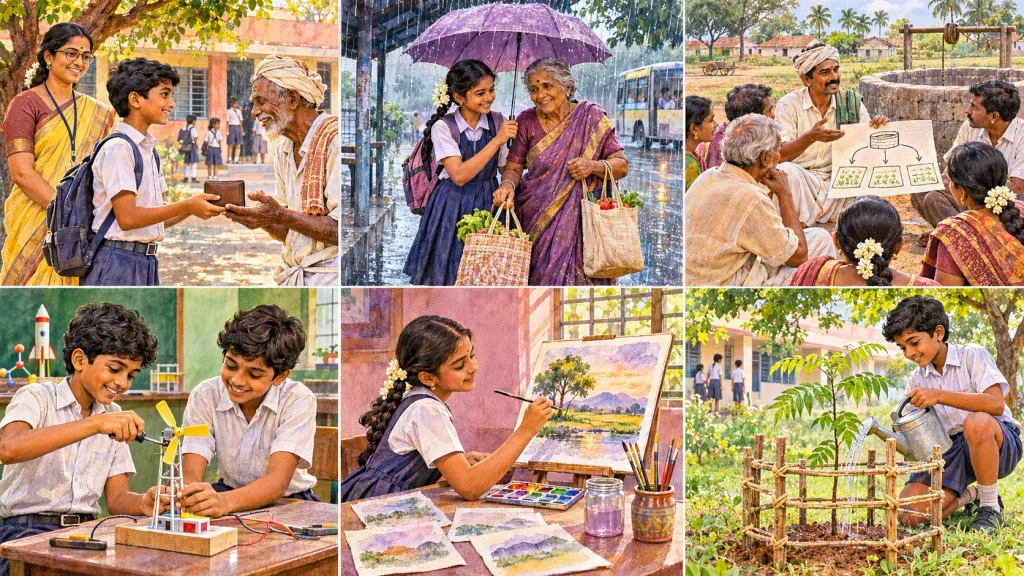
Tamil moral stories can encourage reflection on how everyday actions influence ourselves and others.
| Moral Value | Key Lesson | Story |
| Honesty | Do what is right, even when nobody is watching | The Reward of Honesty |
| Kindness | Small acts of compassion can inspire others | A Small Act of Kindness |
| Wisdom | Think carefully before responding to a problem | The Clever Farmer |
| Friendship | Build trust and acknowledge mistakes | The True Value of Friendship |
| Perseverance | Continue learning despite setbacks | The Power of Perseverance |
| Responsibility | Follow through on commitments | The Responsible Choice |
These lessons are not limited to childhood. Adults also encounter situations involving honesty, cooperation, patience and difficult decisions.
Reading a story together and discussing its characters can encourage listeners to consider different perspectives.
Where Can You Listen to Tamil Moral Stories?
Tamil moral stories can be enjoyed through reading, personal narration and recorded audio.
For people who prefer listening, audio storytelling provides an opportunity to experience a narrative through pronunciation, pacing and the storyteller’s expression.
Discover Original Tamil Story Narrations
Arré Voice offers voice-based content from creators who share stories and other spoken experiences.
Explore these Tamil moral-story Voicepod links:
- Kathai — Tamil Moral Story for You
- Story — Tamil Moral Story
- TP Tamilan Ilakiyam — Tamil Moral Stories
- Tamil Moral Stories 01 — RJ Reithikka
- TP — Tamil Moral Story for You
- Story — Tamil Moral Story
You can also explore the Arré Voice Stories playlist to discover additional story recordings.
How Voice Storytelling Makes Moral Stories More Expressive
Spoken storytelling introduces elements that written text cannot fully represent.
A storyteller can vary tone to communicate a character’s emotions, pause before an important decision or emphasize the lesson at the end.
For example, a quiet voice may communicate uncertainty, while a warm and reassuring tone can express kindness.
These choices help shape the listening experience without changing the story’s central message.
Voice narration also offers an alternative for people who prefer listening to reading.
To explore the wider format, see Arré Voice’s guide to audio stories.
How Do Tamil Moral Stories Relate to Traditional Indian Storytelling?

Tamil moral stories form part of India’s rich tradition of sharing knowledge, values and everyday wisdom through narratives.
Across generations, families and storytellers have used spoken and written stories to explore honesty, compassion, fairness and decision-making.
Collections such as the Panchatantra and Jataka tales are well-known examples of Indian storytelling traditions that use memorable characters and situations to convey lessons. These traditions have circulated through different languages and adaptations, including Tamil.
Tamil literature also has a long history of exploring ethical values. Works such as the Tirukkural express moral principles through concise verses rather than conventional stories.
Today, written collections and recorded narrations provide different ways to engage with these traditions.
Explore Indian storytelling traditions to understand their broader cultural significance.
How Can You Share Your Own Moral Stories on Arré Voice?

Arré Voice gives aspiring storytellers a way to share original Tamil moral stories through recorded audio without appearing on camera.
Start by choosing a meaningful lesson, such as honesty, kindness or perseverance. Develop a simple narrative with relatable characters, a clear conflict and a believable ending.
Practice your narration before recording. Use natural Tamil pronunciation, vary your tone where appropriate and pause at important moments.
You can publish your narration as a Voicepod, which supports recordings of up to 60 minutes. Short stories can be recorded in a few minutes, while longer narratives allow more detailed storytelling.
Creators can also use Voicepools to invite recorded responses to questions about a story’s lesson and explore relevant Voiceclubs to connect with people interested in storytelling and Tamil literature.
Share stories you created yourself or have permission to adapt and publish. Respect original authorship and avoid presenting another creator’s work as your own.
Frequently Asked Questions
What are Tamil moral stories?
Tamil moral stories, or தமிழ் நீதிக் கதைகள், are narratives that communicate practical values through characters, choices and consequences. They commonly explore honesty, kindness, friendship, responsibility and wisdom.
What are some short Tamil moral stories for kids?
Examples include The Reward of Honesty, A Small Act of Kindness and The Clever Farmer from this collection. Each uses a relatable situation to communicate a clear moral lesson.
What values do Tamil moral stories teach?
Tamil moral stories often teach honesty, compassion, patience, perseverance, friendship, respect and responsibility. Their lessons encourage readers to think about how personal decisions affect others.
Where can I listen to Tamil moral stories?
You can explore Tamil storytelling recordings on Arré Voice, including the Stories playlist and individual creator Voicepods. Check each recording’s description to find stories that interest you.
Are Tamil moral stories suitable for adults?
Yes. Although many moral stories are written for children, their themes are relevant across ages. Adults can also reflect on the ethical decisions, relationships and challenges presented in these narratives.
Can I share my own Tamil moral story through audio?
Yes. Arré Voice allows creators to publish spoken narratives through Voicepods. You can record an original Tamil story, share its lesson and invite listeners to discuss its message through voice-based interactions.
Conclusion: Keeping Tamil Moral Stories Alive Through Voice
Tamil moral stories continue to connect storytelling with everyday values and cultural expression.
Whether read aloud, shared within families or recorded by creators, these narratives offer opportunities to reflect, learn and connect.
Platforms such as Arré Voice provide another way for storytellers to share Tamil narratives and introduce their lessons to new listeners.