Social media is no longer limited to scrolling through photos, watching short videos, or following popular creators. In 2026, people have more ways to connect online, from decentralized networks and interest-based communities to voice-first platforms that encourage conversations beyond traditional feeds.
Whether you want greater control over your online experience, a community built around shared interests, or a different way to express yourself, exploring social media alternatives can help you find a platform that better matches your needs.
This guide explains why people are exploring alternatives to traditional social media, the main types available, and what makes each approach different.
What Are Social Media Alternatives?
Social media alternatives are digital platforms that offer different ways to connect, communicate, create content, and participate in online communities beyond conventional social networking experiences. They may prioritize user control, shared interests, private conversations, decentralized networks, or alternative content formats such as audio.
Unlike mainstream social networks that often combine entertainment, personal updates, creator content, and recommendations into broad feeds, alternative social media platforms may focus on particular communication needs.
For example, Mastodon supports decentralized networking, Reddit organizes discussions around communities, and voice-first platforms emphasize spoken expression.
However, an alternative does not necessarily mean a platform is more private, safer, or completely free from algorithms. The differences depend on its design, policies, and features.
The best social media alternative is therefore the one that supports how you prefer to communicate and engage with others.
Why Are People Looking for Alternatives to Traditional Social Media?
People explore alternatives to traditional social media for several reasons, including privacy concerns, content fatigue, changing interests, and the desire for more meaningful participation.
Traditional platforms remain useful for entertainment, professional networking, and reaching large audiences. However, they may not offer the experience everyone wants.
Some users prefer smaller communities, while others want more control over their feeds or the freedom to communicate without constantly producing visual content.
More Control Over Privacy and Personal Data
Privacy is an important consideration when choosing where to spend time online.
People may want greater clarity about what information a platform collects, how their activity is used, and who can access their posts.
Some alternative social media platforms offer different approaches to data management, account portability, or content visibility.
However, decentralization does not automatically guarantee privacy. For example, public posts on decentralized networks may remain accessible across independently operated services.
Before joining a platform, review its privacy policy, account visibility options, data-sharing practices, and content deletion controls.
If managing your online habits is also a priority, understanding digital wellbeing can help you make more intentional choices about social media use.
Interest-Based Communities Instead of Broad Feeds
Not everyone wants a feed containing unrelated viral videos, trending debates, advertisements, and celebrity updates.
Some users prefer spaces where conversations revolve around shared interests, such as books, music, gaming, storytelling, technology, or creative hobbies.
Interest-based platforms make it easier to discover people through common interests rather than existing friendships or follower counts.
For example, a storytelling enthusiast might prefer a dedicated discussion community over a general social feed.
These experiences are closely connected to the idea of voice communities, where spoken conversations can become a way to exchange perspectives and connect through shared interests.
Community quality still depends on active participation, moderation, and respectful interactions rather than the platform’s size alone.
Different Ways to Create and Share Content
Traditional social media often places considerable emphasis on visual content, including photographs, reels, and professionally edited videos.
But visual creation is not everyone’s preferred way to communicate.
Alternative social media apps can support different forms of expression, including written discussions, short audio posts, private group conversations, and community-led storytelling.
For instance, someone who enjoys expressing ideas through speech might prefer recording a short voice message rather than filming and editing a video.
Voice-first experiences such as Arré Voice offer another way to participate through short audio posts and interest-based conversations.
The appeal of these alternatives is not that one format is universally better, but that people can choose a communication style that feels natural and appropriate for their audience.
What Are the Main Types of Social Media Alternatives?
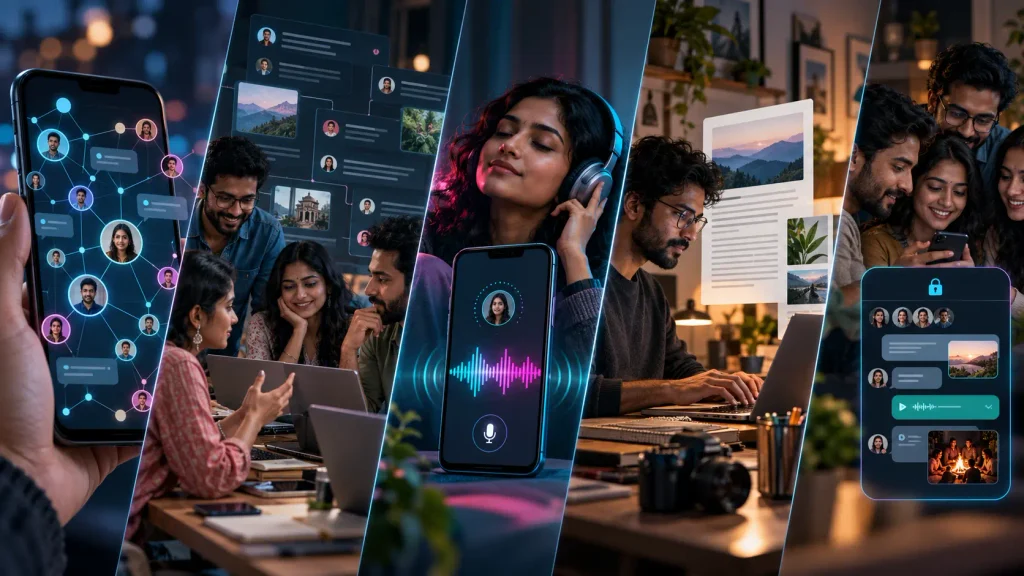
Social media alternatives can be grouped into several categories based on how they handle content sharing, conversations, community participation, and platform control.
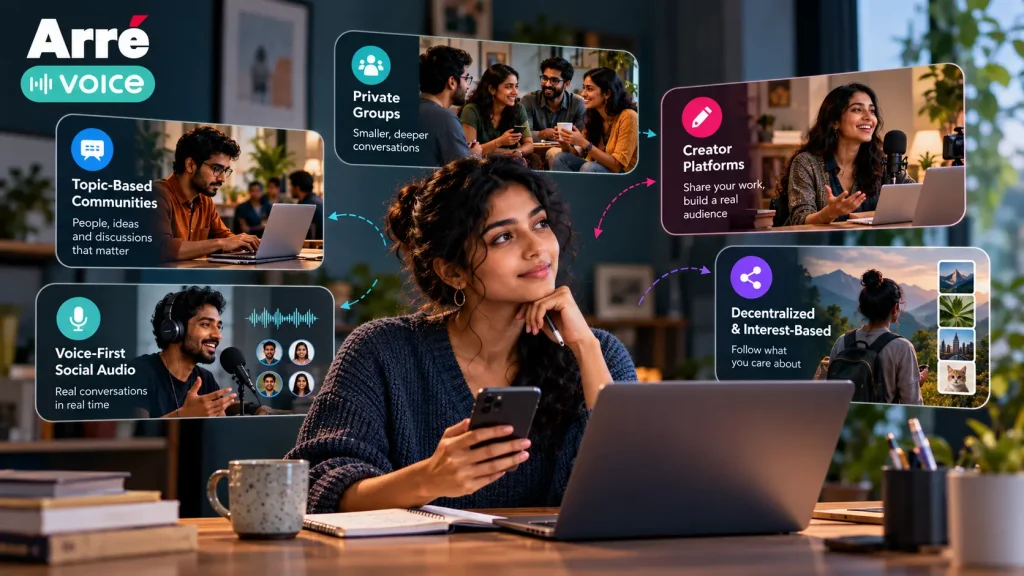
The five main types include decentralized social networks, community-based platforms, voice-based social media apps, creator-focused platforms, and private messaging communities.
These categories sometimes overlap, but understanding their differences helps users identify which platforms best suit their needs.
Decentralized Social Networks
Decentralized social networks aim to reduce reliance on a single organization controlling the entire social networking infrastructure.
Instead of operating exclusively through one centralized service, these networks may allow independent servers, interoperable applications, or portable accounts.
Two examples are Mastodon and Bluesky, although their technical approaches differ.
Mastodon uses the ActivityPub protocol to connect independently operated servers, while Bluesky uses the AT Protocol to support an open social networking ecosystem.
Such platforms can appeal to people interested in open standards, network choice, and different approaches to content moderation.
However, decentralized networks may introduce learning curves, and privacy or moderation practices can vary across participating services.
References: Mastodon and Bluesky’s explanation of the AT Protocol.
Community-Based Social Platforms
Community-based social platforms organize interactions around shared interests, specific topics, or collective activities rather than primarily around personal profiles.
Examples include Reddit communities and topic-focused Discord servers.
Members might join discussions about storytelling, creative writing, technology, games, or professional development.
These platforms are especially useful when the objective is ongoing conversation and knowledge sharing rather than broadcasting content to a broad audience.
Some also support moderation tools, discussion categories, and community guidelines that help organize participation.
Successful community experiences depend on more than technology. Clear expectations, engaged members, and active moderation are equally important.
For a deeper understanding of how these spaces develop, explore our guide to creator communities.
Voice-Based Social Media Apps
Voice-based social media apps use recorded or live audio as a primary way for people to share ideas, tell stories, and participate in conversations.
Unlike video-focused networks, voice-first platforms allow users to communicate without necessarily appearing on camera.
They can be useful for personal reflections, storytelling, commentary, discussions, and spontaneous creative expression.
For example, Arré Voice is a short-form audio social platform where users can create 30-second Voicepods, participate in conversations through Voicepools, and discover interest-based Voiceclubs.
These features offer a different social experience for people who enjoy communicating through speech.
However, audio-first participation may be less convenient in noisy environments or situations where listening aloud is impractical. Accessibility also depends on the features each platform provides.
Explore our guide to social audio apps to understand how voice-focused networking differs from conventional social feeds.
Creator-Focused Content Platforms
Creator-focused platforms are designed around publishing, audience engagement, and building an ongoing relationship between creators and their followers.
Depending on the platform, creators may share newsletters, videos, podcasts, articles, digital products, or exclusive community content.
Examples include Substack for newsletters and written publishing, Patreon for membership-supported creator relationships, and other platforms built around specific creative formats.
These services can be valuable for creators who want more intentional relationships with their audiences rather than relying entirely on general social media feeds.
However, features such as audience ownership, discoverability, monetization, and subscription management vary considerably.
Creators should evaluate whether a platform supports their preferred content format and long-term goals before investing time in building an audience.
Private Messaging and Group Communities
Private messaging and group-based platforms offer another alternative to public social networking.
Rather than sharing posts with an unrestricted audience, users communicate within selected groups, channels, or direct conversations.
Examples include WhatsApp groups, Signal group chats, and private Discord communities.
These spaces can be useful for close-knit interest groups, collaborative projects, professional discussions, or communities that do not need public visibility.
However, private groups are not automatically confidential or equally secure. Encryption, administrator permissions, message forwarding, and data retention depend on the service and its settings.
They may also offer fewer public discovery opportunities than open social platforms.
For users prioritizing ongoing interaction with a defined group of people, private communities can provide a more focused communication environment without replacing every function of traditional social media.
What Are Some Social Media Alternatives to Explore in 2026?
The best social media alternatives in 2026 depend on what you want from your online experience. Some platforms offer greater control over public feeds, while others focus on communities, private conversations, creative expression, or audio-based interaction.
Rather than choosing an alternative based on popularity alone, consider its primary purpose, content format, privacy features, and the type of audience it supports.
Bluesky and Mastodon for Decentralized Social Networking
Bluesky and Mastodon are two alternatives to traditional social networks for people interested in decentralized networking and greater choice over their online experience.
Bluesky uses the AT Protocol and supports customizable feeds, allowing users to follow conversations based on their interests. Its familiar posting and following experience can appeal to people seeking an alternative to conventional text-based social networks.
Mastodon operates through independently managed servers connected using the ActivityPub protocol. Users can participate in conversations across compatible servers, although moderation rules and community experiences may differ.
Both offer alternatives to fully centralized platforms, but their approaches to decentralization are different. Users should also understand that public posts are not necessarily private.
Reddit for Interest-Based Discussions
Reddit is useful for people who prefer topic-focused conversations over following individual social media personalities.
Its communities, called subreddits, bring users together around subjects such as technology, books, gaming, fitness, storytelling, and personal interests.
Members can ask questions, share experiences, exchange recommendations, and participate in discussions shaped by community-specific rules.
Reddit is particularly suitable for discovering different perspectives or seeking advice from people with relevant experience. However, the quality and reliability of information can vary between communities.
Discord for Community Spaces
Discord offers organized spaces where people can communicate through text, voice, and video channels.
It is particularly useful for gaming groups, creator communities, study circles, professional networks, and hobby-based discussions.
Unlike conventional social feeds, Discord servers can organize conversations into separate channels, making it easier for members to follow specific topics.
Community administrators can also establish participation rules and manage access to different spaces.
Its main limitation is that discovering relevant communities may require invitations or searching through external directories. The experience also depends heavily on how each server is managed.
Arré Voice for Short Voice Posts and Audio Communities
Arré Voice offers a different approach to social interaction by putting spoken expression at the center of content creation.
Instead of relying primarily on photographs or videos, users can record 30-second Voicepods, share thoughts through Voicepools, and explore interest-based Voiceclubs.
For example, someone interested in storytelling could record a short personal experience, respond to an ongoing conversation, or explore audio content from people with similar interests.
Its voice-first format may appeal to users who enjoy speaking but do not want to appear on camera or produce heavily edited videos.
Arré Voice is best considered a specialized alternative for short-form audio expression and community participation rather than a complete replacement for every mainstream social media function.
Other Platforms Based on Your Needs
Several other platforms can serve as alternatives to social media apps, depending on the experience you want.
Signal emphasizes end-to-end encrypted private messaging and group conversations, making it relevant for people who prioritize confidential communication over public discovery.
Substack supports creators who want to publish newsletters and develop ongoing relationships with readers, while Patreon focuses on membership-supported creator communities.
These services do not all perform the same functions as Instagram or Facebook. Their value lies in serving more specific communication, publishing, or community needs.
How Do Social Media Alternatives Compare With Traditional Social Media?
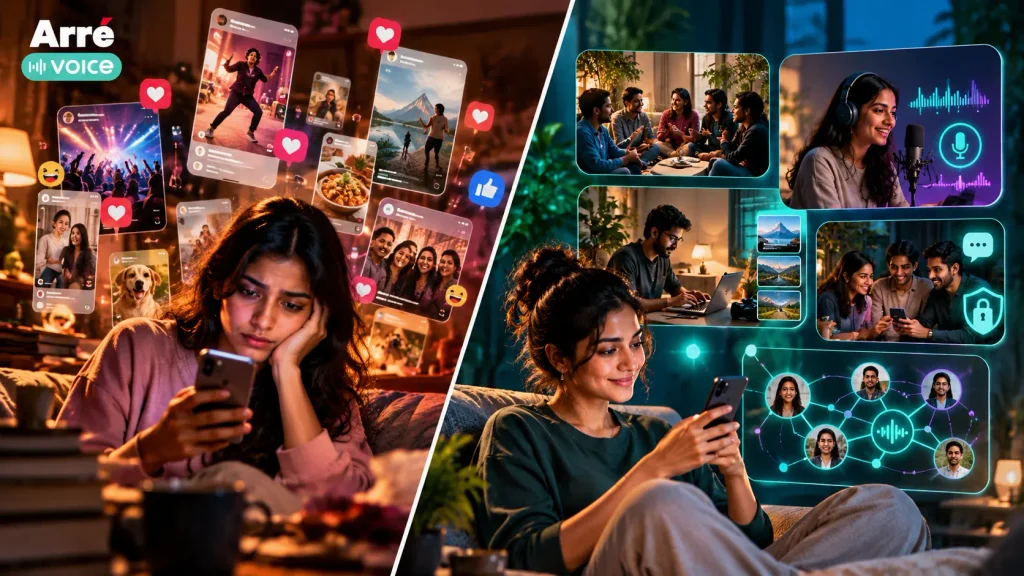
The main difference between traditional social media and alternative platforms is often their primary focus: broad content discovery versus specialized communication, community participation, or user control.
Traditional networks usually combine multiple content formats within large public-facing ecosystems. Alternative platforms may instead prioritize particular features, such as decentralized feeds, interest-based discussions, short audio posts, or private conversations.
| Platform type | Main content format | Primary advantage | Potential limitation |
| Traditional social media, such as Instagram | Photos, videos, stories, messages | Broad content discovery and multiple sharing formats | Competitive feeds and extensive content exposure |
| Bluesky and Mastodon | Public posts and conversations | Open networking approaches and feed or server choice | Learning curve and varying moderation experiences |
| Discussions, questions, links, media | Topic-focused communities and shared knowledge | Information quality and moderation vary | |
| Discord | Text, voice, video, community channels | Organized group interactions | Community discovery and participation can require more effort |
| Arré Voice | Short audio posts and conversations | Voice-first expression and audio communities | Less suitable for primarily visual content |
| Signal | Encrypted messages and calls | Private communication with selected contacts | Limited public audience discovery |
| Substack and Patreon | Publications, subscriptions, community content | Direct creator-audience relationships | Audience growth and monetization can require sustained effort |
No single platform performs best across every category.
For example, someone seeking public conversations may prefer Bluesky, while a person interested in specific hobbies may find Reddit more useful. Discord supports ongoing group interaction, whereas Arré Voice provides a dedicated format for short spoken contributions.
The most useful comparison is therefore based on what you want to do, rather than which social network has the longest feature list.
What Are the Best Social Media Alternatives for Different Needs?
The best social media alternative depends on your main priority. Voice-first platforms suit spoken expression, community platforms support shared interests, creator-focused services help build audiences, and privacy-oriented tools provide different communication controls.
Choosing by use case makes it easier to identify a platform that fits your habits instead of simply replacing one scrolling experience with another.
For People Who Prefer Voice Over Video
If you enjoy speaking, sharing personal experiences, or discussing ideas without appearing on camera, voice-based social platforms are worth exploring.
Arré Voice is one example, allowing users to create short Voicepods and join audio-led conversations. This format can be useful for spontaneous thoughts, creative storytelling, or participating in discussions without filming a video.
Discord also supports voice channels, although its experience is more oriented toward conversations within servers than publishing short audio posts to a social audience.
Explore how voice-based social media works to understand the differences between audio posts, live discussions, and conventional visual feeds.
For Niche Communities and Shared Interests
Reddit and Discord are strong options for people who want to connect through specific interests.
Reddit works well for discovering discussions, asking questions, and exploring community knowledge. Discord can be more suitable for ongoing group conversations, collaborative activities, and communities that interact regularly.
Voice-based communities can provide another option when members prefer expressing ideas through spoken contributions.
The right choice depends on whether you value public discovery, structured discussions, recurring group interactions, or audio participation.
For Creators Who Want to Build an Audience
Creators should select platforms according to their content format, target audience, and preferred relationship with followers.
Substack can suit writers developing a newsletter audience, while Patreon can support creators offering membership-based content and experiences.
Reddit and Discord may help creators participate in relevant communities, provided they contribute meaningfully rather than treating those spaces only as promotional channels.
Arré Voice offers a voice-first format for creators interested in short audio storytelling, commentary, and spoken ideas.
A useful starting point is to understand the fundamentals of audience building before selecting platforms based solely on visibility or monetization promises.
For People Seeking Greater Privacy and Control
Users looking for greater privacy should distinguish between private communication, control over public content, and decentralized network ownership.
Signal is particularly relevant for confidential messaging because its messages and calls use end-to-end encryption.
Bluesky offers choices around feeds and moderation, while Mastodon allows users to select independently operated servers with different policies.
However, neither decentralized networking nor customizable feeds automatically provides the confidentiality of an encrypted messaging service.
Before selecting a platform, review its privacy settings, data practices, moderation policies, and whether your content is publicly accessible.
The best choice is the service whose protections match your actual communication needs, rather than one that simply describes itself as private or decentralized.
How Do You Choose the Right Social Media Alternative?
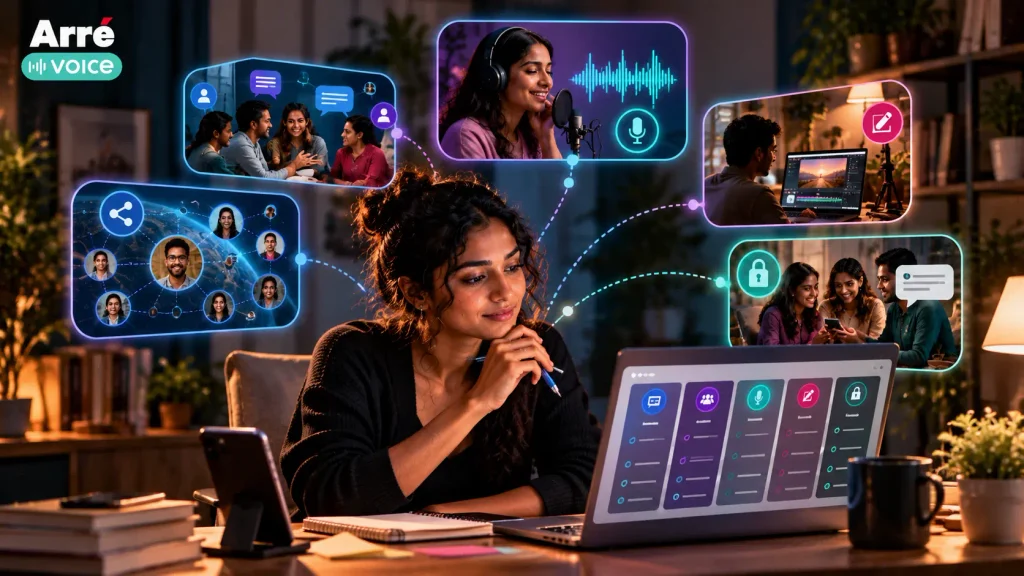
Choosing the right social media alternative starts with understanding how you want to communicate, what communities you want to join, and how much control you need over your online experience. Rather than switching platforms based on trends, compare their content formats, privacy policies, community activity, and accessibility features.
A platform that works well for a video creator may not suit someone who prefers private discussions or short audio conversations. Evaluating your needs first can help you make a more informed choice.
Compare Content Formats and Community Features
Different alternative social media platforms support different ways of expressing ideas and connecting with others.
Some prioritize written discussions, while others offer videos, audio posts, newsletters, or structured community conversations.
Consider these questions before choosing:
- Content format: Do you prefer writing, speaking, sharing visuals, or participating in live discussions?
- Community interaction: Can members respond, collaborate, and maintain ongoing conversations?
- Content discovery: How easily can you find relevant people, topics, and communities?
- Creative tools: Does the platform offer features that support your preferred way of creating content?
For example, Reddit supports topic-based discussions, Discord organizes conversations through community channels, and Arré Voice focuses on short audio posts and spoken participation.
The right platform should make communication easier rather than requiring you to adopt a content format you do not enjoy.
Review Privacy Settings and Moderation
Privacy and community safety are important considerations when comparing social media alternatives.
Before registering, review what information the platform collects, whether posts are publicly accessible, and what options exist for controlling unwanted interactions.
Look for clear information about account visibility, blocking, reporting, data deletion, and community moderation.
For instance, Discord provides moderation tools that community administrators can configure according to their server’s needs. However, their effectiveness depends partly on how communities implement them.
Likewise, decentralized social networks may offer different moderation arrangements without guaranteeing complete privacy.
A useful privacy assessment should distinguish between control over content visibility, protection of personal information, and security of private conversations.
Check Audience Activity and Accessibility
Even a platform with useful features may not meet your needs if the communities you want to join are inactive.
Before committing, explore whether relevant conversations happen regularly, whether members receive meaningful responses, and whether the platform supports your preferred language.
Accessibility matters equally.
Consider whether users can navigate the interface comfortably, adjust their experience, and access content in alternative formats when needed.
For audio-focused platforms, check whether transcripts or other accessible alternatives are available. For video-based services, review caption support.
The W3C Web Accessibility Initiative explains why accessible audio and video experiences require appropriate alternatives for people with different needs.
A practical approach is to test a platform for a few days before making it your primary social space. Participate in conversations, explore communities, and assess whether the experience genuinely suits you.
How Can Arré Voice Offer a Different Social Media Experience?
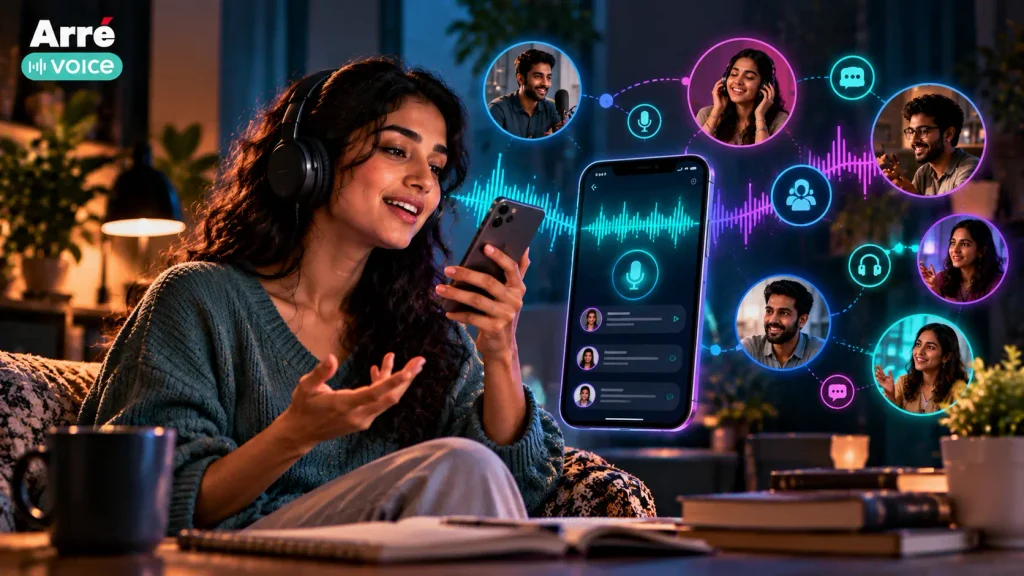
Arré Voice offers a voice-first social media experience built around short audio posts, participatory conversations, and interest-based communities. Instead of making photographs or videos the primary form of expression, the platform allows users to communicate through spoken content.
Its experience centers on three features: Voicepods for sharing short recordings, Voicepools for joining audio conversations, and Voiceclubs for connecting through shared interests.
This approach can appeal to people who enjoy storytelling, expressing opinions, and participating in discussions without appearing on camera.
Create Short Audio Posts Through Voicepods
Voicepods are 30-second audio posts on Arré Voice that let users share thoughts, stories, opinions, and creative expressions through their voices.
Instead of filming a video or preparing a lengthy written post, users can record a brief audio contribution.
For example, a creator might share a personal observation, narrate a short fictional moment, offer a quick opinion, or record a spoken response to an everyday experience.
Arré Voice also offers Creator Studio tools for adding creative effects to audio recordings.
Voicepods can be useful for people who prefer spontaneous spoken expression, although the short duration requires creators to communicate their ideas concisely.
This makes the format different from longer podcasts and visually focused social media posts.
Participate in Conversations Through Voicepools
Voicepools are participatory audio conversations on Arré Voice where users can respond to prompts or questions through their own voice recordings.
Rather than simply publishing an individual post, users can contribute to a shared discussion.
For instance, someone might start a Voicepool asking, “Which childhood story do you remember most vividly?” Other participants can respond with personal memories or different perspectives.
This creates opportunities for conversations around entertainment, storytelling, opinions, and shared experiences.
Voicepools can also support creative prompts, community challenges, and discussions where multiple voices contribute to the same topic.
For users who prefer speaking over typing lengthy replies, the format offers another way to take part in social conversations.
Connect Through Interest-Based Voiceclubs
Voiceclubs are interest-based communities on Arré Voice where people can connect around shared topics and participate through audio content.
They bring the community aspect of social networking into a voice-focused environment.
For example, people interested in storytelling, music, entertainment, or everyday conversations may prefer spaces where spoken contributions are central to participation.
Within Voiceclubs, members can engage through relevant Voicepods and Voicepools, creating opportunities to discover creators and exchange perspectives.
However, the value of any community depends on its members, the relevance of its conversations, and how consistently people participate.
If you are interested in the wider principles behind maintaining engaged groups, explore our guide to community building.
Arré Voice is therefore worth exploring when short-form audio and community participation align with your communication preferences, rather than as a universal replacement for conventional social media.
What Are the Advantages and Limitations of Alternative Social Platforms?
Alternative social media platforms can provide more specialized ways to communicate, create content, and build communities, but they may also have limitations involving audience reach, discoverability, usability, and privacy.
Understanding both sides helps users make realistic decisions.
| Potential advantages | Possible limitations |
| Focused communities: Find discussions organized around specific interests. | Smaller or less active communities may offer fewer opportunities for interaction. |
| Different content formats: Choose text, audio, private messaging, or other creative formats. | Specialized platforms may not support every type of content. |
| Greater platform choice: Explore decentralized networks and alternative moderation approaches. | Some networks can involve additional setup or learning. |
| More intentional participation: Engage in discussions that match your interests. | The experience still depends on members, recommendations, and moderation. |
| Creator-focused features: Build relationships through dedicated publishing or community tools. | Audience growth and ongoing engagement can require consistent effort. |
| Different privacy controls: Select services with policies suited to your needs. | Alternative platforms are not automatically safer or more private. |
For example, a creator seeking broad visual discovery might prefer a mainstream platform, while someone interested in smaller discussion groups may find Reddit or Discord more suitable.
Similarly, users who prefer spoken storytelling could explore voice-first experiences such as Arré Voice, while those prioritizing confidential conversations may choose encrypted messaging services.
Ultimately, the advantage of alternative social platforms is the freedom to choose an online experience around your needs rather than expecting one platform to serve every purpose.
Frequently Asked Questions
What are social media alternatives?
Social media alternatives are platforms that offer different ways to connect, share content, and participate in online communities beyond traditional social networks. Examples include Bluesky and Mastodon for decentralized networking, Reddit for interest-based discussions, Discord for community interaction, and Arré Voice for short audio posts. The best option depends on your preferred content format, privacy needs, and communication goals.
What are some alternatives to Instagram and Facebook?
Popular alternatives to Instagram and Facebook include Bluesky, Mastodon, Reddit, Discord, and specialized creator or community platforms. Bluesky and Mastodon support public social networking, while Reddit and Discord emphasize shared interests and discussions. Arré Voice offers a voice-first experience for people who prefer short audio content. These platforms serve different purposes rather than replacing every Instagram or Facebook feature.
Are there social media apps without a focus on photos or videos?
Yes, several social media apps prioritize written discussions, voice interactions, or private communication instead of photos and videos. Reddit emphasizes topic-based conversations, while Mastodon and Bluesky support text-led social networking. Arré Voice focuses on short audio posts through Voicepods and community conversations through Voicepools and Voiceclubs, making it an option for people who enjoy communicating through speech rather than appearing on camera.
What are decentralized social media platforms?
Decentralized social media platforms use networking systems designed to reduce dependence on a single centralized service. Mastodon connects independently operated servers through ActivityPub, while Bluesky uses the AT Protocol to support an open social networking ecosystem. These approaches can offer different levels of network choice and control, although decentralization does not automatically guarantee privacy, security, or freedom from moderation.
Which social media alternatives are suitable for creators?
The best social media alternatives for creators depend on their content format and audience goals. Substack supports newsletter publishing, Patreon enables membership-based creator relationships, and Discord helps organize communities. Reddit can provide opportunities for meaningful participation in relevant discussions. Arré Voice offers short-form audio creation for people interested in spoken storytelling, commentary, and voice-led engagement.
Are alternative social media platforms safer or more private?
Alternative social media platforms are not automatically safer or more private than mainstream networks. Privacy depends on data collection policies, encryption, account visibility, moderation practices, and individual settings. Signal offers end-to-end encrypted messaging, while decentralized networks provide different approaches to platform control. Before joining any service, review its privacy policy, reporting tools, security features, and public content visibility.
Can voice-based social media replace traditional social media?
Voice-based social media can replace some traditional social media activities, particularly for people who prefer spoken expression and audio conversations. Platforms such as Arré Voice enable users to share short Voicepods and participate in interest-based audio communities. However, voice-first platforms may not meet needs such as visual portfolios, video publishing, or professional networking. They are best viewed as complementary or specialized alternatives.
Conclusion: Finding a Social Platform That Fits Your Needs
The growing range of social media alternatives in 2026 gives people more choice over how they communicate, create content, and participate in online communities.
Whether you prefer decentralized networks, interest-based discussions, private messaging, or voice-first interactions, the right platform depends on your priorities.
If spoken storytelling and short audio conversations appeal to you, explore Arré Voice as another way to connect and share ideas. The goal is not simply to leave traditional social media, but to find an online experience that genuinely works for you.