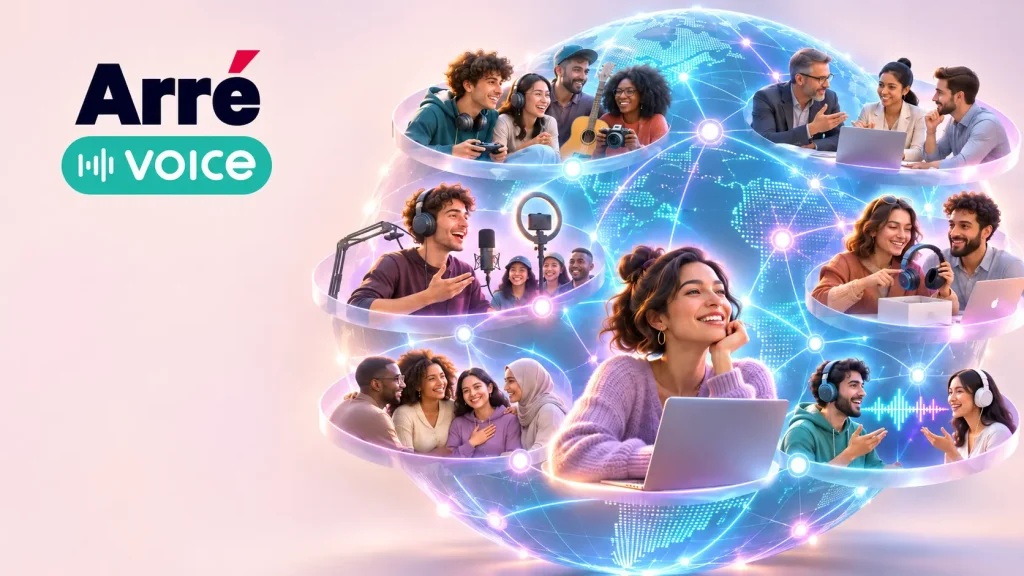
Online communities have changed how people connect, learn and share experiences. Whether someone joins a Reddit discussion, participates in a professional group or connects with creators through audio conversations, digital communities bring people together beyond geographical boundaries.
But what exactly are online communities, and how do they work?
From hobby groups and learning networks to creator communities and voice-based platforms, online communities offer different ways to exchange ideas, build relationships and participate in conversations. Understanding their types and purposes can help you find communities that match your interests.
What Are Online Communities?
Online communities are groups of people who connect through digital platforms to share interests, exchange information, discuss topics or support one another. Members interact through messages, forums, audio conversations, videos or other online communication tools.
Unlike a website where visitors simply consume information, an online community encourages participation. Members can ask questions, contribute knowledge, respond to others and develop relationships around a shared purpose.
For example, a photography community may allow members to discuss camera techniques, share photographs and receive feedback. Similarly, an audio storytelling community brings together people who enjoy creating, sharing and listening to spoken stories.
Online communities can be public or private, large or small, and organized around almost any topic.
How Do Online Communities Work?
Online communities work by bringing people together around common interests and providing digital spaces where they can interact regularly. A community typically has a shared purpose, ways for members to participate and guidelines that help maintain meaningful discussions.
While community platforms differ, three elements shape how most digital communities operate.
Shared Interests and Community Purpose
Every successful online community begins with a reason for people to connect.
Some communities focus on hobbies such as gaming, reading or music. Others bring together professionals, students, customers or creators seeking knowledge, feedback and collaboration.
A clear purpose helps members understand what they can expect and how they can contribute.
For example, people joining a book discussion community may want recommendations, conversations about their favourite authors or opportunities to exchange interpretations of stories.
Member Participation and Conversations
Participation transforms an online group into an active community.
Members may publish posts, answer questions, share resources, discuss experiences or respond to content created by others. These interactions can happen immediately through live conversations or over time through discussion threads and recorded audio.
In a storytelling community, one member might publish a short audio story while others listen, share their interpretations or contribute related experiences.
Communities become more useful when participation is meaningful, members feel comfortable contributing and conversations continue beyond a single post.
Community Rules and Moderation
Community guidelines help establish expectations for respectful and relevant participation.
Rules may address harassment, spam, misleading information, privacy and promotional content. Moderators or administrators may review posts, respond to reports and guide discussions when disagreements arise.
Effective moderation does not mean eliminating different opinions. It means creating an environment where people can exchange perspectives constructively while respecting community boundaries.
Clear guidelines and consistent moderation help members understand what behaviour is acceptable and contribute to a more trustworthy community experience.
What Are the Different Types of Online Communities?

There are several types of online communities, each designed around different interests, relationships and communication needs. The six common categories include interest-based, professional, creator, brand, support and voice-based communities.
Interest-Based and Hobby Communities
Interest-based communities bring together people who enjoy similar activities, subjects or hobbies.
Popular examples include gaming groups, photography forums, book clubs, cooking communities and travel discussion groups.
Members often participate by exchanging recommendations, sharing experiences, asking questions or discussing their interests.
For instance, a gardening community may help beginners learn about plant care while experienced gardeners share practical tips.
These communities are particularly useful for discovering new ideas and connecting with people who share personal interests.
Learning and Professional Communities
Learning and professional communities focus on education, skill development, career interests and knowledge exchange.
They may include student discussion groups, professional networking communities, coding forums and industry-specific networks.
Members can ask questions, share learning resources, discuss professional challenges and exchange practical experiences.
For example, a community of digital marketers might discuss search engine optimization, content strategies or changing industry practices.
Professional communities can also help members discover collaborators, mentors and learning opportunities.
Creator and Fan Communities
Creator communities connect people who produce content with others interested in their work or creative interests.
These groups may involve writers, musicians, podcasters, storytellers, artists and digital content creators.
Members can share work, receive feedback, discuss creative ideas and interact with audiences.
Fan communities, meanwhile, bring together people who appreciate a particular creator, entertainment genre or cultural interest.
For example, an online storytelling community may allow writers and narrators to share original work while listeners discuss characters, themes and performances.
Explore how creator communities help support relationships between content creators and their audiences.
Brand and Customer Communities
Brand communities connect customers, product users and businesses around shared experiences with a company or its products.
Members may discuss product features, exchange usage tips, provide feedback or help solve common problems.
For example, a technology company’s customer community might allow users to share troubleshooting advice and suggest product improvements.
Unlike general hobby groups, these communities typically have a direct relationship with a particular brand, although conversations may be led by customers rather than the company itself.
Useful brand communities encourage genuine discussion instead of focusing entirely on promotions.
Support and Peer Communities
Support communities bring together individuals who share similar experiences, personal challenges or circumstances.
Examples include parenting support groups, student peer networks, career-transition communities and groups for people navigating major life changes.
Members may share experiences, offer encouragement, exchange practical information and find others who understand their situations.
A career-transition community, for example, might help members discuss interview preparation, professional uncertainty and job-search experiences.
These communities benefit from clear privacy expectations, respectful communication and careful moderation, especially when discussions involve sensitive topics.
Voice-Based and Audio Communities
Voice-based online communities allow people to connect primarily through spoken communication rather than relying entirely on written messages or visual content.
Members may participate through recorded audio posts, voice responses, live discussions or audio storytelling.
This format can be useful for people who prefer speaking to typing, enjoy listening to stories or want to communicate without appearing on camera.
For example, Arré Voice supports voice-first interaction through Voiceclubs, which connect people around shared interests, and Voicepools, where participants can contribute audio responses to prompts or questions.
Voice-based communities offer an alternative way to exchange ideas, express emotions and share creative experiences.
Learn more about how voice communities enable conversations and connections through spoken interaction.
What Are Some Real Examples of Online Communities?
Some of the most recognizable examples of online communities include Reddit, Discord, LinkedIn Groups and Arré Voice. Each platform brings people together around shared interests, but the way members communicate and participate differs.
Reddit Communities for Discussions and Shared Interests
Reddit is a discussion-based platform organized into thousands of topic-specific communities called subreddits. These communities cover subjects ranging from technology and gaming to books, travel, education and everyday experiences.
For example, members of r/books discuss literature, recommend titles and exchange opinions, while r/AskReddit encourages conversations through questions and community responses.
Users can create posts, comment on discussions and vote on contributions. Individual subreddits also have their own rules and moderators to guide participation.
Reddit is particularly useful for people seeking diverse perspectives, detailed discussions and experience-based recommendations.
Discord Servers for Interest-Based Groups
Discord brings people together through online spaces called servers. These servers can contain separate text and voice channels organized around particular topics or activities.
Originally popular among gaming communities, Discord also supports groups interested in education, music, technology, creative projects and professional collaboration.
For example, members of a gaming server might discuss strategies in one channel, share updates in another and join voice conversations while playing.
Discord communities are useful for ongoing group conversations, especially when members want to communicate regularly through text or live audio.
Professional Communities on LinkedIn
LinkedIn supports professional networking and industry discussions through LinkedIn Groups and other professional interactions.
These communities bring together people working in similar industries, exploring career opportunities or developing specialized skills.
For example, a digital marketing group may discuss content strategies, search trends, professional challenges and learning resources. Members can exchange experiences, ask questions and connect with others in their field.
LinkedIn communities are particularly relevant for professional knowledge sharing, career development and building industry relationships.
Creator and Storytelling Communities on Arré Voice
Arré Voice offers a different approach to digital communities by focusing on voice-based expression and audio content.
Rather than relying primarily on written posts or video appearances, users can share their ideas, stories and creative performances through recorded audio.
Its Voicepods enable users to publish short, 30-second audio posts, while Voicepools encourage participation through audio responses to questions or prompts. Voiceclubs provide interest-based spaces where people can connect around shared topics.
For example, someone interested in storytelling could share a short narration, explore audio content from other creators and participate in voice-based discussions.
This approach is particularly relevant for creators and listeners who enjoy spoken communication, audio storytelling and discovering different perspectives through voice.
What Are the Benefits of Online Communities?
The main benefits of online communities include connecting with like-minded people, exchanging knowledge, receiving feedback and developing meaningful relationships. These digital spaces make it easier to participate in shared interests regardless of geographical distance.
Finding People With Shared Interests
Online communities help people discover others who enjoy similar topics, hobbies or activities.
Someone interested in photography, literature, technology or music can join a relevant group rather than relying only on their existing social circle.
These connections create opportunities for discussions, recommendations and collaborative experiences.
For example, an aspiring storyteller may find people who appreciate spoken narratives, share creative suggestions and introduce them to different storytelling styles.
Learning and Exchanging Knowledge
Digital communities provide spaces where members can learn through conversations and shared experiences.
People may ask questions, exchange resources, discuss practical problems or offer advice based on their knowledge.
A student might use an educational community to clarify concepts, while a digital creator could learn about recording techniques, audience preferences or content formats.
Unlike one-way information sources, communities allow members to ask follow-up questions and explore different perspectives.
However, shared advice is not always accurate. Members should verify important information using reliable sources, particularly for medical, legal or financial decisions.
Participating and Building Relationships
Regular participation can help members develop familiarity, trust and a sense of belonging.
Responding to conversations, sharing experiences and supporting other members creates opportunities for ongoing relationships.
For creators, community participation can also encourage constructive feedback and closer connections with interested audiences.
A creator who consistently shares useful content and responds thoughtfully to others may develop stronger relationships than someone who publishes content without interacting.
Community participation is therefore not simply about receiving attention. It involves contributing to conversations and developing mutual connections.
For additional context, explore how audience building relates to sustained creator engagement.
Online Communities vs Social Media: What Is the Difference?
The main difference between online communities and social media is their primary focus. Online communities generally organize interaction around shared interests and ongoing relationships, while social media platforms often emphasize content distribution, discovery and broader social networking.
However, the two are not mutually exclusive. A social media platform can host multiple communities, and many online communities use social networking features.
| Feature | Online Communities | Social Media |
| Primary focus | Shared interests and group participation | Content sharing, networking and discovery |
| Typical interaction | Discussions, questions and member exchanges | Posts, reactions, comments and shares |
| Relationship structure | Often organized around a group or common purpose | Often organized around profiles and followers |
| Content discovery | Community topics and member contributions | Feeds, recommendations and followed accounts |
| Common examples | Reddit subreddits, Discord servers, LinkedIn Groups | Instagram, Facebook, TikTok |
| Main value | Knowledge exchange, participation and relationships | Broad communication, entertainment and content visibility |
For example, watching short videos on a social media feed is primarily a content-consumption activity. Joining a dedicated group to discuss those videos, exchange opinions and interact regularly creates a more community-focused experience.
Platforms can support both behaviours. Reddit combines content discovery with topic-based communities, while audio-first platforms can combine creator publishing with interest-based conversations.
The distinction depends more on how people interact than on the name of the platform.
How Do People Find and Join Online Communities?
People can find online communities through search engines, platform search tools, recommendations, social media discussions and invitations from existing members.
The best community to join depends on your interests, preferred communication style and the kind of participation you want.
A practical approach is to:
- Identify your interests: Choose topics such as storytelling, gaming, professional development, music or education.
- Search relevant platforms: Look for communities through Google, Reddit, Discord, LinkedIn or other interest-based platforms.
- Review the community’s purpose: Read descriptions, rules and recent conversations to understand what members discuss.
- Check participation and moderation: Look for relevant discussions, respectful interactions and clear community guidelines.
- Join and explore: Begin by reading discussions, listening to conversations or observing how members participate.
- Contribute meaningfully: Ask questions, share experiences or respond to others when you have something relevant to add.
For example, someone interested in audio storytelling might look for voice-based communities where members share spoken stories and creative ideas. A professional seeking industry knowledge may prefer a specialized LinkedIn Group.
Some online communities are publicly accessible, while others require membership approval, invitations or paid subscriptions.
A useful online community is not necessarily the largest one. A smaller group with relevant discussions, active members and respectful communication may provide a better experience than a large community with limited meaningful interaction.
What Makes an Online Community Active and Valuable?

An active online community is one where members participate regularly, exchange useful information and feel comfortable contributing. However, a large number of members does not necessarily make a community valuable.
The quality of conversations, relevance of shared content and consistency of participation often matter more than membership numbers.
Healthy digital communities typically demonstrate several characteristics:
- Meaningful participation: Members ask questions, share experiences and respond thoughtfully.
- Relevant discussions: Conversations reflect the community’s interests and purpose.
- Welcoming environment: New members can participate without unnecessary barriers.
- Consistent moderation: Clear rules help address spam, harassment and disruptive behaviour.
- Member trust: Participants respect different perspectives and handle personal information responsibly.
For example, a small writing community where members exchange constructive feedback may offer more practical value than a much larger group with little genuine interaction.
Community organizers can encourage participation, but members ultimately shape the quality of the community through their contributions.
What Are the Challenges and Risks of Online Communities?
Although online communities offer valuable opportunities for connection and learning, they can also present challenges involving privacy, misinformation, moderation and member behaviour.
Common risks include:
- Privacy concerns: Members may unintentionally share personal information that others can save or distribute.
- Misinformation: Advice or claims shared by community members may be inaccurate or misleading.
- Harassment and toxic behaviour: Disagreements can sometimes escalate into personal attacks or exclusion.
- Spam and self-promotion: Excessive advertising can reduce the usefulness of discussions.
- Inactive participation: Communities may lose momentum when members stop contributing.
- Echo chambers: Groups can become less informative when opposing perspectives are consistently dismissed.
These risks do not affect every community equally. Their impact depends on the platform, moderation practices, community culture and individual behaviour.
Members can protect themselves by reviewing privacy settings, avoiding unnecessary personal disclosures, verifying important claims and reporting harmful behaviour.
Community administrators can support a safer environment through transparent rules, accessible reporting options and consistent moderation.
How Are Voice-Based Online Communities Different?

Voice-based online communities use spoken communication as a primary way for members to share ideas, stories and experiences. Unlike text-focused forums, they allow participants to communicate through recorded audio or live voice conversations.
Spoken communication can convey elements such as tone, emotion, pronunciation and vocal expression that may be harder to interpret through written messages alone.
This makes audio communities particularly relevant for storytelling, poetry, music, language practice and discussions where vocal delivery contributes to meaning.
However, voice-based participation is not automatically better than text. Written discussions may be easier to scan, search and reference, while audio content benefits from captions, transcripts and accessible playback options.
Recorded Audio Conversations and Community Participation
Recorded audio allows members to contribute without requiring everyone to be available simultaneously.
For example, one participant might share a short spoken story, while another listens later and contributes a response or related experience.
This asynchronous format differs from live voice conversations, where participants generally interact at the same time.
Recorded audio can support:
- Storytelling and personal experiences.
- Spoken poetry, singing and creative performances.
- Audio-based discussions around shared interests.
- Participation without appearing on camera.
The ability to listen and respond at different times can make recorded conversations convenient for members with different schedules.
Interest-Based Voiceclubs and Voicepools on Arré Voice
Arré Voice brings voice-based community participation into its social audio experience through features designed around spoken content and shared interests.
Voiceclubs provide interest-based spaces where users can connect around topics they enjoy, while Voicepools allow participants to contribute audio responses to questions and conversation prompts.
For example, a discussion prompt about a favourite childhood memory could encourage members to share their experiences through recorded voice responses.
Alongside these features, Voicepods allow creators to publish 30-second audio posts featuring stories, songs, opinions and other spoken content.
These formats demonstrate how online communities can move beyond written discussions to include voice-led interaction.
Readers interested in exploring this approach further can learn about social audio apps and voice-based social media.
How Are Online Communities Evolving?
Online communities are evolving as digital platforms offer more ways for people to communicate, create content and participate in shared interests.
Traditional discussion forums remain useful, while other communities increasingly combine written posts, videos, live conversations and recorded audio.
Some platforms also provide AI-assisted tools for content creation, moderation or discovery, although their capabilities and reliability vary.
Another development is the growing variety of community formats. People can participate in small interest-based groups, professional networks, creator-led communities or audio-focused spaces depending on their preferences.
Rather than replacing one another, these formats give members different ways to connect. The most valuable communities will continue to depend on relevant conversations, meaningful participation, accessibility and trust.
Frequently Asked Questions
What is an online community in simple words?
An online community is a group of people who connect through the internet because they share an interest, goal or experience. Members interact by asking questions, discussing topics, sharing content or helping one another through digital platforms.
What are some examples of online communities?
Examples include Reddit subreddits for topic-based discussions, Discord servers for group conversations, LinkedIn Groups for professional networking and Arré Voice communities for spoken storytelling and audio interaction.
What are the main types of online communities?
Six common types are interest-based and hobby communities, learning and professional communities, creator and fan communities, brand and customer communities, support and peer communities, and voice-based or audio communities.
What is the difference between an online community and social media?
Online communities generally focus on shared interests and ongoing group participation, while social media often emphasizes publishing, discovering and distributing content. However, social media platforms can also host communities, so the two concepts frequently overlap.
Are online communities free to join?
Many online communities are free to join, including numerous public discussion groups and interest-based communities. Others require invitations, membership approval, subscriptions or participation fees. Access conditions depend on the individual community and platform.
How can I find online communities that match my interests?
Start by identifying your interests and searching relevant platforms or search engines. Review community descriptions, rules and recent discussions before joining. Look for groups with useful conversations, respectful members and participation options that suit your preferences.
What are the benefits of joining online communities?
Online communities can help people meet others with shared interests, exchange information, learn new skills, receive feedback and develop relationships. The benefits depend on community quality, member participation and the relevance of its discussions.
Can online communities use voice instead of text?
Yes. Voice-based communities allow members to communicate through recorded audio, live discussions or spoken responses. Platforms such as Arré Voice support voice-first participation through features including Voicepods, Voiceclubs and Voicepools.
Conclusion: Why Online Communities Matter
Online communities help people connect through shared interests, exchange knowledge and develop relationships beyond geographical boundaries. From discussion forums and professional networks to creator groups and voice-based communities, each format offers different opportunities for participation.
Understanding how digital communities work, their benefits and potential challenges can help people choose spaces where they feel comfortable contributing and connecting with others.